
SpaceX Unveils $82 Billion Opportunity -- Silent Reactions
Key Points
SpaceX's core businesses include its rocket-launching operation and its satellite broadband service. Over the past year, the company has spent billions of dollars procuring GPUs from Nvidia. Additionally, SpaceX is leasing some of its computing capacity to companies such as Anthropic, Google Cloud, and Reflection AI.
The explosive growth in the use of artificial intelligence (AI) is driving an increasing need for specialized computing resources. Traditional cloud infrastructure providers are struggling to meet this demand in sufficient quantity. Space Exploration Technologies, known for its reusable rockets and Starlink satellite network, is aggressively expanding beyond the aerospace sector into the world of accelerated computing capacity.
Through targeted investments and strategic partnerships, SpaceX is positioning itself to supply access to high-performance GPU clusters, building a foothold in the neocloud economy.
Why Neoclouds Are Important for AI
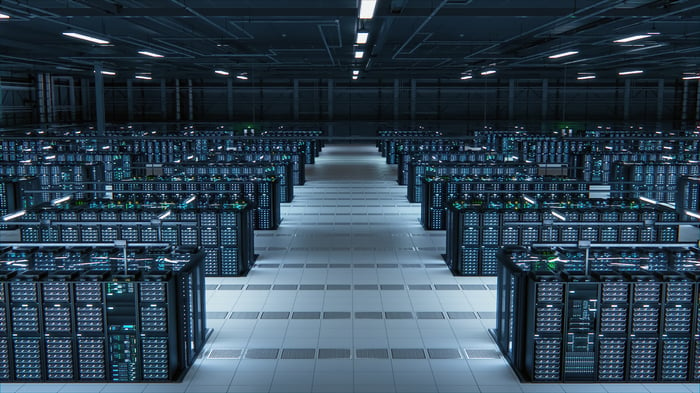
Neoclouds are specialized data centers built around dense clusters of GPUs—primarily Nvidia’s industry-leading processors—rather than general-purpose servers. They streamline access to the massive parallel-processing power required for AI training and inference, allowing clients to avoid the capital outlays of building and operating their own data center infrastructure.
By specifically optimizing their clusters to handle AI workloads, neoclouds help accelerate model development and lower barriers to entry for smaller research teams. This is particularly useful now, as there are numerous bottlenecks limiting the pace at which new data centers can be brought online.
How SpaceX Is Expanding Its Role in AI Infrastructure
Over the last year, SpaceX has deployed significant capital into AI infrastructure by purchasing substantial quantities of Nvidia GPUs. The company has since entered agreements to supply AI infrastructure capacity to prominent clients such as Anthropic, Alphabet's Google Cloud, and Reflection AI. The total value of these three contracts could reach about $82 billion over the next three years.
| Customer | Contract Length | Fee Per Month | Total Deal Value |
|---|---|---|---|
| Anthropic | 36 Months | $1.25 billion | $45 billion |
| Google Cloud | 33 Months | $920 million | $30.4 billion |
| Reflection AI | 42 Months | $150 million | $6.3 billion |
Data Sources: SpaceX Filings, CNBC, Reuters.
By leasing some of its capacity to external customers, SpaceX is leveraging its large-scale Colossus computing system to create a new revenue stream while simultaneously helping to address the same capacity constraints that are fueling the rise of dedicated AI cloud providers like Nebius Group and CoreWeave.
How Will AI Affect SpaceX's Long-Term Direction?
The entry of SpaceX into the neocloud field introduces fresh competition for established players. Its added capacity could help alleviate market shortages and exert downward pressure on pricing. That might benefit hyperscalers even as it compresses profit margins for existing providers.
However, the AI compute market is expanding so rapidly that bringing additional capacity into the marketplace does not necessarily threaten to sap business from incumbents. Rather, SpaceX is proving it can coexist alongside them.
Rather than a full business model pivot, SpaceX appears to be layering its AI infrastructure segment onto its existing space-focused core operation. In the long run, this will help give it a diversified business model—one that keeps revolving around orbital technology while also generating meaningful revenues from the terrestrial boom in AI demand.
Should You Buy Stock in Space Exploration Technologies Right Now?
Before you buy stock in Space Exploration Technologies, consider this:
The Motley Fool Stock Advisor analyst team just identified what they believe are the 10 best stocks for investors to buy now—and Space Exploration Technologies wasn’t one of them. The 10 stocks that made the cut could produce monster returns in the coming years.
Consider when Netflix made this list on December 17, 2004... if you invested $1,000 at the time of our recommendation, you’d have $387,428. Or when Nvidia made this list on April 15, 2005... if you invested $1,000 at the time of our recommendation, you’d have $1,221,398.
Now, it’s worth noting Stock Advisor’s total average return is 895%—a market-crushing outperformance compared to 205% for the S&P 500.
Don't miss the latest top 10 list, available with Stock Advisor, and join an investing community built by individual investors for individual investors.
See the 10 stocks »
Stock Advisor returns as of June 25, 2026.
Adam Spatacco has positions in Nvidia. The Motley Fool has positions in and recommends Nvidia. The Motley Fool has a disclosure policy.
Post a Comment for "SpaceX Unveils $82 Billion Opportunity -- Silent Reactions"