
KOSPI Fear Sparks at Open, Circuit Breakers Trigger at 2 PM
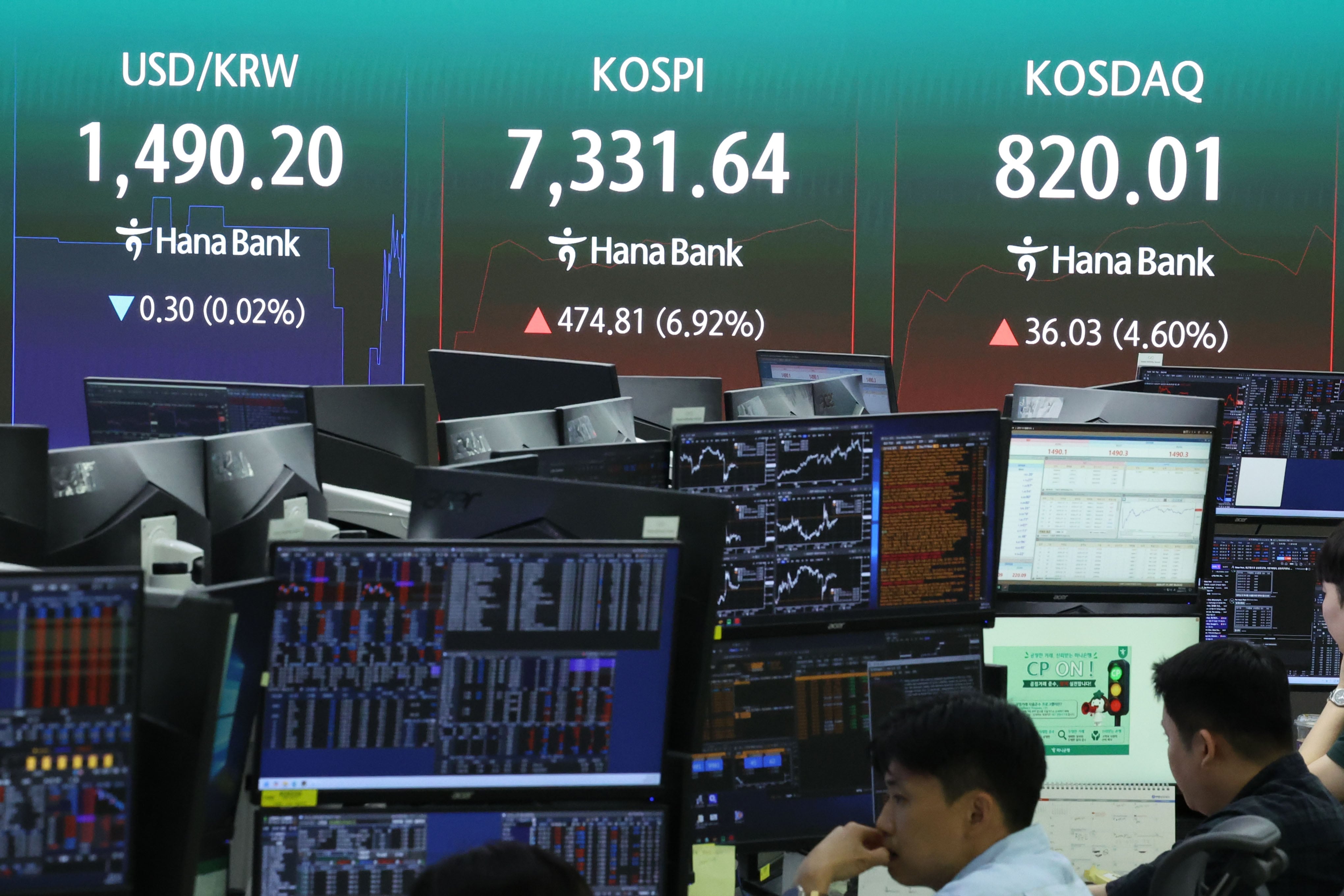
The 10 a.m. of Fear, the 2 p.m. of Promise
A recent saying among individual investors has gained traction: “The 10 a.m. of Fear, the 2 p.m. of Promise.” This phrase suggests that trading becomes volatile around 10 a.m. and rebounds begin around 2 p.m., advising caution during these two time slots. The origin of this saying is linked to the market’s repeated “V-shaped trends,” where the KOSPI dropped over 5% in a single day and then surged over 5% the next. The term “Hwangmalol,” an intensified form of “winding up,” referring to a sharp rebound, also became popular.
To understand the validity of this saying, we analyzed days with high volatility this year. We examined 38 sidecar triggers (20 sell-side, 18 buy-side) and 7 circuit breaker triggers in the KOSPI market, noting their exact times and days of the week. Our findings revealed that the saying is only partially true. Fear arrived not at 10 a.m. but at the market open, and 2 p.m. was closer to a time of betrayal than promise.
Fear Strikes at 9:06 a.m.
Sidecars cannot be triggered during the first 5 minutes of trading. This means the earliest possible time for a trigger is 9:06 a.m. Of the 38 triggers this year, 11 (29%) occurred precisely at 9:06 a.m. Expanding the timeframe to 9:10 a.m., the count rises to 16 (42%), and to the entire 9 a.m. hour, 23 (61%). This indicates that the market often started the day already down or up by ±5%, rather than collapsing during trading hours.
The patterns varied depending on the direction of the trend. Buy-side sidecars were concentrated in the 9 a.m. hour: 14 of 18 (78%). Positive news—such as U.S. market surges, semiconductor rallies, or ceasefire hopes—was resolved overnight in New York and reflected as a gap at the open. Sell-side sidecars, however, were triggered later: 11 of 20 occurred after 10 a.m. as ongoing bad news, like oil price spikes or war headlines, deepened losses during Korean trading hours. Good news was delivered in the morning; fear unfolded throughout the day.
Another factor contributing to the “10 a.m. fear theory” is the People’s Bank of China’s announcement of the yuan’s midpoint rate at 10:15 a.m. A weaker-than-expected yuan often drags down the won. At 10:30 a.m., Hong Kong and Shanghai markets open, prompting foreign investors to trade Asian equities as a basket. A source from Yeouido’s securities industry noted, “Office workers typically check stock apps after morning meetings, around 10 a.m., which may amplify their perception of volatility at that hour.”
The ‘2 p.m. of Promise’? The 2 p.m. of Circuit Breakers
The “2 p.m. of Promise” is a superstition that institutions like pension funds will enter the market during high volatility, stabilizing prices. While this may happen, 3 of the 7 circuit breakers this year were triggered between 1:28 p.m. and 2:33 p.m. (June 23 at 2:33 p.m., July 7 at 1:51 p.m., July 13 at 1:28 p.m.). These were not times of rebound but moments when earlier 5% drops deepened to 8%, halting trading entirely.
Indeed, 35% of sell-side sidecar days (7 of 20) escalated to circuit breakers on the same day. On March 4, a 9:06 a.m. sidecar led to a 11:19 a.m. circuit breaker. On July 13, a 10:34 a.m. sidecar preceded a 1:28 p.m. circuit breaker. Morning sidecars were not precursors to afternoon rebounds but, in one of three cases, signs of deeper crashes.
Leveraged products, launched recently, amplify volatility near the close. Their rebalancing orders—executed close to market close and aligned with the day’s trend—do not calm but exacerbate swings.
By Day of the Week, ‘Black Mondays’ Most Frequent
What explains the V-shaped swings investors perceive? Data shows the turning point is not time but date. Another superstition claims, “A sell-side sidecar is followed by a buy-side sidecar the next day.” This occurred four times this year (February 2–3, March 4–5, March 9–10, June 8–9). A -5% drop one day, followed by a +5% surge the next: U.S. markets and headlines set the tone overnight, and the KOSPI “received” the result at 9:06 a.m. the following day.
By day of the week, sell-side sidecars were most frequent on Mondays (7 of 20), earning the term “Black Monday.” Three of the seven circuit breakers also occurred on Mondays. News accumulated over weekends is reflected at Monday’s open—a phenomenon known as the “Monday effect” in global markets. Buy-side sidecars, however, peaked on Wednesdays (6 of 18).
월 5900원 멤버십, 신문 독자에게는 2900원, 조선멤버십
55000원 상당의 신문-잡지 8종 마음껏 보기, 조선멤버십
현금처럼 쓸 7000포인트 받아 알뜰한 쇼핑, 조선멤버십
Post a Comment for "KOSPI Fear Sparks at Open, Circuit Breakers Trigger at 2 PM"