
Nvidia's Next Move: Robot Brains and AI Computers Offline
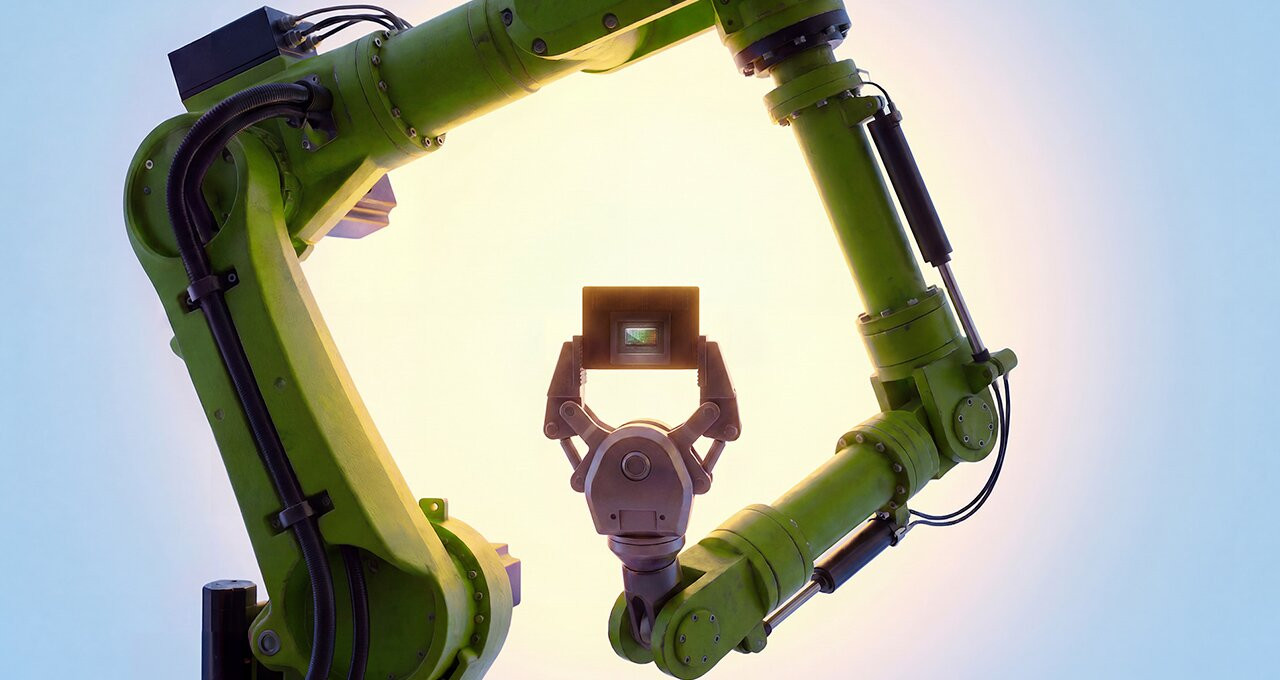
Introduction to the Jetson T3k and T2000
Nvidia has introduced two new compact computers, the 'Jetson T3k' and 'Jetson T2000,' specifically designed to run artificial intelligence (AI) on humanoid robots and autonomous equipment. These devices are built on Nvidia's latest 'Thor' architecture and are engineered to handle AI computations locally. This means that robots can observe their surroundings using cameras, understand human instructions, and make autonomous decisions without relying on external servers.
The Jetson units are not traditional graphics cards for consumer PCs but rather ultra-compact computers integrated into robots, drones, autonomous mobile equipment, and factory machinery. They act as the "brain" of the robot, analyzing data from cameras and sensors to run AI that identifies people or objects and calculates navigation paths.
Previously, it was common to connect robots to the internet to use external AI servers. However, this approach had several limitations: latency could vary based on internet connectivity, sensitive camera footage or factory data had to be transmitted externally, and service costs could accumulate. Nvidia aims to process these tasks directly within the robot whenever possible, enhancing efficiency and security.
Key Features of the Jetson T3k
The high-end 'Jetson T3k' features an Nvidia Blackwell GPU, an 8-core Arm CPU, and 32GB of memory. It delivers up to 865 FP4 teraflops of AI performance. Compared to the existing high-performance T5k model, the T3k is designed to provide similar inference performance while cutting size and power consumption by approximately half.
"Inference" refers to the process where a pre-trained AI receives input and generates an answer. This includes tasks such as a robot identifying a person in a camera feed or understanding a command like, "Bring me the box on the right shelf," and determining the subsequent action.
The Jetson T2000: A More Cost-Effective Option
The 'Jetson T2000' is another new product offering 400 FP4 teraflops of AI performance and 16GB of memory. As a more cost-effective and lower-power alternative to the T3k, it is aimed at a broader range of equipment, including camera systems for analyzing human movement, autonomous mobile robots, and robotic arms for picking and placing items in factories.
Nvidia explained that these new products expand the performance range of the Jetson family from 70 TOPS-class small devices to systems reaching up to 2000 teraflops. Developers can select the model that best fits their required AI performance, budget, and power constraints.
Advanced AI Capabilities
The new products focus on running advanced AI models that go beyond simple object recognition to understand complex, multi-modal information. They support large language models that understand text and speech, AI that analyzes images and language simultaneously, robot-specific AI that translates visual input into physical movement, and AI that predicts changes and outcomes in the real world.
To support this, Nvidia provides AI models and robot development tools such as 'Nemotron,' 'Cosmos 3,' and 'Isaac GR00T.' Nemotron is used for understanding human instructions and generating responses, while Isaac GR00T is a model for humanoid robot movement and task execution. Cosmos helps robots understand the real-world space they see through cameras and predict future scenarios.
The Cosmos 3 Edge Model
The newly unveiled 'Cosmos 3 Edge' is a relatively lightweight robot AI model with 4 billion parameters. It is designed for robots to observe their surroundings in real-time, assess situations, and predict or generate their next actions. A key feature is that it can run directly on Thor-based hardware rather than on a server.
For example, if a robot needs to move a box from the floor to a shelf, it must first identify the locations of both in the camera feed. It then needs to avoid people or obstacles while moving, determine the grip position and force required to pick up the box, and adjust its actions if it fails. Nvidia's next-generation robot AI aims to integrate 'seeing,' 'understanding,' 'judging,' and 'moving' into a single device.
Memory Optimization and Cost Reduction
Beyond hardware, Nvidia also announced features to reduce the memory required during development. As AI models grow in scale, they demand more memory, which is difficult for robots to provide given their limited size and power compared to servers. Nvidia has added features to the Jetson family that help developers automatically optimize AI and system settings to use limited memory efficiently.
According to Nvidia, humanoid robot companies UBTECH and Agile Robots reduced memory usage by up to 15GB through software optimization. As a result, they can now run relevant tasks on 32GB Jetson modules instead of the previous 64GB models. Smart retail company SandStar also reduced memory usage by up to 4GB, allowing them to utilize an 8GB model instead of a 16GB version.
This memory reduction goes beyond just lowering numbers. Using products with less memory reduces the cost of components, power consumption, and heat generation for each robot. For companies deploying large fleets in factories or logistics centers, this directly impacts total deployment costs.
Expanding the Jetson Platform
Currently, Jetson AGX Thor is expanding its reach in the humanoid and industrial robotics sectors. Nvidia stated that companies including 1X, Agile Robots, Amazon Robotics, Boston Dynamics, FANUC, Hitachi, and Techman Robot are developing robots and automation equipment based on the Jetson platform.
However, the T3k and T2000 will not be available for general sale immediately. Nvidia plans to provide a feature via JetPack 7.2.1 starting in late July 2026 that allows developers to simulate T3k performance on existing Jetson AGX Thor development kits. A feature to test the T2000 will be added later, with the actual T3k and T2000 modules scheduled for release in the first quarter of 2027.
Significance of the Announcement
This announcement is significant not because it introduces an entirely new form of AI robot technology, but because it lowers the size, power consumption, and cost barriers for running high-performance AI directly within robots. Nvidia is expanding its influence beyond the semiconductors used to train AI in data centers to the 'robot brain' market, where trained AI powers physical machines in the real world.
Post a Comment for "Nvidia's Next Move: Robot Brains and AI Computers Offline"