
"Unscrambling an Omelette": Canada-US Trade Minister Comments Ahead of CUSMA Review

The Significance of Trade Relations Between Canada, the United States, and Mexico
The United States has long been Canada’s closest trading partner, a relationship that has been solidified through the Comprehensive and Progressive Agreement for Trans-Pacific Partnership (CUSMA). This agreement has facilitated the free flow of goods, including crude oil, between the two nations for decades. In 2025 alone, Canadian crude oil exports to the United States reached a value of $127.37 billion, while in 2024, daily exports averaged 4.20 million barrels. An additional 750,000 barrels per day were added to this figure thanks to the Trans Mountain Pipeline, which began operations in May 2024.
As of tomorrow, Canada, Mexico, and the United States will decide whether to extend their trade relationship beyond its current expiration date in 2036, potentially maintaining the agreement until 2042. This decision is critical for the future of economic integration between the three nations.
Economic Integration and National Importance
Minister for Canada-U.S. Trade, Intergovernmental Affairs, Internal Trade and One Canadian Economy, Dominic LeBlanc, emphasized the national importance of renewing and strengthening these trade ties. He noted that the agreement has not been a one-way street, with oil trade from Fort McMurray serving as an example of mutual economic benefit.
Canada and Mexico have already expressed interest in continuing the agreement, and discussions are ongoing with U.S. trade representative Jamieson Greer. These talks could influence how businesses like Suncor Energy manage their workforce, particularly regarding the maintenance of a transient workforce.
Shift from Fly-In, Fly-Out Workforce
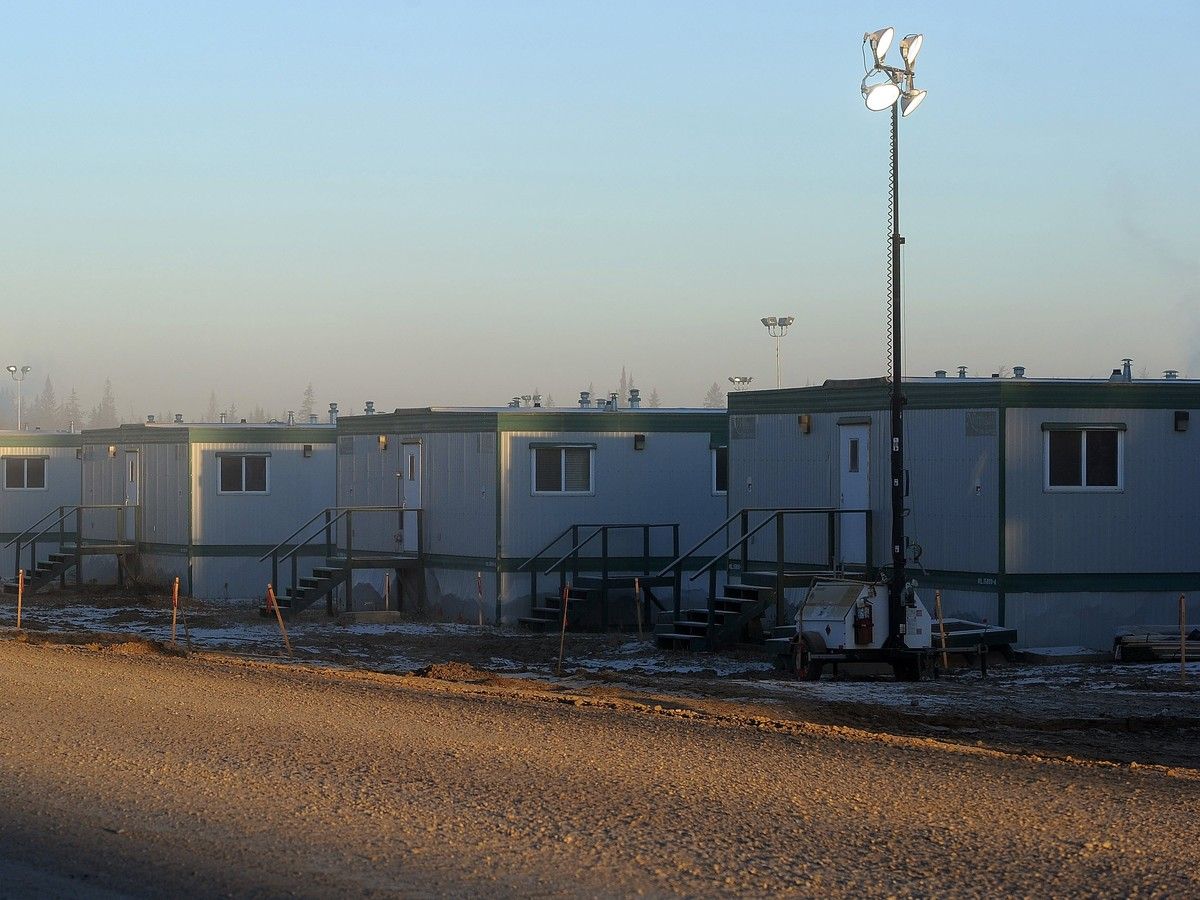
For decades, oilsands companies have relied on fly-in, fly-out (FIFO) workers, who are attracted by premium wages. However, this model has led to concerns about the long-term economic growth of resource-rich regions such as Fort McMurray.
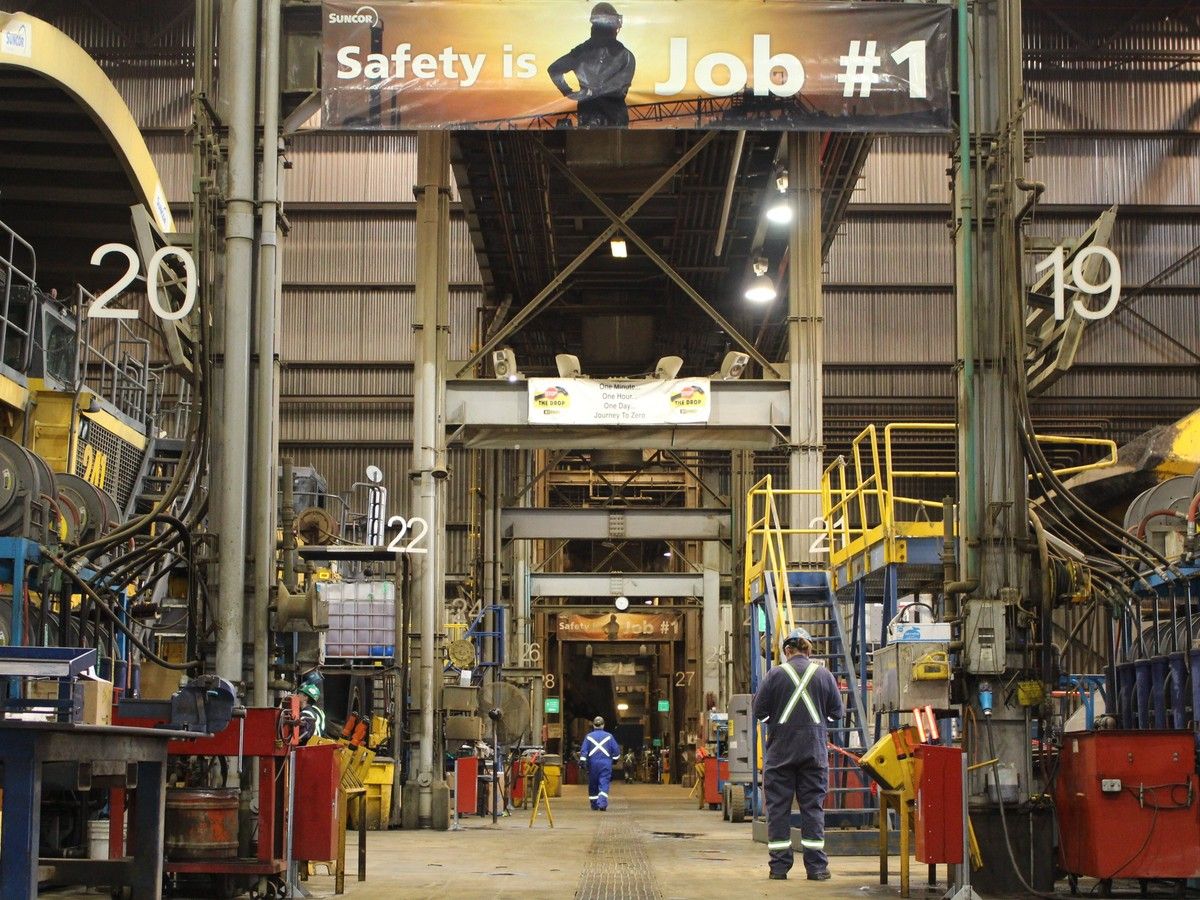
Suncor Energy, one of the largest Canadian petroleum retailers, has announced plans to phase out approximately 200 contractor positions at its Fort McMurray Base plant and Syncrude operations. This move aims to transition to a more localized workforce, supporting fixed plant operations through local employment.
Minister LeBlanc acknowledged that this shift away from FIFO is not unique to Fort McMurray and is happening across the country. He also praised Suncor’s efforts to work with local and provincial authorities to increase the number of residents in the area.
Local Government Encourages Workforce Localization
The Regional Municipality of Wood Buffalo (RMWB) has been encouraging oilsands companies to prioritize local workers for over a year. RMWB Mayor Sandy Bowman highlighted that Suncor has been the most receptive to these initiatives, with other companies such as Imperial Oil and Canadian Natural Resources (CNRL) also showing interest.
According to Bowman, around 600-800 Suncor workers have already moved out of camps to live locally. He expressed support for this initiative, noting that it aligns with the goal of building stronger local communities rather than relying on temporary work camps.
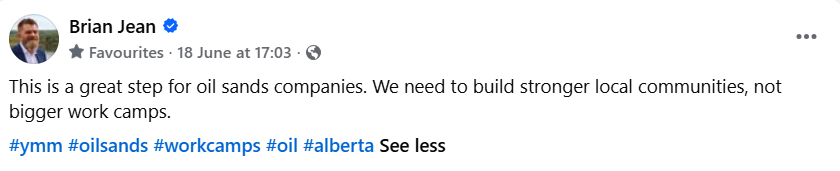
Energy Minister Brian Jean, MLA for Fort McMurray-Lac La Biche, echoed this sentiment in a Facebook post, stating that “we need to build stronger local communities, not bigger work camps.”
Supporting the Transition to Local Residency
Minister LeBlanc emphasized that economic development is the responsibility of local and municipal governments working with companies like Suncor. He noted that the federal government is not involved in this process, but the Government of Alberta is encouraging other provinces to follow suit.
Fort McMurray has seen significant developments in recent years, including the construction of a Walmart supercentre and Home Depot, as well as a state-of-the-art ice arena set to open in early 2027. The RMWB has also indicated that land is available and “shovel ready” for additional infrastructure, including housing, if needed.
Mayor Bowman expressed confidence in the municipality's ability to make Fort McMurray an attractive place for people to live. He highlighted the region's low property taxes, high disposable income, and strong infrastructure as key advantages.
Challenges and Opportunities Ahead
With an increasing population and delayed infrastructure projects, questions remain about whether current residents believe the municipal government can ensure favorable living conditions for those moving to the area. However, Bowman remains optimistic, emphasizing that the goal is to create a community where people want to live.
As the region transitions from a FIFO workforce to a more localized one, the success of this shift will depend on continued collaboration between local authorities, businesses, and the community.
Post a Comment for ""Unscrambling an Omelette": Canada-US Trade Minister Comments Ahead of CUSMA Review"