
Why No US Airlines Fly Nonstop to Thailand?
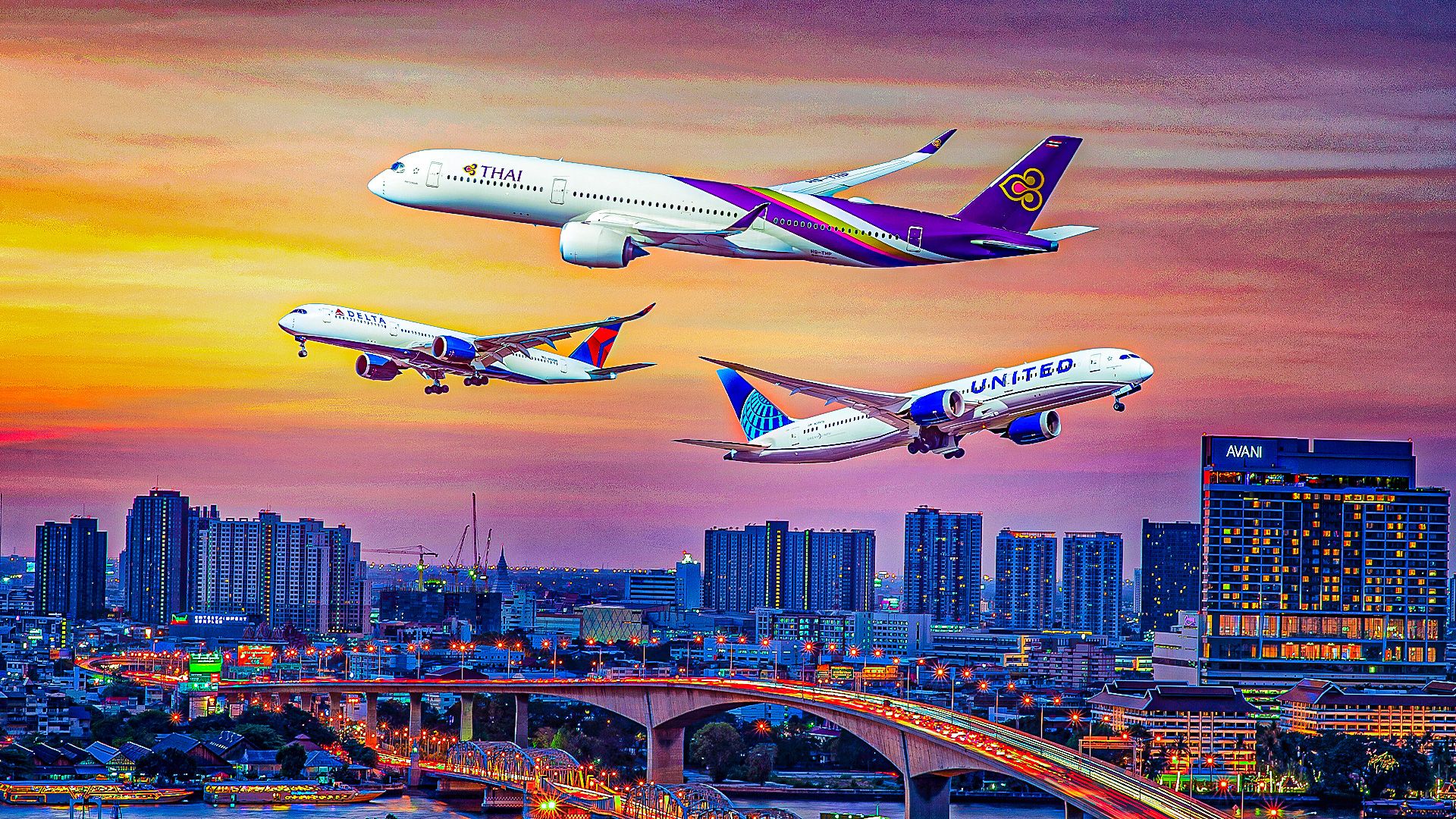
Thailand has long been a top destination for international travelers, drawing over 35 million visitors in 2024. While the largest sources of tourists come from China and India, the country is gaining traction among U.S. travelers who are drawn to its rich culture, diverse cuisine, and stunning landscapes. Despite this growing interest, there are currently no direct flights between the United States and Thailand. This article explores the reasons behind the absence of nonstop services, examines alternative travel options, and considers the potential for future direct flights.
Thailand's Safety Rating and Its Impact
In 2015, the U.S. Federal Aviation Administration (FAA) downgraded Thailand’s air safety rating from Category 1 to Category 2 after an audit found non-compliance with International Civil Aviation Organization (ICAO) standards. This move effectively barred Thai airlines from operating direct flights to the U.S. However, in April 2025, Thailand regained its Category 1 status, opening the door for more direct connections.
United Airlines took advantage of this change by launching a one-stop service from Los Angeles International Airport (LAX) to Bangkok Suvarnabhumi International Airport (BKK), with a stop in Hong Kong. The route, operated using Boeing 787-9 aircraft, began in October 2025. Alongside this, the airline also introduced new services to Ho Chi Minh City and Adelaide, emphasizing its commitment to expanding global connectivity.
Why No Nonstop Flights Yet?
Despite the improved safety rating, nonstop flights from the U.S. to Thailand remain rare. One key reason is the low-yielding nature of the route. Unlike destinations such as Singapore, which attract significant business traffic, most U.S.-to-Thailand flights are for leisure or visiting friends and relatives—markets that are typically price-sensitive. This makes it challenging for airlines to justify the high costs associated with ultra-long-haul flights.
The distance between Los Angeles and Bangkok is 8,269 miles, placing it firmly in the ultra-long-haul category. These routes require substantial fuel and crew expenses, and the aircraft is away from its base for extended periods. Ultra-long-haul services are generally viable only between major business hubs that can support premium passenger demand.
Examples of successful ultra-long-haul routes include Singapore Airlines’ Airbus A350-900ULR service between Singapore Changi Airport (SIN) and John F. Kennedy International Airport (JFK), and Qantas’ nonstop flight between Perth Airport (PER) and London Heathrow Airport (LHR). To make a U.S.-to-Thailand route profitable, airlines would need to attract more premium travelers.
Previous Flights and Current Options
Thai Airways previously operated direct flights from Bangkok to both Los Angeles and New York. These routes used the Airbus A340-500, which provided extra legroom for passengers. However, the aircraft was not fuel-efficient, leading to losses on each flight. As a result, the New York route was discontinued in 2008, and the Los Angeles route was rerouted via Seoul in 2012 before being canceled entirely in 2015.
Today, Thai Airways operates more fuel-efficient aircraft, including the Airbus A350 and Boeing 787, which could potentially support nonstop services. The airline plans to expand its fleet further with additional Boeing 787-9s and 787-10s, making such routes more feasible in the future.
Air Canada’s Nonstop Service
Currently, the only carrier offering a nonstop service between North America and Thailand is Air Canada. Its Boeing 787-9 flies three times per week between Vancouver International Airport (YVR) and Bangkok Suvarnabhumi International Airport (BKK), increasing to five times during peak winter months. The shorter distance between Vancouver and Bangkok—7,344 miles—makes this route more financially viable than a Los Angeles-to-Bangkok flight.
Air Canada’s success with this route suggests that nonstop services could be possible if other U.S. carriers see similar demand. However, competition from other carriers and market dynamics will play a role in determining the feasibility of such routes.
Alternatives to Nonstop Flights
For those looking to fly to Thailand from the U.S., there are numerous one-stop options available. United Airlines offers a one-stop service via Hong Kong, while other carriers provide connections through major East Asian hubs like Tokyo and Seoul. Low-cost airlines also offer competitive fares, catering to budget-conscious travelers.
Premium carriers such as Cathay Pacific, Singapore Airlines, and EVA Air provide extensive links to Thailand via their respective hubs. On the return journey, Emirates, Qatar Airways, and Etihad Airways operate services to Thailand through their Middle Eastern hubs. European carriers also serve Bangkok, and Norse Atlantic Airways has launched services from London to the Thai capital.
Future Possibilities
While nonstop flights from the U.S. to Thailand are still a distant prospect, United Airlines remains a strong candidate for introducing such services. As a member of Star Alliance, the carrier could benefit from partnerships with Thai Airways, offering seamless connections throughout Southeast Asia.
If United were to launch nonstop flights, they would likely originate from either Los Angeles International Airport (LAX) or San Francisco International Airport (SFO). LAX has the largest Thai community in the U.S., while SFO serves as a major transpacific hub. Either location could provide the necessary demand to support a profitable nonstop route.
Post a Comment for "Why No US Airlines Fly Nonstop to Thailand?"