
AP Exclusive: Ukraine’s New 'StarGate' Evac Drone Tested Under Fire
A New Era in Battlefield Evacuation: Ukraine’s StarGate Drone Takes Flight
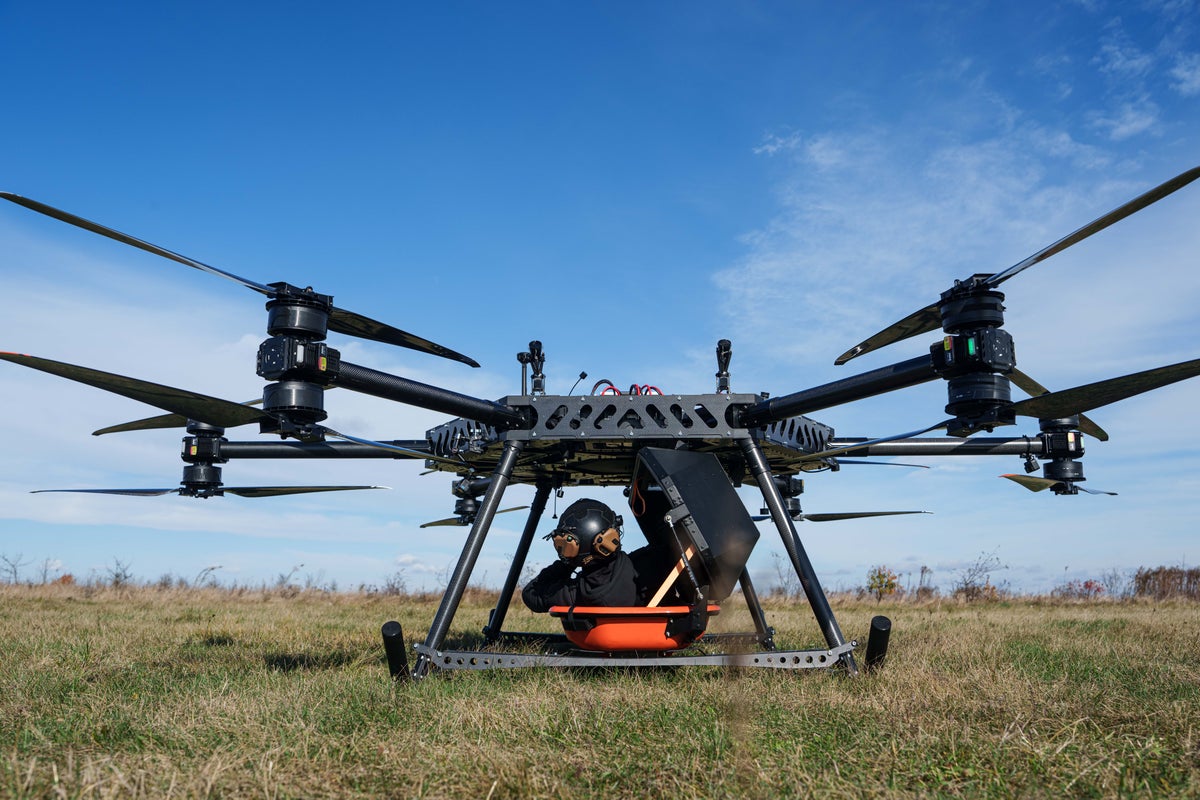
Six propellers spin into motion, lifting a sleek, multirotor drone high above an open field in eastern Ukraine. Suspended beneath its frame is a weighted stretcher, simulating the presence of a wounded soldier clad in full combat body armor. This is no ordinary drone test—this is a glimpse into the future of military medical evacuation on the front lines. The demonstration, captured exclusively by the Associated Press, marks a pivotal moment in Ukraine’s ongoing efforts to innovate under fire. At the heart of this mission is StarGate, a revolutionary aerial evacuation drone developed by Ukrainian defense technology firm SkyFall. If proven effective in real combat conditions, StarGate could redefine how wounded soldiers are rescued from the most dangerous zones—places where traditional ground vehicles and even manned helicopters dare not go.
Now, for the first time, StarGate has been handed over to an active combat brigade for evaluation under actual battlefield scenarios. This transition from lab to frontline is more than just a technical milestone—it represents a strategic shift in military logistics, one driven by the harsh realities faced by Ukrainian troops every day.
Born from the Front Lines
The concept for StarGate didn’t emerge from a boardroom or a research facility. It was born directly from the trenches. “The idea came straight from the front line,” said SkyFall’s spokesperson, who requested anonymity due to security concerns for personnel involved in sensitive defense projects. Speaking to reporters while wearing a balaclava to conceal identity, he emphasized that the need for such a system was not theoretical—it was urgent.
In many sectors along the current front lines, what military forces call the kill zone stretches up to 15 kilometers (9 miles) or more—areas continuously targeted by enemy drones, artillery, and precision strikes. In these regions, moving injured soldiers to safety is not only perilous but often impossible using conventional methods. Ground teams risk their lives simply trying to reach the wounded, especially when roads are cratered, rivers are mined, or entire sections are littered with unexploded ordnance.
“Covering 10 kilometers in minutes would be a drastic change on the front line,” said KVN, a commander within the 475th Separate Assault Regiment, known as Code 9.2. He spoke under his call sign, in accordance with Ukrainian military protocol. “Right now, it can take two to three hours for a ground robot or vehicle to reach a casualty site—sometimes longer, depending on terrain and threats.” For severely injured soldiers, those extra minutes—or even hours—can mean the difference between life and death.
From Request to Reality
The push for StarGate began last year when Flint, the commander of Code 9.2, approached SkyFall’s founder with a clear directive: find a safer, faster way to evacuate the wounded. The regiment had witnessed firsthand the limitations of existing systems. While unmanned ground vehicles have become increasingly common in delivering supplies and retrieving casualties, they struggle with mud, debris, broken infrastructure, and the ever-present threat of drone attacks. Mines and river crossings further limit their mobility.
SkyFall itself emerged in the aftermath of Russia’s full-scale invasion in 2022, rapidly evolving from a small startup into a key player in Ukraine’s defense innovation ecosystem. The company already boasts several successful products, including the Vampire heavy-lift drone—a formidable machine so feared by Russian forces that it earned the nickname “Baba Yaga” in enemy intelligence reports. SkyFall also produces Shrike first-person-view drones and the P1-SUN aerial interceptor, a system designed to neutralize incoming threats.
But StarGate stands apart—not as a weapon, but as a lifeline.
Design and Capabilities: Built for Survival
StarGate is engineered to carry payloads of up to 150 kilograms (330 pounds)—enough to transport a fully equipped soldier in body armor. Its medical evacuation cabin is centered around a standard stretcher, designed to securely hold a casualty during flight. The drone cruises at 65 kph (40 mph) and can accelerate to 105 kph (65 mph), allowing it to cover distances in minutes rather than hours.
According to SkyFall, the drone can be prepared for flight in approximately 10 minutes, making it highly responsive in emergency situations. It is built to operate in extreme weather, including rain and snow, and features thermal-imaging cameras enabling night operations—critical for missions conducted under cover of darkness.
Surviving the Swarm: Testing Against the Real Threats
At the test site, StarGate lifted off amid simulated aerial assaults. First-person-view drones buzzed toward it, mimicking the swarm tactics used by enemy forces. Electronic jamming systems were activated, disrupting communications and GPS signals—conditions commonly encountered on modern battlefields. As one attacking drone closed in, a net deployed from StarGate’s undercarriage, capturing it mid-air and sending it spiraling off course. The encounter resembled a high-speed duel between autonomous machines, a scene straight out of science fiction.
Yet the stakes are far too real. Carrying a human life raises the bar significantly. To ensure reliability in hostile environments, StarGate relies on dual communication channels: Starlink and SkyFall’s proprietary L-Link system. These are backed by an artificial intelligence-driven navigation layer that enables the drone to maintain control even when satellite signals are disrupted, spoofed, or jammed.
If all communication is lost, the drone is programmed to autonomously plot a return path to a safe landing zone. Additionally, SkyFall has demonstrated that StarGate can continue flying safely even after losing one of its six arms—a crucial feature for resilience in combat.
This isn’t just about speed or endurance. It’s about trust. For Ukrainian forces, the ability to reach a fallen comrade in minutes instead of hours could save countless lives—and restore morale in units operating under relentless pressure.
As StarGate prepares for real-world deployment, the world watches closely. Could this be the beginning of a new chapter in military medicine—one where drones don’t just deliver weapons, but carry wounded soldiers home?
Operational Readiness and Early Evaluations
The StarGate drone has officially entered frontline testing, marking a pivotal moment in its journey from conceptual prototype to a potentially transformative tool in combat medical evacuation. However, despite the significant progress, critical gaps remain in publicly available data regarding its resilience under real-world battlefield conditions. The company behind the system has not released performance metrics or stress-test results that would demonstrate how effectively StarGate can endure impacts, extreme weather, electronic interference, or hostile fire. This lack of transparency raises questions about its reliability in high-risk environments where even minor malfunctions could have life-or-death consequences.
Nonetheless, the drone’s transition from lab-based concept to operational asset is notable. Over the past several months, StarGate has undergone a series of iterative design improvements aimed at enhancing both functionality and deployability. Among the most significant upgrades are detachable arms, which allow for easier disassembly and transport—crucial for rapid deployment across rugged terrains and remote zones. These modular components can be quickly reassembled on-site, reducing logistical burdens during emergency operations.
Another key enhancement involves the integration of a medical-grade stretcher capable of securely transporting injured personnel without compromising their stability. Designed with trauma care in mind, the stretcher features shock-absorbing materials, adjustable restraints, and integrated monitoring ports for vital signs, enabling continuous health tracking during transit. This feature sets StarGate apart from traditional evacuation methods, where movement and jostling often exacerbate injuries.
In addition to physical redesigns, the drone’s software architecture has been significantly upgraded. Advanced AI-driven navigation systems now allow for autonomous route planning, obstacle avoidance, and dynamic rerouting based on real-time environmental feedback. Cybersecurity measures have also been reinforced to prevent hijacking or signal jamming—a growing concern in modern warfare where electronic warfare plays a decisive role.
Despite these advancements, cost remains a major consideration. StarGate’s manufacturers estimate that each unit will cost no less than $50,000, with prices varying depending on configuration—such as payload capacity, sensor suite, battery endurance, and additional defensive shielding. The company has set an ambitious production target: up to 1,000 units per month by the end of 2026. Achieving this milestone would require substantial investment in manufacturing infrastructure, supply chain optimization, and workforce training.
Yet, even with these projections, early adopters remain cautious. Lieutenant KVN, a field commander leading one of the first units to test the drone in active operations, emphasized that it is far too soon to assess its true effectiveness. “We’re still learning how to operate it,” he stated. “It’s a completely new method of evacuation—something we’ve never done before. We need at least a month of consistent use before we can begin to evaluate its success rate, reliability, or limitations.”
He added that while the concept holds promise, practical challenges are already emerging. Operators must adapt to new protocols, including drone-handling procedures, communication sequences, and emergency override mechanisms. Training time, equipment calibration, and maintenance schedules are all factors that influence readiness.
SkyFall, the organization overseeing the evaluation process, confirmed that the unit is actively assessing StarGate but declined to share any preliminary findings. Officials cited operational security concerns and the sensitivity of ongoing tests as reasons for withholding details. Nevertheless, they acknowledged that initial feedback has been mixed, with some positive reports on maneuverability and speed, while others highlight issues with battery life and signal latency in dense urban areas.
As the trials continue, experts warn that success will depend not just on technology, but on seamless integration into existing military doctrines and medical response frameworks. The ultimate test lies ahead: whether StarGate can deliver wounded soldiers to safety faster, safer, and more efficiently than conventional methods—especially in contested or heavily damaged zones where human medics face extreme danger.
Post a Comment for "AP Exclusive: Ukraine’s New 'StarGate' Evac Drone Tested Under Fire"