
Black Hills Road Woes: Closures and Utility Work Ahead in Rapid City This Week
Major Infrastructure Projects Underway Across Rapid City and Western South Dakota
Drivers throughout the Rapid City area and western South Dakota are encountering a wave of construction activity as multiple road, water system, and airport improvement projects move forward. These efforts, aimed at enhancing safety, durability, and efficiency across the region’s transportation network, come with temporary disruptions including lane closures, detours, and restricted access. However, officials emphasize that these upgrades are critical for long-term infrastructure resilience and improved travel conditions.
Water Line Repairs on East Omaha Street Set to Begin
Beginning September 21 and continuing through September 28, Rapid City crews will undertake essential repairs to a water line located at the intersection of East Omaha Street and Lacrosse Street. 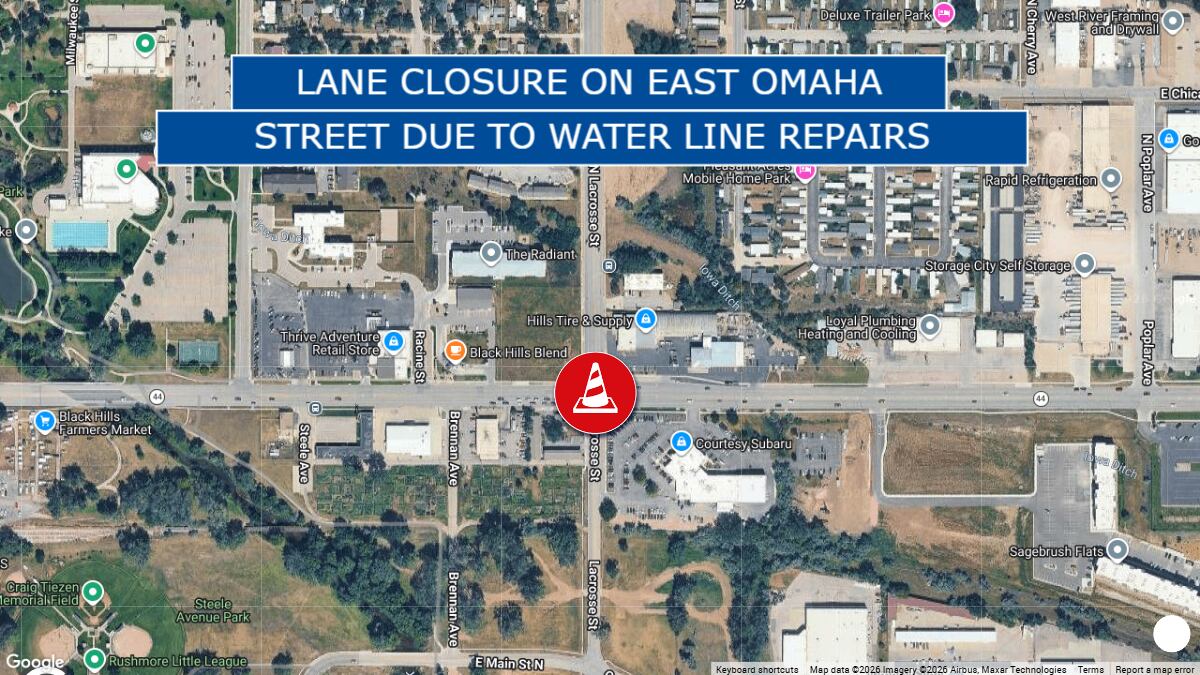 The project is expected to involve significant work in the northernmost westbound lane of East Omaha Street, which will be closed during the repair period.
Residents and commuters should anticipate delays and exercise caution while traveling through the area. Work zones will feature flaggers and signage to guide traffic safely around active construction sites. Importantly, city officials have confirmed that nearby homes and businesses will not experience interruptions in water service during the repair window. This ensures continuity for daily operations while the underlying utility infrastructure is stabilized and modernized.
Stumer Road Closure for New Water Main Installation
In southwest Rapid City, drivers should prepare for detours starting September 22 as Catamount Constructors begins installing a new water main along Stumer Road. 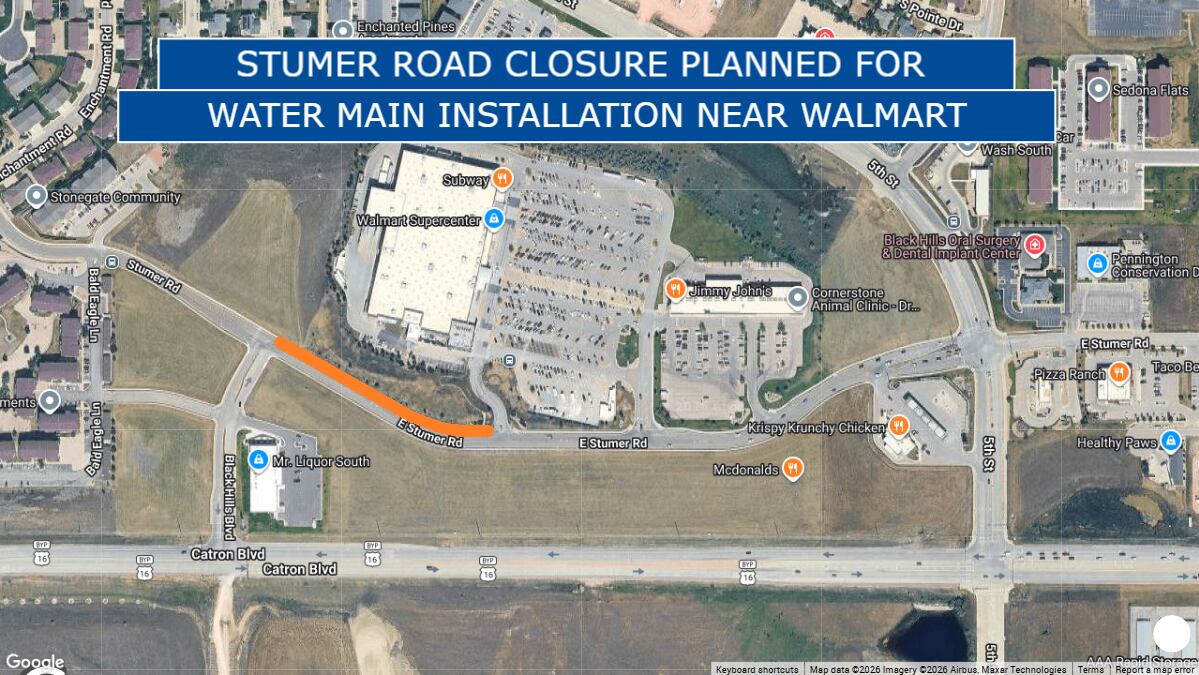 The project involves demolition, excavation, and the laying of new piping to improve water delivery capacity and reliability in the growing neighborhood near Walmart.
Initially, the westbound right lane will be closed, with traffic redirected into the center lane to maintain two-way flow. This phase is expected to conclude by September 25. A more significant closure will follow: Stumer Road will be fully shut down between Black Hills Boulevard and the south entrance to the Walmart parking lot. Alternative routes will be directed via Catron Boulevard and Fifth Street to keep traffic moving efficiently.
Additionally, the sidewalk within the construction zone will be closed for safety reasons. The entire project is scheduled for completion by October 1, with minimal impact on surrounding communities once completed.
Luna Avenue Reduced to One Lane During Asphalt Replacement
On Wednesday, September 23, Luna Avenue will be temporarily restricted to one lane in each direction as Iron Horse Excavating replaces a deteriorated section of asphalt pavement. 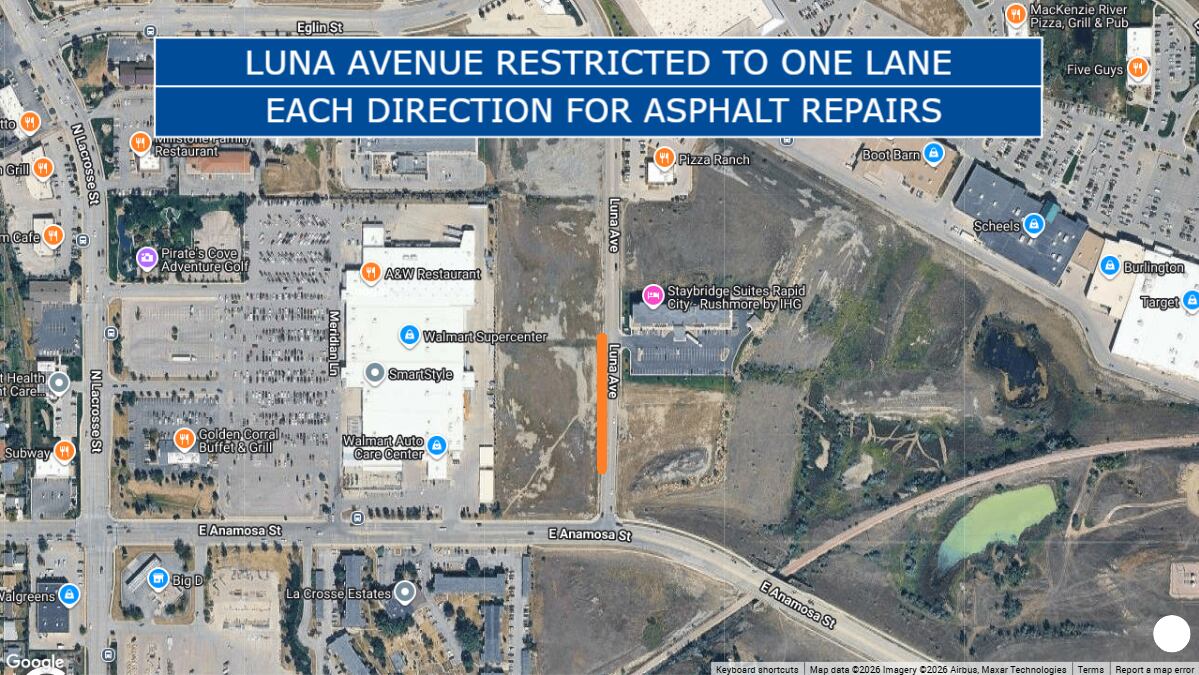 The work is scheduled to begin and finish on the same day, minimizing the duration of disruption.
Although the project is short-term, drivers are urged to slow down, remain alert, and allow extra time when passing through the area. Construction crews will be working closely with local authorities to ensure traffic remains manageable. For questions or concerns about the project, residents can contact Ashley Ankele at Iron Horse Excavating directly at 605-355-0045.
Temporary Ramp Closure for Viaduct Work Beneath Campbell Street
A brief but impactful closure is also planned near the ongoing Campbell Street viaduct project. Beginning Thursday, September 24, the northbound ramp from St. Joseph Street—located beneath the viaduct structure—will be closed for a single day to allow crews to complete critical understructure work. 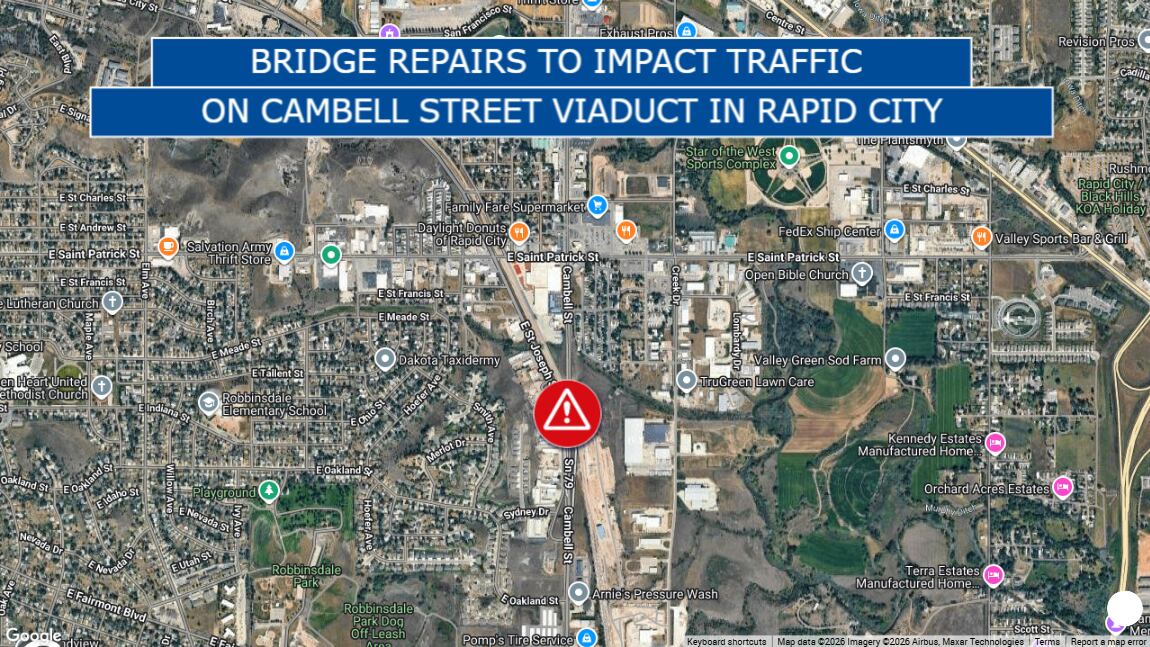 The ramp is expected to reopen by the end of Friday, September 25.
During this time, traffic on the viaduct itself will remain limited to one lane in each direction, with a reduced speed limit of 30 mph enforced throughout the work zone. Drivers should expect slower-moving traffic and potential backups, particularly during peak commute hours in the morning and evening.
The $596,000 viaduct enhancement project is being executed by J.V. Bailey Inc. of Rapid City. While the immediate scope of work wraps up soon, the overall viaduct project is slated for full completion on May 28, 2027. Contractors anticipate finishing their portion of the work by mid-October 2026.
For real-time updates on all current road conditions, construction alerts, and closures, travelers are encouraged to consult South Dakota’s 511 system—a reliable resource for navigating dynamic traffic environments.
Highway Resurfacing Project Completed in Meade County
A major milestone has been achieved in Meade County, where a comprehensive highway resurfacing initiative has now been completed. The project focused on key stretches of Highway 34 near Howes and Highway 73 south of Faith. 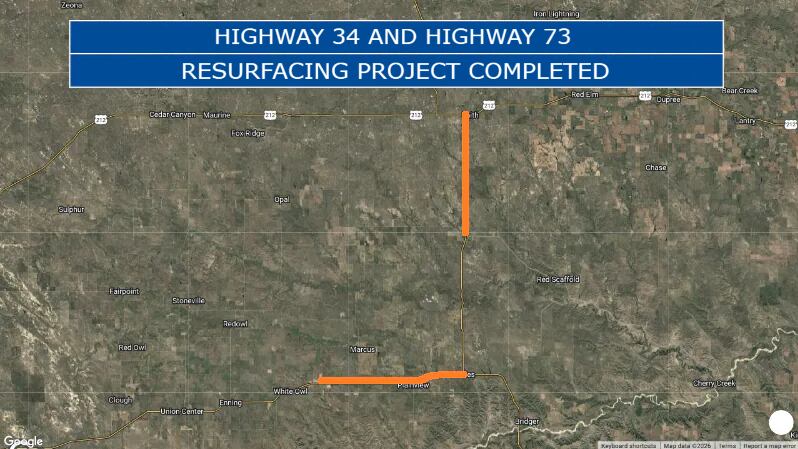 Crews undertook extensive rehabilitation, including full resurfacing, repair of areas affected by fault heaves (ground movement), shoulder widening and paving, and drainage pipe rehabilitation.
Final tasks such as repainting pavement markings and sealing culvert joints were completed by September 18, according to the South Dakota Department of Transportation. These improvements collectively deliver smoother driving surfaces, wider shoulders for emergency stops, and enhanced drainage systems designed to prevent future deterioration. The upgrades aim to reduce long-term maintenance costs and increase safety for rural travelers.
State Expands Airport Funding Flexibility for Terminal Upgrades
Beyond roadwork, state leaders are making significant strides in supporting aviation infrastructure. The South Dakota Aeronautics Commission recently approved sweeping changes to its funding policy during its September meeting, expanding support for commercial-service airport terminal projects.
Under the new framework, state funding for eligible public, non-revenue-generating portions of terminal buildings—such as lobbies, restrooms, and administrative spaces—will now be determined by a tiered percentage formula based on project size. Depending on scope, the maximum state contribution can range from $250,000 to $4 million.
Additionally, the commission increased the state match rate for public airport grants. Most airports across the state will now receive a 7% state match, up from the previous 5%. Notably, Rapid City Regional Airport and Sioux Falls Regional Airport will continue to receive a 5% match due to their status as larger commercial hubs.
This shift empowers smaller communities to pursue ambitious terminal upgrades with greater financial flexibility, promoting economic growth and improved air connectivity across the state.
Enhancing Support for Smaller Airports Across South Dakota
The recent policy adjustments implemented by South Dakota’s state transportation officials mark a significant shift in how the state approaches aviation infrastructure development. These changes are specifically designed to empower smaller, rural airports—often critical lifelines for remote communities—by offering them greater access to funding, planning flexibility, and technical assistance. By reevaluating long-standing allocation models and streamlining application processes, the new framework ensures that even the most modest airfields can participate meaningfully in statewide aviation improvements.
One of the core goals of the updated policies is to level the playing field between large commercial hubs and small regional or general aviation airports. Historically, a disproportionate share of funds has flowed toward major airports with higher passenger volumes. While these facilities remain essential, the revised strategy recognizes that smaller airports play an equally vital role in emergency response, medical evacuations, agricultural transport, and connecting isolated towns to broader regional networks. With the new guidelines, smaller airports now have clearer pathways to apply for grants and receive priority consideration for projects that improve safety, accessibility, and operational efficiency.
Greater Flexibility in Planning and Development
A key component of the reform is increased flexibility in how communities approach airport improvement projects. Under the previous system, many local governments faced rigid requirements around project scope, timelines, and eligibility criteria. This often discouraged participation from smaller airports with limited staff or budget capacity. The updated rules now allow for phased development plans, modular upgrades, and more adaptive use of federal and state funds.
For example, a rural airport might now initiate a runway surface repair before pursuing a full-length lighting system upgrade, tailoring its investment strategy to immediate needs and available resources. Similarly, airports can combine multiple smaller projects into a single funding request, reducing administrative burden and increasing approval chances. This shift not only accelerates progress but also encourages innovation in infrastructure planning.
- Modular Project Approvals: Smaller airports can now submit standalone applications for specific upgrades—like signage improvements or taxiway repaving—without needing to propose an entire master plan upfront.
- Phased Implementation: Projects can be broken down into stages, allowing communities to begin work immediately on high-priority items while securing additional funding for later phases.
- Enhanced Technical Assistance: State agencies will provide dedicated support teams to help smaller airports navigate grant applications, conduct feasibility studies, and prepare environmental assessments.
Financial Sustainability and Long-Term Vision
While expanding access to support, officials have emphasized the importance of maintaining the financial health of the state’s aeronautics fund. The reforms were developed through extensive consultation with fiscal experts, airport operators, and stakeholders across the state. Careful modeling was conducted to ensure that increased disbursements to smaller airports do not compromise the fund’s ability to meet future obligations or respond to unforeseen challenges such as extreme weather events or economic downturns.
To reinforce sustainability, the new framework includes performance-based funding metrics. Airports must demonstrate measurable outcomes—such as improved safety records, increased flight operations, or enhanced community connectivity—to qualify for continued support. This accountability mechanism ensures that public investments deliver tangible benefits and align with broader transportation goals.
Moreover, the state is exploring partnerships with private entities and nonprofit organizations to leverage additional resources. Public-private collaborations could bring in new technologies, such as solar-powered lighting systems or advanced weather monitoring tools, which would otherwise be cost-prohibitive for smaller facilities.
A Broader Impact on Rural Communities
The ripple effects of these policy changes extend far beyond the tarmac. Reliable air service supports healthcare delivery, enables faster response during natural disasters, and strengthens economic ties between rural areas and urban centers. For instance, a small airport in western South Dakota recently used upgraded facilities to facilitate emergency medical flights during a winter storm, saving lives when ground transportation became impossible.
These developments underscore a growing recognition that aviation infrastructure is not just about air travel—it’s about resilience, equity, and opportunity. By investing in the smallest airports, the state is laying the foundation for a more inclusive and robust aviation network.
As South Dakota continues to refine its approach, officials remain committed to ongoing stakeholder engagement. Future updates may include expanded data-sharing platforms, real-time tracking of project milestones, and digital dashboards for public transparency. Ultimately, the goal is clear: to create a smarter, fairer, and more sustainable aviation system that serves every corner of the state.
Post a Comment for "Black Hills Road Woes: Closures and Utility Work Ahead in Rapid City This Week"