The Evolution of Luxury: How Sotheby’s International Realty Redefined Wealth in the Digital Age
Luxury once wore its status on its sleeve—bigger homes, prestigious addresses, and price tags that spoke volumes. These were clear, unambiguous signals of affluence. But as the world has evolved, so too has the definition of what it means to be wealthy. Today, luxury is less about conspicuous display and more about alignment with personal values, lifestyle, and authenticity. This shift isn’t just a trend—it’s a cultural transformation driven by technology, generational change, and an insatiable appetite for meaningful experiences.
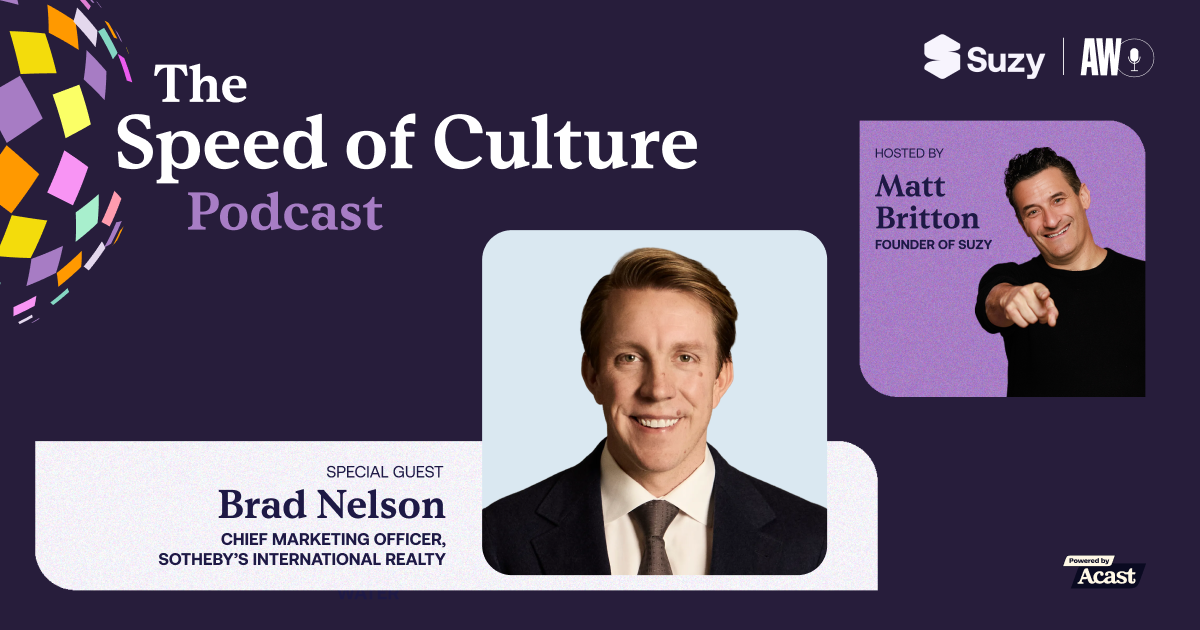
At the heart of this transformation is Sotheby’s International Realty, a brand that has stood at the intersection of real estate, art, and culture for over five decades. In a recent episode of The Speed of Culture Podcast, Brad Nelson, Chief Marketing Officer of Sotheby’s International Realty, offered an insider’s perspective on how the company has not only survived but thrived amid these seismic shifts.
Staying Relevant by Knowing Who You’re Not
One of the most powerful lessons from Brad’s leadership journey is that longevity comes not from trying to appeal to everyone, but from staying fiercely focused on who you are. Sotheby’s International Realty has deliberately chosen not to be everything to everyone. Instead, it has doubled down on quality, uniqueness, and storytelling—values that transcend mere square footage or market value.
“We’ve stayed culturally relevant because we’ve been disciplined,” Brad explains. “We don’t chase every trend. We stay true to our core identity: exceptional properties, exceptional people, exceptional stories.”
This focus allows the brand to stand out in a crowded marketplace where many competitors blur the lines between luxury and mass-market appeal. For marketers across industries, this is a critical takeaway: clarity of purpose fuels trust, and trust fuels loyalty.
Lifestyle First, Property Second
Gone are the days when a home was simply a trophy. Today’s affluent buyers—especially younger generations—are approaching real estate through a different lens. They aren’t asking, “What’s the biggest house I can afford?” Instead, they ask, “What kind of life do I want to live?”
Brad notes that factors like commute time, access to nature, proximity to cultural hubs, and even neighborhood vibe now weigh heavily in decision-making. A property isn’t just a place to live—it’s a platform for living.
“They define the lifestyle first, then find the home that supports it,” he says. “It’s a reverse process from the past.”
This mindset shift demands a new kind of real estate marketing—one that doesn’t just showcase a kitchen or a backyard, but tells the story of a morning coffee in a sunlit kitchen, a weekend hike just steps from the front door, or a vibrant community that fosters connection.
The Power of Human Insight Over Data
In an age where AI and big data dominate business strategy, Brad emphasizes that the best market signals often come from human conversations—not spreadsheets.
Sotheby’s International Realty identified a resurgence in San Francisco’s luxury market long before public sales data reflected it. How? By listening directly to their network of top-tier advisors who were already seeing increased activity in $10 million-plus transactions.
This feedback loop is embedded into the company’s twice-yearly Luxury Outlook Report, which blends qualitative insights with quantitative analysis. The lesson? The people closest to the customer—real estate agents, private bankers, lifestyle consultants—often see changes before they appear in the numbers.
Marketing Luxury Is About Desire, Not Necessity
There’s a fundamental truth in luxury marketing: no one needs a $5 million home. That makes the category inherently emotional. And emotions drive decisions.
Sotheby’s understands this deeply. Their campaigns prioritize cinematic visuals, evocative storytelling, and immersive content—because the goal isn’t to explain why someone should buy a home, but to help them imagine themselves living in it.
“You’re not selling a product,” Brad says. “You’re inviting someone into a dream.”
High-quality photography, video tours, and narrative-driven content create emotional resonance. They don’t list features—they evoke feelings.
Trust Still Wins the Deal
Despite the rise of social media, algorithms, and digital advertising, Brad insists that trust remains the final gatekeeper in high-value transactions.
The brand has invested heavily in platforms like YouTube and Instagram to build awareness and credibility with younger audiences. But when it comes time to make a decision worth millions, buyers still turn to people they know and trust.
“Social media shapes perception,” Brad notes. “But relationships determine who gets the call.”
This paradox underscores a vital truth: while digital tools open doors, human relationships close deals. The ability to connect authentically—whether through a shared passion for architecture or a mutual appreciation for local culture—remains irreplaceable.
The New Marker of Luxury: Human Connection
As artificial intelligence becomes more capable of delivering information, the scarcity of genuine human connection grows. Sotheby’s 50th-anniversary campaign, Well Connected, celebrates this idea.
One standout example? The sale of Julia Child’s former home in Provence. Thanks to the global network of Sotheby’s advisors, the property wasn’t just sold—it became a cultural moment. Local knowledge, cross-border collaboration, and deep personal relationships turned a single listing into a legacy story.
In a world where information is abundant, what becomes truly valuable is the human touch—the advisor who knows your taste, the agent who remembers your favorite coffee, the broker who introduces you to someone whose life aligns with yours.
Celebrating 50 Years of Refined Living
To mark half a century of excellence, Sotheby’s International Realty launched a new advertising campaign centered on decades of trusted relationships. Complementing this is The Art of Refined Living, a stunning visual book created in collaboration with Assouline. It captures the brand’s heritage through extraordinary homes, architectural masterpieces, and defining cultural moments—proving that luxury is not just about where you live, but how you live.
As the world continues to change, one thing remains constant: the enduring power of connection, craftsmanship, and meaning. And in that space, Sotheby’s International Realty continues to lead—not by chasing trends, but by staying true to what truly matters.
Leave a Reply