
Why Spend $6,500 on a Wheelset When $1,399 Delivers Nearly the Same Performance?
The $6,500 Wheelset That’s Not Just About Performance
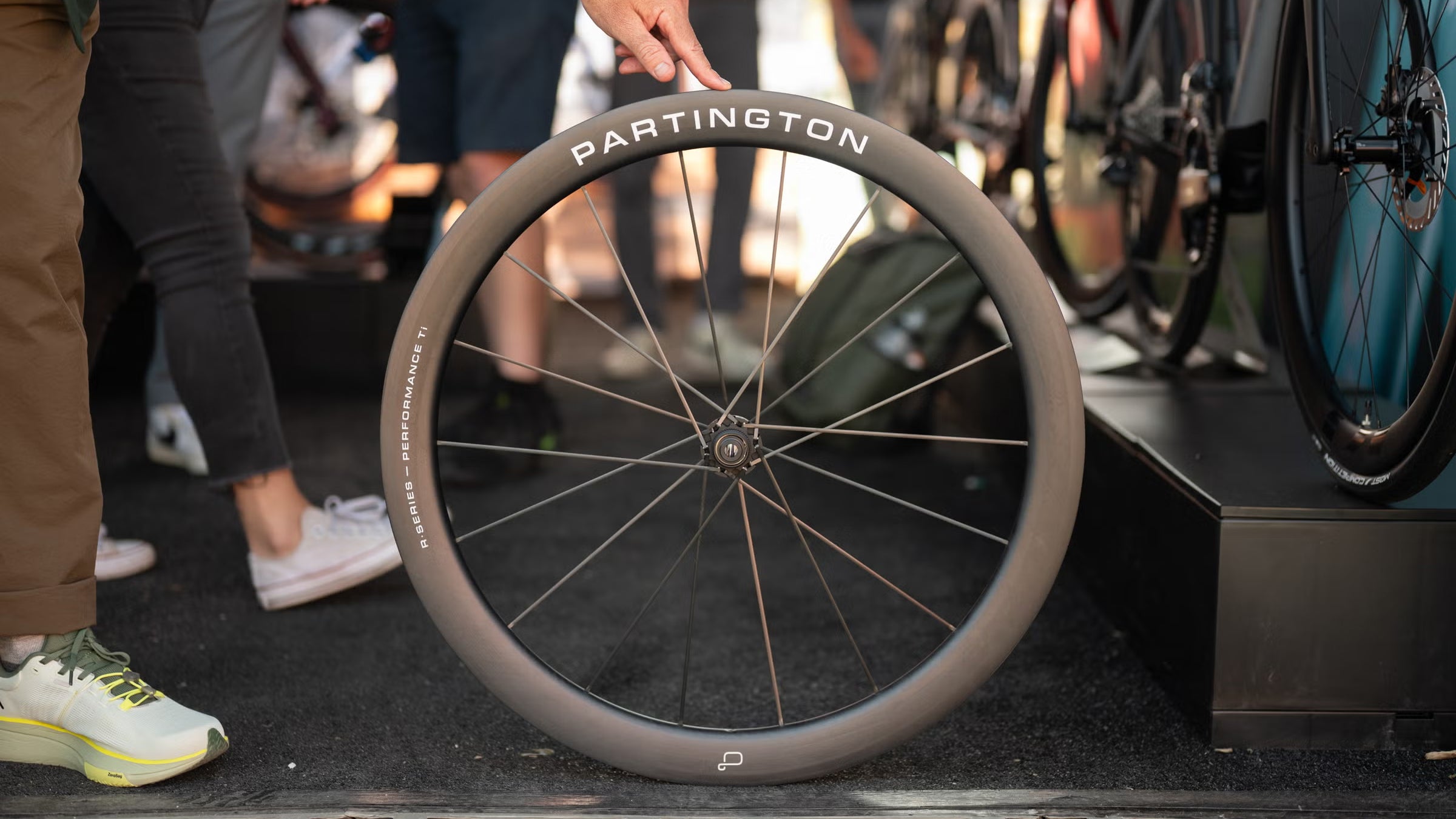
When Tom Pidcock rolled into the start line at the UCI Road World Championships wearing a set of wheels with a striking white logo few had ever seen—let alone ridden—the cycling world stopped to take notice. These weren’t just any wheels. They were Partington R-Series Performance Ti wheels, priced at a staggering $6,500, and they immediately sparked conversation across forums, social media, and coffee shop debates on group rides. While many riders were dazzled by the sheer audacity of the price tag, those in the industry recognized the name instantly. I’d personally spoken with Partington a full year earlier about these exact wheels, long before they appeared on Pidcock’s bike. At the time, I already knew two things: these wheels were among the most expensive in the market, and they were also among the rarest.
But what truly intrigued me wasn’t just their cost or scarcity—it was the story they told. In an era where high-performance carbon wheels are available for as little as $1,300, and where Chinese manufacturers are producing gear that matches—or even surpasses—many Western benchmarks, why would anyone spend nearly five times more on a wheelset? The answer lies not in raw performance alone, but in something far more subtle: marketing, perception, and brand storytelling.
A Benchmark in Engineering (and Marketing)
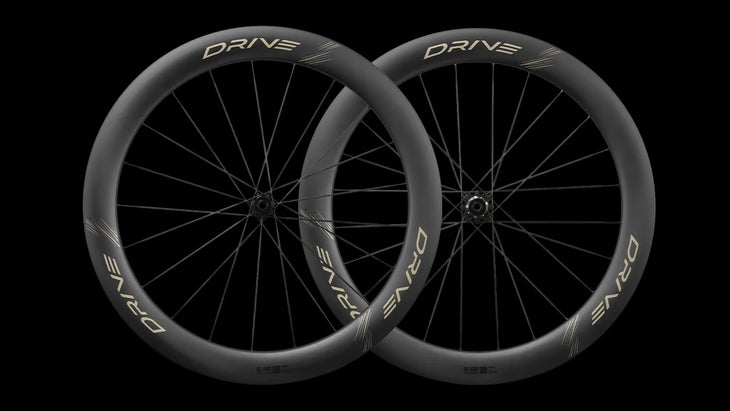
The Partington R-Series Performance Ti in 65mm depth is almost certainly the wheelset Pidcock used at Worlds. There’s a slim chance it could be the 50mm version—though without close-up access to his bike, we can’t confirm—but for this discussion, the 65mm model stands out as the more compelling example. Its specs are nothing short of extraordinary:
- 65mm rim depth
- Sealed rim bed
- 23mm internal width
- 34mm external width
- Weight: 1,265 grams
These numbers aren’t just impressive—they’re borderline surreal. Only a handful of wheelsets in existence come close to matching this combination of depth, width, and weight. Even Zipp’s flagship 454 NSW, which Pidcock uses on his Pinarello-Q 36.5 team bike, falls short: it’s shallower and roughly 100 grams heavier. So if you’re looking for the ultimate blend of aerodynamics, stiffness, and lightness, the Partingtons appear to be at the top of the pyramid.
Yet here’s the paradox: if performance is the only metric that matters, then why not go with a much cheaper alternative?
The Rise of Chinese Competition
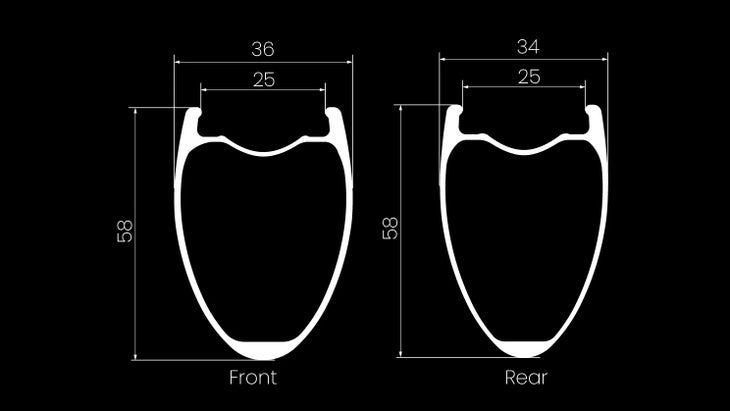
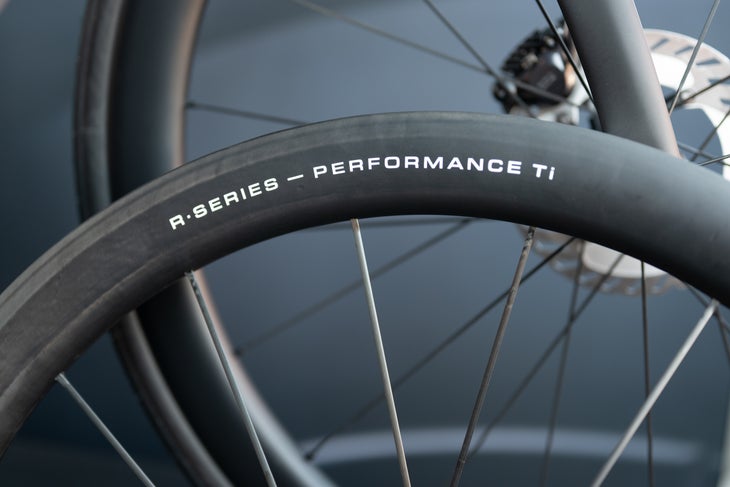
Enter Elitewheels, a rising star in the Chinese cycling component scene. Their Drive SL 58D CS wheelset retails for just $1,399—a fraction of the cost of the Partingtons. But let’s look closer at what you actually get:
- 58mm depth
- 25mm internal width
- 36mm front / 34mm rear external width
- 1,330 grams
Yes, the Elitewheels set is slightly heavier and less deep than the Partingtons—but it’s incredibly close in every other way. And while you may need to tape the rim bed yourself (a minor inconvenience), the cost savings are undeniable. You could wipe off excess sealant with a $100 bill and still come out ahead.
Elitewheels isn’t alone. Brands like Niner, Vittoria, and countless others from China are now offering frames, wheels, and components that rival—and sometimes exceed—the quality of established Western brands, all at a fraction of the price. This shift has disrupted the entire industry, forcing traditional manufacturers to reevaluate their pricing models and value propositions.
The Real Game: How Do You Sell a $6,500 Wheelset?
So how do you justify a $6,500 wheelset when a near-identical product exists for under $1,500? The answer lies not in the material or the engineering—but in the narrative.
Look at the websites. The Elitewheels site presents its Drive SL 58D CS as a clean 3D render on a plain black background. A few angles, a measurement diagram, and that’s it. No lifestyle imagery. No hero shots of cyclists conquering alpine passes. No high-tech lab footage showing wind tunnel testing. It’s minimal. Functional. Almost clinical.
Now contrast that with Partington’s website. From the moment you land on the homepage, you’re greeted with a dramatic image of a rider in a breathtaking landscape—real, cinematic, aspirational. Then come the actual photos of the wheels, detailed descriptions, and a rich backstory explaining what makes them special.
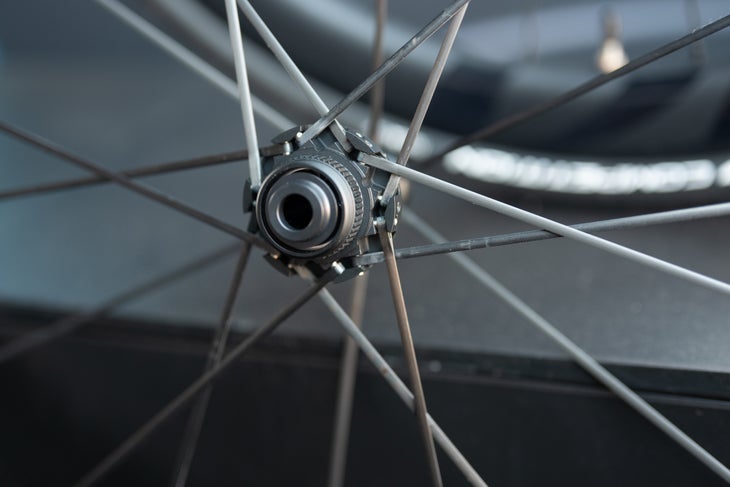
Take the spokes: both use carbon fiber, but Elitewheels simply calls them “carbon spokes.” Partington, on the other hand, introduces “FLEXON” carbon spokes, complete with a technical breakdown of the carbon weave and manufacturing process. Sounds impressive, right? Except FLEXON is likely just a branded term for standard carbon fiber—nothing revolutionary.
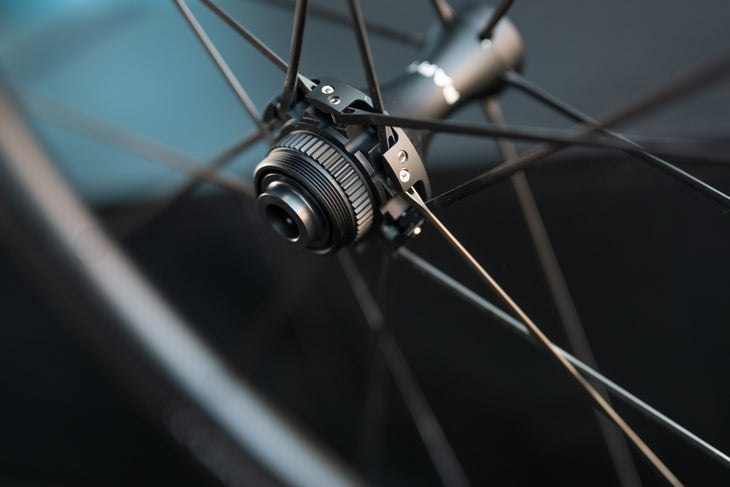
Even the hubs tell a story. Both are titanium, but Elitewheels describes theirs as a “one-piece titanium freehub” with “instant engagement.” Partington? Their hub is called the “PERFORM hub,” engineered using “detailed Finite Element Analysis (FEA)” to refine geometry, reduce mass, maintain stiffness, and ensure efficient load transfer.
Wait—doesn’t every major manufacturer use FEA? Yes. But the language makes it sound like a proprietary breakthrough. And that’s exactly the point.
Packaging as Prestige
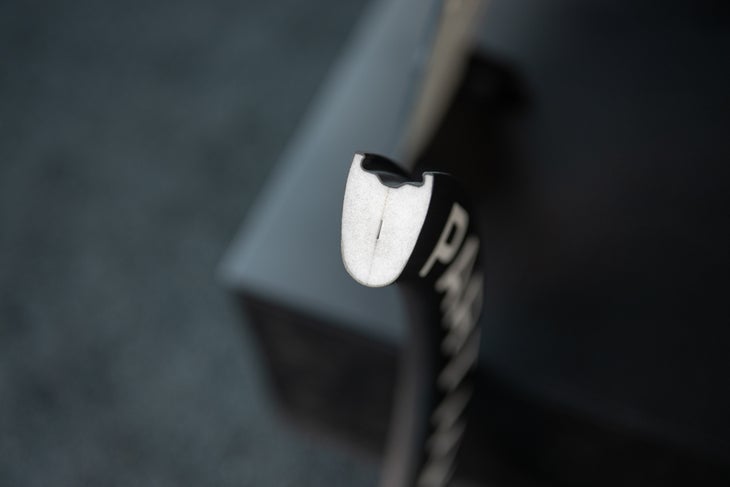
And then there’s the packaging. While most consumers wouldn’t care, Partington goes all out:
“Wheels are packed individually in lithographically printed telescope-style boxes featuring a matte cellophane finish with spot UV varnish. Each wheel is held securely in a vacuum-molded insert.”
As someone who spent over a decade designing print materials, I know exactly what this means. It’s premium. It’s tactile. It feels exclusive. To the average buyer, it’s meaningless—unless you’re trained to read between the lines. But that’s the magic: you either pretend to understand it, or you believe it must be worth every penny.
In the end, the Partington R-Series isn’t just selling wheels. It’s selling a dream. A sense of exclusivity. A feeling of being part of something elite. And in a world where performance is increasingly democratized, that’s the real edge.
The Art of the Narrative: Why Storytelling Defines Luxury in Cycling
When you step into the world of high-end cycling components, performance is no longer just about speed, weight, or aerodynamics. It’s about identity. It’s about belonging to a narrative—one that transcends engineering and dives deep into heritage, craftsmanship, and emotional resonance. This is precisely what brands like Partington are doing with their R-Series wheels: they’re not selling a product; they’re offering an experience, a lifestyle, and a story.
The absence of detailed packaging information from Elitewheels isn’t a flaw—it’s intentional. In the luxury market, the unboxing moment is part of the ritual. You don’t need to be told how it’s packed because the act of receiving it already carries meaning. That silence speaks volumes. It signals exclusivity, anticipation, and a sense of privilege. You’re not just getting a wheel—you’re being invited into something rare.
Partington doesn’t just sell performance; it sells the promise of performance. And in doing so, it mirrors the marketing genius of brands like Lamborghini—not because its wheels go faster, but because they make you feel like you’re driving something extraordinary. Even if your daily commute doesn’t require 100 mph acceleration, the psychological thrill of owning a piece that could achieve it is real. This isn’t about practicality. It’s about aspiration.
But here’s where things get interesting: once the performance foundation is laid, the real magic begins. That’s when the brand shifts gears—from specs to soul. You’re not buying a carbon fiber rim from a factory line. You’re investing in a handcrafted artifact made by a visionary founder in Australia. It’s functional art. It’s wearable design. It’s a statement on individuality, ambition, and passion.
And that brings us to a crucial truth: art is not priced by material cost. A painting in a museum isn’t valued because of the price of paint or canvas. It’s valued because of the artist’s reputation, the cultural moment it represents, and the story it tells. The same applies to premium bike wheels. The value isn’t in the grams saved or watts gained—it’s in the narrative behind the product.
This is why Western brands still hold a unique edge in the luxury space. They’ve mastered the art of storytelling. They know that people don’t just buy wheels—they buy into a dream.
The Fall of Rapha: A Cautionary Tale
Yet, this path is fragile. The most powerful example of what happens when a brand betrays its own story is Rapha.
Rapha began as a cult brand built on authenticity—handmade gear, limited runs, a strong community ethos. Its early success wasn’t due to mass appeal, but to exclusivity and emotional connection. Riders didn’t just wear Rapha jerseys; they identified with them.
But then came the pivot: expansion. Wholesale distribution. Overproduction. Discount campaigns. Suddenly, the scarcity model collapsed. The brand lost its aura. Quality declined to meet lower price points. What was once a symbol of elite riding became a common sight at local races—and worse, a target for discount shoppers.
By 2026, Rapha was in crisis. After nine consecutive years of losses, its CEO stepped down. The brand had failed to balance scale with integrity. The artisan story couldn’t survive volume. And now, it struggles to reclaim relevance.
This is the danger of trying to grow a luxury brand without staying true to its roots. Exclusivity isn’t just a feature—it’s the core. Once diluted, it can never be recovered.
The Chinese Advantage: Value Without the Story
Meanwhile, Chinese manufacturers have taken a different route. They’re not telling stories about heritage or visionaries. But they are delivering excellent quality at competitive prices. Their products aren’t marketed as art—they’re marketed as performance. And for the vast majority of riders, that’s enough.
In fact, many consumers don’t care about the backstory. They want a reliable, fast, durable wheelset that won’t break the bank. And Chinese brands are increasingly meeting that demand. With strong supply chains, advanced manufacturing, and lower overhead, they offer compelling alternatives to Western luxury.
So the question becomes: Can a Chinese brand ever pull off the same luxury narrative?
Possibly—but not overnight. To succeed in the high-end market, they’d need more than technical excellence. They’d need to build a mythos. A founder with a vision. A legacy. A community. These aren’t things that can be outsourced or mass-produced. They take time, consistency, and authenticity.
But the door is open. As global perceptions shift, and as younger generations embrace both innovation and individuality, the next big luxury cycling brand might very well emerge from China—once it learns to tell a story worth believing in.
Final Thoughts: Is There Still Room for the West?
Is the Western approach—luxury through storytelling—the only viable path forward? Or is there another way?
Maybe. But right now, it’s the most sustainable one. Yes, it means staying small. Yes, it means sacrificing volume. But it also means preserving value, authenticity, and desire.
For those who believe in performance at all costs, a high price tag isn’t a barrier—it’s a badge. It signals effort, expertise, and dedication. In a world flooded with cheap options, the expensive wheel becomes a declaration: I care enough to pay more.
So what do you think? Are we witnessing the last stand of Western craftsmanship—or the beginning of a new era? Can a brand truly be both affordable and aspirational? And will one day, a Chinese company rise to tell a story as powerful as Lamborghini or Partington?
Let’s hear your thoughts below.
Post a Comment for "Why Spend $6,500 on a Wheelset When $1,399 Delivers Nearly the Same Performance?"