What if Senate blocks evidence? Defensor warns public will react
The Prosecution’s Readiness for the Impeachment Trial
In Manila, the Philippines, the prosecution team leading the impeachment trial of Vice President Sara Duterte has consistently emphasized their preparedness to present compelling evidence that could result in a guilty verdict. However, there is a critical question: what happens if the Senate, acting as an impeachment court, refuses to accept evidence gathered by the House of Representatives?
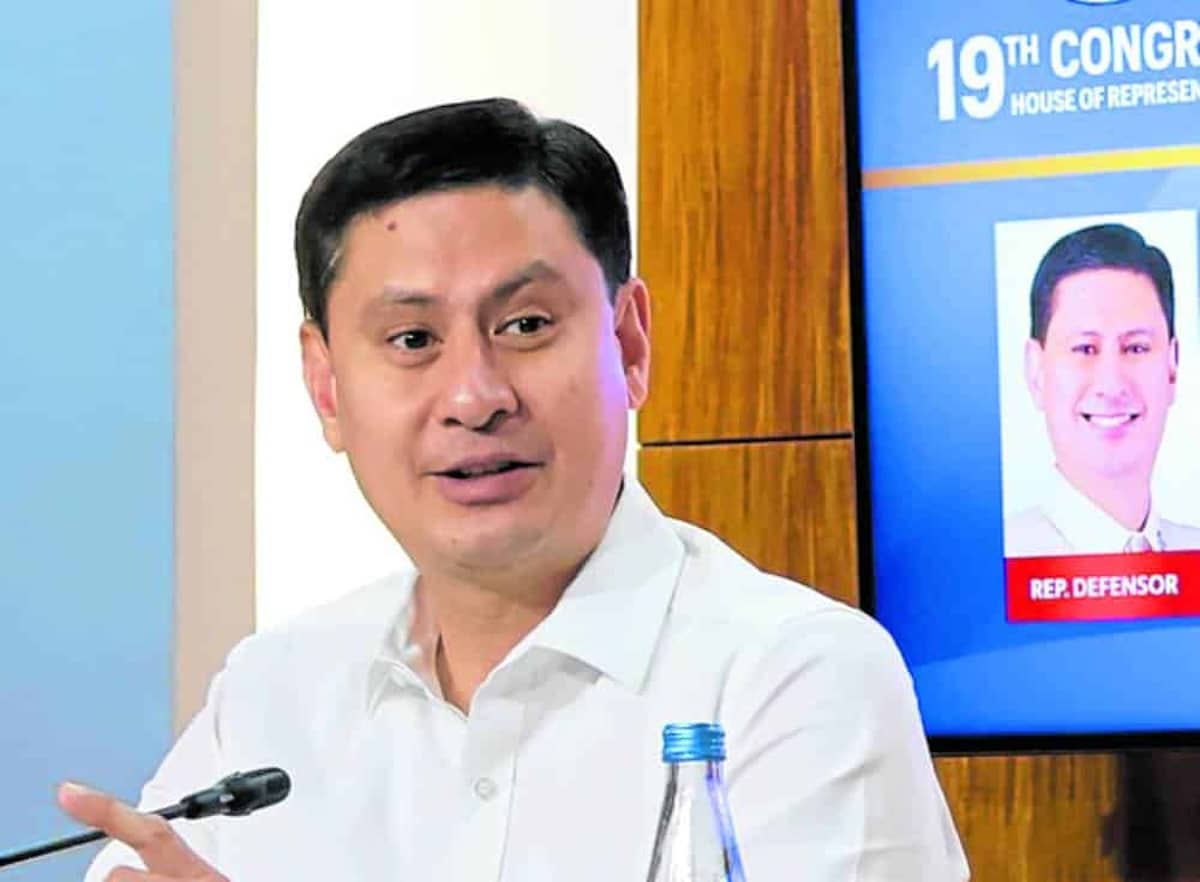
During a press briefing on Tuesday, Iloilo Representative Lorenz Defensor, a member of the panel, expressed his belief that if the Senate denies the presentation and admission of key evidence against Duterte, it would reflect poorly on the senator-judges.
“We are not concerned that the evidence we have prepared for presentation at the impeachment trial may be blocked. If they will block that, remember that we are not the ones in trial, the people will also judge our senator-judges,” Defensor stated to reporters at the Batasang Pambansa complex.
He added, “And while we will give them utmost respect, I am sure that the people will change their minds should an impeachment court not allow the opening and presentation of evidence.”
Evidence and Procedural Flexibility
According to Defensor, any evidence cannot be questioned based on technicality because the rules of the impeachment court have been set loosely on purpose so that information can easily be admissible.
“I hope the people understand that they cannot block the procedures of an impeachment court through technicalities. Do not believe such claims because an impeachment trial and the impeachment process was written with the intent of a looser interpretation of the rules of procedure,” Defensor said.
“This is for all kinds of evidence to be released so that our senator-judges can rule based on their own conscience. There should be no heavy requirement placed on evidence, or proof beyond reasonable doubt; but the quantum of evidence required to convict is simply the personal assessment of each senator-judge, whether a high public official should be removed or may stay in public office,” he added.
Defensor further explained that if the presentation of critical evidence is hampered, it would be taken against the defense panel—Duterte’s legal team—as it would be seen as another attempt to evade the rebuttal of evidence presented.
“Especially for the defense panel, if they will not show up, they did not show up and then they would block the release of evidence, it would not look good for a high-ranking official facing impeachment,” Defensor explained.
“So we are not worried, we are prepared to present our evidence no matter what they will do, we’ll let them judge us, and we respect our impeachment court,” he added.
Confidence in the Process
Other members of the prosecution team expressed confidence that the impeachment court will admit the evidence they present. According to lead prosecutor Batangas Representative Gerville Luistro and Akbayan party-list Representative Chel Diokno, concerns about evidence will be addressed during the pre-trial stage of the impeachment proceedings.
“Well, that is the purpose of the pre-trial. We are supposed to submit the list of witnesses, as well as the list of evidence, which will be presented during the trial, presentation of the prosecution’s evidence. Although I understand that if the evidence is not yet available during the pre-trial, so long as we can justify the same, it may be presented still before the impeachment court,” Luistro said.
“The decision on admissibility of evidence is made by the Senate as an impeachment court. But the discretion to present evidence, regarding what evidence is in our hands, is within the prerogative of the prosecution, and the court cannot interfere with that discretion. That’s why at the start we would want to call on witnesses or present documents on the prosecution’s possession,” Diokno added.
Previous Hearings and Evidence Presented
Before Duterte was impeached by the House, the committee on justice headed by Luistro conducted extensive hearings to discuss the allegations and examine the evidence against the Vice President.
On April 14, the panel discussed allegations of confidential fund misuse within the Office of the Vice President and the Department of Education, which she used to head before. Some of the revelations made during the April 14 hearing were contained in the supplemental affidavit of Ramil Madriaga, Duterte’s former aide.
According to Madriaga, Duterte supposedly ordered her in December 2022 to deliver cash to allies as a way of “giving back.” Madriaga said four large duffle bags were unloaded from the vehicles, three of them were dark and one was light-colored—containing around P30 million to P35 million each.
On April 22, the panel tackled accusations that Duterte has unexplained wealth, and that she failed to disclose all her assets in her Statement of Assets, Liabilities, and Net Worth. At one point during that hearing, Anti-Money Laundering Council (AMLC) Executive Director Buenaventura confirmed that they saw covered and suspicious transactions made by Duterte and her husband, Manases Carpio.
On April 29, the committee tackled Duterte’s threats against ranking officials, with the National Bureau of Investigation authenticating video clips containing the Vice President’s rants against President Ferdinand Marcos Jr., First Lady Liza Araneta Marcos, and former House Speaker Ferdinand Martin Romualdez.
Historical Context
Despite these pieces of evidence, the Senate in the past has had a history of not revealing key evidence in an impeachment trial. During the tail-end of the impeachment trial against former president Joseph Estrada, senator-judges voted not to open a second envelope containing evidence that people said would have proven that Estrada was indeed the person behind the bank accounts supposedly containing ill-gotten wealth.
But when the envelope was not opened, several government officials went to the Edsa Shrine to protest—marking the second People Power Revolution.
Previously, former law school dean Mel Sta. Maria warned that people taking the streets to protest will not be a far-fetched possibility should the Senate Impeachment Court acquit Duterte even in the face of glaring evidence.