
UAE Driverless Cars: Safer Than My Own?
The allure of a driverless future, once confined to the realms of science fiction, is rapidly materialising on our city streets. Even as autonomous vehicles become increasingly commonplace, the experience of relinquishing control and gliding through the city in a vehicle guided by artificial intelligence remains a novel and undeniably thrilling sensation. It’s a feeling akin to witnessing a silent, efficient ballet of technology, where the steering wheel turns as if by magic and the journey unfolds with an almost ethereal smoothness.
Leading the charge in this transformative industry is Waymo, the autonomous ride-hailing service operated by Alphabet, the technology titan synonymous with Google. Having already established a significant presence in major American metropolises like Los Angeles, San Francisco, and Phoenix, Alphabet has set its sights on a new frontier: London. Early next year, the company announced its intention to introduce its fully autonomous robotaxi service to the UK capital, marking a significant expansion across the Atlantic.
In a statement that generated considerable excitement, Alphabet declared, "Hello London! Great news. We’re bringing our fully autonomous ride-hailing service across the pond where we intend to offer rides – with no human behind the wheel – in 2026." This ambitious plan follows closely on the heels of Waymo’s app launch in Los Angeles just last November. Since then, their fleet of sleek, white, electric I-PACE Jaguars has become an integrated part of the urban landscape, drawing curious glances as they navigate the thoroughfares.
Much like the revolutionary impact of Uber on the taxi industry, Waymo is pushing the boundaries of urban mobility, steering us towards a future where driverless cities are not a distant dream but a tangible reality. While it is still early days, and the technology has yet to fully alleviate persistent traffic congestion in sprawling cities like Los Angeles, there is optimism that this will change. The recent approval for Waymo vehicles to navigate the city’s notorious freeway choke points, in addition to their previous operation in specific built-up areas, is a significant step forward.
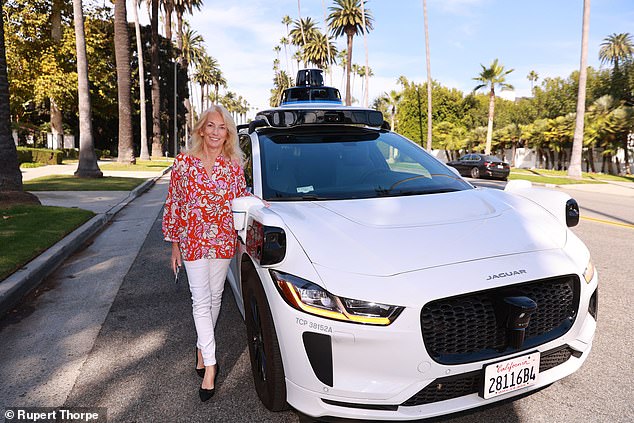
The need for more efficient and accessible transportation solutions in Los Angeles is particularly acute, especially with major global events on the horizon, including next year's World Cup and the 2028 Olympic Games. For long-time residents, the futuristic charm of robotaxis is often highlighted when out-of-town guests experience them for the first time. A recent anecdote from a visiting girlfriend perfectly captured this sentiment: “It feels like we’re in a sci-fi movie,” she exclaimed, her phone capturing the sight of Waymos gliding past, alongside the ubiquitous delivery robots diligently navigating sidewalks with their Uber Eats payloads.
However, this initial wonder quickly gave way to a more practical question: “Do you feel safe inside a driverless taxi?” This question resonates deeply, particularly given past concerns. In 2023, a critical piece highlighted instances of autonomous vehicles causing disruptions and near-misses in San Francisco, the very cradle of this technology. Reports detailed incidents such as a vehicle colliding with a packed city bus, and another driving through police tape, narrowly avoiding an officer. Waymos were also noted for causing traffic blockages by becoming immobilised.
Yet, the pace of technological advancement has been nothing short of remarkable. Waymo now asserts that its vehicles exhibit significantly fewer accidents involving airbag deployment – a staggering 79% reduction compared to human drivers. A report from September indicated that Waymo’s fleet had completed 96 million miles of driving across US cities in June alone. Based on US transport safety statistics, human drivers would have incurred approximately 159 such crashes over the same distance, whereas Waymo recorded only 34. Crucially, there have been no Waymo-related fatalities involving human occupants.
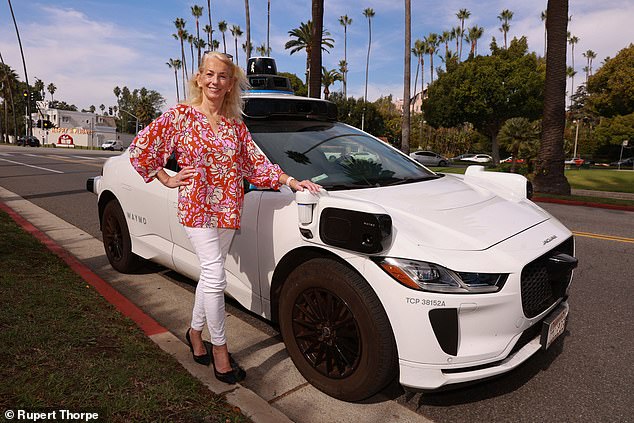
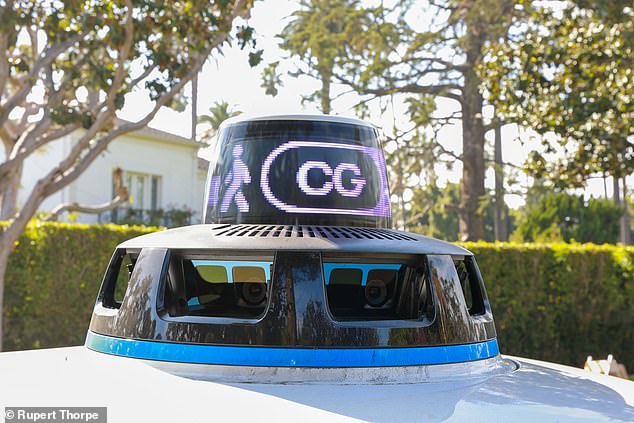
The continuous stream of data from every journey is meticulously fed back to Waymo, equipping its AI with an unparalleled understanding of road conditions and potential hazards. The vehicles are outfitted with sophisticated "lidars" on their roofs – advanced sensors that create a 360-degree view of the surroundings up to 300 metres away, utilising a combination of radar, sensors, and cameras. This wealth of information is processed by an AI "brain" capable of predicting the actions of pedestrians, cyclists, and other vehicles with remarkable accuracy.
Consequently, the answer to the safety question has evolved. Today, I can confidently state that I feel safer in these autonomous vehicles than I do behind the wheel of my own car. This sentiment is particularly significant for women, especially when travelling late at night. The apprehension of being driven by an unknown male driver in a traditional taxi is a concern that automated cabs effectively eliminate. I recall a terrifying experience some years ago, being driven from Los Angeles International Airport by a driver whose erratic behaviour suggested he was under the influence of drugs. My desperate pleas for him to pull over were met with refusal for several miles, leaving me in a state of near-tears. While ride-sharing apps like Uber have mitigated such risks through driver profiles, recorded journeys, and cashless transactions, autonomous taxis represent a further leap in passenger security by removing the human element entirely.
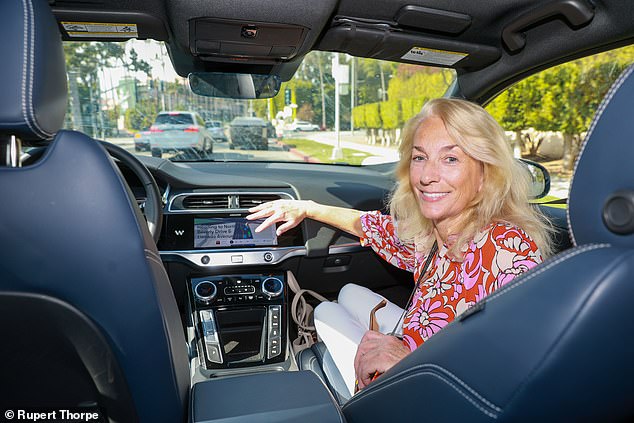
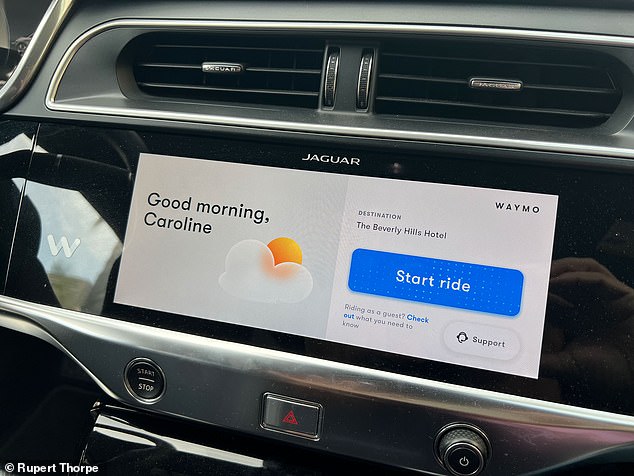
The user experience with Waymo is designed to be seamless. Summoning a vehicle via the app is comparable in speed to an Uber, and pricing fluctuates based on demand, mirroring the dynamic pricing models of other ride-hailing services. Identifying your designated Waymo is simple, as your initials are illuminated on the car's roof. During a recent trip in Beverly Hills, my Waymo arrived within minutes. Much like with Uber, the app provides real-time tracking of the approaching vehicle. Upon entering, a personalised greeting appears on screens located at both the front and rear of the cabin: "Welcome, [Your Name]." The system allows a five-minute grace period after the door is opened before the journey begins, with a gentle alarm reminding passengers to fasten their seatbelts. Passengers have the option to pre-select their preferred music via streaming services like Spotify or to enjoy the curated in-car playlist.
The vehicles are generally kept in pristine condition, although a recent experience with a car exhibiting unsightly smears on the windscreen served as a minor reminder that perfection is an ongoing pursuit. The ride itself is remarkably quiet and precise. A display screen provides a clear visualisation of the surrounding environment, including pedestrians, other vehicles, and traffic signals. As the Waymo pulls away from the kerb, the sensation is that of being guided by an unseen, expert hand – a liberating experience that allows passengers to focus on other activities, like applying makeup.
My destination was Rodeo Drive, a bustling hub in Beverly Hills, particularly vibrant with early Christmas decorations. As we approached Gucci, a Bentley abruptly stopped directly in front of my Waymo. Had I been driving, my instinct would have been to brake sharply. However, the Waymo’s advanced systems anticipated the manoeuvre, decelerated smoothly, and then navigated around the stationary vehicle, which was being driven by a woman evidently distracted by her mobile phone.
However, as one traditional taxi driver pointed out, the very caution displayed by driverless cars in recognising and responding to obstacles could potentially be exploited by other road users. Roundabouts, which are more prevalent in the UK than in the US, could present particular challenges. Waymos might struggle to merge into fast-moving traffic, and aggressive drivers might feel emboldened to cut them off, confident that an autonomous vehicle will inevitably yield.
On another occasion, while waiting for a return journey, I inadvertently positioned myself on a red-painted kerb. My approaching Waymo detected this and the app politely instructed, "Please move 50 feet to your south where I can safely pick you up." This demonstrated the vehicle's adherence to traffic regulations and its proactive approach to passenger safety.
My initial encounters with self-driving technology date back to 2014, when I experienced Google's prototype vehicle. That early iteration, resembling a VW Beetle, exhibited jerky movements and even accidentally bumped into a kerb. The contrast with today's sophisticated Waymo fleet is stark. The current generation of autonomous vehicles has become so integrated into daily life that many young people, particularly those of college age, no longer feel the necessity of obtaining a driver's license. A friend shared that her 16-year-old daughter, having grown up in the era of ride-sharing and now autonomous vehicles, has shown no interest in learning to drive, stating, “Why do I need to learn to drive?”
Waymo's commercial fleet in the United States now exceeds 2,000 vehicles, operating across numerous cities. The company is further expanding its reach, with plans to launch in Detroit, Las Vegas, and San Diego in 2026, followed by Miami and Washington D.C.
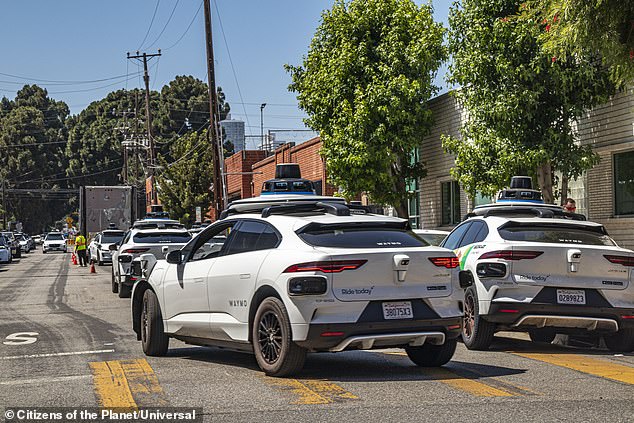
Earlier this year, Waymo commenced testing operations in Tokyo, though these are still in the experimental phase. The UK, and specifically London, represents the next major strategic focus. A source close to the matter revealed, “London has been our focus for some time. We are launching sooner in the UK than people think. There are still some regulatory hurdles to get around but we’re very close to getting a deal. London will be first, then major cities like Manchester, Liverpool, Birmingham and Edinburgh.”
Waymo’s competitors, including Elon Musk’s Tesla, the Chinese firm Baidu, and Jeff Bezos’s Zoox, appear to be trailing in their development and deployment. The source elaborated, “Alphabet has deep pockets and Waymo has access to all of Google’s data, which is a huge commercial advantage. Waymo’s been clever, focusing on safety first, which Tesla’s been accused of trying to circumvent. Waymo has Google Maps, a mature, tested product. They’ve been operating at a loss but you don’t hear of that. True profit comes by dominating the market, which is where Waymo’s heading.”
The company reports facilitating over 250,000 fully autonomous trips in Los Angeles per week, and achieved a milestone of 10 million lifetime trips in May. Waymo acknowledges a substantial investment of £7.6 billion into its fleet, though industry insiders suggest the actual figure is considerably higher.
Despite these impressive operational statistics, one unfortunate incident continues to be a point of contention: the death of a cat named KitKat last month. The tabby was struck by a Waymo vehicle in San Francisco. The cat's owner, Daniel Zeiden, described KitKat as "unequivocally adored." Waymo issued a statement expressing their deepest sympathies and explaining that "While our vehicle stopped to pick up passengers, a nearby cat darted under our vehicle as it was pulling away." The company also confirmed making a donation to a local animal rights organisation.
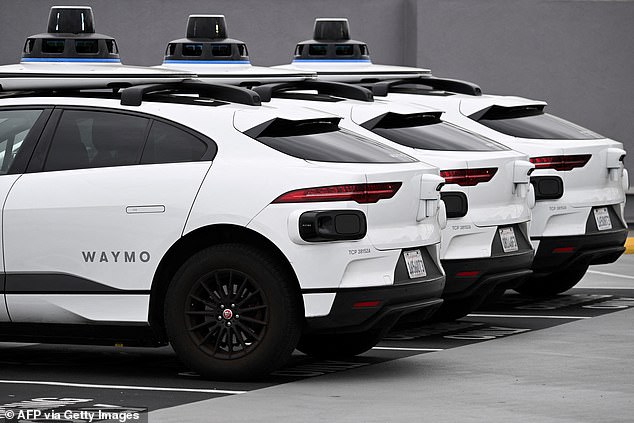
Critics of artificial intelligence have seized upon the cat's death to voice concerns about the perceived rapid pace of technological advancement. Protests have included activists placing orange cones around Waymo vehicles in an attempt to impede their movement, although the vehicles have since been reprogrammed to manoeuvre out of such "cone prisons." Another point of contention arises from the vehicles' charging routines. Footage shared online showing a line of Waymos queued at a charging station at night prompted one user to comment, "Man, this is wild. Here’s a line of Waymos blocking a public street to get charged at 3am. It’s a public safety hazard."
From my perspective, these issues, while valid, pale in comparison to the profound advantages that a fully autonomous transportation system can offer. So, buckle up, Britain. The era of autonomous vehicles is dawning, and they are poised to revolutionise personal transport in a manner akin to how Henry Ford’s innovations transformed travel for the horse and carriage. The future of mobility is here, and it’s driving itself.
Post a Comment for "UAE Driverless Cars: Safer Than My Own?"