
Experience Zero-Gravity Bliss: The Aiora Chair and its Mind-Altering Potential
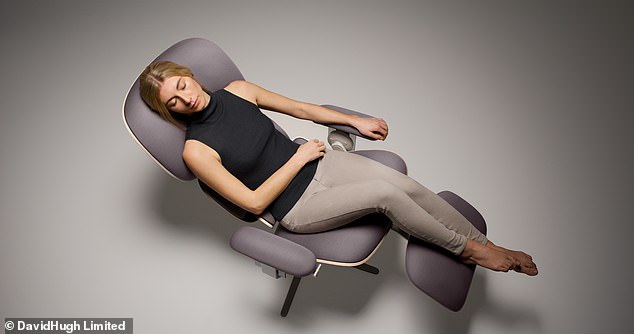
Imagine sinking into a chair that promises to transport you to an "altered state of mind" in mere minutes. This is not science fiction, but the reality offered by the Aiora chair, a revolutionary piece of furniture born from the collaboration between scientists at the University of Essex and the esteemed British furniture company, DavidHugh LTD. This futuristic seat operates on a novel principle known as 'pure planar motion mechanics,' meticulously engineered to replicate the sensation of floating in zero gravity. The designers posit that this unique experience closely mimics the profound effects of being suspended within a sensory deprivation flotation tank.
Since 2018, a dedicated team of psychologists has been delving into the intricate ways this remarkable chair influences the sitter's brain activity. Dr. Nick Cooper, the lead researcher from the Centre for Brain Science, has observed fascinating outcomes. "Several of our studies have revealed patterns of brain activity similar to those reported in long–term Buddhist meditators, and remarkably, in people with no prior meditation experience," he stated. While the allure of achieving a meditative state without years of practice is undeniable, this extraordinary experience comes with a significant investment. For those keen to acquire their own Aiora chair, the price tag stands at a considerable £9,950.
The Science Behind the Float: Pure Planar Motion Mechanics
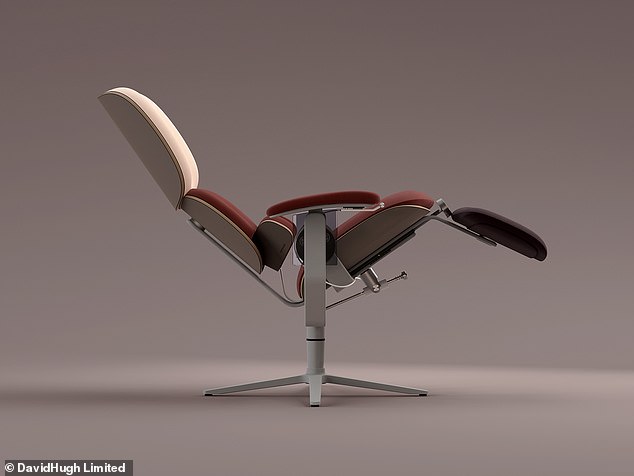
The Aiora chair achieves its unique floating sensation by ingeniously minimising the perceived effects of gravity and friction. Each component of the chair – the headrest, armrests, backrest, and seat – is designed to move independently along individual horizontal paths. This distinct mechanism prevents them from being influenced by gravity in the way a traditional rocking chair would be. Furthermore, the integration of exceptionally smooth bearings drastically reduces resistance and friction, allowing the chair to fluidly adapt to the user's natural body movements.
Dr. David Wickett, the visionary designer of the Aiora chair and co-founder of DavidHugh Ltd, highlights the extraordinary sensitivity of this system. He explained that "even breathing can lift the entire body." The ultimate effect is that the sitter experiences no discernible pressure points, fostering a profound sense of floating rather than the conventional feeling of being seated. This sensation is so markedly different from sitting in a standard chair that users typically require a few minutes to adjust and "learn" how to surrender to the movement, rather than attempting to control it.
"Whilst floating in weightlessness is extraordinary in itself, what is even more remarkable is what people report after experiencing the chair with eyes closed," Dr. Wickett elaborated. "People often report being in a boundless space, experiencing illusions of movement, and being without thought." This subjective experience, while seemingly focused on comfort, translates into tangible effects on the brain, as confirmed by ongoing research.
Measurable Brainwave Shifts: Towards an Altered State of Consciousness
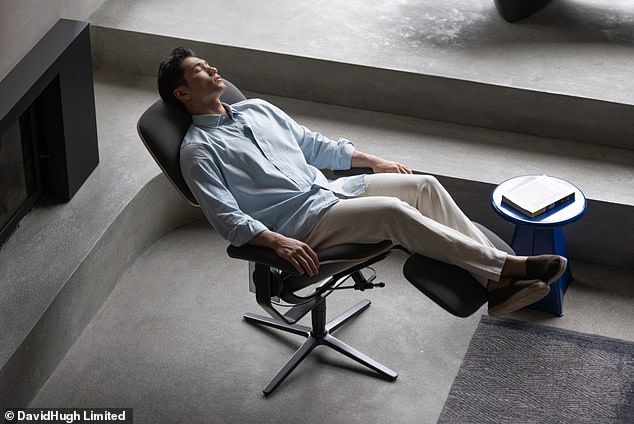
The impact of the Aiora chair extends beyond mere comfort; it demonstrably influences brain activity. Dr. Cooper and his team at the University of Essex have observed that individuals tend to enter what they term a "non–ordinary state of consciousness" within five to 10 minutes of engaging with the chair. "We see increases in slow wave brain activity over time, when using the chair," Dr. Cooper shared.
These neural changes are particularly pronounced in specific areas of the brain. The right frontal regions, which play a crucial role in various brain control mechanisms, and the fronto–central cortex, associated with cognitive tasks demanding concentration and attention, show significant alterations. "We are intrigued by changes to a particular slow wave brain activity, the “frontal midline theta” that is very similar to what we see in expert meditators," Dr. Cooper noted.
While the researchers are preparing to publish their comprehensive findings in a peer-reviewed journal, the precise mechanisms behind these brainwave shifts remain an active area of investigation. Dr. Cooper offered a working hypothesis: "At the moment, we hypothesise that this has something to do with the way that the chair dramatically reduces the amount of sensory input that the brain is receiving, and so therefore allows a more internally based attentional focus to take over. However, we can’t be more specific than that at the moment."
Parallels with Sensory Deprivation: Unlocking Inner Focus
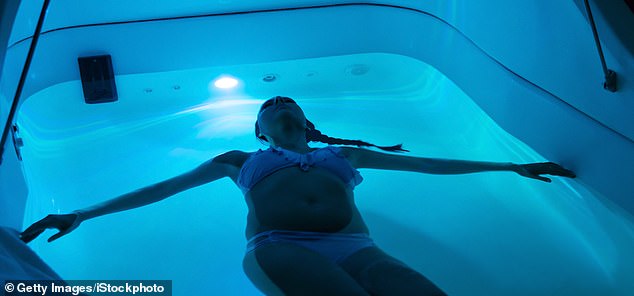
If Dr. Cooper's hypothesis holds true, the Aiora chair shares remarkable similarities with the well-established benefits of sensory deprivation flotation chambers. These specialized chambers utilise highly concentrated saline water to create a state of neutral buoyancy, effectively nullifying the sensation of pressure caused by gravity. Coupled with complete darkness and soundproof environments, these "float tanks" dramatically minimise the amount of external sensory information an individual receives.
Extensive studies have demonstrated that spending time in such a reduced sensory environment can lead to a wide spectrum of positive outcomes. These include achieving deep meditative brain states and experiencing a significant reduction in blood pressure. The Aiora chair, through its unique mechanical design, appears to be achieving a comparable reduction in sensory input, thereby facilitating a similar journey into introspection and altered consciousness, all from the comfort of a scientifically engineered chair.


No comments:
Post a Comment