
Pioneering the Search for Extraterrestrial Life: Pandora Mission Takes Flight
In an era of renewed fascination with the possibility of life beyond Earth, a groundbreaking collaboration between Lawrence Livermore National Laboratory (LLNL) and NASA is poised to revolutionize our search for habitable worlds. Set to launch in January from Vandenberg Space Force Base in Santa Barbara, California, a compact satellite named Pandora will embark on a 13-month mission to meticulously analyze the atmospheric conditions of 20 exoplanets. This ambitious endeavor aims to complement the powerful observational capabilities of the James Webb Space Telescope (JWST), particularly in its efforts to photograph planets orbiting young, energetic stars.
The core objective of the Pandora mission is to identify "biosignatures" – telltale chemical compounds, such as oxygen, carbon dioxide, and methane, that are strongly indicative of biological processes. While the likelihood of detecting such gases is statistically minuscule, the data gathered by Pandora could provide crucial pieces to one of humanity's most profound puzzles: "Are we alone?"
"To detect something like a biosignature, or to look for life, you need to really have a good measurement of the atmosphere of your exoplanet," explained Peter McGill, an optical astronomer involved with the Pandora Mission. "And to do that, you need to understand the star."
A New Generation of Exploration
The Pandora mission marks a significant milestone as the first satellite launched into space under NASA's Pioneers Program. This initiative, named in homage to NASA's historic Pioneers Programs that explored our solar system, seeks to extend our reach to planets up to 100 light-years away. The mission's targets are specifically chosen to be planets orbiting young stars. These stars, while vibrant, pose a significant challenge for traditional telescopes due to "solar contamination" – interference from the star's intense light that can distort or corrupt planetary data.
Ben Bahney, leader of the LLNL Space Program, expressed his enthusiasm for the project, stating, "This is the first full NASA science mission that we have managed for this kind of spacecraft. It’s a culmination of at least six or seven years of direct effort, from proposal all the way through to launch."
The genesis of the Pandora mission can be traced back to LLNL scientists who recognized the inherent limitations of the JWST in overcoming solar contamination. Having previously contributed to space telescopes like Hubble and Kepler, they understood the potential challenges. "The core members of the (LLNL) science leadership team knew that stellar contamination was going to be problematic, and they sort of tailor-made this small satellite mission, i.e. Pandora, to help address this problem," said Jordan Karburn, an engineer specializing in small satellite capabilities for the Pandora Mission.
The Ingenuity of Pandora's Design
The operational principle behind Pandora is elegantly simple yet scientifically profound. Directly imaging exoplanets is often impossible due to their faintness against the vastness of space. However, astronomers can gain valuable insights by observing planets as they transit, or cross, the face of their host star. During these transits, a small fraction of the star's light passes through the planet's atmosphere.
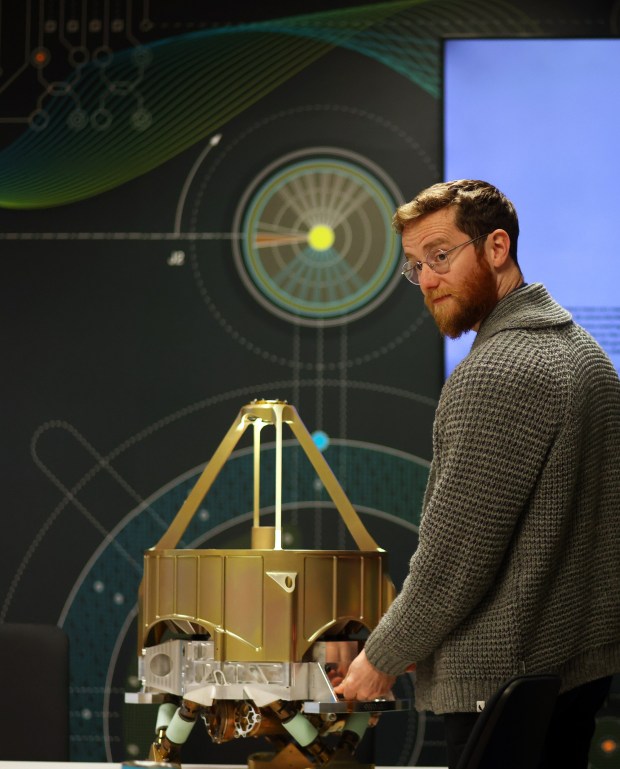
Scientists then employ a spectrometer, a sophisticated instrument that analyzes the wavelengths of light. By dissecting this light, they can identify the chemical elements present in the planet's atmosphere, revealing its unique "chemical fingerprint." Pandora's role is to precisely measure this starlight as it's filtered through the exoplanet's atmosphere.
"With Pandora, we can then combine this data with James Webb, remove the noise from the spectrum and learn robust properties about exoplanets," Karburn elaborated. This synergistic approach allows for a much clearer and more detailed understanding of exoplanetary atmospheres than either telescope could achieve alone.
A New Paradigm for Space Exploration: Cost-Effective Innovation
Beyond its primary scientific goal of advancing exoplanet research, Pandora serves a crucial secondary purpose: demonstrating the efficacy of public-private partnerships in driving space exploration forward. Traditionally, NASA's monumental engineering achievements have come with substantial price tags. The JWST, for instance, represents a mission exceeding $10 billion.
Pandora, however, embodies a "new class" of mission designed to deliver cutting-edge scientific capabilities at a significantly reduced cost. The Pandora team estimates their instrument is approximately seven times less expensive than what NASA's initial projections suggested.
"Things like (the James Webb telescope) are $10 billion-plus missions, right? So NASA is used to spending an incredible amount of money to drive totally unique capabilities in space," Bahney commented. "The (Pandora) instrument alone is about seven times cheaper than what NASA says that it should be… One of our biggest ‘fights,’ so to speak, was convincing NASA that it was credible because we were so under budget." This success highlights the potential for more agile and cost-efficient approaches to space science.
Launch and Future Prospects
The Pandora Mission satellite is scheduled to be integrated with a SpaceX rocket carrying a payload of 21 other satellites, destined for various commercial and scientific missions. While the precise launch date remains classified for national security reasons, it is anticipated to occur sometime after January 5th from Vandenberg Space Force Base.
Upon successfully leaving Earth's atmosphere, the SpaceX rocket will deploy Pandora. The LLNL team will then initiate its commissioning phase, preparing the small satellite to begin its vital task of scrutinizing distant star systems for any signs of life.
"This is a major undertaking, and the fact that we’re now ready for launch is extremely exciting," Bahney concluded. "There’s a really significant potential here for Pandora to have a huge science impact." The Pandora mission represents a bold step forward in our ongoing quest to understand our place in the cosmos.


No comments:
Post a Comment