
Bahrain Aluminum Facility Targeted by Iran
Escalating Middle East Tensions Threaten Global Economic Stability
The ongoing conflict in the Middle East is sending ripples across the global economy, with recent attacks targeting critical infrastructure and strategic shipping lanes. The repercussions are being felt acutely in commodity markets, particularly for essential metals like aluminum, and are raising concerns about further disruptions to international trade and energy supplies.
Aluminum Smelter Targeted in Bahrain
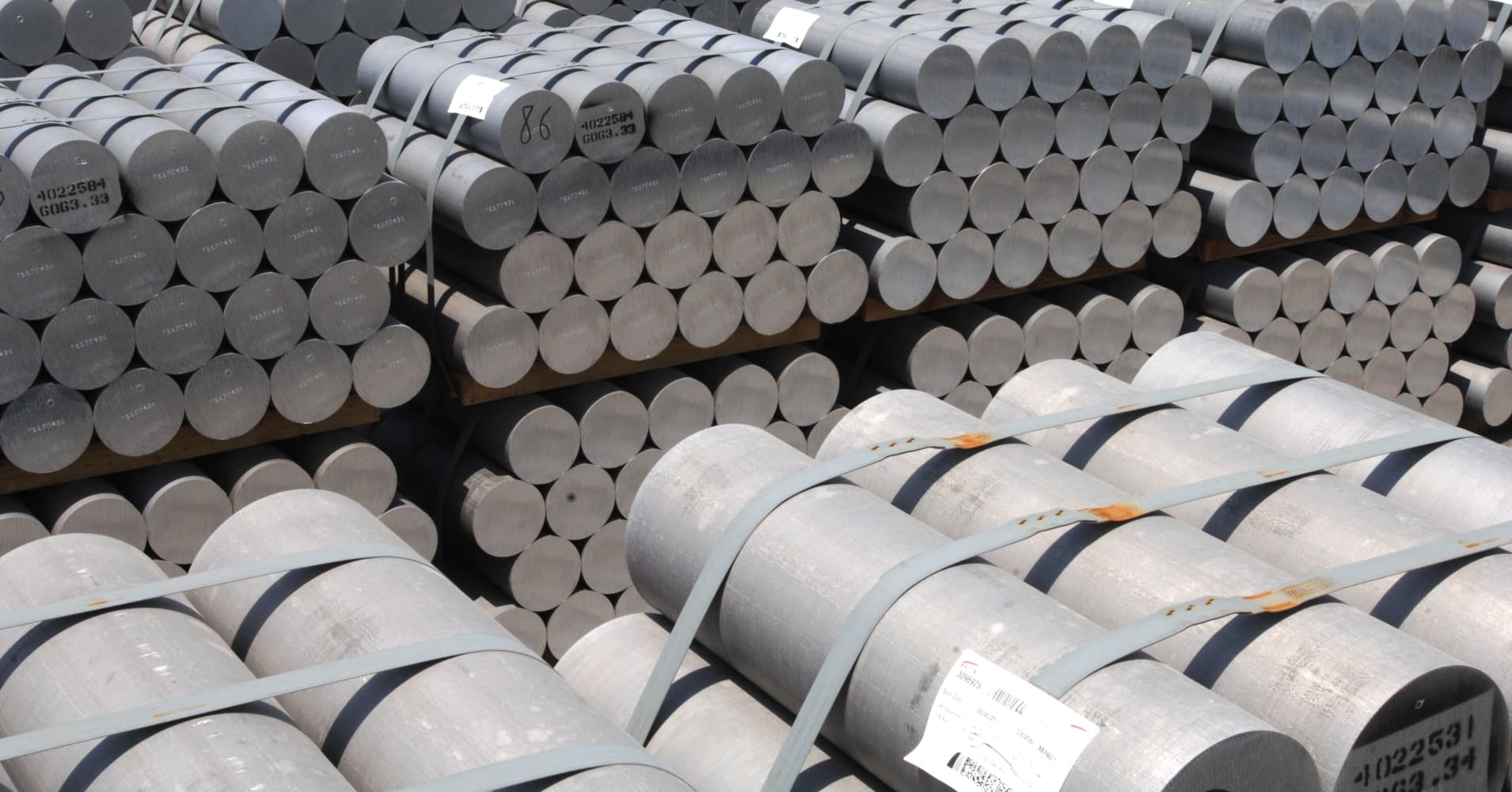
Aluminium Bahrain (Alba), home to the world's largest aluminum smelter, announced on Sunday that its facility was subjected to an Iranian attack. The incident, which occurred on Saturday, marks an escalation of the wider conflict that has now extended into its second month. Alba, a significant player in the global aluminum market, stated it is currently assessing the damage and prioritizing operational resilience and employee safety.
This attack comes after Alba had already reduced its production capacity by 19% in mid-March. This preemptive measure, amounting to a cut of approximately 300,000 tons from its annual output of 1.6 million tons, was implemented to safeguard business continuity amidst existing transit disruptions affecting the Strait of Hormuz. These production cuts have fueled anxieties about a potential global shortage of aluminum, a metal indispensable to numerous industries. Earlier this month, aluminum prices had already surged to four-year highs, and while they have seen some retraction, they remain significantly elevated compared to late February levels.
Aluminum's importance cannot be overstated. As the most abundant metal on Earth, it is a cornerstone of modern industry, vital for electronics, transportation, construction, and the burgeoning renewable energy sector, particularly in solar panel manufacturing, as well as for packaging. Any significant disruption to its supply chain poses a substantial threat to global economic activity.
Iran's Retaliatory Strikes and Regional Spillover
Iran has been engaged in a series of retaliatory actions, including missile and drone strikes, against its regional neighbors, which it attributes to attacks initiated by the U.S. and Israel on February 28th. The United Arab Emirates confirmed on Sunday that its air defenses had intercepted a recent salvo of incoming missiles.
The conflict has seen new actors enter the arena. On Saturday, the Houthi movement in Yemen, which is backed by Iran, announced its first direct participation in the war by launching a missile strike targeting Israel.
Houthis' Maritime Threat
Analysts suggest that the Houthis could leverage their position to disrupt maritime traffic through the Bab el-Mandeb Strait. This narrow waterway, situated between the Arabian Peninsula and the Horn of Africa, is a crucial chokepoint for vessels navigating to the Red Sea and subsequently the Suez Canal. Such disruptions could significantly amplify pressure on global trade routes.
The potential impact of this is substantial. In the first half of 2023, the Bab el-Mandeb Strait was estimated to handle approximately 12% of seaborne oil trade and 8% of liquefied natural gas (LNG) trade. This adds to the existing pressure on the Strait of Hormuz, an even more critical passage between Iran and the Arabian Peninsula, through which an estimated 20% of global oil supplies moved prior to the current conflict.
The ramifications for global energy markets have been stark. U.S. crude oil prices closed Friday at their highest level in over three years, with West Texas Intermediate (WTI) crude rising 5.46% to $99.64 per barrel, and international benchmark Brent crude gaining 4.22% to settle at $112.57. These price surges underscore the market's deep-seated fears regarding significant supply disruptions originating from the Middle East.
The effectiveness of diplomatic efforts to de-escalate the situation remains uncertain. Reports indicate that a recent move by President Donald Trump to grant Iran a 10-day extension for negotiations, coupled with a pause on attacks on Iran's energy infrastructure through April 6th, failed to fully soothe supply concerns. President Trump expressed optimism about the talks, contrasting with Iran's claims of no ongoing negotiations.
Growing U.S. Military Presence Fuels Invasion Fears
Adding another layer of complexity and potential instability, the United States has been increasing its military presence in the Gulf region. The arrival of the 31st Marine Expeditionary Unit, comprising approximately 3,500 personnel, in the Middle East on Saturday has fueled speculation and concern about a potential ground invasion. Such a scenario could further prolong the conflict and deepen the uncertainty surrounding the global economy. U.S. Sailors and Marines aboard the USS Tripoli (LHA 7) officially entered the U.S. Central Command's area of responsibility on March 27th.
Iran's Threat to Educational Institutions
In a significant diplomatic development, Iran has threatened to target U.S. and Israeli educational institutions in the region. This threat, reported by Iranian media quoting its armed forces, comes with a condition: the U.S. must condemn attacks on Iranian universities. Iran has presented images purportedly showing damage to the University of Science and Technology in Tehran, which it blames on U.S. strikes.
Diplomatic Efforts Amidst Rising Tensions
As the economic fallout from the conflict continues to spread globally, President Trump is facing mounting pressure to find a resolution, particularly concerning Iran's influence over the Strait of Hormuz. In a diplomatic push, Pakistan announced on Saturday that Saudi Arabia, Turkey, and Egypt would dispatch their top diplomats to Islamabad for discussions aimed at ending the war. Pakistan's Foreign Office confirmed on Sunday that its Foreign Minister had met with his Turkish counterpart to address the Iran conflict and other pressing issues.
Post a Comment for "Bahrain Aluminum Facility Targeted by Iran"