
Experts reveal why viral baby monkey Punch was abandoned and targeted by other monkeys
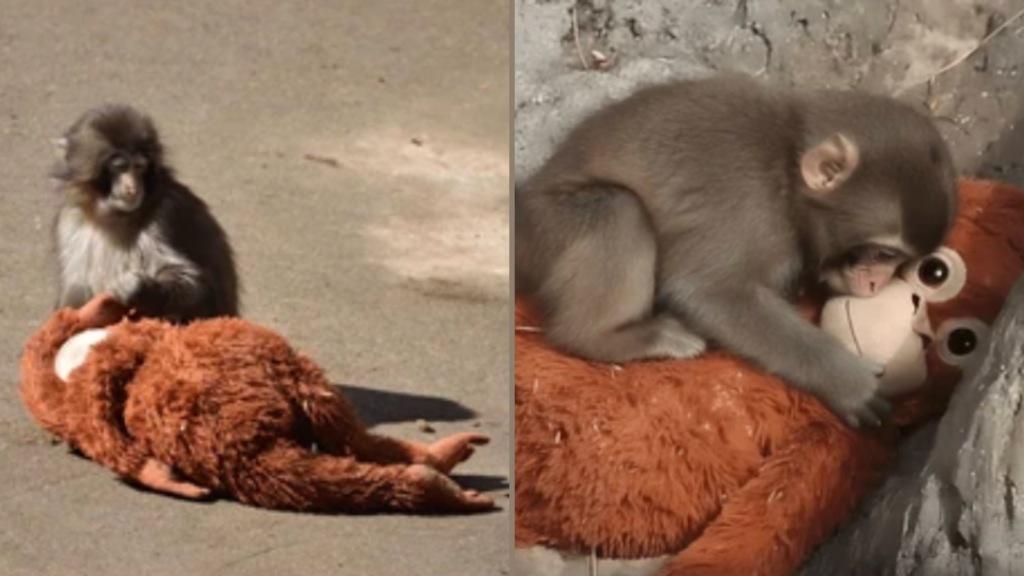 A heartwarming story of a tiny Japanese macaque, affectionately named Punch, has captured the attention of the world. Punch became an internet sensation after he was observed clinging to a stuffed orangutan for comfort. The touching footage, captured at the Ichikawa City Zoo in Japan, depicts the infant monkey treating the plush toy as a surrogate parent. However, this viral fame conceals a deeper, more complex biological struggle that began at the very moment of his birth.
Punch's mother abandoned him shortly after he was born in July. This left the vulnerable infant to navigate the intricate and often harsh social hierarchy of his troop entirely on his own. Zoo staff attempted to provide comfort by offering various soft materials, but Punch consistently gravitated towards the primate-like plush toy. This behavior strongly echoes the findings of famous psychological studies conducted in the 1950s, where infant monkeys overwhelmingly chose soft cloth "mothers" over those made of wire, seeking security and comfort.
While the images of a baby monkey embracing a toy are undeniably endearing, they also highlight a more profound crisis in primate welfare. Experts are now actively discussing the crucial question of whether Punch can ever truly integrate into his macaque troop. The answer to this question is intrinsically tied to the brutal, yet entirely natural, social laws that govern the world of macaques.
Environmental Stressors Impacting Maternal Behavior
Primatologist Zanna Clay offers a compelling explanation for maternal rejection, pointing to extreme environmental stress as a significant contributing factor. Punch's birth coincided with an intense heatwave, a phenomenon that can severely deplete the physical resources of a first-time mother. When a mother is physically depleted and lacks the necessary energy to care for her infant, she may instinctively prioritize her own survival over the immediate needs of her offspring. This is a harsh reality of the natural world, where survival often dictates difficult choices.
Beyond immediate environmental pressures, the ability to parent effectively is a learned skill, acquired through careful observation of experienced individuals. Jessica Mayhew highlights that in captive environments, first-time mothers often lack the essential "social roadmap" that would typically be provided by elder, more experienced members of the group. Japanese macaques are known to live within strict matrilineal hierarchies, meaning a mother's low social rank within the troop can further exacerbate the challenges of raising an infant, making the task feel almost insurmountable.
The stuffed toy, in Punch's case, serves as a crucial physical anchor for his innate, natural instincts. Baby macaques are biologically programmed to cling to their mothers to develop essential muscle strength and to foster emotional security. Without the consistent tactile input from the plush toy, Punch would have been deprived of vital sensory experiences necessary for his early developmental stages. While the toy offers a significant degree of comfort, it fundamentally cannot impart the complex nuances of macaque "language" or social interaction.
Understanding Macaque Social Dynamics
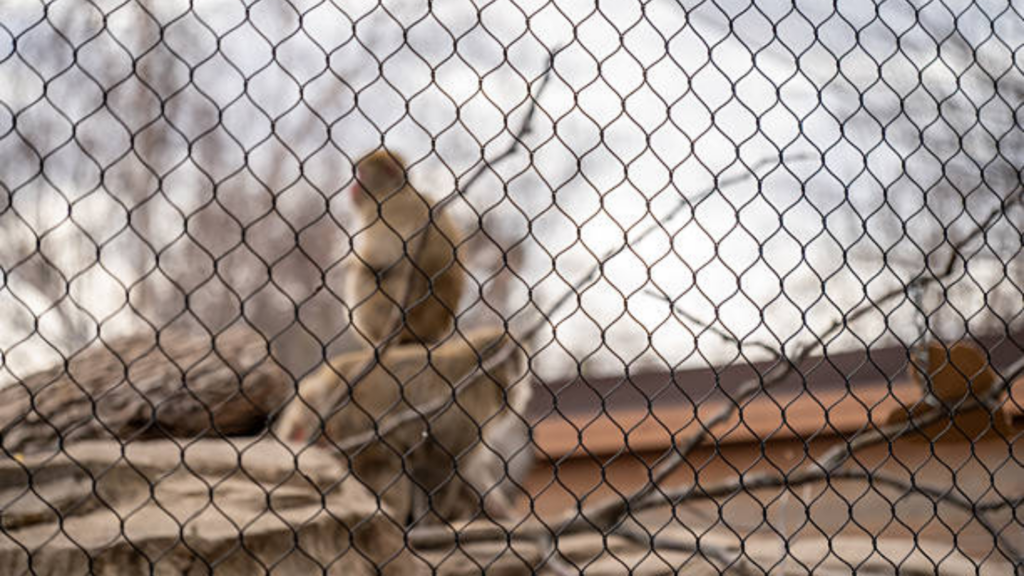
Recent video clips circulating online have depicted Punch being chased or even dragged by older monkeys, sparking considerable outrage among his millions of devoted online fans. Many viewers have interpreted these actions as outright bullying. However, experts in primate behavior are quick to clarify that this is, in fact, standard macaque disciplinary behavior. Within their complex social structures, dominant individuals and families frequently employ aggression as a means of reinforcing their position and reminding lower-ranking individuals of their established place within the social order.
Alison Behie emphasizes that even if Punch had possessed a biological mother, he would likely have still encountered these rough interactions. The critical difference, however, is that he currently lacks a protective figure to intervene when these encounters become excessively intense. High-ranking females, in particular, may seize opportunities to assert their dominance over the vulnerable infant. Conversely, other members of the troop might occasionally display nurturing traits, offering moments of respite.
This absence of a true maternal bond profoundly impacts Punch's grooming habits. Grooming is a fundamental social behavior for macaques, serving as a vital form of "social glue" that strengthens relationships and reduces stress within the group. Punch is frequently observed grooming his toy, but this interaction is inherently one-sided, as the plush cannot reciprocate the gesture. This imbalanced relationship has the potential to significantly impede his social development, as grooming is the primary mechanism through which macaques alleviate stress and repair bonds following conflicts.
The Path Forward for Punch
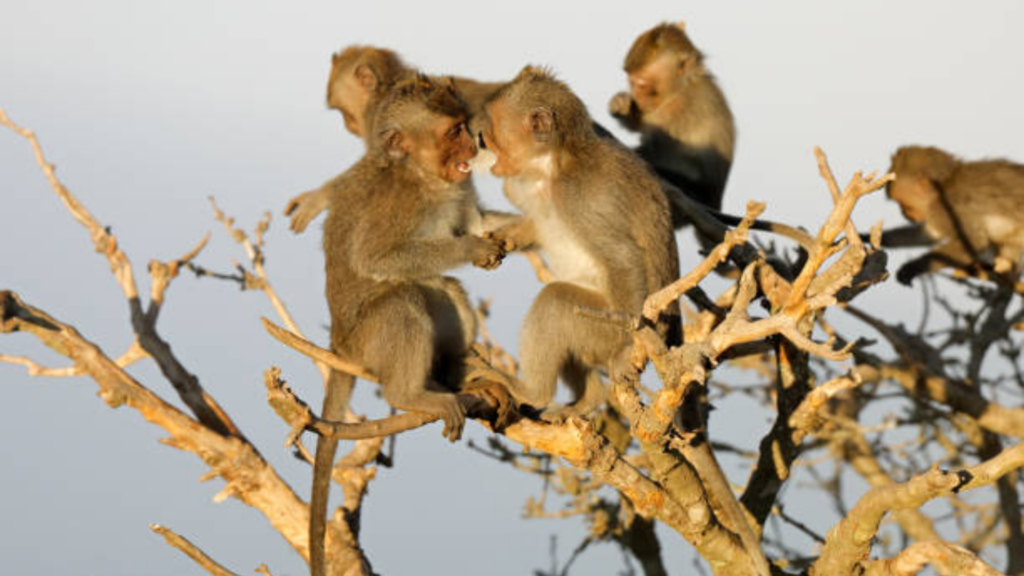
Despite his challenging start, zookeeper Kosuke Shikano describes Punch as "mentally strong" and remarkably resilient. He appears to recover quickly after confrontations with older macaques, exhibiting behaviors that suggest he may yet successfully integrate into the troop. Experts believe that the introduction of a "foster" troop mate could potentially adopt him, a development that would drastically improve his long-term social prospects and integration success.
However, conservation psychologist Carla Litchfield issues a stern warning about the potential negative consequences of Punch's widespread viral fame. There exists a genuine risk that his perceived "cuteness" could inadvertently fuel the illegal exotic pet trade. Many people fail to recognize the rapid maturation of monkeys. Within just four years, Punch will develop into a powerful adult, and his needs will far surpass anything that a human household can realistically provide.
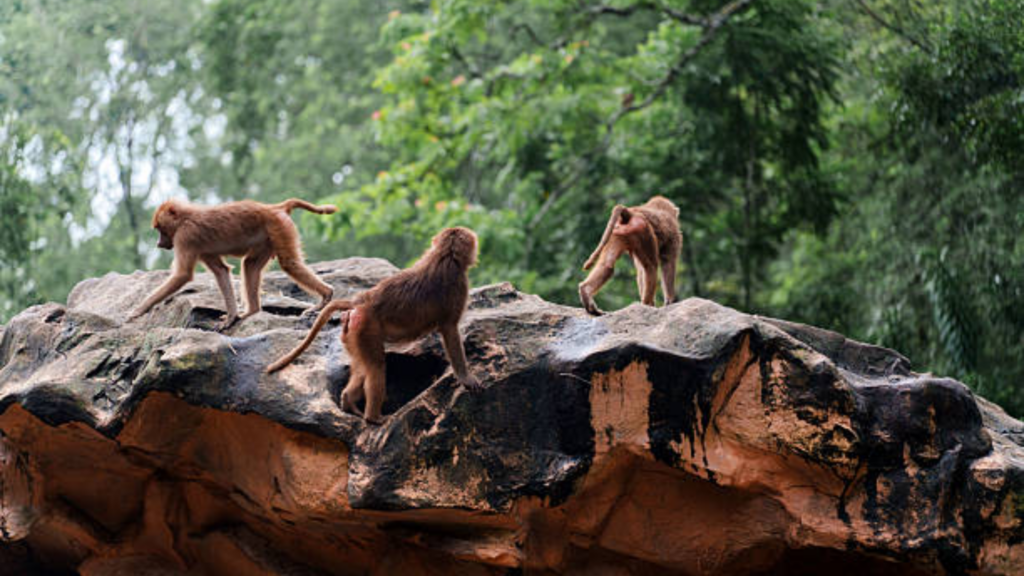
Punch's compelling story serves as a potent reminder of the far-reaching impacts of climate change and habitat loss on animal welfare, even within the controlled environment of a zoo. His journey from a rejected infant to a resilient survivor continues to captivate and fascinate people worldwide. For the moment, he remains a powerful symbol of survival, still clutching the toy that provided him with essential comfort and security during his most vulnerable hours.
Post a Comment for "Experts reveal why viral baby monkey Punch was abandoned and targeted by other monkeys"