
Here’s what a Princeton Middle East expert says is the likeliest outcome in Iran
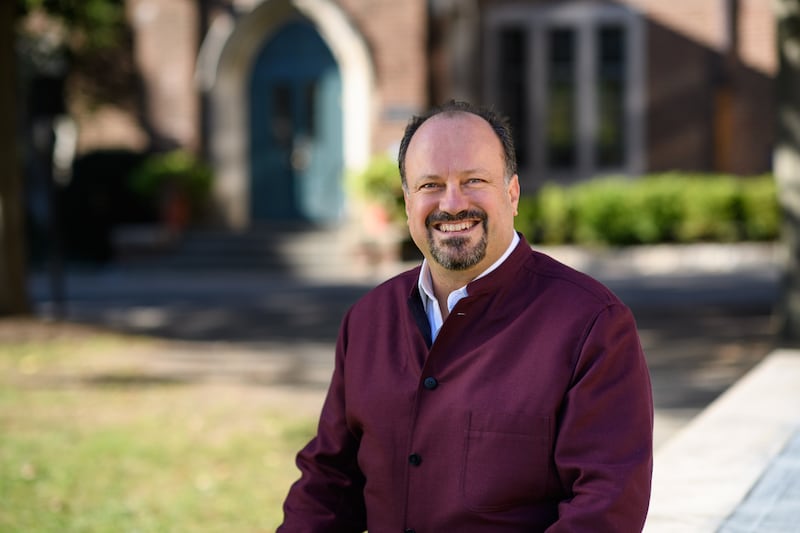
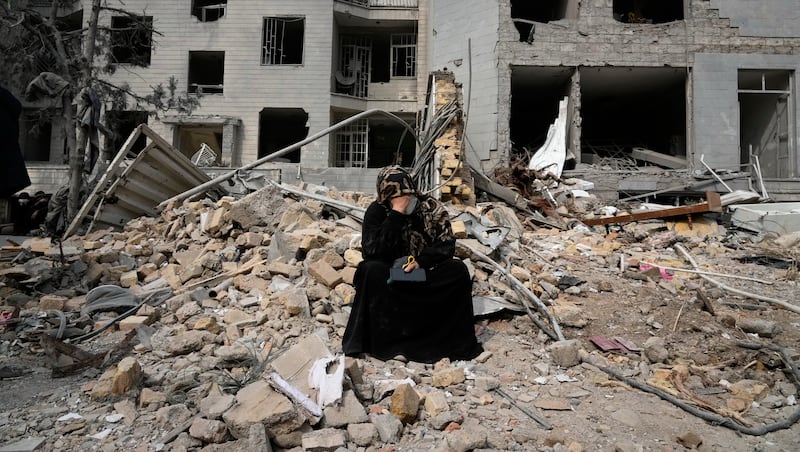 Bernard Haykel’s journey from civil-war-torn Lebanon to Miami, Florida, at age 15 could have marked a definitive break from the Middle East. Instead, he channeled his fluency in Arabic, a deep interest in history, and his understanding of the region into a distinguished academic career focused on Islamic and Middle Eastern studies.
Now a professor at Princeton University and director of its Institute for the Transregional Study of the Contemporary Middle East, North Africa and Central Asia, the 57-year-old Haykel observes the unfolding events in the Middle East with a dual lens of scholarly concern and that of an American citizen impacted by fluctuating gasoline prices. He suggests that the economic landscape, in particular, may see further turbulence before stabilization.
Haykel, whose background includes a French-Lebanese surgeon father and a Polish-American nurse mother, pursued international politics at Georgetown University before obtaining his master’s and Ph.D. from Oxford. His academic journey also includes a tenure at New York University prior to his arrival at Princeton. His extensive travels across the Middle East have fostered relationships with various regional leaders, including the crown prince of Saudi Arabia.
Recently, Haykel garnered attention for his assertion on a Bloomberg podcast, hosted by Mishal Husain, that he anticipates the Iranian regime’s continued hold on power, despite military actions by Israel and the United States.
In a recent conversation, Haykel elaborated on his perspectives, offering insights into how the Middle East perceives former President Donald Trump, the divergences in media coverage of the ongoing conflict between the region and the U.S., and his projections for the most and least favorable outcomes as the conflict enters its third week.
 The following discussion has been edited for clarity and conciseness.
Comparing Media Narratives: U.S. vs. Middle East
When asked to compare media coverage of Iran in the United States versus other regions, Haykel acknowledges the complexity due to the diverse American media landscape. He notes that outlets like The Wall Street Journal and The New York Times present distinct perspectives, further influenced by the output of think tanks. A significant portion of U.S. media coverage, he observes, is often framed around the personality of Donald Trump.
In contrast, Middle Eastern media coverage tends to focus less on personality and more on the immediate implications of the conflict. Haykel explains that from an Arab perspective, coverage often centers on questions like, "Why are the Iranians attacking us? What is our involvement? We are neutral."
Iranian media, on the other hand, is characterized by substantial disinformation and propaganda, often leaning into conspiracy theories. Haykel cites examples where Iranian state media suggests that Israeli actors, rather than Iranians, are responsible for attacks on oil facilities and tankers, with the alleged motive of drawing Arab nations into the conflict. He emphasizes that the evidence clearly points to Iranian involvement.
Haykel further notes that within the Arab world, there's a perception that "Americans don’t know what they’re doing." This viewpoint suggests that despite significant firepower, U.S. planning has been inadequate, failing to consider potential consequences like the closure of the Strait of Hormuz. The narrative posits that the Iranian regime is more resilient and has been preparing for such a confrontation for an extended period. Some Arab media outlets, he adds, offer a more immediate and realistic assessment of the situation.
Concerns Over Energy Markets and Geopolitical Miscalculations
While acknowledging that some of these critical perspectives are present in U.S. commentary, Haykel expresses a graver concern regarding the energy sector. He believes that the actual threat to global energy systems is underestimated by oil analysts and traders, who anticipate a swift resolution driven by overwhelming U.S. firepower. Haykel characterizes the current situation as a war of attrition, where Iran is attempting to establish deterrents by making conflict prohibitively costly for the world and the U.S., thereby discouraging future military action.
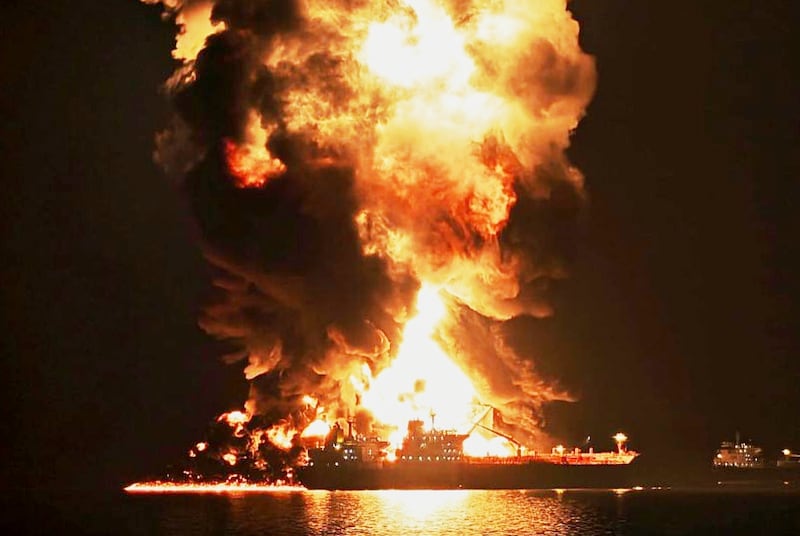 This strategy, he predicts, will likely involve further destruction of oil facilities and tankers, a reality that should be reflected in oil prices. Currently, with prices hovering around $100 a barrel, Haykel argues they should be significantly higher, at least $150, and will likely reach that level as market realities catch up.
Haykel disputes the notion that the conflict will be short-lived, challenging President Trump's assertion that it would be a mere "excursion" with Iran quickly fading from headlines, drawing an analogy to Venezuela. Haykel contends that the comparison is flawed.
He views the Iranian regime as far more resilient and institutionalized than its Venezuelan counterpart, possessing a more advanced military and better organization. Haykel believes Trump has misjudged the nature of the Iranian regime, describing it as a tougher, more ideological entity unlikely to collapse easily. He characterizes the current dynamic as a high-stakes game of "chicken," with Iran aiming to inflict significant pain and pressure on the United States.
Potential Scenarios for the Iranian Regime
Haykel outlines three potential scenarios for the Iranian regime's future:
- Survival and Hardening: This is the current observed outcome, with no apparent divisions within the regime's security forces.
- Survival and Moderation: This scenario involves the emergence of new leadership willing to negotiate with the U.S. and compromise on revolutionary ideology. Haykel notes that while elements within the regime hold such views, figures like the Iranian president lack real power, with decision-making authority resting with the Iran Revolutionary Guard Corps and the new Supreme Leader, Mojtaba Khamenei.
- Regime Collapse: Haykel deems this outcome unlikely. He cites the regime's monopoly on weapons, its continued support base, and the divided, unarmed, and uninspired nature of the opposition as factors preventing its downfall.
Based on these assessments, Haykel reiterates his belief that the regime will likely harden and survive, as has been evident in recent developments.
Best-Case and Worst-Case Outcomes
Looking ahead, Haykel articulates his views on the most and least favorable scenarios:
- Best-Case Scenario: This involves achieving an immediate ceasefire, ending the war and attacks on energy infrastructure. The regime, weakened by the costly conflict, would then be contained and forced to focus internally on managing domestic dissent.
- Worst-Case Scenario: This entails an escalation of the conflict, moving beyond attacks on tankers to targeting desalination plants. The destruction of these facilities, crucial for providing fresh water to major cities like Dubai, Abu Dhabi, and Riyadh, would render life unsustainable in these urban centers. Such an event, Haykel warns, could trigger an environmental and humanitarian catastrophe.
Iranian Capabilities and International Alliances
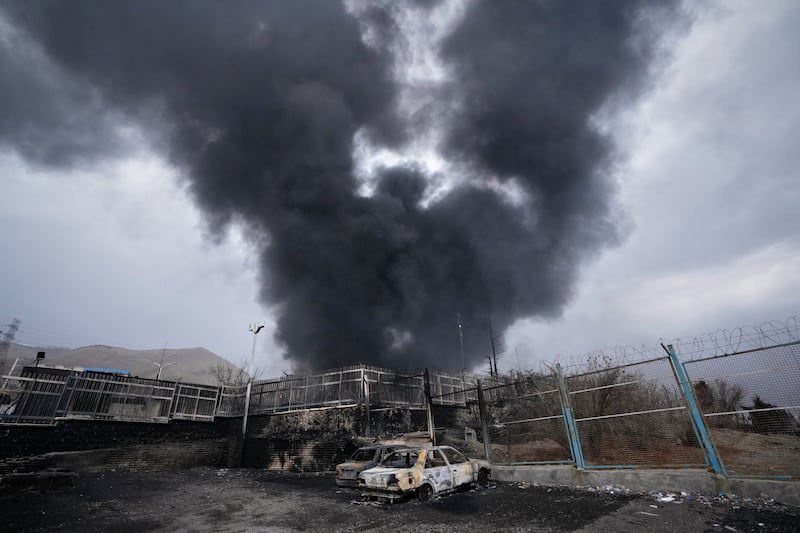
Regarding reports of Iranian drones targeting the U.S. West Coast, Haykel dismisses them as likely bluster. While acknowledging the potential for Iranian sleeper cells globally, including in the U.S., which could engage in terrorist activities, he asserts that Iran's primary military strength currently lies in its drones and short-range missiles.
Beyond Hezbollah, Iran’s allies are largely non-state actor proxy militias, including groups in Iraq, Hamas in the Palestinian territories, and the Houthis in Yemen. However, Haykel points out that Iran lacks significant state allies. Its relationships with Russia and China are complex. Russia, he notes, is currently Iran's closest ally and is benefiting from the Middle East's instability, as it increases the value of Russian oil, especially with U.S. sanctions on Russian oil being lifted due to global demand.
China, on the other hand, holds a more ambivalent stance. While they may welcome a weakened U.S. presence in the region, their heavy reliance on oil imports from the Middle East makes them averse to widespread chaos and desirous of stability for their energy supply lines.
A Long-Standing Animosity
The notion that America has been in a state of conflict with Iran since 1979 is one Haykel supports. He traces this hostility to the 1979 revolution, which brought a regime to power consistently expressing animosity towards the United States. The regime’s pervasive anti-American rhetoric, including slogans like "Death to America" and the symbolic trampling of American flags, reflects its view of the U.S. as an "evil force" and "The Great Satan" that must be expelled from the region. This hostility extends beyond military influence to encompass cultural and economic spheres.
The Iranian People: A Contrast to the Regime
Despite the regime's pervasive anti-American indoctrination, Haykel believes the Iranian populace largely rejects this narrative. He contends that most Iranians are pro-West and pro-American, weary of the current regime and aware of its hypocrisy. He acknowledges the regime's history of direct and proxy attacks on Americans, reinforcing his view of it as a hostile entity.
Perceptions of Donald Trump in the Middle East
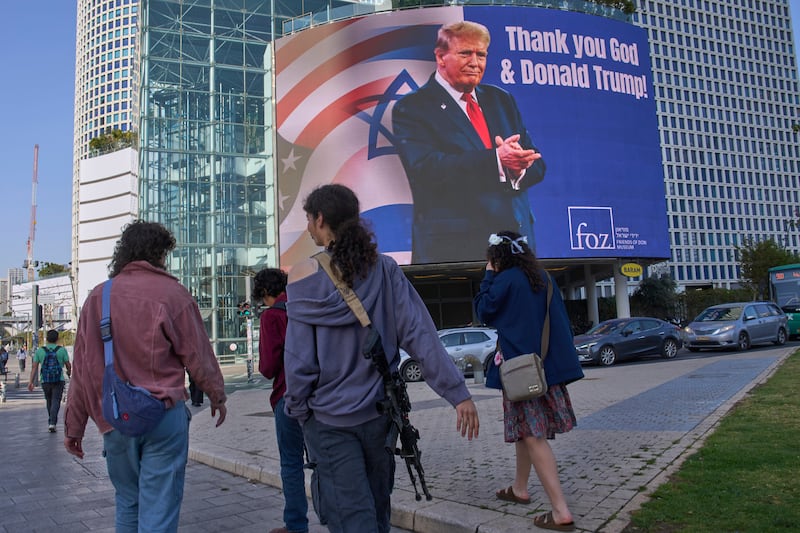
When asked about attitudes toward Donald Trump in the Middle East, Haykel notes a mixed reception. Some find him difficult to tolerate. However, many Middle Easterners perceive him as refreshing due to his directness and unvarnished display of power and desire for control. He contrasts this with past U.S. administrations, which, while espousing values like human rights, were often seen as pursuing aggressive, imperialist agendas. Trump’s open declaration of a desire to "dominate the region" is, paradoxically, seen by some as an honest articulation of U.S. foreign policy. This doesn't imply liking him, but rather a recognition of his transparent approach.
This perspective aligns with the views of Trump's supporters, who argue that his demonstration of power earns respect from other nations.
However, Haykel points out that many Middle Eastern leaders are unsettled by Trump's perceived capriciousness and erratic nature. His tendency to rapidly shift from initiating war to calling for negotiations, or to attack while simultaneously negotiating, creates an atmosphere of unpredictability and transactionalism that causes concern.
Misconceptions About Iran
Haykel believes a significant misconception Americans hold about Iran is a lack of appreciation for its rich history and sophisticated culture. He contrasts this with a simplistic view of Iranians as nomadic peoples. Having visited Iran, Haykel describes it as an incredibly beautiful and sophisticated country, citing Isfahan as a prime example of a city adorned with stunning Islamic and Iranian art, architecture, and monuments. He emphasizes the depth of Iranian society and history, which he feels is often overlooked.
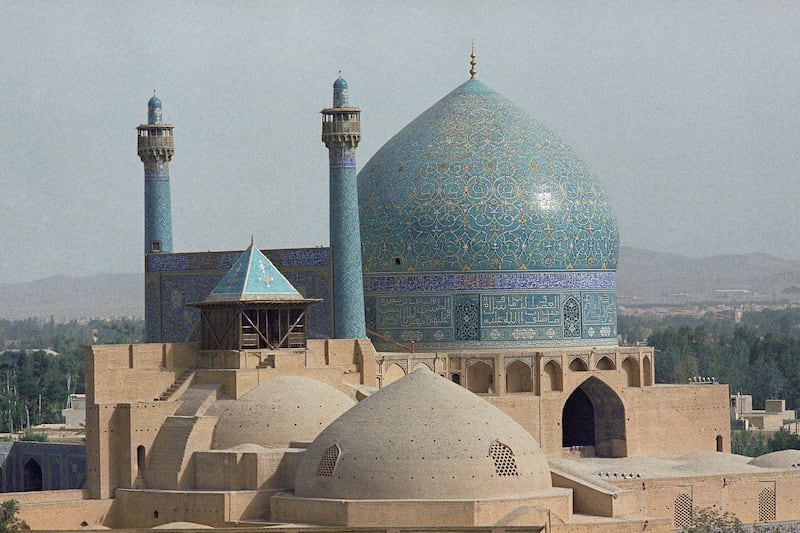 He characterizes the Iranian people as exceptionally talented, sophisticated, and educated, possessing strong institutions and a vibrant civil society. Haykel reiterates his sense that the Iranian population is eager for the regime to either moderate or be replaced.
Resources for Further Learning
For Americans seeking to deepen their understanding of Iran, Haykel recommends two notable books:
- "The Mantle of the Prophet" by Roy Mottahedeh: Described as one of the most beautiful books ever written on Iran, it offers a perspective on the Iranian Revolution through the eyes of a cleric.
- "The Shah" by Abbas Milani: A work by a Stanford professor, this book provides further insight into Iranian history and leadership.
Post a Comment for "Here’s what a Princeton Middle East expert says is the likeliest outcome in Iran"