
Utah Democrats test limits of progressive politics in new blue district. Is this what voters want?
Utah Democrats Vie for New Congressional Seat, Embracing Progressive Stances
The political landscape in Utah's newly drawn 1st Congressional District is heating up, with Democratic candidates actively seeking to establish their progressive credentials. A recent town hall event, designed to showcase the contenders vying for this newly competitive seat, revealed a strong consensus among many participants on a range of highly progressive issues.
The event, organized by Black Lives Matter and the anti-Israel advocacy group 71 Percent Coalition, saw six Democratic candidates articulate their platforms. The discussions highlighted a clear competition to demonstrate ideological alignment with the party's left wing, particularly on issues concerning foreign policy, social issues, and immigration.

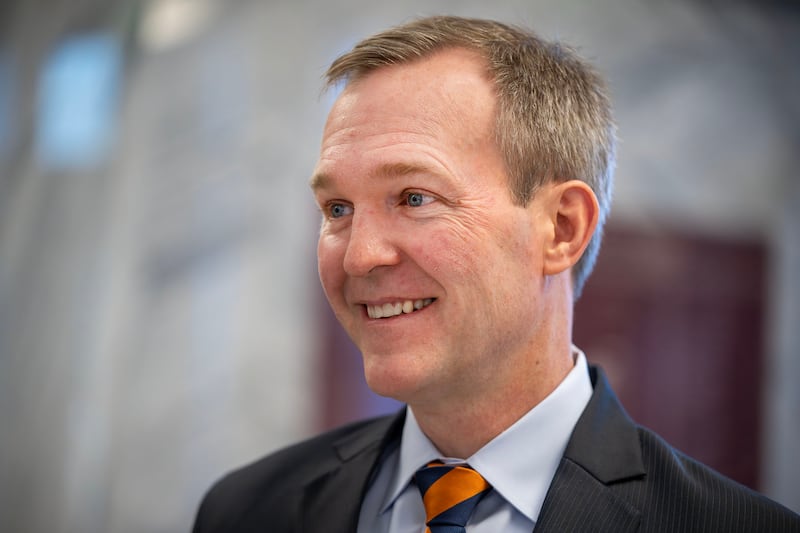
Notably absent from the town hall was Rep. Ben McAdams, a former Salt Lake County mayor. McAdams, who has out-raised his seven opponents combined, has positioned himself as a more moderate figure, seeking to balance opposition to former President Donald Trump with broader coalition-building efforts. Similarly, State Sen. Kathleen Riebe, who previously ran for Congress, did not attend but indicated agreement with the stances taken by the town hall participants on Israel, transgender treatments for minors, and the future of U.S. Immigration and Customs Enforcement (ICE).
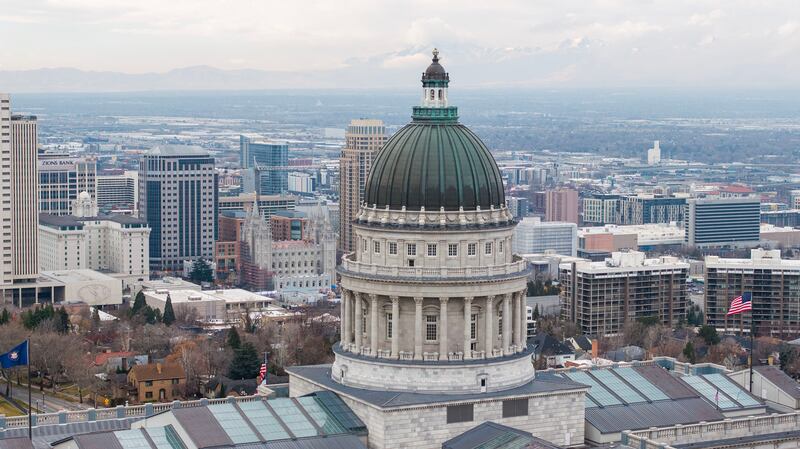
The official filing period for candidates is now underway, following the finalization of a court-ordered congressional district map. This redistricting has created a rare opportunity for Democrats to compete in a district that has historically leaned Republican, but which now shows a strong Democratic advantage, with Kamala Harris winning the area by a significant margin in the last presidential election. However, the intense partisan pressures within this urban Salt Lake City district appear to be pushing candidates toward positions that a recent national poll suggests may not resonate with the broader Democratic electorate.
Candidates Advocate for Bold Progressive Policies
The town hall was characterized by a remarkable lack of debate, with candidates largely finding common ground in their eagerness to implement ambitious progressive policies. Key themes included:
-
Foreign Policy and Aid: A significant focus was placed on re-evaluating U.S. foreign aid, with a strong sentiment against providing further financial support to Israel. Candidates expressed a unified view that the U.S. and Israel are engaged in a "crime of aggression" against Iran.
- Attorney Michael Farrell explicitly stated, "not another penny for Israel."
- Self-described democratic socialist Luis Villarreal went further, asserting, "Israel is not a real country. It is an evil and deeply fascistic economic arm of the United States’ capital interests," a statement met with enthusiastic applause from the audience.
- Salt Lake County council member Eva Lopez Chavez called for the prosecution of Israeli Prime Minister Benjamin Netanyahu and criticized Utah's law that prohibits state contracts with companies boycotting Israel.
-
Economic Redistribution: The conversation heavily emphasized wealth redistribution, with calls for increased taxes on the wealthy to fund social programs.
- Former tech lobbyist Liban Mohamed proposed a wealth tax to finance universal healthcare, childcare, and pre-kindergarten education.
-
Government Reform: Candidates also voiced support for significant structural changes to the U.S. government.
- Former state Sen. Derek Kitchen outlined a plan to expand the Supreme Court to 13 justices, implement term limits for justices, and reform campaign finance regulations.
-
Labor and Workers' Rights: Former state Sen. Nate Blouin criticized Rep. McAdams for past votes against pro-union legislation. Blouin highlighted his own legislative efforts, including proposed bills to repeal Utah’s "right to work" law and increase the minimum wage, though these did not advance to a floor vote.
National Trends and Local Disconnects
While the candidates at the town hall presented a united progressive front, a recent national poll from the Manhattan Institute suggests a potential disconnect between these stances and the views of the average Democratic voter. The poll indicated that a substantial portion of Democrats nationwide believe the party should move towards the center, rather than further left.
The poll's findings are stark: * Only 21% of Democrats believe minors under 18 should be eligible for transgender treatments. * A mere 13% view Israel as an illegitimate state responsible for post-founding violence. * Just 11% believe there should be no focus on deporting undocumented immigrants.
Jesse Arm, the author of the poll, commented on this dynamic, stating, "There is clearly a dynamic at play here where the Democratic voter is much more moderate than the median professional Democrat." He further explained that political incentives within the Democratic Party, particularly during primary elections, encourage ideological escalation rather than moderation, driven by pressure from a network of nonprofits, activists, donors, and unions.
Contrasting Approaches to Representation
Rep. Ben McAdams has defended his approach, stating his campaign is focused on "real progress for Utahns, not empty rhetoric and strongly worded tweets." He pointed to his record of expanding Medicaid and facilitating an LGBTQ nondiscrimination compromise in Utah as examples of tangible achievements. McAdams emphasized his commitment to "building coalitions" and acting as a "unifying figure," asserting that while he takes "courageous stands," he has "never been polarizing."
State Sen. Kathleen Riebe, who has focused on education funding and building relationships in rural Utah, believes that a significant lurch to the left could hinder a Democratic nominee's ability to address the needs of Utahns. She argued, "To be too far left would hinder our ability to build those alliances and move our Democratic values forward." Riebe cautioned that pushing too far left risks alienating voters and hindering the broader advancement of Democratic goals.
However, a separate poll conducted by the Deseret News and the Hinckley Institute of Politics suggests that Utah Democrats may be more receptive to left-leaning politics than their national counterparts. This poll found that a majority of Utah Democrats have a favorable view of socialism and democratic socialism, and a significant percentage approved of figures associated with progressive politics.
The six Democrats who participated in the town hall appeared ready to champion this perceived shift in the state's political leanings. Their platforms embraced concepts such as debt-free higher education, single-payer health insurance, and low-barrier housing, with candidates even engaging in lighthearted banter about who occupied the most ideologically leftward position on stage.
Post a Comment for "Utah Democrats test limits of progressive politics in new blue district. Is this what voters want?"