
If you want to support independent women's media,become a subscriber. Get an all-access pass to everything we make, including exclusive podcasts, articles, videos and our exercise app, MOVE.
The headline to this piece is a quote from a woman I worked with several years ago.
At the time, well into the latter half of an interesting and demanding career, she said her husband was about to retire and that she was certainly ready to follow suit — but not in every regard.
"I don't need to keep working from a financial point of view,'' she said. "But the idea of full retirement gives me the shivers.''
Watch: Understanding trauma bonding in relationships. Post continues below.
When I asked her why, she didn't hesitate.
"Because of my husband,'' she said. "I love him, but I don't want to spend all day, every day with him."
She said it calmly, without guilt or drama. Just a simple truth.
At the time, I thought it was a bit sad to hear she felt that way.
I had always thought that after a lifetime of work and perhaps raising a family together and all that comes with it, the idea of being with your spouse or partner at all times was the ultimate couple goal.
Now that I've just tipped over the big "Six-Oh", I've started noticing a pattern in conversations with women my age and older.
Their husbands are counting down to retirement, but the women are… not. Not all of them, anyway, and not in the same way.
Another friend told me her husband is practically giddy about retirement. He's lined up golf games, lunches, plans for how they'll fill their days.
She smiled when she told me what she said to him.
"I told him he'd better make some more friends before he retires because he won't be hanging around with me all day."
It was a joke — but there was still some truth to it.
Because beneath these remarks is something I keep hearing again and again — a quiet unease about what happens when your partner suddenly becomes your full-time companion — the thing you longed for in the early, heady days of becoming a pair.
We're told retirement is the reward. The long exhale after decades of work, family commitments and all the responsibilities, ups and downs that are part of living and loving.
Retirement means more time together. Slower days. Shared routines and enjoying a little financial freedom.
And for some couples, that's exactly what it is. I have friends who got together in their teens and who've just celebrated their 40th wedding anniversary. They're both retired now and are loving it. They travel overseas, make regular short local trips, eat out, explore, walk, spending time with their families and friends and so on.
But for others, especially women who have spent years balancing work, raising children, managing households and carving out tiny pockets of independence for the sake of sanity, it can feel different.
Because somewhere along the way, we built lives that included space.
Separate routines. Different interests. Time apart.
Personally, I've had more than a decade of "space" now, and happily single I can't imagine sharing my physical or emotional space too closely with another adult.
And that brings me to another version of this conversation that doesn't get talked about as much. What retirement looks like if you're doing it alone.
Because while many of my friends are quietly negotiating how much time they'll spend with their partners, I'm thinking about something else entirely.
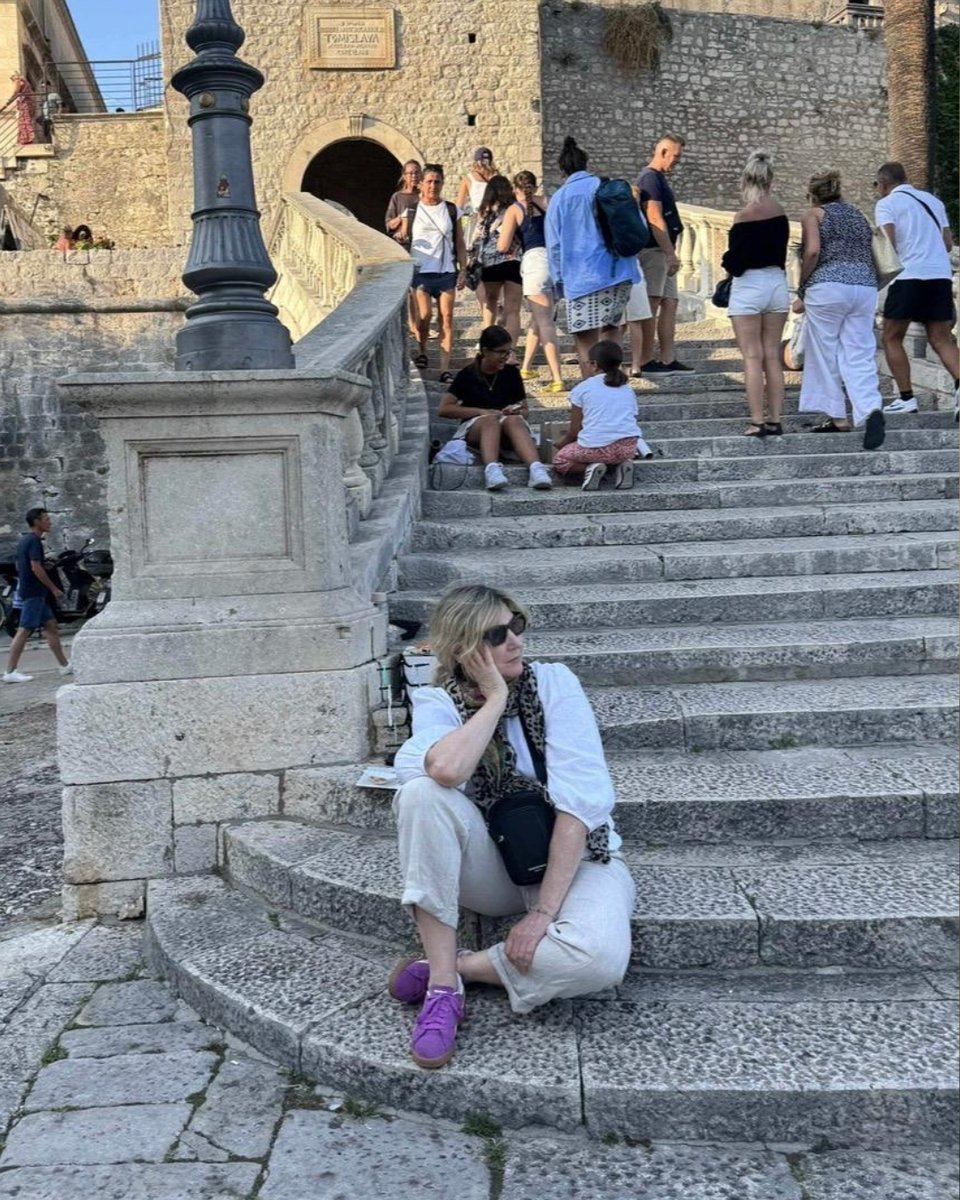 Image: Supplied.
What happens when there's no one else in the house at all?
No one to talk to over breakfast.
No one to share the small, inconsequential moments of a day.
No one whose routines you need to work around, or who needs to work around yours.
For years, being single has given me something I value deeply and that's autonomy.
My time is my own. My space is mine. My decisions don't require negotiation.
But retirement, I suspect, changes the texture of that.
Because work isn't just income. It's structure. It's incidental connection. It's purpose stitched quietly through the week.
And when that falls away, the silence might land differently.
I imagine mornings that stretch a little too long. Days when the only conversation is with the barista. Weeks when it would be very easy not to be noticed at all.
And yet there's another side to that same coin.
The freedom to shape your days entirely on your own terms. To travel without compromise, follow curiosity wherever it leads. To build a life that isn't about fitting in with someone else, but expanding into yourself — maybe into a new self.
If couples are negotiating space in retirement, perhaps those of us on our own are negotiating something else.
Not loneliness, necessarily. But how to stay connected – and I mean intentionally, actively – in a life that could very easily become too quiet.
Maybe it all comes back to the same question about "space". Not whether we're partnered or alone, but how much space we actually want, and what kind.
Space isn't necessarily a sign something is wrong. In many cases, it's the reason things work so well for many couples.
In fact, Australian psychologist Sandy Rea says maintaining a sense of individual identity is critical in long-term relationships, particularly as couples move into later life stages where roles begin to shift.
So, what happens when that space disappears?
When one person is suddenly home all day, wanting to talk, connect, and be together, while the other is still holding onto a rhythm that includes independence?
It's not about not loving your partner.
It's about not wanting to lose yourself.
There's also a quieter layer to this and maybe one that feels harder to admit.
For many women and I speak for myself in this — life has been about being needed.
By children. By partners. By work colleagues. By friends. By everyone.
And just as that begins to shift, as kids grow up and life opens up again, retirement can feel like the start of a new kind of expectation.
Not explicit. Not spoken. But there.
Still happily working, I'm often asked, "when are you going to stop?" or "what are you going to do when you stop working?"
I'm not entirely sure what the answer is — more writing? Some solo travel? Learn how to upholster? Visit my children interstate more often? Get into volunteering? All of it I hope!
For couples, the expectation can be, more time together. More shared days. More… availability.
What I'm starting to realise is this isn't just anecdotal.
As Relationships Australia highlights, major life transitions such as children leaving home or retirement can place unexpected pressure on relationships, as couples are forced to renegotiate how they spend their time and relate to each other day-to-day.
Retirement also means reshaping your sense of identity and that's enormous if your self-worth has been linked to your career and working life.
And while we tend to plan for retirement financially, experts say one of the most overlooked conversations can be: how much time do we actually want to spend together?
Because sometimes, if we're honest, the answer probably isn't "all of it".
Listen: Do you think this is an aspirational relationship goal? Or a flashing red flag?
It's also why retirement can be a surprisingly vulnerable time for relationships. Shifts like this are increasingly being linked to later-in-life separations — something I'm seeing in my extended circle. Not always because couples don't care about each other, but because the adjustment is bigger than expected.
Maybe that's the part we don't talk about enough.
Because it sounds hostile to admit you don't want unlimited time with the person you've built a life with. Or that the "you" of 30 or 40 years earlier, no longer wants to spend every waking second with their beloved.
But maybe it's not ungrateful or unkind, bitter or mean. Perhaps it's realistic.
I'm certainly not a relationships expert by any stretch, but observing my friends and others I know who've had successful long-term relationships, it seems to be not about constant togetherness, but about balance.
About choosing each other, while crucially, still holding onto the parts of yourself that exist outside the relationship.
Maybe the real challenge of retirement isn't financial or logistical, but instead it's emotional.
How do two people, after decades together, reshape their lives through a major period of transition without stepping on each other's independence?
How do you stay connected without feeling consumed by the other person?
And how do you say, honestly and without guilt, "I love you. I'm just not sure I want you home all day".
Right or wrong, I've told my sons, who are amazing and respectful young men, that love doesn't always look like togetherness. Sometimes it looks like space. Like separate routines. Like having something that belongs just to you.
And possibly retirement isn't about the complete merging of two lives.
Maybe it's about learning, all over again, how to live alongside each other without losing yourself in the process.
Feature Image: Supplied.


No comments:
Post a Comment