
Melbourne Robot Joins Aged Care Homes
In a Mecwacare residential aged care facility in Ballarat, Victoria, a unique team member has joined the staff. This four-foot, brightly coloured robot, named Abi, possesses an impressive repertoire, capable of conversing in up to 90 languages, occasionally blowing bubbles, and crucially, remembering personal details like the songs residents grew up listening to.
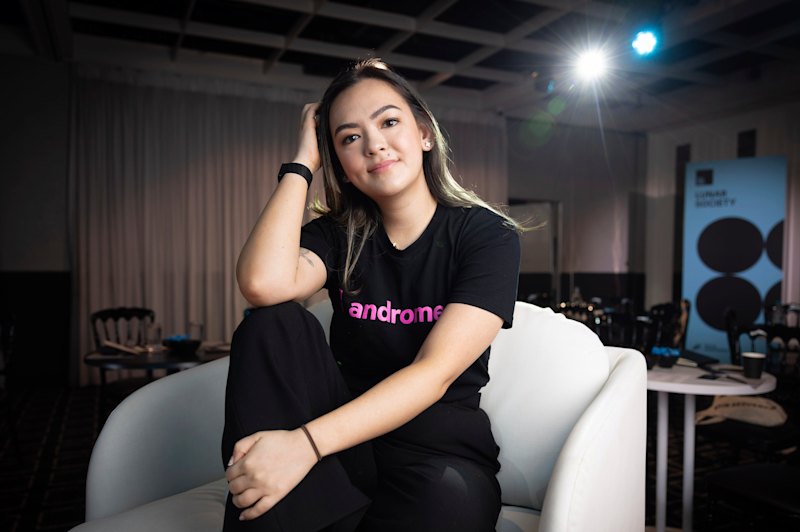
The genesis of Abi lies with 26-year-old mechatronics engineer Grace Brown. She first built the prototype in her bedroom during a Melbourne lockdown, driven by a sense of personal loneliness. Five years later, Brown is the chief executive of Andromeda Robotics, a Melbourne-headquartered company now valued at approximately $100 million, with a growing presence in San Francisco. What began as a personal hobby has evolved into a vision for something far exceeding the scope of aged care.
"The most challenging aspect isn't what people typically anticipate," Brown explains. "It's not the engineering intricacies, nor is it the fundraising efforts. Instead, it's the profound responsibility of essentially authoring the behavioural guidelines for a robot interacting with individuals experiencing loneliness, grief, confusion, or even nearing the end of life. This is happening in real-time, within actual homes, with families observing the interactions. There's no existing manual for such complex scenarios."
 This month marks a significant milestone for Andromeda, with the deployment of its 22nd Abi robot across the Victorian not-for-profit provider, Mecwacare. This rollout represents what the company describes as the largest deployment of empathetic humanoid companion robots within Australian aged care to date. Consequently, over 1500 residents are now sharing their daily lives with these innovative machines. The company is also preparing for its first US customer, located on the West Coast, who will go live shortly.
The need for such technology is underscored by alarming projections. Australia is facing a significant shortfall of at least 110,000 aged-care workers by 2030, according to data from the Committee for Economic Development of Australia. Compounding this, Brown's own research highlights a stark reality: 40 per cent of Australian aged care residents report receiving no visitors in a given month, a figure that rises to 60 per cent in the United States.
"Loneliness at the end of life isn't simply about the absence of people," Brown elaborates. "Most residents are, in fact, surrounded by others. True loneliness stems from the absence of someone who truly knows you. Someone who can recall the name of your first dog, or who notices you've become unusually quiet today compared to yesterday."
Andromeda is by no means the sole innovator in this burgeoning market. Israel's Intuition Robotics has developed ElliQ, a lamp-like tabletop companion that recently achieved a significant milestone by becoming the first social AI robot to be fully reimbursed by a US Medicaid program in Washington state. Japan's Paro, a therapeutic seal robot, has been a familiar presence in care homes worldwide for two decades. Other contenders include Groove X's Lovot, offering a furry, pet-like alternative, and South Korea's Hyodol dolls, powered by ChatGPT technology and already in over 12,000 homes.
Andromeda's strategic approach hinges on the belief that a full-sized humanoid, specifically engineered for empathy and more akin in spirit to Pixar's fictional healthcare robot Baymax than a simple lamp, represents the optimal form factor for widespread adoption.
The company's $23 million Series A funding round, secured last September and led by San Francisco-based Forerunner Ventures with participation from CSIRO-linked Main Sequence, Rethink Impact, and Perth-based Purpose Ventures, has fuelled Brown's relocation to the US and Andromeda's ambitious American launch. While the company has not publicly disclosed its current valuation, the investment signifies strong confidence in its future.
Mecwacare reports encouraging early results. The company's internal research indicates that 74 per cent of staff observed a reduction in resident agitation when Abi was present, with the robot receiving an overall satisfaction rating of nine out of ten. Anne McCormack, Chief Executive of Mecwacare, has even begun referring to Abi as their "happiness assistant."
However, these findings are distinct from rigorous clinical trials. A 2024 feature in the journal Nature highlighted a limited evidence base for such technologies, raising concerns about the potential for infantilisation among dementia residents and the risk that this technology might only be accessible to the most well-funded facilities.
Brown readily acknowledges these concerns. "The resistance typically arises before Abi is introduced, not after," she states. "Those who are most sceptical in theory are frequently the ones who, within a week of deployment, are inquiring when Abi can play a specific song their mother used to love."
Beyond the therapeutic benefits, there's also the critical consideration of potential harm. Andromeda has encountered what Brown terms "minor incidents," where Abi's interactions have not been well-received. She stresses that none of these incidents have resulted in resident injury, and each facility has a designated support lead capable of pausing the robot at any moment. "We conduct post-incident reviews with the same rigor as a hospital after a clinical event."
A more pressing challenge for Brown and Andromeda is the absence of clear regulatory frameworks. As Abi is not classified as a medical device, a toy, or a human staff member, it currently occupies a regulatory grey area.
"The foundational principles being established now will profoundly influence how billions of people ultimately interact with these machines," Brown asserts.
She views aged care as merely the initial phase of a much grander objective. Her conviction lies in the imminent widespread integration of billions of robots into human environments, with a significant deficit in their ability to comprehend social cues and context. Andromeda aims to provide the "social operating system" that these machines will eventually require.
"If our social operating system proves effective here, it will be adaptable anywhere," Brown concludes. "The sheer scale of what we are building positions us to be a company worth at least $100 billion."
Post a Comment for "Melbourne Robot Joins Aged Care Homes"