
The secret Nazi weapons that were years ahead of their time
The Wunderwaffe: Nazi Germany's Quest for Technological Supremacy in World War II
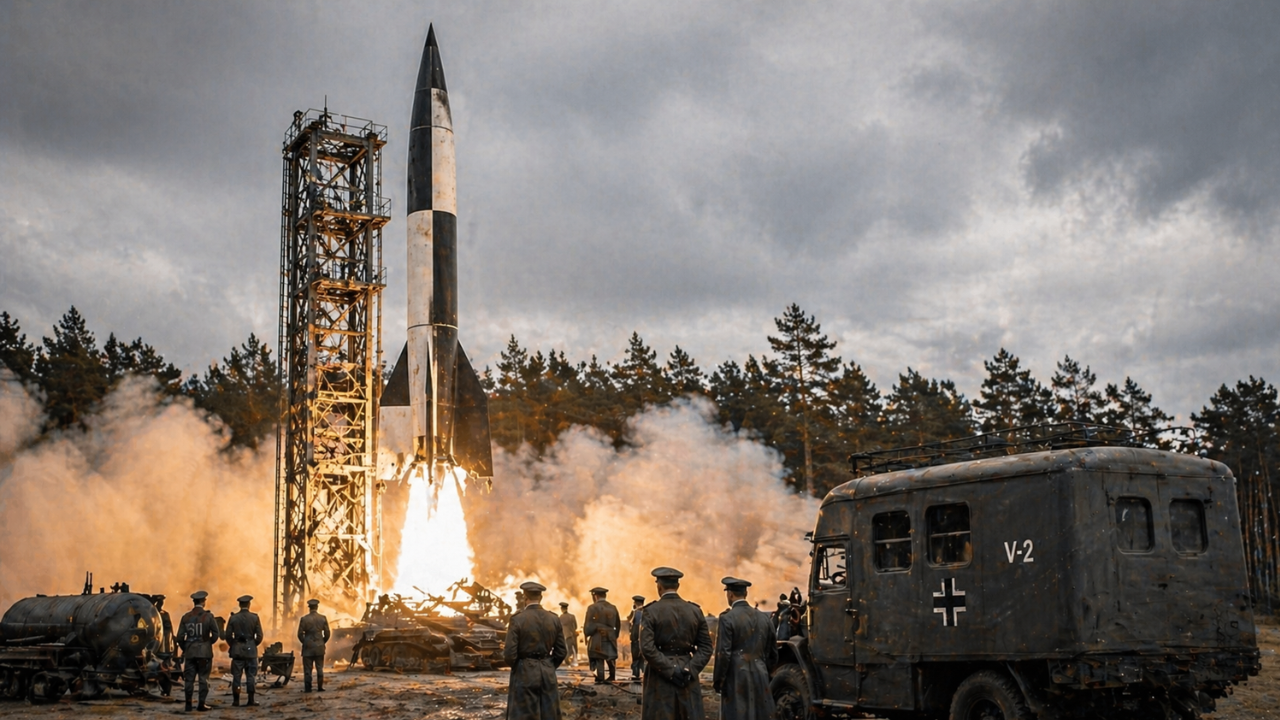 During the tumultuous years of World War II, Nazi Germany embarked on an ambitious and often desperate quest for technological superiority. As the tide of war began to turn against them, the regime poured significant resources into developing so-called “wonder weapons,” or Wunderwaffe. These were not merely incremental improvements on existing military hardware; they represented a radical departure, aiming to fundamentally alter the course of the conflict through sheer technological prowess rather than overwhelming manpower. While many of these groundbreaking projects arrived too late or were manufactured in insufficient quantities to make a decisive impact, their underlying designs were often years, and in some cases, decades, ahead of their contemporaries.
The V-2 Rocket: Ushering in the Ballistic Missile Age
Among the most revolutionary innovations to emerge from Nazi Germany was the V-2 rocket. Spearheaded by a brilliant team of engineers, including the visionary Wernher von Braun, the V-2 was a marvel of its time, claiming the title of the world's first long-range guided ballistic missile. Launched from mobile platforms, these rockets achieved astonishing speeds, reaching supersonic velocities and briefly touching the edge of space before hurtling towards their targets. A critical advantage of the V-2 was its invulnerability once launched; unlike conventional artillery, it could not be intercepted. Cities like London and Antwerp bore witness to its devastating power, experiencing widespread destruction and a profound sense of psychological dread.
The V-2 represented a monumental leap forward in rocket propulsion and guidance systems. The legacy of this weapon extended far beyond the battlefield. Following the war, both the United States and the Soviet Union eagerly seized upon captured V-2 technology and the expertise of German scientists. This influx of knowledge and hardware proved instrumental in kickstarting their own nascent missile development programs and, crucially, their ambitious space exploration endeavors.
The Messerschmitt Me 262: Dominating the Skies with Jet Power
Another paradigm-shifting development was the Messerschmitt Me 262, a fighter aircraft that proudly held the distinction of being the world's first operational jet-powered fighter. At a time when the skies were dominated by propeller-driven aircraft, the Me 262 offered a breathtaking advantage in speed, capable of exceeding 800 kilometres per hour. This made it significantly faster than any Allied fighter it encountered.
In combat engagements, the Me 262 proved to be a formidable opponent. Allied pilots found themselves struggling to cope with its blistering speed and potent firepower. However, the Me 262's potential was ultimately curtailed by a confluence of factors: significant production delays, chronic fuel shortages that hampered operational readiness, and strategic miscalculations by the Nazi leadership.
Despite its limited deployment and the constraints placed upon it, the Messerschmitt Me 262 undeniably heralded the dawn of the jet age. Its innovative design principles had a profound and lasting influence on aircraft development across the globe in the post-war era.
The Horten Ho 229: A Precursor to Stealth Technology
Perhaps one of the most astonishingly futuristic designs conceived during this period was the Horten Ho 229, a prototype flying wing aircraft. Constructed predominantly from wood, its sleek, aerodynamic shape was intentionally designed to minimise radar reflection, leading many to consider it an early, remarkable precursor to modern stealth technology.
The aircraft's intended role was to penetrate enemy airspace undetected by radar, delivering its bomb payload at high speeds before Allied defences could react. Although it never achieved full operational status before the war's conclusion, the fundamental design principles of the Ho 229 would resurface decades later in the development of advanced stealth aircraft. Modern analyses have indeed suggested that its unique shape could have significantly reduced its radar signature, though not to the extent of contemporary stealth capabilities.
The Type XXI U-Boat: Revolutionising Submarine Warfare
In the naval arena, Germany's Type XXI U-boat represented a significant evolution in submarine design and capability. Unlike its predecessors, which spent considerable time operating on the surface, the Type XXI was engineered for prolonged underwater missions. It boasted substantially improved battery capacity, allowing it to remain submerged for extended durations, and a highly streamlined hull that enabled much greater underwater speeds. These innovations made it exponentially more difficult for Allied forces to detect and intercept.
While only a handful of Type XXI U-boats were commissioned and deployed before the war's end, the submarine's advanced design laid the groundwork for virtually all modern submarine development. Its influence is evident in naval fleets worldwide, shaping underwater warfare for generations to come.
The V-1 Flying Bomb: The Dawn of Cruise Missile Technology
Even before the V-2, Germany had unleashed the V-1 flying bomb, colloquially known as the "buzz bomb" due to the distinctive, unsettling sound of its pulsejet engine. The V-1 was essentially an early iteration of a cruise missile, employing its unique engine to travel considerable distances before impacting its target. While less sophisticated than the V-2, it was produced in substantial numbers and was extensively used against Allied cities. The weapon was relatively cost-effective to produce and served as a potent demonstration of the potential of unmanned aerial attack systems. The fundamental concept pioneered by the V-1 would eventually evolve into the sophisticated cruise missiles that are a staple of modern military arsenals.
Why the Wunderwaffe Didn't Turn the Tide
Despite their remarkable technological sophistication, these advanced weapons ultimately failed to secure victory for Nazi Germany. Several critical factors contributed to this outcome. Firstly, many of these groundbreaking projects were initiated too late in the war, by which point Germany was already facing insurmountable pressure on multiple fronts. Secondly, persistent production challenges and severe resource shortages severely limited the scale of their deployment. Finally, internal conflicts and strategic indecision within the Nazi leadership frequently led to delays or the misapplication of these potent weapons. A prime example is the Me 262, which was initially diverted from its role as a fighter to serve as a bomber, thereby diminishing its effectiveness during crucial phases of the conflict.
A Lasting, Complex Legacy
Although they did not achieve their ultimate objective of winning the war, these advanced German weapons left an indelible mark on the landscape of post-war technology. Allied forces not only captured the physical hardware but also secured the invaluable expertise of the scientists and engineers who had developed them. This transfer of knowledge was a pivotal element in shaping the intense arms race of the Cold War, driving advancements in modern aviation, and igniting the ambitious space race. Technologies conceived and honed for the grim purpose of warfare ultimately contributed to scientific and engineering progress on a global scale.
The narrative of Nazi Germany's advanced weaponry serves as a stark reminder of how rapidly technology can evolve when propelled by the immense pressures of war. It also brings into sharp focus the profound ethical quandaries that accompany scientific progress when it is driven by conflict. Many of these innovations were undeniably brilliant from an engineering standpoint, yet they were brought into being for destructive ends under one of history's most brutal regimes. Today, they stand as a dual testament to human ingenuity and a sobering cautionary tale about the potential misuse of that very ingenuity.
Post a Comment for "The secret Nazi weapons that were years ahead of their time"