
Crackdown on Toxic Speech at London Protests
Overview of the Protests and Police Response
Eleven individuals were arrested for hate crime offenses during two major protests in London on Saturday. The Metropolitan Police confirmed that these arrests occurred amid the Unite the Kingdom rally, organized by far-right activist Tommy Robinson, and the pro-Palestinian Nakba 78 rally. Despite the presence of around 4,000 police officers, which marked an "unprecedented" policing operation, clashes between the rival groups were avoided.
The protests proceeded relatively peacefully, with a significant number of arrests made across both events. A total of 43 people were detained, with 20 affiliated with the Unite the Kingdom protest and 12 with the Nakba rally. Eight additional arrests were not linked to either event, or their affiliation could not be determined. Three of these arrests were due to the use of live facial recognition technology.
Among the 11 hate crime arrests, two were from the Nakba protest, while nine were from the Unite the Kingdom march. Seven more hate crime offenses are under investigation, with suspects still at large. One of the Nakba protesters was arrested for supporting a proscribed organization. The offenses included those motivated by race, religion, sexuality, and disability.
Policing Measures and Cost
The Met Police had pledged an unprecedented crackdown on antisemitism and other forms of hate speech at the marches. Organizers of both rallies were warned they risked prosecution for hate offenses under new powers being used by Scotland Yard for the first time. Other offenses leading to arrests included assault on emergency workers, possession of offensive weapons, and failure to remove face coverings.
To prevent any potential clashes, the police deployed armoured vehicles, horses, dogs, drones, and helicopters. A "sterile zone" was established between the two marches, as tens of thousands of participants marched through central London. The operation cost £4.5 million, with 660 officers brought in from other parts of the country.
Drones were used to monitor both protest routes, and live facial recognition was employed for the first time in a protest policing operation at Euston and King's Cross St Pancras railway stations.
Details of the Protests
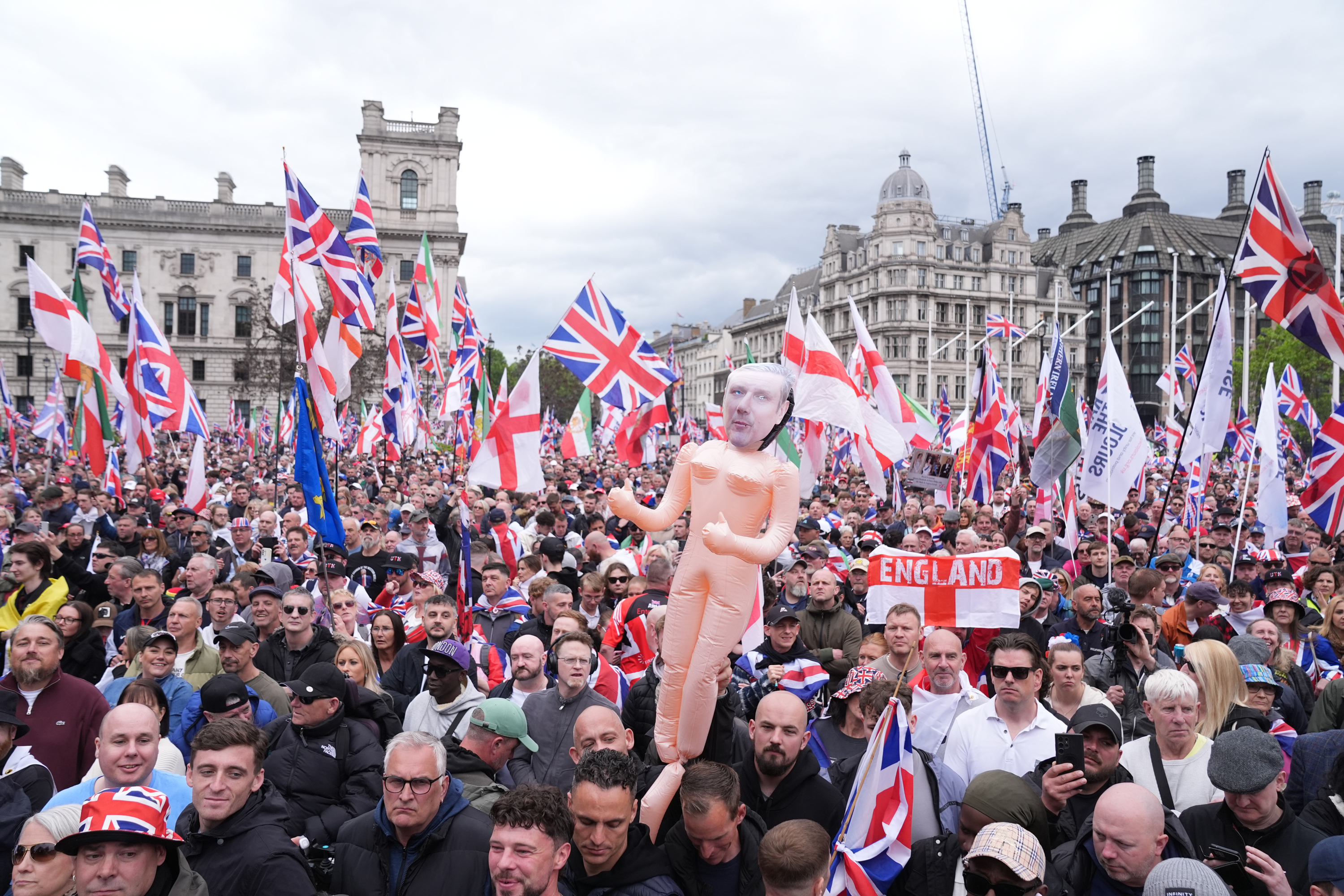
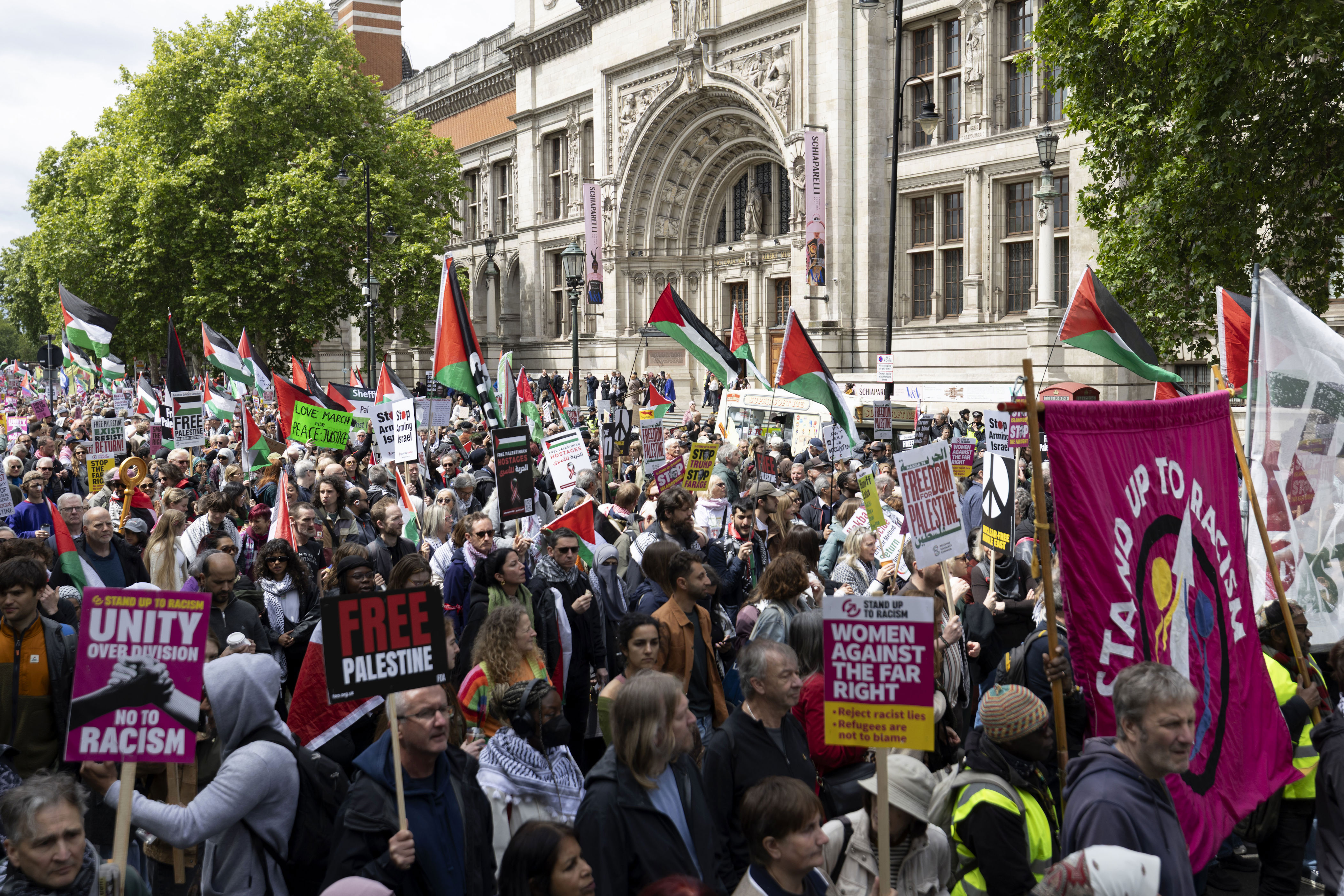
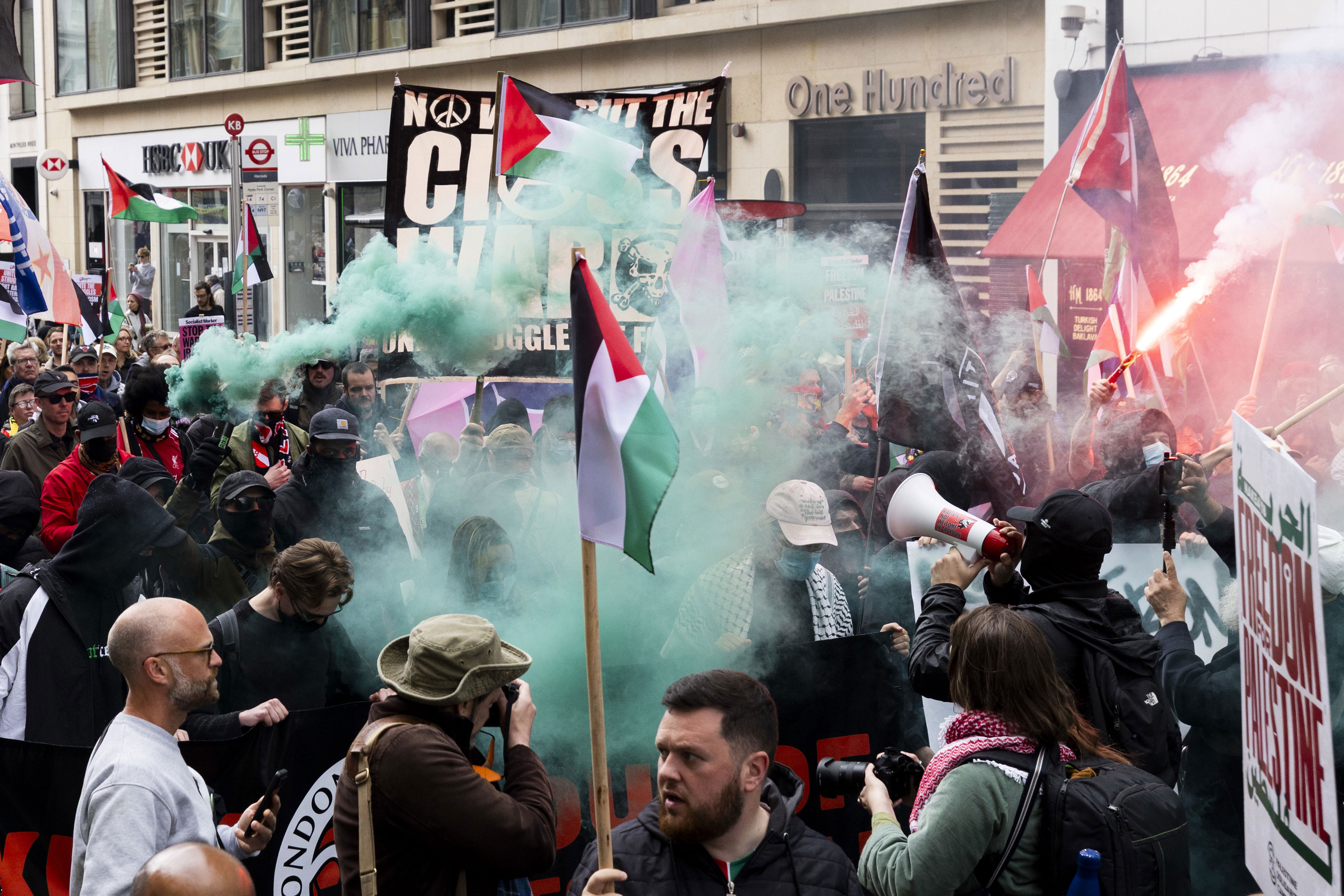
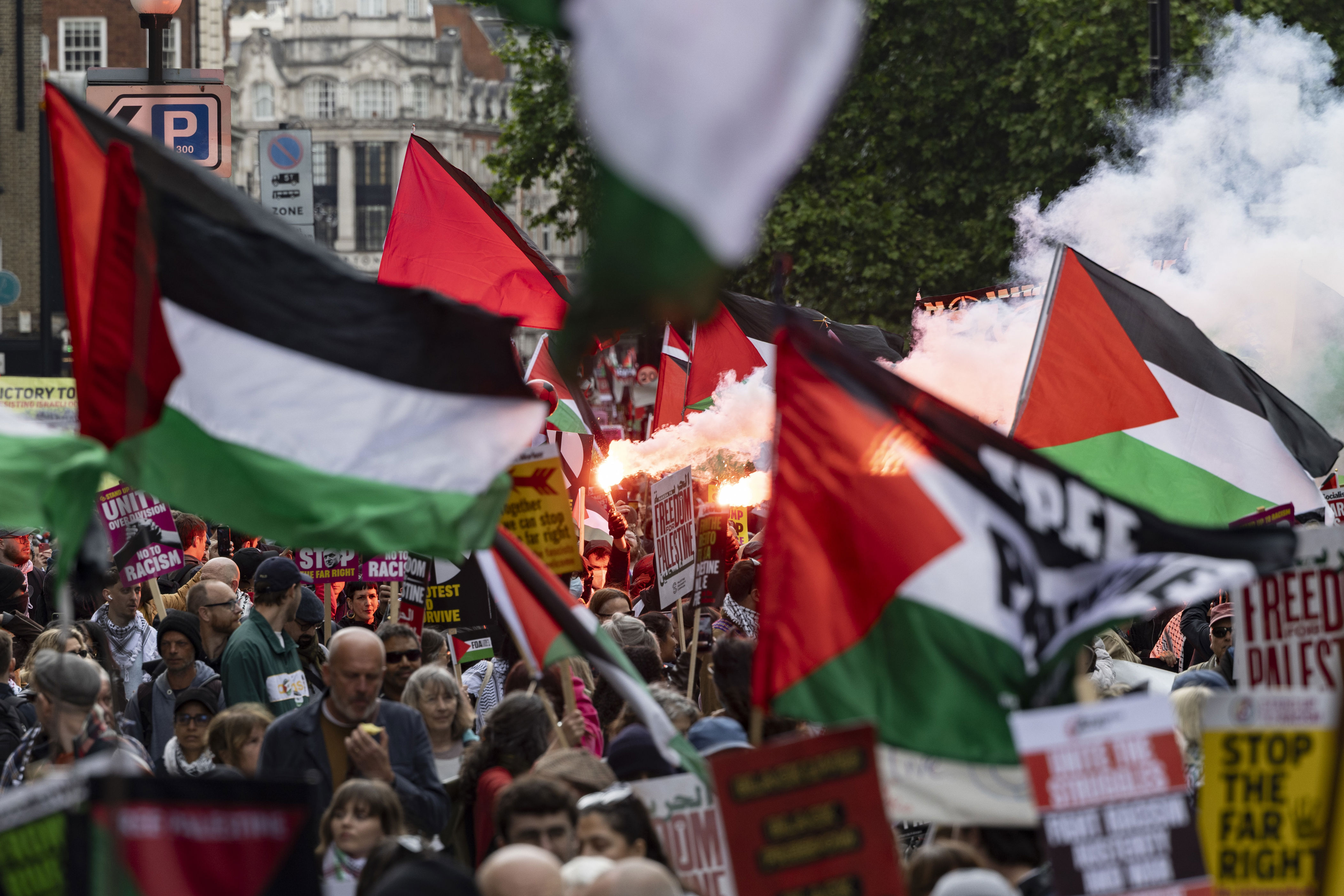
The Unite the Kingdom rally began on Kingsway and ended in Parliament Square. Participants called for stricter controls on migration and political change. Meanwhile, the pro-Palestine demonstrators started in Kensington and concluded in Pall Mall, commemorating the 78th anniversary of the Nakba, when approximately 750,000 Palestinians were displaced from their homes.
Although official figures have not been released, early estimates suggest around 20,000 people attended the pro-Palestine protest, while approximately 60,000 participated in the Unite the Kingdom march. These numbers represent a lower turnout compared to last year’s Unite the Kingdom march, which drew around 150,000 attendees in September.
In addition to the arrests at the two protests, 22 more were made at the FA Cup Final at Wembley Stadium. Four officers were assaulted during the events, though none seriously, and six others faced hate crime offenses.
Key Speakers and Messages
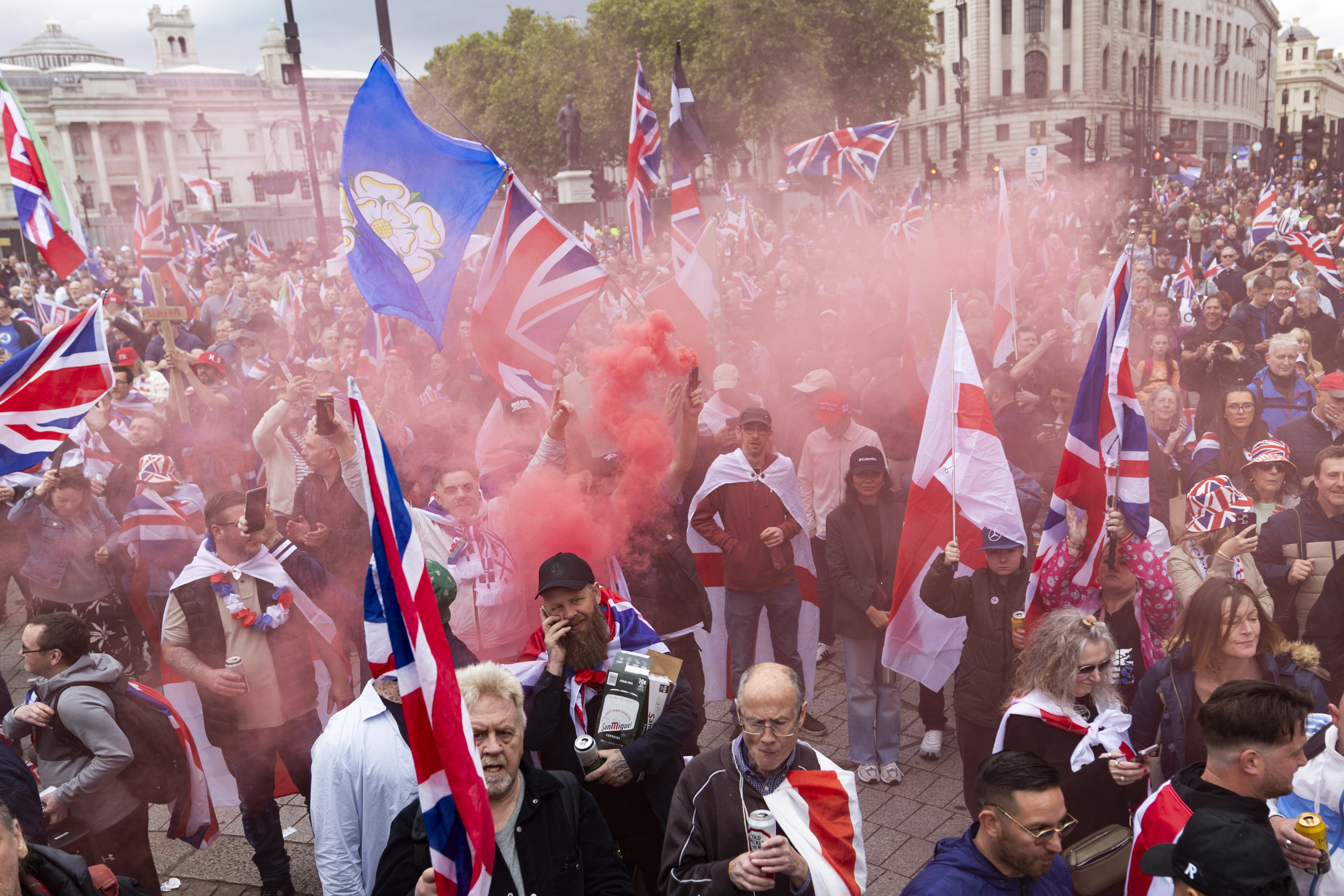
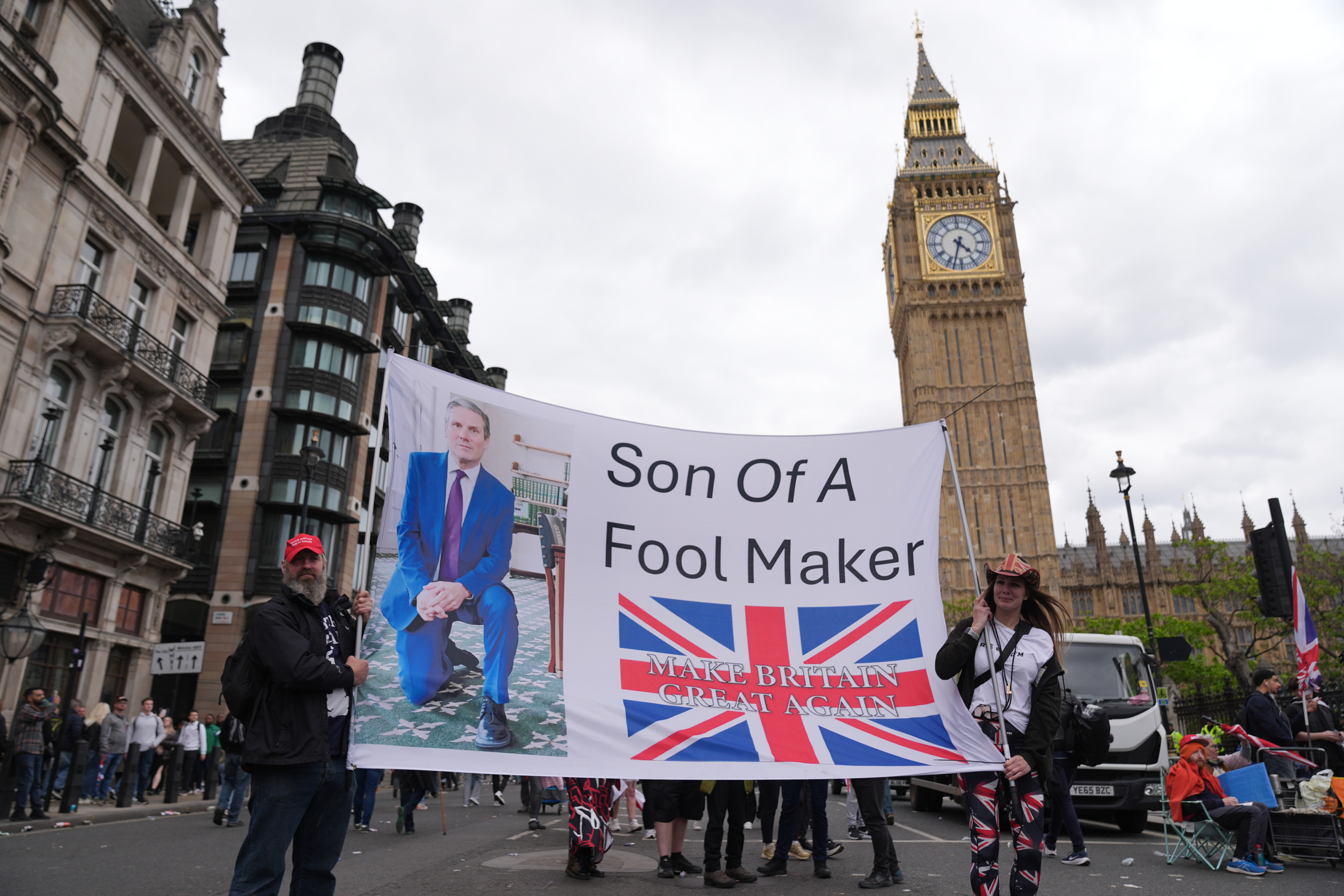
During the Unite the Kingdom rally, Union flags were waved, and chants against Prime Minister Keir Starmer were heard. Many participants wore "Make England Great Again (Mega)" red hats. Discussions centered on the desire to see the current government replaced and the belief that white working-class people are being discriminated against in the UK.
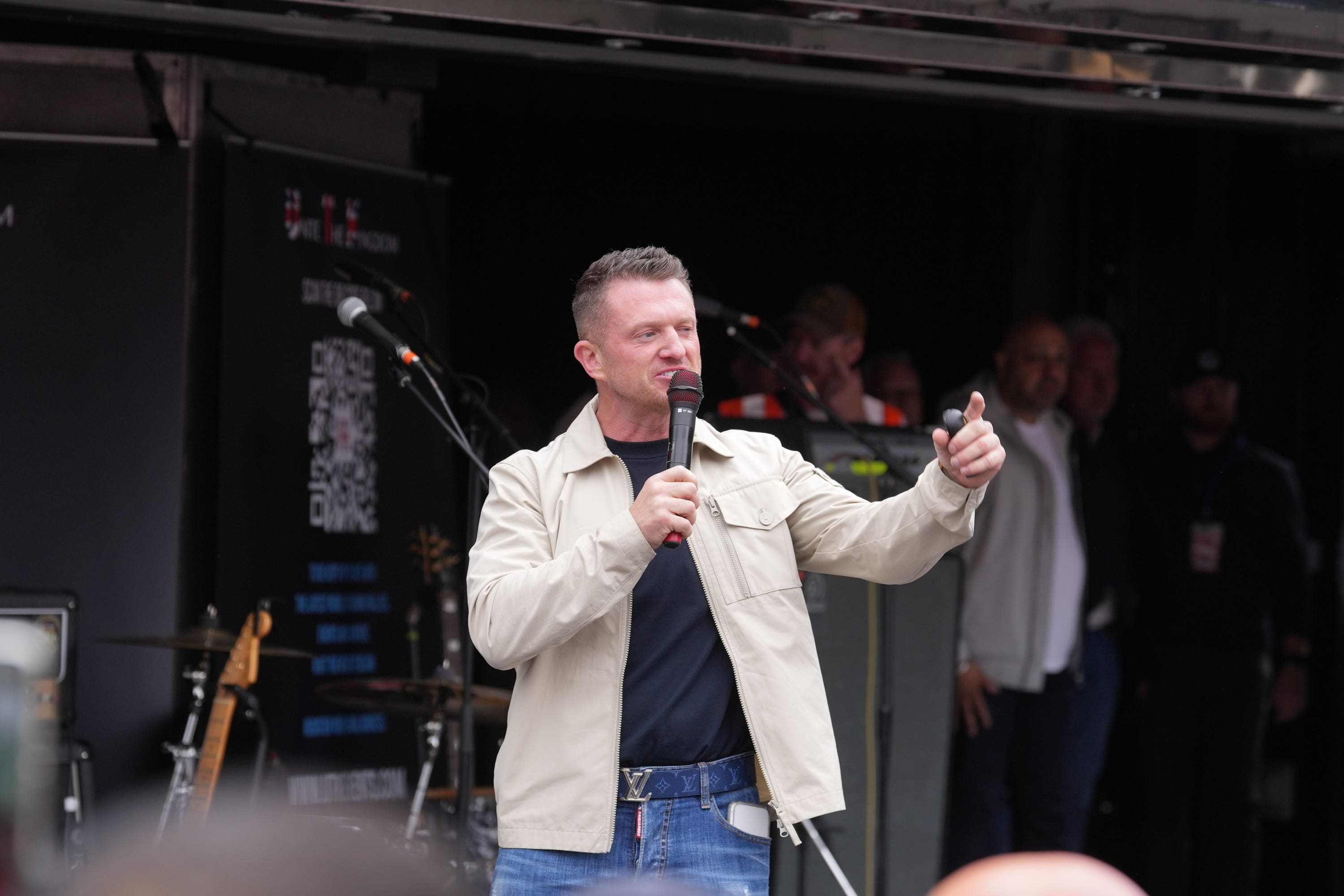
Tommy Robinson, who spoke on stage in Parliament Square, posted a video on X stating, “Keir Starmer, the country’s awake, your days are numbered.” He urged his audience to get involved in politics, including registering to vote, and emphasized the importance of the upcoming 2029 election.
Other speakers at the rally included Katie Hopkins, Laurence Fox, and Siobhan Whyte, whose daughter Rhiannon was murdered by a Sudanese asylum seeker. Whyte criticized Keir Starmer, claiming he failed her and her daughter.
Pro-Palestine Rally Highlights
During the Nakba Day march, protesters carried banners and placards with messages such as "Smash the far right" and "Free Palestinian Hostages," with many wearing keffiyehs. Demonstrators described themselves as anti-genocide and anti-fascism, emphasizing their opposition to antisemitism.
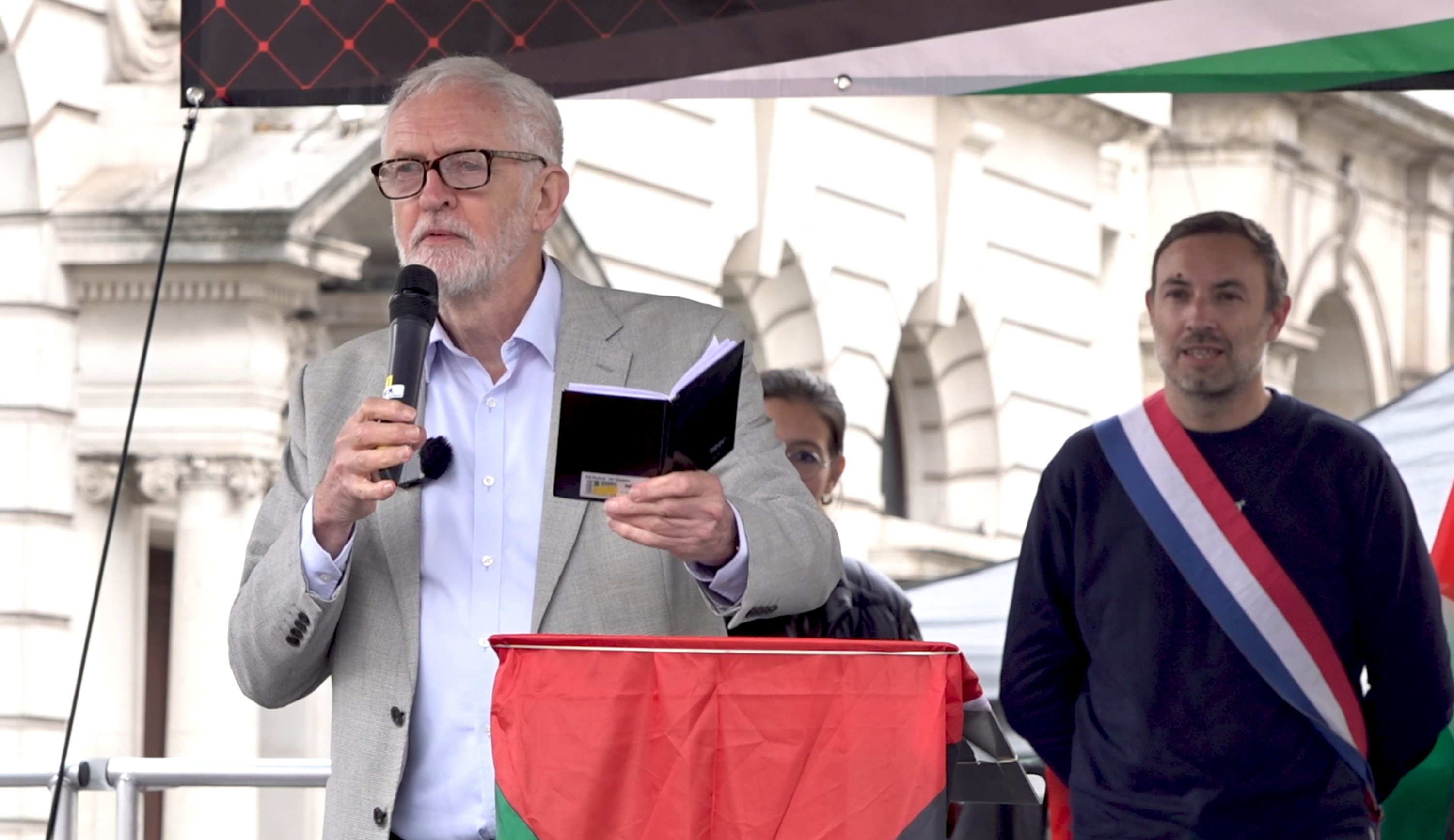
Speakers at the rally included Jeremy Corbyn, Zarah Sultana, Diane Abbott, and Apsana Begum. Ms. Begum stated that the movement would not be divided by the "far right," while Ms. Abbott highlighted a "common enemy" in the form of racists, fascists, and antisemites.
Ms. Sultana criticized Andy Burnham as "not an alternative" to Sir Keir Starmer, while Mr. Corbyn called for a change in policy rather than just personalities.
Conclusion and Public Statements
Weyman Bennett, co-convenor of Stand Up To Racism, said that Tommy Robinson attempted to silence solidarity with Palestine and divide communities through racism and Islamophobia, but failed. Thousands stood together to defend the right to protest and reject the far right.
The Nakba protest concluded around 5:30 pm, while the Unite the Kingdom protest ended at 6 pm. Both events proceeded largely without significant incidents.
Before the marches, new guidance from the Crown Prosecution Service (CPS) encouraged prosecutors to consider whether protest placards, banners, and chants on social media could constitute offenses of stirring up hatred. Officers were prepared to arrest and charge for hate speech crimes, including chants like “death to the IDF” or references to “intifada.”
The Government blocked 11 foreign nationals from entering the UK ahead of the Unite the Kingdom rally, described by the Prime Minister as “far-right agitators.”
Post a Comment for "Crackdown on Toxic Speech at London Protests"