
Judge allows Luigi Mangione's notebook and gun as evidence in murder trial
Certain evidence discovered in Luigi Mangione's backpack during his arrest will be excluded from his upcoming trial, according to a New York judge's decision on Monday, while other significant items—such as the suspected murder weapon and notes showing dissatisfaction with the healthcare system—will remain admissible.
Mangione's legal team claimed that local officers conducted an unlawful search of his backpack during his arrest at a Pennsylvania McDonald's in December 2024, just days afterUnitedHealthcare CEO Brian Thompsonwas fatally shot on a sidewalk in Manhattan. Law enforcement officers kept examining the bag at the Altoona police station before requesting a search warrant later that same day.
Judge Gregory Carro decided that crucial evidence found during the search at the police station—such as a 3D-printed firearm and a document referred to as a "manifesto"—could be admitted in Mangione's state court case. Carro stated in his ruling that these items were obtained through a lawful search following the Altoona Police Department's procedures.
However, items discovered during the initial search at McDonald's—such as a loaded magazine, passport, wallet, cell phone, and computer chip—will not be considered. Even though police officers claimed they checked the bag at the time, partly due to concerns it might contain a weapon, Carro determined that this reasoning did not withstand examination.
However, although the body-worn camera footage indicated that officers were worried at the scene that the backpack could hold a bomb, there was no evidence that a gun was a concern or that it was the reason for the search," the judge stated. "But even if it had been a valid concern, there was no chance at the time of the search that the defendant could have accessed a gun from the backpack, and therefore no urgency.
Mangione's legal team had advocated forthe backpack’s contentsto be excluded from the state's case because they claim it was searched unlawfully, without a warrant. Prosecutors from the Manhattan District Attorney's Office rejected the defense's assertions and maintained that the searches were lawful and appropriate.
Carro's decision was made several months aftera nine-day suppression hearingwhich featured extensive video from police body cameras depicting the arrest process and statements from several law enforcement officers regarding the searches.
The case has sparked a nationwide discussion and brought attention to public opinions regarding the American healthcare system. Mangione, 28, has witnessed aoutpouring of supporton social media and at the court, even as officials – including former Attorney General Pam Bondi – have strongly criticized the killing as a“cold-blooded assassination.”
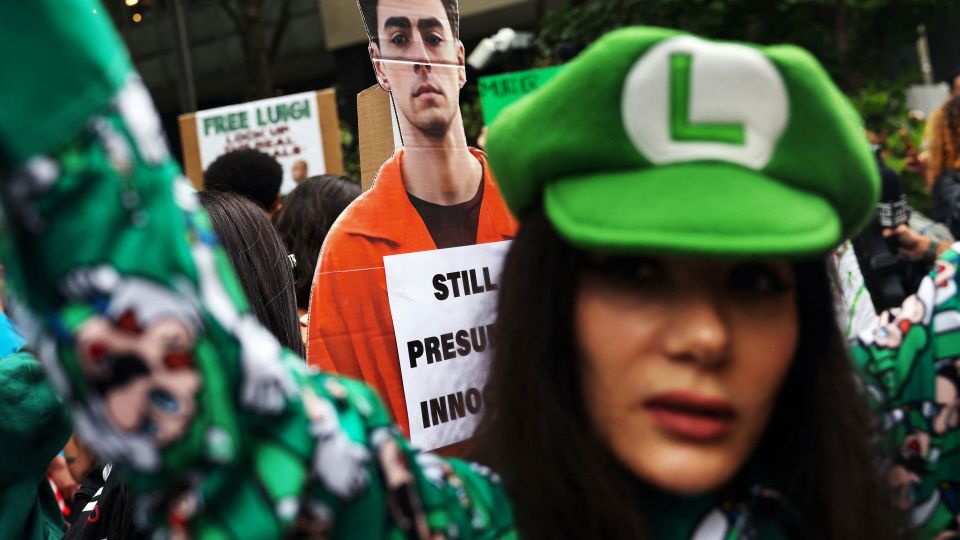
A graduate from an Ivy League university is confronting charges of second-degree murder and eight additional accusations in the state's case, which isset to go to trial in September. He is also facing federal chargesconnected to Thompson's death, along with state charges in Pennsylvania resulting from his arrest. He has entered not guilty pleas to all the charges.
Carro also partially approved a defense motion to exclude statements Mangione is alleged to have given to authorities prior to his extradition to New York on December 19, 2024.
Mangione's legal team claimed that the police failed to properly inform their client of his Miranda rights—which inform an individual of their right to remain silent and seek legal counsel—before they started questioning him at the McDonald's. Carro determined that most of Mangione's statements could be accepted as evidence, noting that many involved personal details or safety issues or were made on the spot.
Mangione's defense tried to have much of the same backpack evidence excluded from the federal trial, but the judge presiding over that casedenied their motion earlier this year.
"The entire contents of the Backpack fall squarely within several exceptions to the warrant requirement," wrote US District Court Judge Margaret Garnett in her January order.
Even though Garnett supported federal prosecutors regarding the backpack evidence, Mangione's legal team has succeeded.other legal victories, including having the top charges in his New York state and federal cases dropped – which subsequentlyremoved the death penalty from the latter case.
Despite Carro's decision, authorities have stated they possess additional evidence linking Mangione to the crime scene. HisDNA and fingerprintsSeveral items thrown away by the shooter near the crime scene were recovered, according to prosecutors in court filings.
The backpack search
Law enforcement arrived at the McDonald's in Altoona, Pennsylvania, following a call from a manager who reported that a customer resembled the individual linked to the recent CEO murder in New York.Bodycam footagedisplays two police officers moving toward Mangione, who was seated in a corner of the diner with a plastic bag and a brown paper bag on the table in front of him. A black backpack was located on the floor near his feet,the police testified at the December hearing.
When the officers requested Mangione's identification, he provided his name as Mark Rosario and presented a counterfeit New Jersey driver's license under that name, according to their testimony. Prosecutors claim the suspect in the shooting used a New Jersey license with the same name to register at a Manhattan hostel just days prior to the incident.
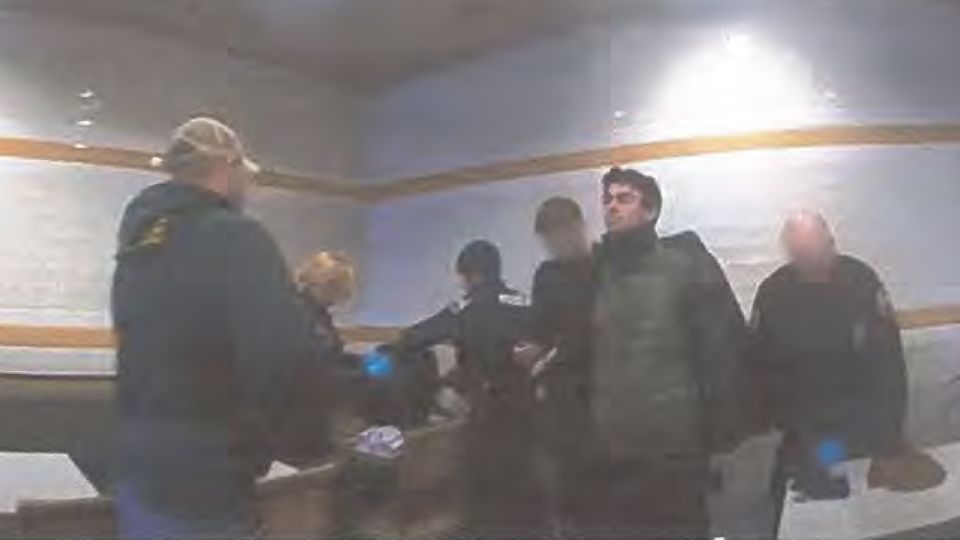
Approximately 20 minutes later, following police warnings about using a false identity, he revealed his actual name to be Luigi Mangione.
As authorities recorded his personal details, one officer questioned Mangione about why he had first lied regarding his name.
"I definitely shouldn't have," Mangione replied.
Shortly thereafter, a police officer informed Mangione of his Miranda rights prior to conducting a pat-down search and placing him in handcuffs behind his back.
Law enforcement started examining his backpack that was on a table at the eatery and took out a fully loaded magazine wrapped in a pair of undergarments along with a Faraday bag — designed to prevent cell signal access — which held a passport, a phone, and a wallet.
Law enforcement officials moved the bag to the Altoona police station, where they kept examining it and found several pieces of clothing, personal care items, a suppressor, and a 3D-printed firearm. The District Attorney's office states that the weapon corresponds to ballistics evidence from the Manhattan incident.
At the station, law enforcement carefully photographed Mangione's belongings, including pages from a red notebook containing handwritten notes that the District Attorney's Office has referred to as a "manifesto."
"I am finally confident about my next steps. The specifics are falling into place. And I have no uncertainty regarding whether it is correct or justified," Mangione wrote in a post dated August 2024,as per the prosecutors' court documents.I'm somewhat pleased that I delayed things, as it gave me the chance to learn more about (UnitedHealthcare).
unknown content item
-"The target is insurance. It meets all the criteria," he wrote, as stated in the documents.
During the December session, two officers admitted they reviewed parts of the documents while taking pictures of the pages.
Police did not request a search warrant for the bag until later that evening, approximately seven hours after they initially opened the backpack,Mangione's legal representatives stated in a court documentProsecutors stated that Altoona officials obtained the warrant to assist in moving Mangione's items to New York investigators, rather than to permit the examination of his belongings.
The Office of the District Attorney claimed that the police were justified in examining the bag due to concerns for public safety and that they appropriately adhered to the protocols for searching and recording an arrestee's belongings. The evidence might also be allowed if prosecutors demonstrate that it would have been inevitably found through legal means during the investigation.
The defense claimed the searches went beyond the limits of the different search policies and that officers were unlawfully seeking evidence of guilt instead of conducting proper safety or inventory checks.
Mangione’s alleged statements
Mangione's defense lawyers also attempted to dismiss the statements he is said to have made to law enforcement prior to his extradition to New York – which includes most of his discussions with police at the McDonald's as well as what he is alleged to have shared with officers.while in a police vehicle, at the courthouse, and in jail in Pennsylvania.
Mangione's legal team argued that his statements should be excluded because law enforcement breached his right to legal representation and conducted unlawful questioning both prior to receiving his Miranda rights and following his request to remain silent.
The Office of the District Attorney claimed that the officers appropriately questioned Mangione and that all his statements should be considered acceptable as evidence.
Carro determined that most of Mangione's alleged statements could be allowed, as many related to safety issues or "pedigree information," such as his name, origin, and age.
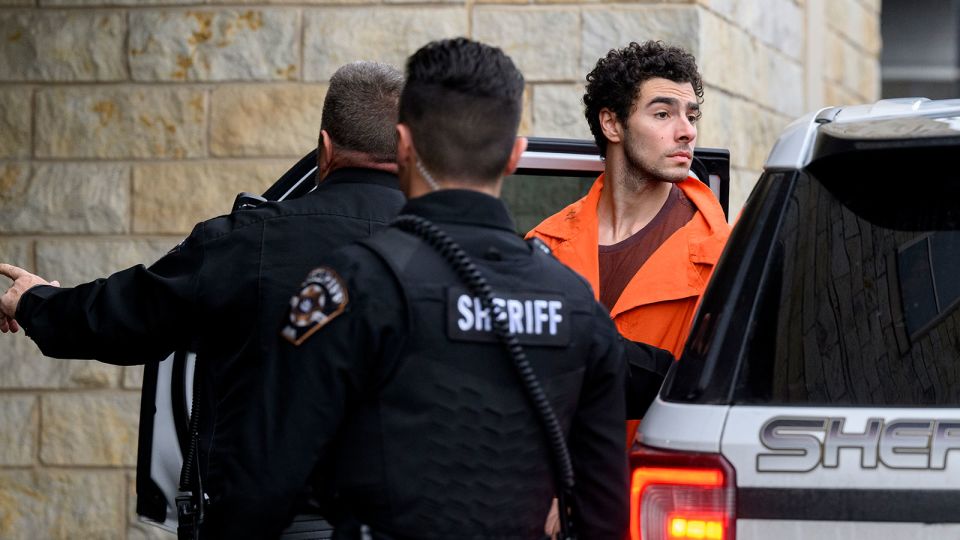
However, the judge determined that Mangione was in custody at McDonald's approximately one minute prior to being given his Miranda rights, so several statements he made during that period should be excluded, including his answers to questions about why he lied regarding his name and whether he had a fake ID. Additionally, his responses to subsequent questions where he invoked his right to remain silent could also not be admitted, according to Carro's ruling.
Mangione's legal team also attempted to exclude remarks they claim he made to officers while being held in Pennsylvania.
At the December hearing, a police officer who accompanied Mangione to his court appearance in Pennsylvania stated that the defendant looked at the crowd of reporters at the courthouse and remarked, "All these people here for a mass murderer. Wild."
Correction officer Tomas Rivers stated that during Mangione's detention, they talked about the distinctions between private and government-run healthcare systems as well as the media's reporting on the case. A different corrections officer reported that Mangione mentioned he had a backpack containing foreign money and a 3D-printed firearm.
Nevertheless, each stated they did not share these discussions with anyone until they were interrogated by prosecutors the previous year.
The judge determined that Mangione's claimed statements to the officers can also be considered, concluding they were spontaneous and not a result of interrogation.
Post a Comment for "Judge allows Luigi Mangione's notebook and gun as evidence in murder trial"