
Rugged Classics: Range Rover vs. Mercedes-Benz G-Wagen in a Downpour
Even as the rain lashed down, making the photographer question the wisdom of proceeding, there were compelling reasons to keep the cameras rolling. This wasn't a shoot for delicate convertibles that might dissolve in a drizzle. Instead, we had two formidable machines to put through their paces, a fact that necessitated swapping loafers for sturdy boots and a blazer for something more weatherproof.
We weren't embarking on a stripped-down, no-frills adventure. Rather, the pairing of a Range Rover and a Mercedes-Benz G-Wagen offered a unique glimpse into the burgeoning world of luxury four-wheel-drive vehicles that began making waves in the late 1970s and early 1980s.
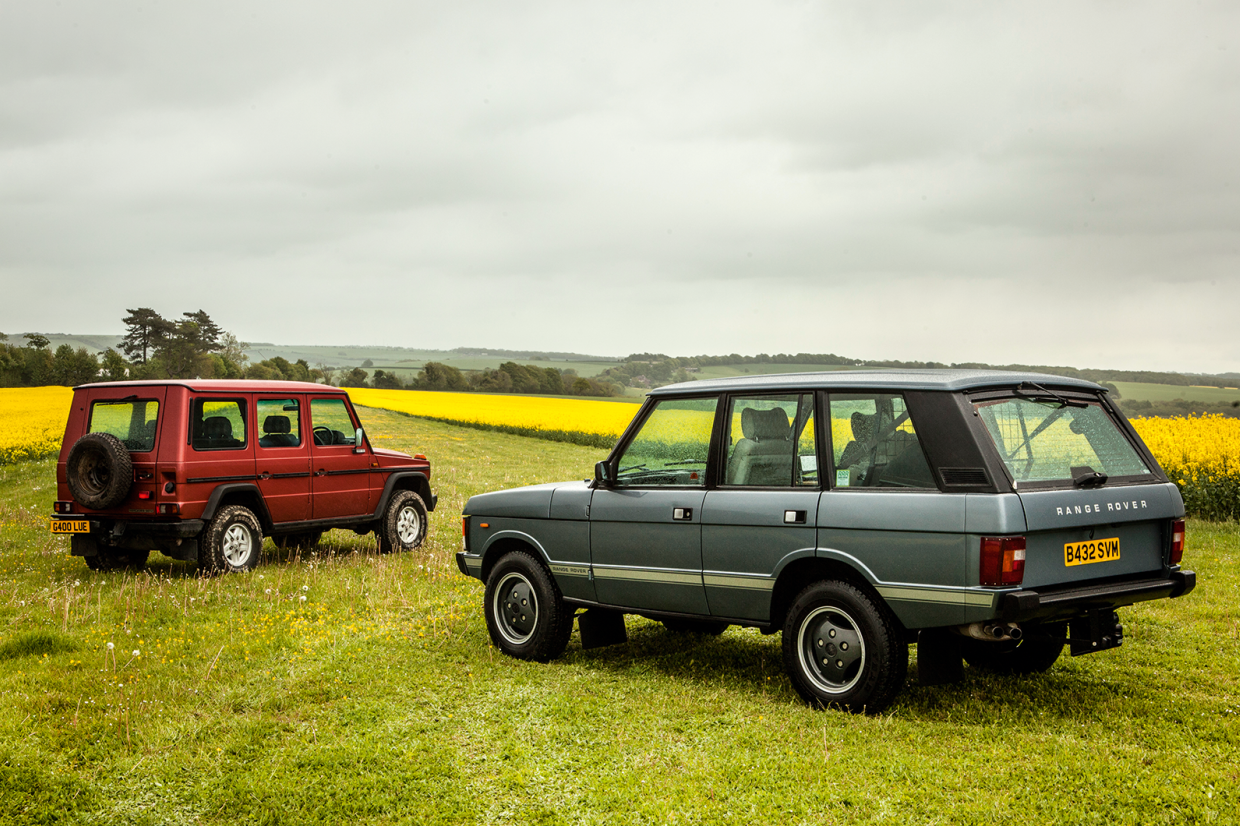
Before these titans emerged, those seeking an alternative to the utilitarian Land Rover found themselves with limited options. While the Solihull stalwart was undeniably capable, it lacked the creature comforts and refinement expected even by the standards of the preceding decade's saloon cars. The British firm, however, was on the cusp of offering something distinctly different. Across the Atlantic, the market for what would become known as Sports Utility Vehicles (SUVs) was already thriving, thanks to stalwarts like the Jeep Wagoneer and Ford Bronco. It was a market that Land Rover’s head of market research, Graham Bannock, identified as ripe for exploration, convincing management of its potential. Under the stewardship of 'Spen' King, who was in charge of new projects, and with the crucial input of chassis designer Gordon Bashford, the two-door Range Rover finally made its debut in 1970.
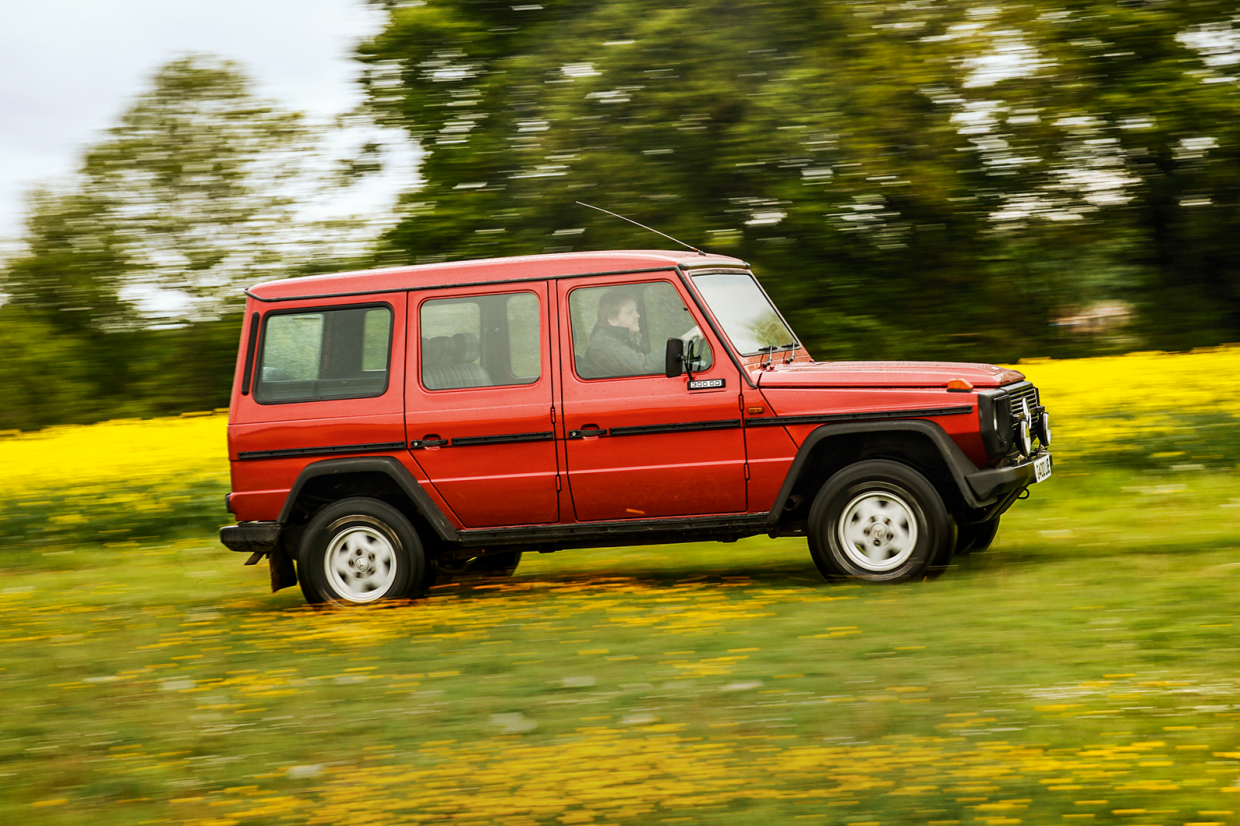
In contrast, the G-Wagen, or Geländewagen as it was fully known, arrived on the scene nearly a decade after the Range Rover. Its origins, however, trace back to a 1973 collaboration between Daimler-Benz and Steyr-Daimler-Puch to develop a lightweight, all-wheel-drive off-road vehicle. Steyr-Puch brought valuable experience to the table, having already produced the robust Haflinger and Pinzgauer models, and the G-Wagen’s design clearly bore the imprint of military influence. From its launch in the south of France in 1979, the Mercedes-Benz's inherent versatility was immediately apparent. While the Range Rover was initially offered solely as a two-door, the G-Wagen boasted four distinct body configurations at launch (with a fifth added shortly after), coupled with four engine choices. This resulted in an astonishing 40 potential combinations from the outset.
The design and development processes for the two vehicles also differed significantly. While the Range Rover underwent rigorous testing in extreme conditions, including the Sahara Desert and the Alaskan wilderness, the G-Wagen's development was more inwardly focused, with extensive in-factory evaluation. This divergence highlighted the technological advancements of the intervening decade. The Mercedes-Benz development team leveraged computer-aided analysis and mathematical simulations to push the limits of the ladder-frame chassis before even building prototype vehicles.
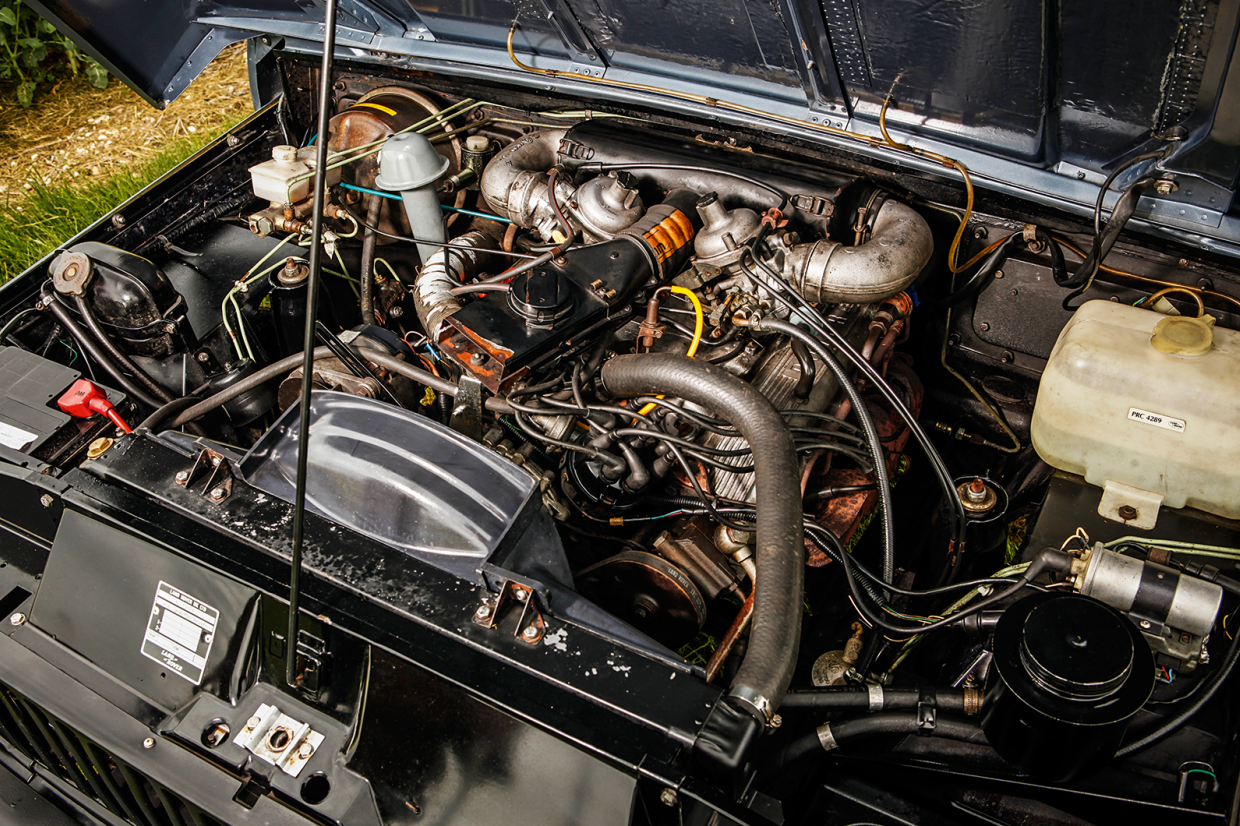
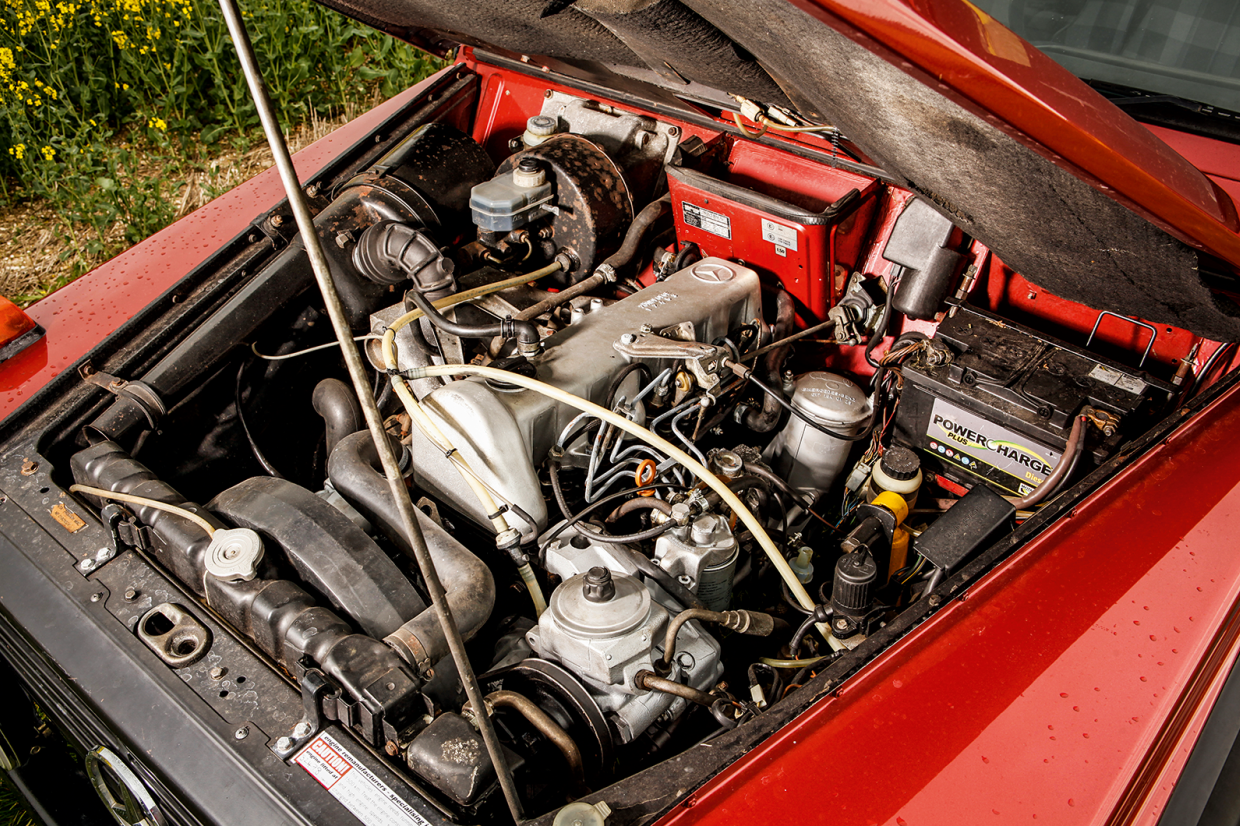
Once the first drivable prototype emerged from the Steyr-Puch factory in Graz, Austria, testing evolved into more conventional, yet still demanding, scenarios. These included excursions into the coalfields between Cologne and Aachen, the challenging Shöckl mountain site in Austria, the arid landscapes of North Africa, and even the harsh environments of the Atlas Mountains and the Arctic Circle. This meticulous development paid dividends. The moment you step into the G-Wagen, there's an immediate sense of capability, a feeling that you could tackle any terrain. However, in the 1989 300GD featured here, this capability is delivered at a more leisurely pace, with a quoted 0-60mph time of a rather stately 23.7 seconds. The five-cylinder, 3-litre diesel engine requires diligent use of the rev range and gear changes to extract its modest performance, often finding itself competing with lorries on motorways when faced with inclines.
This performance is in stark contrast to the Range Rover. In comparison, the British marque feels positively sporting, thanks in no small part to the Buick-derived 3.5-litre V8 engine nestled under the bonnet. This 1984 Vogue model, rather than featuring later fuel injection, is equipped with twin Zenith-Stromberg carburettors. This setup, combined with the five-speed manual gearbox, delivers smooth power and a satisfying rev range, contributing to a more impressive 0-60mph time of 15 seconds.
However, when venturing off the beaten track, these acceleration figures become largely irrelevant. The true measure of these vehicles lies in their ability to reach their destination, not necessarily how quickly. In this regard, both cars impress in their own distinctive ways.
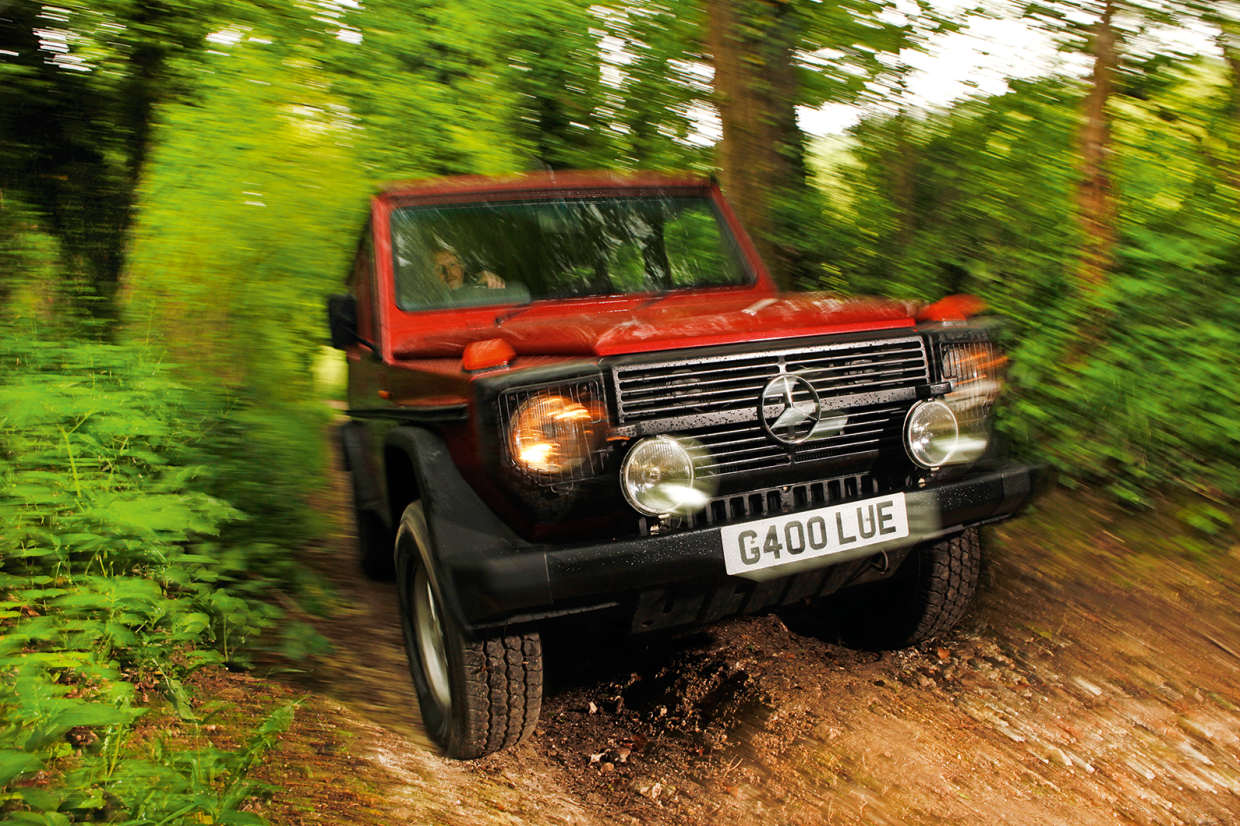
The Range Rover boasts permanent four-wheel drive, a lockable centre differential, and a dual-range transfer box. Engaging low range significantly aids traction on particularly challenging surfaces. The G-Wagen, as standard, operates in two-wheel drive, a fact readily apparent on slick surfaces like wet grass. Engaging four-wheel drive instantly restores grip, bringing the two vehicles back onto a more even footing. The Mercedes-Benz also features a dual-range transfer box, but its key advantage lies in the availability of two locking differentials that can be engaged from the cabin.
While four-wheel-drive engagement feels robust in both vehicles, the rutted green lane chosen for testing presents a loose surface and a demanding gradient. With low range selected, neither the Range Rover nor the Mercedes-Benz shows any sign of struggle, powering us to the top with impressive composure and without a hint of losing traction.
Both manufacturers made the progressive decision to abandon traditional, often harsh, leaf-spring suspension in favour of coil springs. This was complemented by telescopic dampers and Panhard rods on both models. Spen King, for the Range Rover, championed this change not only for improved comfort but also to enhance wheel articulation, ensuring all four wheels remained in contact with the ground off-road, thereby maximising grip.
But the true test of these off-roaders extends beyond occasional green-laning excursions.
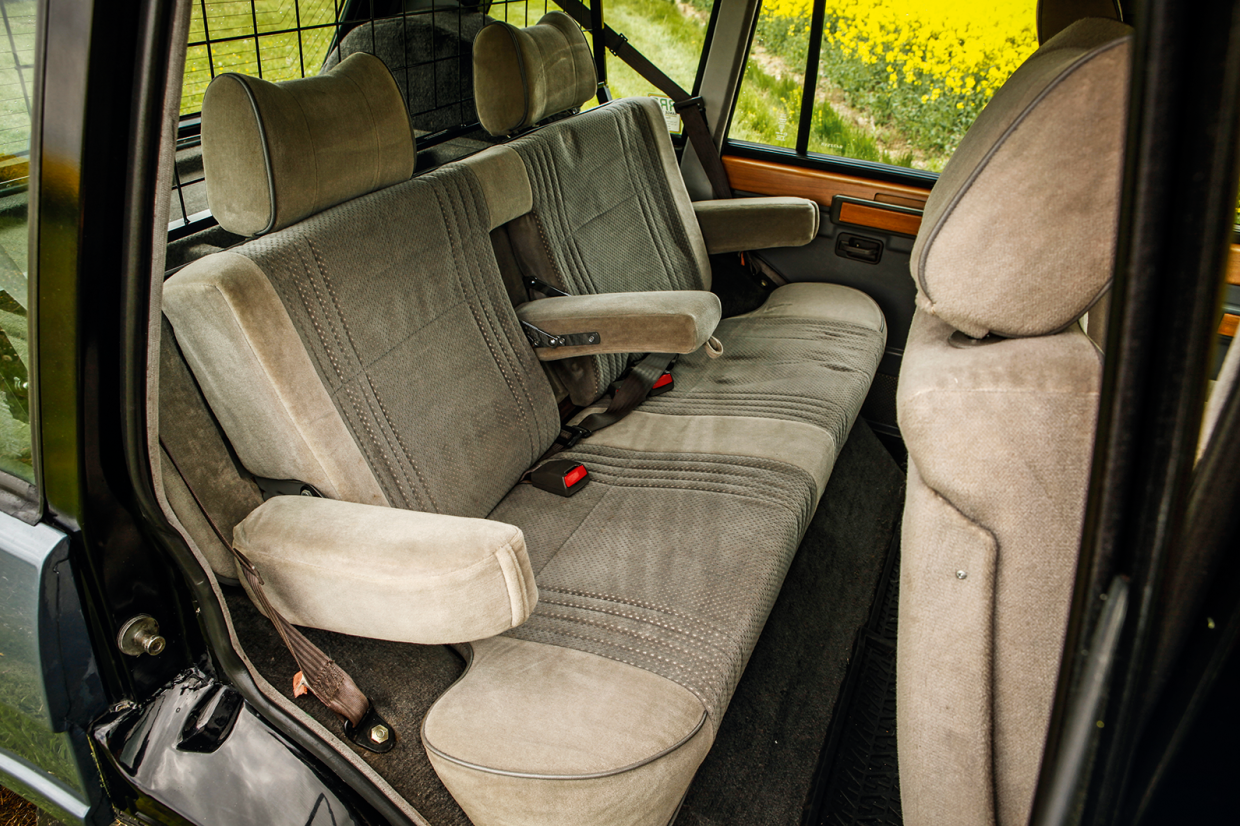
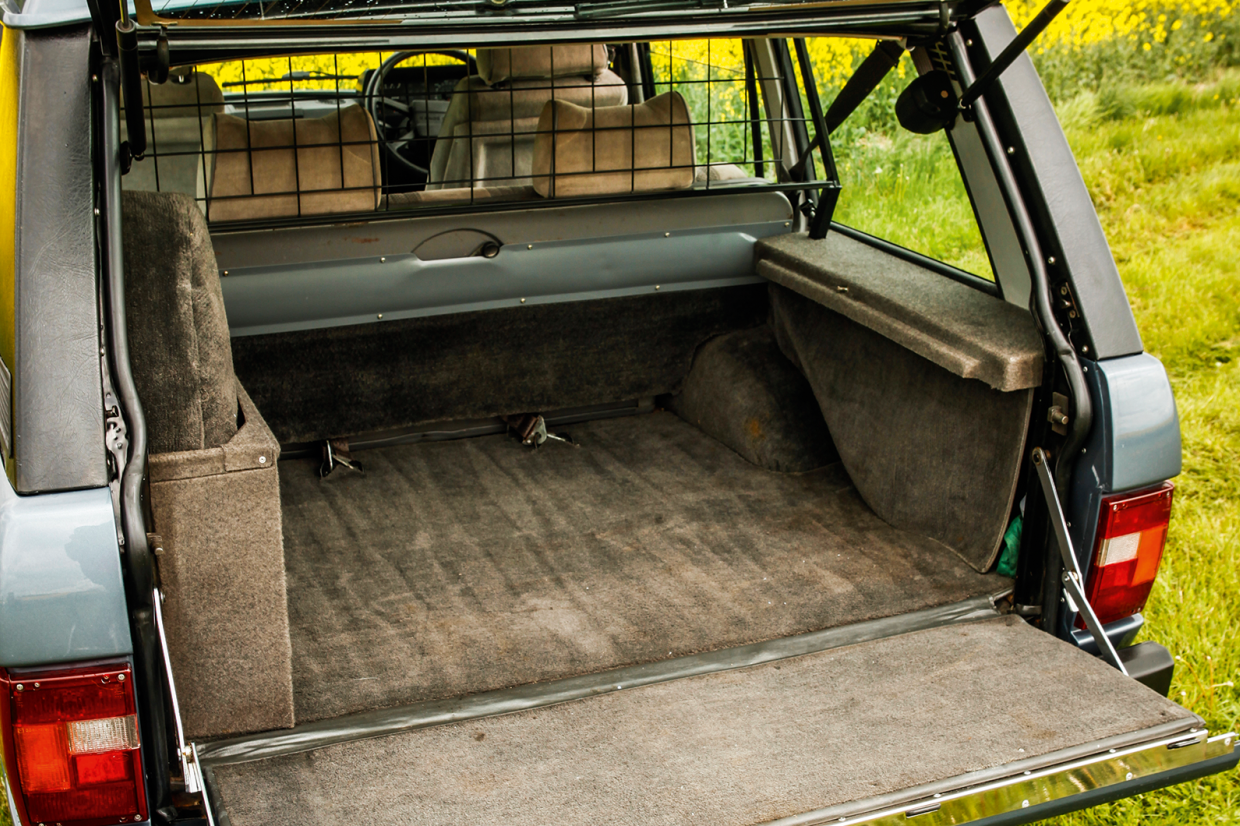
Stepping into the Range Rover, the emphasis on luxury is immediately evident. Unlike the more utilitarian Series or 90/110 Land Rovers, the interior of this Range Rover is not designed to be hosed down. The well-designed dashboard layout and comfortable seating position make it easy to forget the vehicle's formidable off-road prowess, allowing occupants to simply enjoy it as a spacious and well-appointed classic road car. Deep-pile carpets, velour seat trim, and tasteful wood cappings contribute to the refined ambiance. Over the years, options like air-conditioning and electric windows further cemented its appeal to its target market. The generous rear seats feature triple folding armrests, and the boot space is ample, accessed via the quintessential split-folding tailgate – a feature often found at the heart of country pursuits, serving as a convenient perch for picnics and a mid-morning dram.
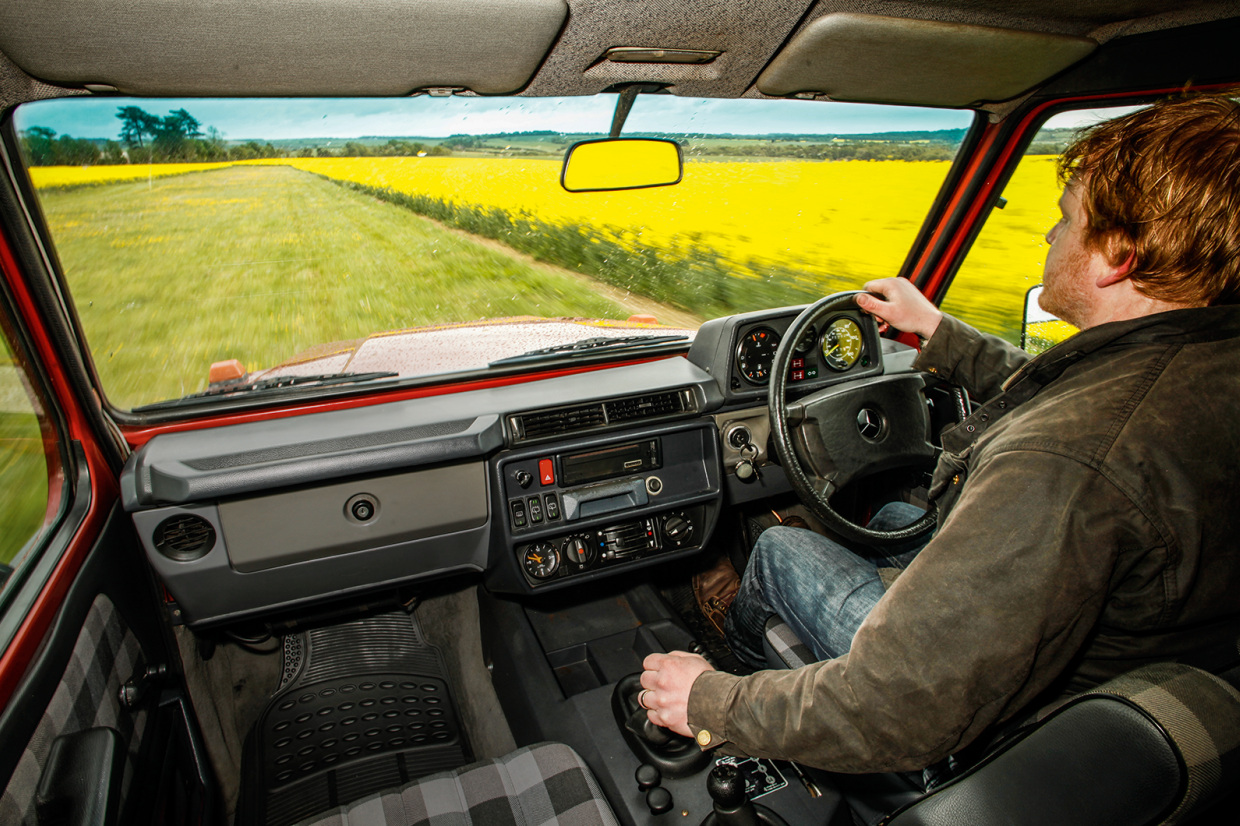
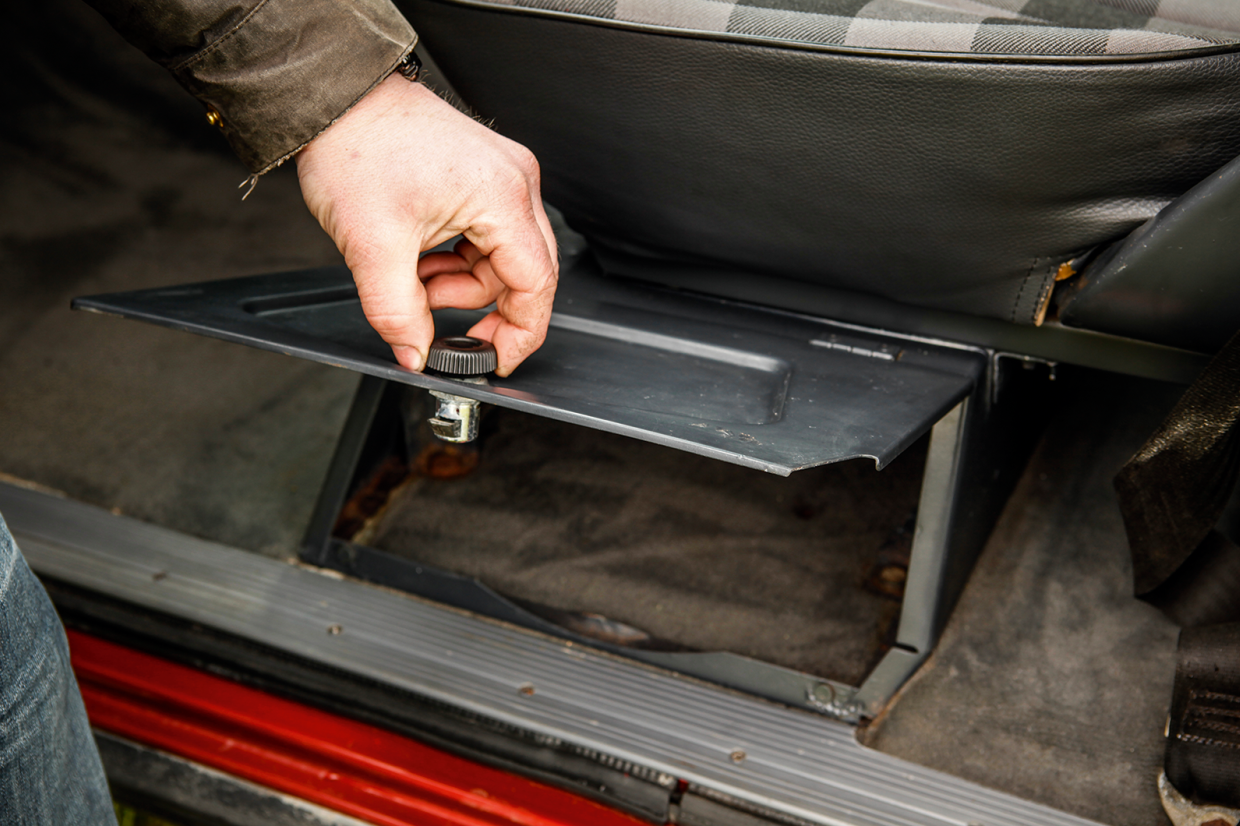
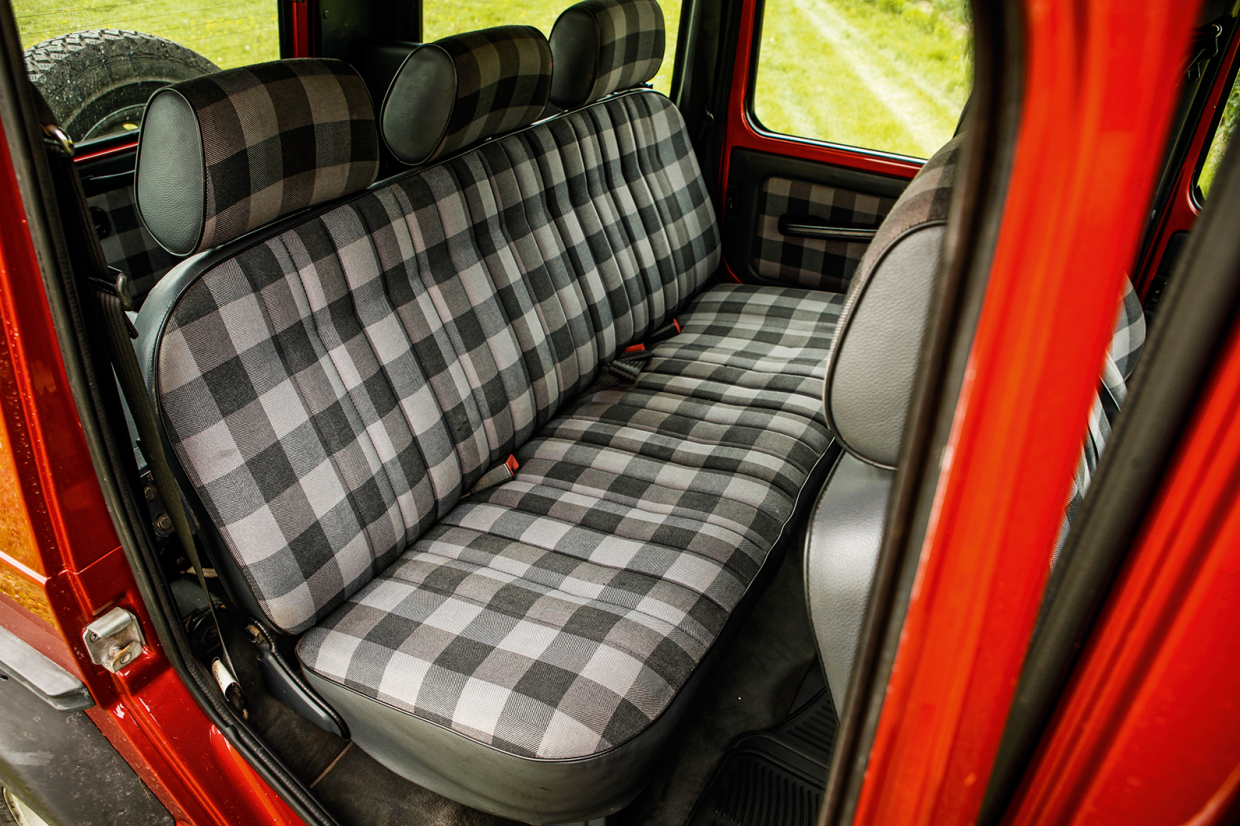
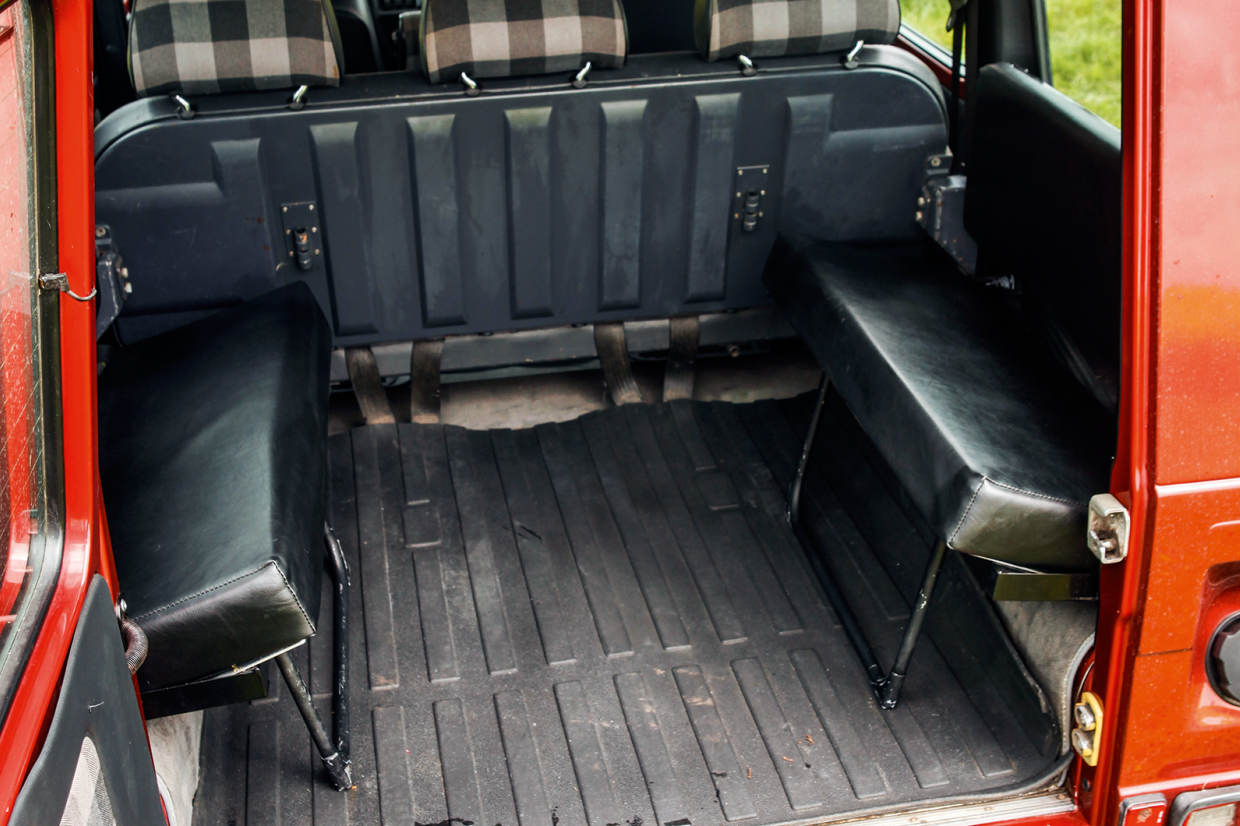
The G-Wagen presents a more utilitarian interior design. While Mercedes-Benz and Steyr-Daimler-Puch clearly had different interpretations of luxury, the G-Wagen's interior is by no means lacking. There are several thoughtful touches, such as the under-seat compartment housing the jack, and the large, side-hinged rear door which provides excellent access to the load bay. This particular long-wheelbase model also benefits from an extra set of rear seats. The G-Wagen did evolve in terms of luxury, with a significant facelift in 1990 introducing a more refined interior reminiscent of the W124 E-Class. Behind the wheel, the gearknob is conveniently placed, thanks to a lower transmission tunnel. Like the Range Rover, the G-Wagen's dashboard and controls are logically arranged and easy to access.
In many classic cars, an abundance of plastic trim panels might be cause for criticism. However, in the G-Wagen, it serves to reassure the driver that a bit of mud and dirt won't be the end of the world. As Baker, the photographer, enquired, “Do you want to wash these wheels before I photograph them?” It felt almost disrespectful to the G-Wagen to do so. We had been traversing flooded tracks, navigating narrow green lanes, and even accelerating across a grass runway, and neither vehicle had given us any reason to doubt their inherent capabilities. Both provided a comfortable sanctuary, with effective heating at the push of a button or slide of a lever, and aesthetics that remain appealing even after so many decades.
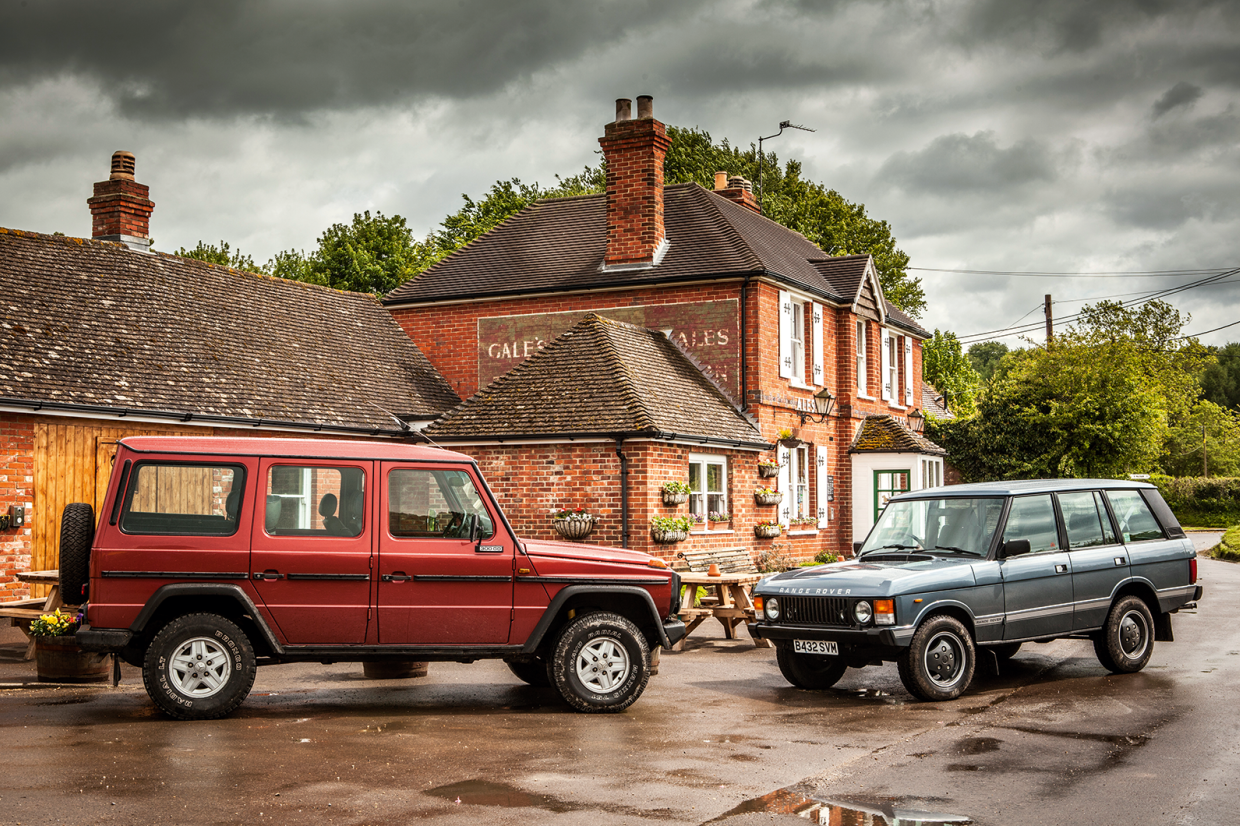
We left the wheels deliberately caked in mud and headed to a country pub. As if to further underscore their broad appeal, both vehicles looked perfectly at home parked outside, drawing admiring glances from passers-by. Both examples have undergone some restoration. The Range Rover, in particular, was acquired by its owner, Ben Metcalfe, on eBay and subsequently received a comprehensive rebuild by marine engineers, a testament to its robust construction. This was never intended to be a direct, apples-to-apples comparison; the two models are fundamentally different in their specifications. One could argue that the Mercedes-Benz would be a more fitting companion for an early Land Rover Defender. However, as we sat in the pub, gazing out at the mud-splattered workhorses, utterly unfazed by everything we had subjected them to, the inevitable question arose: if I had to choose, which one would it be?
The limitations of the 300GD on the motorway were a significant hurdle for me to overcome. However, a different engine option would undoubtedly resolve this particular issue, and a six-cylinder petrol alternative would certainly narrow the performance gap between the G-Wagen and the Range Rover. Off-road, the Mercedes-Benz felt virtually indestructible – a sensation perhaps amplified by its comparative lack of the luxurious refinements offered by its British rival.
Considering the brief of the day, however, perhaps the British contender just edges it. The combination of the eager V8 engine with its signature soundtrack, coupled with exceptional comfort, space, and outstanding off-road ability, means the Range Rover ticks all the boxes. It’s also, undeniably, a magnificently good-looking classic.
More importantly, I began the day with a firm conviction that the Range Rover was the vehicle for me. I hadn't quite grasped the appeal of the Mercedes-Benz, with its distinctive styling and its somewhat ambiguous position in the utility/luxury market. But as the day drew to a close, I found myself genuinely disappointed to be handing back the keys. Having had a glimpse into the reasons behind the G-Wagen's dedicated following, I can see why it commands such loyalty. Another few outings, and I suspect I might even consider myself a convert. Ultimately – and despite the relentless rain, wind, and cold – it's genuinely heart-warming to know that two classic cars still possess the power to bring a smile to your face, even in the most typically British of weather conditions.
Images: Tony Baker
Factfiles
Mercedes-Benz 300GD LWB
- Sold/number built: 1984-’91 / 3905
- Construction: Steel chassis, steel body
- Engine: All-iron, overhead-cam 2998cc five-cylinder diesel, indirect fuel injection
- Max power: 88bhp @ 4000rpm
- Max torque: 126.5lb ft @ 2400rpm
- Transmission: Five-speed manual, driving rear or all four wheels, dual-range transfer box, twin differential locks
- Suspension:
- Front: Live axle on leading arms, coil springs with Panhard rod
- Rear: Live axle on trailing arms with Panhard rod; telescopic dampers f/r
- Steering: Power-assisted recirculating ball
- Brakes: Discs front, drums rear, with servo
- Length: 14ft 4in (4395mm)
- Width: 5ft 5¾in (1700mm)
- Height: 6ft 5in (1975mm)
- Wheelbase: 9ft 4in (2850mm)
- Weight: 4491lb (2037kg)
- Mpg: 19
- 0-60mph: 23.7 secs
- Top speed: 83mph
- Price new: £17,240
Range Rover Mk1 4-door
- Sold/no built: 1981-’94 / 326,070 (all Mk1s)
- Construction: Steel chassis, aluminium and steel body panels
- Engine: All-alloy, ohv 3528cc V8, twin Zenith-Stromberg carburettors
- Max power: 125bhp @ 4000rpm
- Max torque: 190lb ft @ 2500rpm
- Transmission: Five-speed manual, driving all four wheels, dual-range transfer box, automatic differential lock
- Suspension:
- Front: Live axle, radius arms, coil springs
- Rear: Live axle, radius arms, self-levelling struts; telescopic dampers and Panhard rods f/r
- Steering: Power-assisted recirculating ball
- Brakes: Discs, with servo
- Length: 14ft 7in (4470mm)
- Width: 5ft 8in (1780mm)
- Height: 5ft 9in (1800mm)
- Wheelbase: 8ft 3in (2540mm)
- Weight: 4650lb (2109kg)
- Mpg: 15.4
- 0-60mph: 14.4 secs
- Top speed: 96mph
- Price new: £15,473


No comments:
Post a Comment