
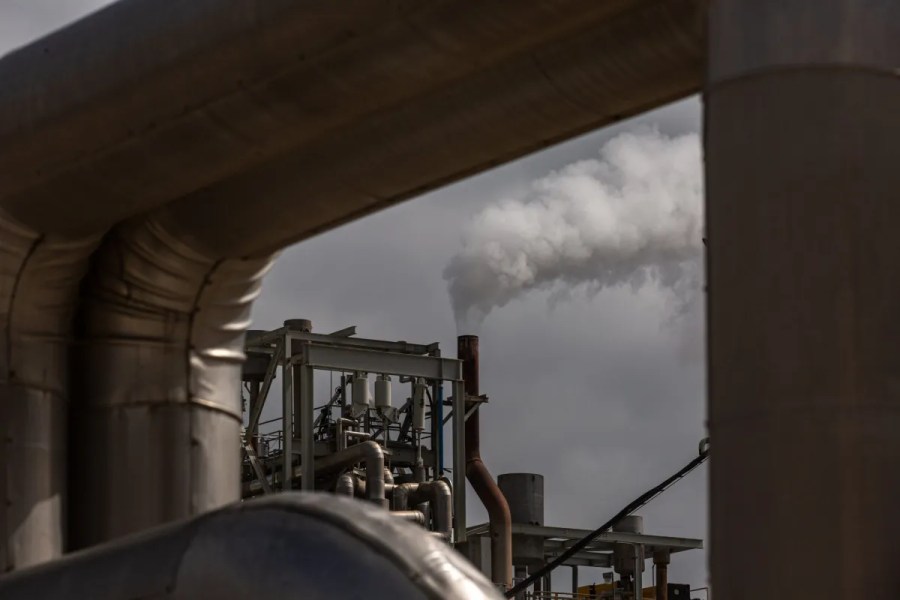
 Brandon Mulder, a journalism fellow at the University of Texas Energy Institute, observes a significant shift in Texas's energy landscape. A decade ago, wind power was the undisputed champion, attracting massive investments and positioning Texas as a leader in renewable energy. However, the current scene tells a different story, with natural gas generation experiencing a powerful resurgence, largely propelled by the influx of data centers into the state.
For the past six months, the volume of natural gas generation projects in the Electric Reliability Council of Texas (ERCOT) interconnection queue – the extensive waiting list for new power generators seeking grid access – has surpassed that of wind projects. This marks the first time since January 2016 that gas has overtaken wind in this critical planning metric. This development underscores the policy and economic challenges confronting the wind industry, while simultaneously highlighting the appeal of gas power for data centers eager to capitalize on the artificial intelligence boom.
The Data Center Surge and Gas's Advantage
"The data center explosion and their desire for 24/7 power probably excited a lot of gas developers, and that gas queue got bigger," commented David Spence, a professor of energy regulation at the University of Texas.
ERCOT, like all U.S. grid operators, utilizes the interconnection queue to manage and forecast the integration of new power generation. It's important to note that not all projects in the queue ultimately come to fruition. Research from the Lawrence Berkeley National Laboratory (LBNL) indicates that only about 22% of projects in ERCOT's queue are actually built, though this is still the highest completion rate among U.S. grids. Nevertheless, the queue serves as a valuable early indicator of the grid's future trajectory. Currently, solar and battery projects dominate the queue, accounting for a substantial 75% of the 458,000 megawatts of proposed generation. Gas and wind projects make up the remainder.
However, the landscape has shifted dramatically in recent years. Over the past three years, the volume of gas projects in the queue has surged by over 400%, escalating from 12,500 megawatts in March 2023 to nearly 64,000 megawatts as of last month, according to ERCOT data. In contrast, wind projects have seen a more modest increase of 87%, growing from 25,700 to 48,000 megawatts during the same period.
The Texas Energy Fund, established by the Legislature in 2023, is providing low-interest loans to developers of "dispatchable" power sources – those that can be easily ramped up or down to meet grid demand, such as natural gas-fired power plants. Approximately 9,000 megawatts of projects in the queue are benefiting from these loans, with a significant portion being "near-term gas projects we expect to come online," according to an ERCOT spokesperson.
Yet, the most potent catalyst for this gas-powered expansion is the sheer volume of companies seeking to establish data centers in Texas. ERCOT data reveals that prospective data center projects represent an estimated 360,000 megawatts of power demand. This figure alone is more than quadruple the grid's record peak demand of 85,500 megawatts, which was set in August 2023. ERCOT CEO Pablo Vegas emphasized to a Senate committee that if even a fraction of this demand materializes, "then we're going to clearly need a lot more of [gas] generation in order to have a balanced and reliable grid."
ERCOT's Embrace of Gas Generation
ERCOT CEO Pablo Vegas views the burgeoning number of gas projects in the queue as a positive development. He stated that for too long, ERCOT's energy market has struggled to attract dispatchable energy generation, such as gas plants. This situation is a consequence of the market's design, stemming from sweeping deregulation reforms enacted by the Texas Legislature in 1999. This restructuring created a competitive wholesale and retail power market and introduced a renewable energy mandate.
Vegas explained that this design initially incentivized the introduction of cheap electricity to the grid, fueling the renewable energy boom of the late 2000s and early 2010s. However, he believes the market design failed to adequately value the distinct attributes of different power sources, which are crucial for grid reliability. Renewables, while providing clean and affordable electricity, are inherently intermittent, dependent on wind and sunshine. Battery storage can dispatch power when needed by drawing from the grid during off-peak hours and returning it during peak demand, but it faces duration limitations. Thermal generators, like gas and coal, can operate continuously as long as fuel is available.
"We've seen this explosion of wind and solar, and now batteries, to the complete exclusion of growth in the natural gas system, because economically we're not valuing the characteristics of gas generation that is so important for long-term reliability," Vegas remarked. He advocates for changes in market design to acknowledge and reward the reliability contributions of gas generation.
Navigating the Challenges of Gas Deployment
Despite the growing demand, bringing new gas-fired power plants online is not without its obstacles. For several years, the supply chain for gas turbines – the core components of power generation – has experienced significant bottlenecks. This is largely attributed to the overwhelming demand from data centers outpacing manufacturing capacity. According to Wood Mackenzie, an energy research and consulting firm, orders placed for turbines today may not be fulfilled until 2031.
However, data centers and gas power developers are demonstrating ingenuity in overcoming these supply chain hurdles. A recent report from energy data company Cleanview highlights innovative approaches, including the repurposing of turbines originally designed for aircraft or cruise ships. For instance, El Paso's electric utility is planning to construct a gas plant utilizing a novel design that integrates 813 small gas generators, typically used as backup power for hospitals or manufacturing facilities. This setup is intended to produce 366 megawatts for a Meta data center. In a similar vein, Elon Musk's AI company, xAI, acquired and reactivated a dormant power plant in Mississippi to supply power for a data center used in training its chatbot, Grok.
"The perceived economic loss of not getting your data center up and running in a year is valued in the billions of dollars," noted Joshua Rhodes, a grid researcher at the University of Texas. "That will drive people to very out-of-the-box solutions for these types of things."
Wind's Waning Momentum
On the other side of the energy equation is the declining market share of wind power. Since its peak in 2018, when wind represented approximately 50% of the megawatts in the interconnection queue, it has now fallen behind other major generation sources. Experts point to a confluence of factors contributing to wind's current challenges, extending beyond recent reductions in renewable energy tax credits.
A primary obstacle for wind development stems from its past success. After two decades of extensive growth across Texas, the most advantageous development locations have largely been utilized. Prime sites in West Texas and the coastal region, characterized by strong winds, accessible land, and proximity to transmission lines, have been extensively developed.
"Texas has a lot of land, but the low-hanging fruit has been picked over by all the wind development that has happened there," stated Joseph Rand, an energy markets researcher at LBNL. Furthermore, the saturation of existing wind development areas in West Texas and along the coast has led to transmission line congestion. This congestion forces generators to curtail their power output, thereby impacting profitability.
To address this issue, ERCOT is advancing plans to upgrade its transmission system, including the development of three major 765-kilovolt lines designed to carry significantly more electricity than any existing lines in Texas. Rand commented, "If I were a wind developer, I might not want to build today and face that curtailment risk for the first few years of my project's lifespan."
Wind's challenges are also compounded by the remarkable success of solar energy in Texas. While both wind and solar technologies have seen cost reductions over the past two decades, solar's costs have declined more rapidly. LBNL data indicates that the cost of solar energy has fallen from approximately $160 per megawatt-hour in 2010 to around $70 in 2024.
"Because the cost of building a solar farm has gone down so dramatically over the last five to six years, it just becomes a better business decision to build solar and, increasingly, solar plus [battery] storage," said Judd Messer, Texas vice president of the clean energy trade association Advanced Power Alliance.
Finally, the wind industry grapples with policy uncertainties that hinder its ability to attract financing. Policies enacted during the Trump administration, which slowed or paused federal approvals necessary for wind project completion, have caused investors to become more hesitant. Even within Texas, which has structured its grid to largely avoid federal regulation by operating primarily within state lines, federal agencies can still impact renewables. The Federal Aviation Administration's (FAA) "200-foot rule," which requires construction permits for structures exceeding 200 feet in height, such as onshore wind turbines, can pose a hurdle. Last summer, the U.S. Department of Transportation announced that the FAA would "thoroughly evaluate proposed wind turbines to ensure they do not pose a danger to aviation," signaling that routine permit processes could become more challenging for onshore wind projects.
"This kind of arbitrary executive-level uncertainty is really spooking people," Messer concluded.


No comments:
Post a Comment