
Newsletter: Draining Moscow's War Funds
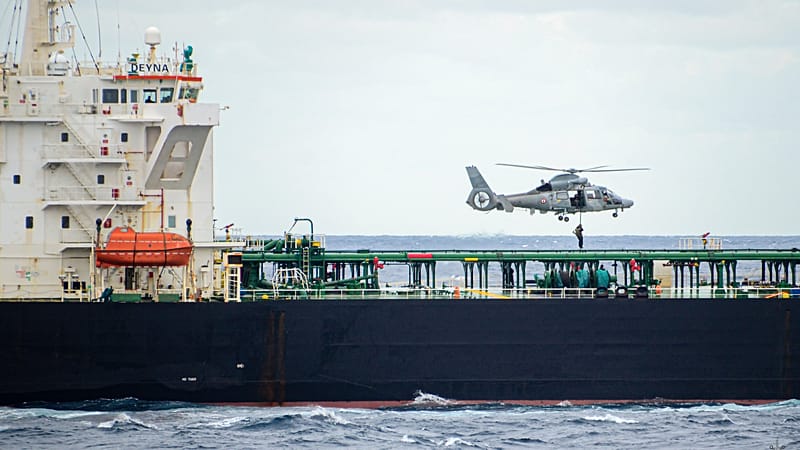
Sanctions Update: New Measures Against Russia Expected
Good morning from Brussels. Mared Gwyn is here with all the insights to start your day.
Today, we begin with a sanctions update. Brussels is eagerly anticipating the European Commission’s proposal for a new package of economic sanctions against Russia. This is expected to be presented today, according to Jorge Liboreiro, our in-house sanctions expert.
This will be the 21st package of sanctions since February 2022. The focus is likely to be on the price cap on Russian oil, currently set at $44 per barrel. According to EU rules, the cap must be periodically adjusted to remain 15% below the average market price for Russian crude. With the price of Urals crude surging due to the closure of the Strait of Hormuz, the next revision, scheduled for 15 July, should be upward rather than downward.
However, no one in Brussels wants to provide Moscow with any relief at a time when drones and missiles are falling on Ukrainian cities. Therefore, the Commission is expected to either delay the revision or propose a fixed figure. The goal is to lock it in. As previously reported, hopes for a full ban on maritime services for Russian oil tankers have all but vanished, shifting the focus back to the cap.
The 21st package is also set to continue efforts to crack down on the “shadow fleet,” close loopholes, and blacklist entities that help Moscow evade sanctions.
Alumina Controversy in Ireland
Keep an eye out for alumina, the white powder that has plunged Ireland into a PR nightmare just weeks before it’s scheduled to take the reins of the EU Council presidency. The EU’s Foreign Policy chief, Kaja Kallas, is due in Dublin later today for talks with her counterpart Helen McEntee, where Aughinish Alumina, the company at the heart of the controversy, will be discussed. Jorge breaks down the scandal.
Targeting Patriarch Kirill?
When it comes to individuals, the big question is whether Brussels will seize the moment to go after Patriarch Kirill, the head of Russia's Orthodox Church. Hungary, which protected Kirill for the past four years, has signalled its readiness under the new government.
Taliban Backlash
Forty-seven Members of the European Parliament representing five political groups asked Belgian Minister of Foreign Affairs, Maxime Prévot, to refuse to grant Belgian visas to representatives of the Taliban regime, who are set to meet the European Commission’s officials for talks in Brussels this month, my colleague Vincenzo Genovese reports.
In a letter seen by, the MEPs express concern about negotiating with a regime responsible for massive violations of freedoms and human rights, claiming that allowing the Taliban to travel to Belgium could be perceived as a form of political recognition, incompatible with the EU institutions’ positions.
“Allowing Taliban representatives to travel to Belgium is a form of recognition that is incompatible with EU values,” Saskia Bricmont from the Greens/EFA group wrote on social media.
France and Germany Abandon Joint Fighter Jet Project
France and Germany said on Monday they had agreed to abandon a joint fighter jet programme due to disagreements between the companies involved, in a blow to European efforts to boost defence cooperation.
The Future Combat Air System (FCAS) programme was launched in 2017 to replace France's Rafale jets and the Eurofighter planes used by Germany and Spain. It was to be complemented by drones, sensors and digital communications systems designed to operate together in a networked battlespace.
The project was seen as a key test of European efforts to work more closely on defence as they seek to present a united front in the face of a hostile Russia at a time of souring ties with the United States.
Other News Highlights
- Seven EU countries push Brussels to resist further weakening of car emission targets.
- Governments, including France and Spain, have urged Brussels to resist any rollback of CO2 standards for cars and vans, arguing that weakening emissions rules would endanger Europe’s climate objectives, economic competitiveness and energy security, according to a document seen by Marta Pacheco.
- What is 'Kushner Island' and why are Albanians protesting about it? Known as Sazan Island, the former Italian military outpost and once secret communist naval base is being contested again as plans for a luxury resort raise questions about conservation, Simon Ormiston explains.
- Israeli strikes kill 14 in Lebanon as attacks persist despite Iran threat. At least 14 people were killed in Israeli strikes on southern Lebanon on Monday, the country's health ministry said, as attacks persisted despite Iranian threats to strike Israel again if it continued bombing the country.
Upcoming Events
- The EU’s foreign policy chief, Kaja Kallas, visits Dublin, Ireland.
- European Commissioner for Internal Affairs and Migration, Magnus Brunner, presents the 2026 European Drug Report.
- EU transport ministers will meet in Luxembourg for a Transport, Telecommunications and Energy Council focused on telecommunications.
- European Commissioner for the Mediterranean Dubravka Šuica and European Commissioner for Energy and Housing Dan Jørgensen give a presentation on the Trans-Mediterranean Renewable Energy and Clean-Tech Cooperation at 3.00 Brussels time.
- European Parliament President Roberta Metsola participates in the 85th Commemoration of the Victims of the Soviet Mass Deportations.
That’s it for today. Jorge Liboreiro, Vincenzo Genovese, and Angela Skujins contributed to this newsletter.
Post a Comment for "Newsletter: Draining Moscow's War Funds"