
The Tigers’ Hidden Gem Pick
The High-Stakes Decision: Detroit’s Club Option Dilemma for 2025
As the dust settles on another MLB season, the focus shifts swiftly to offseason maneuvering—particularly when it comes to club option decisions. These choices, often made within five days of the World Series conclusion, can shape a team’s roster and financial outlook for years to come. For the Detroit Tigers, two key decisions loom large: whether to exercise the $10 million club option on reliever Kenley Jansen and starting pitcher Drew Anderson. Both players are set to earn eight-figure salaries in 2025 if their options are picked up, but the path forward couldn’t be more different for each.
A Tale of Two Pitchers: Jansen vs. Anderson
Kenley Jansen stands as one of the most decorated closers in baseball history. With a career that includes All-Star appearances, multiple saves titles, and an elite strikeout rate, Jansen has long been a cornerstone of any bullpen he joins. His 2024 campaign with the Tigers was marred by inconsistency, however. Despite posting a solid 3.20 ERA and maintaining a strong 28% strikeout rate, Jansen struggled with home runs and walk rates, particularly down the stretch. He converted just 22 of his 28 save opportunities—a troubling mark for a closer at this stage of his career. Still, he did finish the season on a high note, stringing together 12 consecutive appearances without allowing an earned run. That late surge might give him hope for a return, but the Tigers may hesitate to commit to a full-time role so early in the winter.
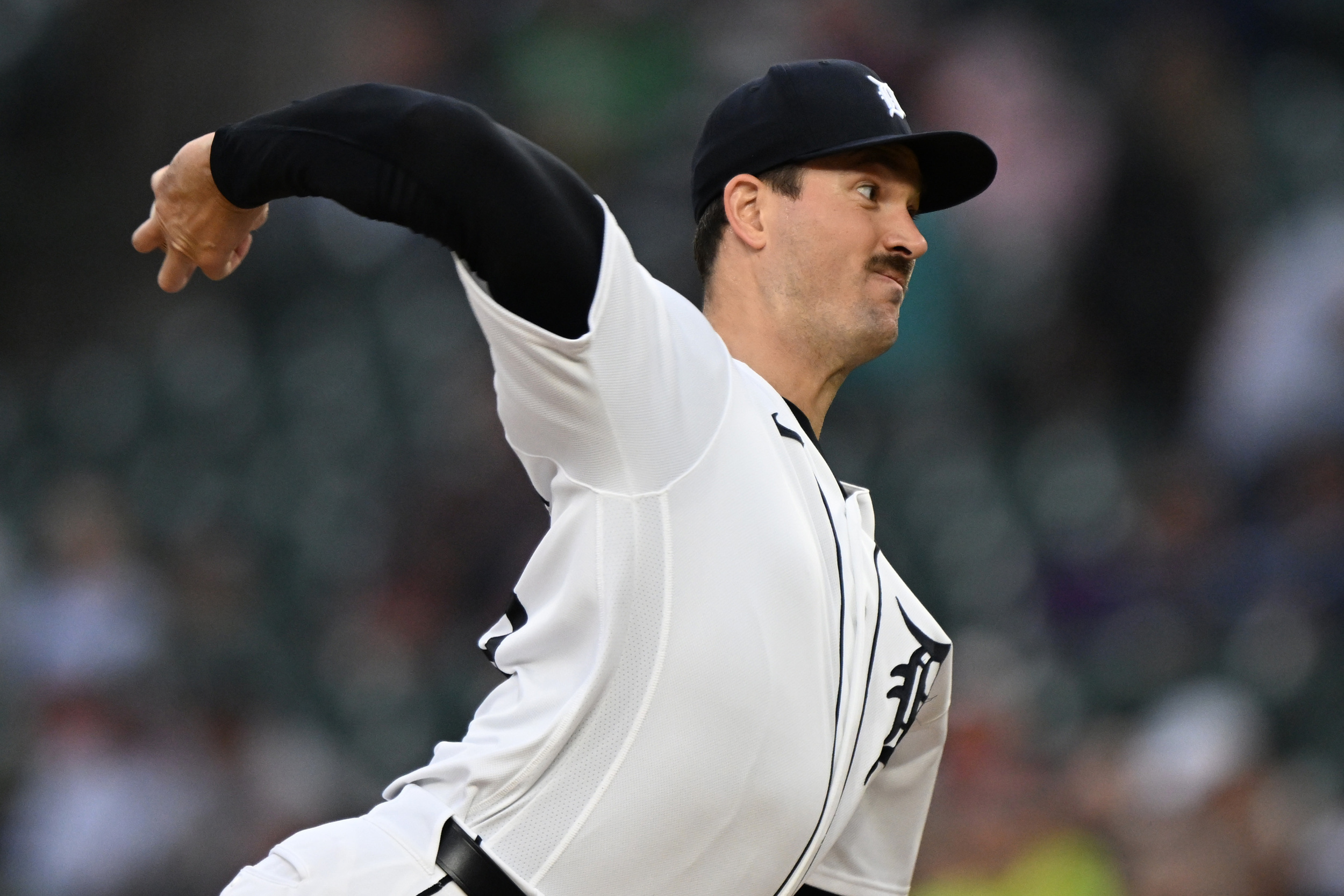
On the other hand, Drew Anderson represents a much more uncertain profile—one defined by resilience, adaptability, and a surprising resurgence after a five-year detour through Japan and Korea. Signed last December to a one-year, $7 million deal with a $10 million option and no buyout, Anderson entered the season expecting a rotation spot. But with the additions of Framber Valdez and Justin Verlander, his role shifted dramatically into the bullpen. Initially inconsistent, Anderson found his footing during the final stretch of the season.
From Mop-Up Man to Rotation Candidate
Anderson’s transformation began after the trade deadline, when Tarik Skubal and Casey Mize were sent away. With the rotation depleted, Anderson was thrust into the starting role for his final nine appearances. Over 44 1/3 innings, he posted a 2.84 ERA—impressive numbers for a pitcher stepping into such a high-pressure situation. While his peripherals weren’t dominant—fanning just 20% of batters and walking 11%—his ability to limit damage and keep the ball in the park stood out. He allowed home runs at a higher-than-average rate, but crucially, opponents who saw him a third time went just 9-for-22 with two homers and two doubles, indicating some command issues under repeated exposure.
Still, what makes Anderson compelling is not just his results, but his arsenal. At age 32 (turning 33 in March), he averaged 95 mph on his fastball, complemented by a sharp curveball and a revamped kick-changeup developed during his time with the SSG Landers in South Korea. That changeup proved especially effective against left-handed hitters, helping neutralize the opposing lineup. In total, across 108 innings split between relief and starting roles, Anderson delivered a 3.67 ERA—a figure that suggests he’s capable of being a reliable mid-rotation or high-leverage reliever.
Financial Context and Market Realities
The $10 million price tag for Anderson isn’t trivial, but it’s not unreasonable either. That amount aligns closely with what Tyler Mahle and Zach Eflin received last winter following injury-shortened seasons. The Rays’ signing of Nick Martinez, a swingman who had never previously pitched in a full-time role, for $13 million further underscores the market’s willingness to pay for proven performance—even if it’s situational. Other recent one-year deals in this range include Michael Lorenzen ($8MM), Michael Soroka ($7.5MM), and Dustin May ($12.5MM). Of these, only May and Soroka carried significant upside, both with injury histories that make them risky bets. Lorenzen, meanwhile, has historically been a fifth starter.
For Detroit, the decision isn’t just about Anderson’s value—it’s about roster construction. With Skubal and Mize now gone, Jack Flaherty heading into free agency, and Valdez showing flashes but also struggles in his first season as a Tiger, the rotation is wide open. Troy Melton had the best year among returning starters, but Keider Montero showed promise and could compete for a back-end spot. Young arms like Jackson Jobe, River Ryan, and Reese Olson have high ceilings but lack the durability to be relied upon for 150 innings.
Anderson could enter spring training as a starter, with the flexibility to move back to relief depending on how the Tigers fill their remaining needs. That versatility is invaluable.
Bullpen Overhaul Ahead
The Tigers’ bullpen is equally in flux. Will Vest and Kyle Finnegan had disappointing seasons, while Brant Hurter missed significant time due to a back injury. Jansen remains a question mark—he’s two saves away from joining the elite 500-save club, a milestone that would undoubtedly influence his desire to remain a full-time closer. Yet even if the Tigers were willing to offer him that role, they’re unlikely to lock in a long-term commitment before seeing how the rest of the market develops. Declining his $12 million option (with a $2 million buyout) keeps their options open, allowing them to explore cheaper alternatives or restructure the bullpen around a new identity.
Ultimately, the choice between Jansen and Anderson isn’t just about performance—it’s about fit, risk, and long-term planning. While Jansen carries historical significance, Anderson offers a fresh start, a unique skill set, and the potential to thrive in multiple roles. For a team rebuilding its rotation and bullpen, the decision may hinge less on legacy and more on what’s next.
Key Developments in the MLB Postseason Landscape
As the Major League Baseball postseason heats up, several critical roster and strategic decisions are shaping the narrative of this year’s championship race. From injury updates to player movement and fan-driven momentum, the stories unfolding behind the scenes are just as compelling as the games on the field.
Rays Confirm Top Starter Will Not Return for Postseason
The Tampa Bay Rays have officially announced that their ace pitcher will not be available for the remainder of the postseason due to a lingering injury. While the team has not disclosed the exact nature of the issue, sources indicate it involves a stress reaction in the pitcher’s forearm—a condition that requires extended rest and rehabilitation. This development comes as a significant blow to the Rays’ playoff hopes, especially given their reliance on their top starter during the regular season.
The absence leaves the rotation in flux, with the Rays expected to rely on a combination of younger arms and veteran depth. Manager Kevin Cash confirmed that the team is “evaluating all options” and may consider using a six-man rotation or shortening innings for other starters to preserve bullpen strength. The decision underscores the delicate balance between performance and long-term health, particularly in high-stakes series.
Alex Anthopoulos Weighs In on Braves’ Offseason Plans
In a recent interview, Atlanta Braves executive Alex Anthopoulos offered insights into the team’s upcoming free agency strategy, emphasizing both continuity and flexibility. With several key players entering free agency—including outfielder Adonis Garcia and reliever Luke Jackson—Anthopoulos acknowledged the challenges of retaining talent while maintaining competitive balance.
“Free agency is always a puzzle,” Anthopoulos said. “We want to keep our core together, but we also need to be realistic about what we can afford and what makes sense for the long-term vision.” He highlighted the importance of internal development and the potential role of young prospects like Spencer Strider and Travis Demeritte in future plans.
One name generating buzz is German-born infielder Jurickson Profar, whose trade value has surged after a strong second-half performance. Anthopoulos noted that the Braves remain open to discussions but stressed that any move would depend on the right fit, both on the field and in the clubhouse.
ALCS Rosters Announced by Rays and Guardians
The American League Championship Series (ALCS) rosters have now been officially confirmed by both the Tampa Bay Rays and Cleveland Guardians. The Rays have trimmed their 40-man roster down to 28 players, including five pitchers from the minor leagues who were promoted for postseason duty. Among them is 23-year-old left-hander Eduardo Sánchez, whose impressive strikeout rate in Triple-A made him a standout choice.
The Guardians, meanwhile, have opted for a more conservative approach, sticking with a traditional 26-player roster. They’ve added two additional relief pitchers—pitchers Jacob Melton and Tyler Freeman—to bolster their bullpen depth. The team’s focus remains on maximizing efficiency in high-leverage situations, especially with their star closer, Emmanuel Clase, returning from a brief injury layoff.
Both teams are expected to utilize a mix of bullpen specialists and situational hitters, signaling a shift toward analytics-driven strategies in the later stages of the playoffs.
Brewers’ Jacob Misiorowski Credits Fans for Career Boost
Brewers reliever Jacob Misiorowski recently opened up about the emotional impact of Milwaukee fans on his professional journey. Speaking at a post-game press conference, Misiorowski said the unwavering support he received during tough stretches in the regular season played a pivotal role in helping him regain confidence.
“I’ve had my ups and downs,” Misiorowski admitted. “But when I walk out of the tunnel and hear the crowd chanting my name—especially during tough outings—it gives me something to fight for.” He credited the energy of the Miller Park faithful for pushing him through a difficult stretch in June, when he posted a 7.50 ERA over five starts.
His turnaround since then—from a struggling starter to a reliable setup man—has been widely praised. Misiorowski now boasts a 2.90 ERA in 42 appearances and has recorded 10 saves. He called the fanbase “the heartbeat of this team.”
Report: Braves Turn Down Trade for Tarik Skubal
A new report indicates that the Atlanta Braves declined an offer from the Detroit Tigers to acquire star pitcher Tarik Skubal in a blockbuster trade. The proposed deal reportedly included three top-tier prospects—pitcher Cade Smith, outfielder Jace Jung, and infielder Rafael Devers—as well as a cash consideration.
While the Braves were interested in strengthening their rotation, sources say front office officials ultimately concluded that the cost was too high relative to Skubal’s current level of production. Skubal, though talented, has struggled with consistency and durability over the past two seasons, raising concerns about long-term reliability.
The Braves instead chose to double down on internal development, focusing on building around existing pitchers like Max Fried and Kyle Wright. The decision reflects a broader organizational philosophy of patience and sustainable growth rather than quick fixes.
With the postseason underway, every move counts—and these developments could shape the trajectory of multiple franchises in the months ahead.