
Gaza Deal Hope: US Signals Optimism After Trump Circle Meetings
Speculation mounted regarding a potential announcement following Prime Minister Benjamin Netanyahu's White House meeting with US President Donald Trump. The addition of a press conference fueled rumors that the Trump administration might be on the verge of finalizing an agreement to end the conflict between Israel and Hamas in Gaza and secure the release of the remaining hostages.
This visit marked Netanyahu’s fourth trip to the White House since Trump's return to office in January. The primary focus of discussions centered around the US president’s proposed 21-point plan. This ambitious plan aims to achieve several key objectives: ending the Gaza conflict, establishing a post-war governing structure, and securing the release of the 48 hostages still held by various groups. Intelligence suggests that approximately 20 of these hostages are still alive.
Prior to the meeting, US special envoy Steve Witkoff engaged in an extensive two-hour discussion with Netanyahu at his Washington hotel. The aim of this meeting was to secure Netanyahu’s support for the proposal, despite his reservations regarding specific terms. These sticking points reportedly included the disarmament of Hamas and the role of the Palestinian Authority (PA) in governing Gaza after the conflict. Jared Kushner, the president’s son-in-law and former senior advisor, also participated in these preparatory discussions.

While Hebrew media outlets suggested that the Witkoff meeting was productive and that Netanyahu was likely to express support for the plan during his meeting with Trump, reports indicated that divisions remained between Jerusalem and Washington as of Monday.
Adding another layer of complexity, Hamas claimed they had not yet been presented with the proposal. Husam Badran, a senior official within the group, stated that they had “not received any official proposal via the Egyptian and Qatari mediators.” He emphasized that ending the conflict and the complete withdrawal of Israeli forces from Gaza were essential prerequisites for any agreement.
Badran also voiced a fundamental objection to the requirement that Hamas disarm. He asserted that their weapons “belong to the Palestinian resistance and the Palestinian people” and that they have the right to resist occupation “under international law… and the right to exercise that resistance by any means possible.”
The US has reportedly garnered initial support from Arab and Muslim nations, which is crucial for the post-war management of Gaza. However, modifications to the US plan, potentially influenced by Netanyahu, could jeopardize this support. These nations have stressed the importance of the PA's involvement in Gaza and the possibility of a future Palestinian state – both of which are considered red lines by the Israeli premier.
Media reports also suggested that Israel is pushing to limit Qatar's role in post-war Gaza, given the strained relations between Jerusalem and Doha. The US, however, values Qatar as a key partner and mediator.
Furthermore, Israel is reportedly seeking explicit assurances within the agreement that the IDF will retain the freedom to act against Hamas if the group attempts to rearm or rebuild its forces after the deal is signed. Mediators are concerned that including such a clause could deter Hamas from agreeing to the deal.
One of the 21 points within the plan outlines that significant aspects of the agreement can proceed even without Hamas's explicit consent. This includes establishing a new transitional government composed of Palestinian technocrats and deploying an international stabilization force in areas cleared of Hamas's presence – encompassing a vast majority of the Gaza Strip.
However, without the release of the remaining 48 hostages, it is unlikely that Israel will agree to halt its military operations in Gaza City and other areas.

Several Arab nations and the Palestinian Authority have reportedly requested revisions to Trump’s Gaza peace plan. These requests include softening the language regarding Hamas's disarmament, shifting from a definitive requirement to a request for Hamas to hand over its weapons.
They are also advocating for a clearer alignment of the immediate post-war government with the PA, a point of contention for Israel. Additionally, there are suggestions that any international peacekeeping force should be deployed along the border with Israel, rather than within Gaza itself. This request reportedly originates from Hamas.
Smotrich's "Red Lines"
Netanyahu is also likely to face opposition to the plan from within his own coalition government.
Far-right Finance Minister Bezalel Smotrich has conditioned his Religious Zionism party’s support for the plan on a series of demands, some of which directly contradict key elements of the proposed agreement.
Smotrich has outlined six conditions that his party requires for supporting the deal. These conditions represent a notable shift from his previous stance, which called for the complete military destruction of Hamas and Israeli governance of Gaza, including the establishment of settlements. Smotrich has previously threatened to withdraw from the government if the war is halted.
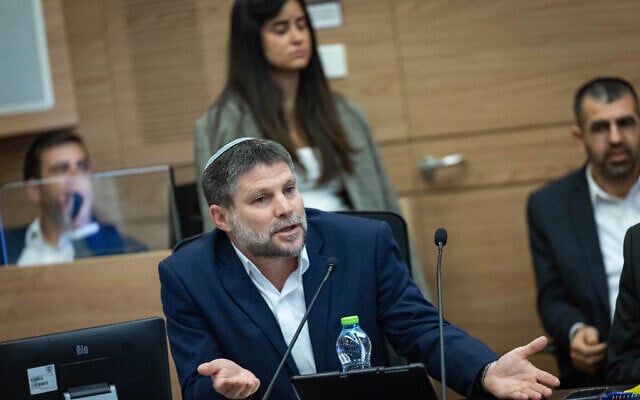
Smotrich stated that his party’s red lines “include ending the war only with the full and genuine dismantling and demilitarization of Hamas and the Gaza Strip.”
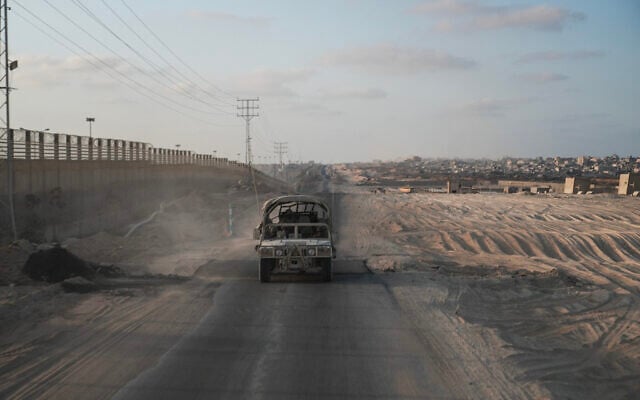
He also insists that Israeli forces must maintain a presence on the perimeter of the Strip, including the Philadelphi Corridor along the Gaza-Egyptian border, and have complete freedom of action throughout the coastal territory.
Smotrich also demands that the PA have no role in governing Gaza, even indirectly, arguing that such involvement would be equivalent to acknowledging a Palestinian state.
Furthermore, he insists that the agreement contain “not even a hint” of a Palestinian state, stating that “the idea of a Palestinian state needs to be completely removed from the table.”
Smotrich also opposes any role for Qatar in the post-war administration of Gaza, labeling the Gulf state as “two-faced hypocrites that sponsor terror.”
Finally, Smotrich demands that the border with Egypt be opened to allow Palestinians who wish to leave Gaza to relocate to any country that will accept them. He has previously supported a proposal to relocate all of Gaza’s residents abroad.
Smotrich also addressed the issue of Israel annexing the West Bank, a core objective of his party.
He stated that he expects Netanyahu to “establish politically and practically the fact that Judea and Samaria are an inseparable part of the sovereign state of Israel, and to put on the table an alternative plan for managing the lives of the Arabs of Judea and Samaria themselves.”
Trump’s 21-point plan reportedly outlines a potential pathway to a future Palestinian state, a concept that Netanyahu has consistently rejected.
Trump and Netanyahu also hold differing views on the potential annexation of parts of the West Bank by Israel.
Settler Leaders Express Concerns
Netanyahu’s allies on the right, including settlement leaders, have been urging Israel to assert its sovereignty over parts of the West Bank, particularly in response to the growing number of Western countries recognizing a Palestinian state.
Netanyahu reportedly met with West Bank settlement leaders prior to his meeting with Trump and stated that he would raise the issue of Israeli sovereignty over the West Bank.
However, he also reportedly acknowledged a “complicated reality,” suggesting that Israeli annexation of parts of the West Bank is unlikely.
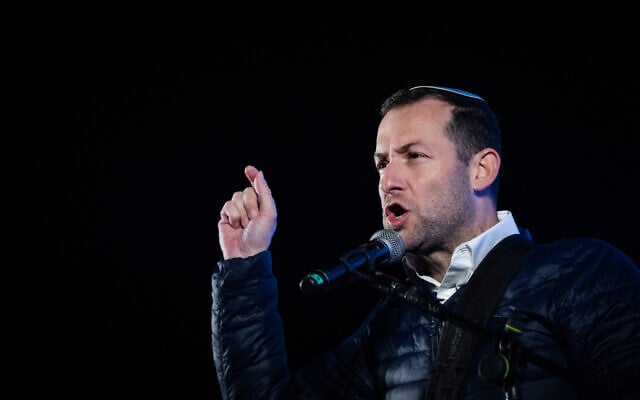
Reports indicate that Netanyahu favorably compared Trump to former US president Barack Obama, who actively pressured Israel to freeze settlement construction.
“We have a supportive president,” Netanyahu reportedly said regarding Trump. “Remember the Obama era, when he told us not to lay even one brick.”
One settler representative said that he emerged from the meeting with Netanyahu “very concerned.”
He stated that Netanyahu listened to the settler representatives but did not commit to a timeline for Israel annexing the West Bank.
“This government could sign off on the establishment of a Palestinian state — that’s the next October 7,” he said.
The UAE has also stated that any move to annex the West Bank would be a “red line.”
Hostage Families Plead for a Deal
Meanwhile, the Hostage and Missing Families Forum sent a letter to Trump ahead of his meeting with Netanyahu, expressing gratitude for his efforts to secure the release of the captives and urging him to finalize the latest deal.
The Hamas attack resulted in the deaths of 1,200 people and the abduction of 251 hostages to Gaza. Of those, 48 remain in captivity, with approximately 20 believed to be alive.

The families implored Trump to “stand firm against any attempts to sabotage the deal you have brought forth.”
The forum also appeared to reiterate previous accusations against Netanyahu, whom they blame for “sabotaging” various ceasefire proposals that could have led to the release of their relatives.
Post a Comment for "Gaza Deal Hope: US Signals Optimism After Trump Circle Meetings"