
These clever hacks will keep your car windows from fogging up
I live in New York City, where the weather is fickle and temperatures can swing widely in either direction, no matter the season. But there’s one thing that is quite predictable in this climate: My car windshield will always fog up when I hit the road. It used to happen only in the wintertime, but summer humidity has made it necessary to learn how to keep car windows from fogging up all year long.
Aside from finally learning how to use my car’s defroster properly, I’ve come across many hacks floating around the internet that supposedly stop car windows from fogging up. But which ones really work? And do they work in both cold and hot weather?
To clear up the matter (pun intended), I connected with a trio of auto experts and asked them for strategies that actually work. Read on to learn how to keep car windows from fogging up, according to the pros. Plus, get their tips for clearing a foggy window in a flash.
Why car windows fog up
The fog on your windshield is actually condensation, a process by which a gas turns into a liquid. In this case, the water vapor (gas) in the air becomes water (liquid) again.
Condensation happens when warm, moisture-laden air touches a cooler surface. Clouds are formed this way, as is dew on the grass in the morning. If you’ve ever taken a hot bath or shower and come out to see a foggy bathroom window, or have wiped away the “sweat” on a cold beverage can, that’s condensation.
And yes, the fog on your car windows is also the result of condensation. It forms when warmer air—typically outside the car in summer and inside the car in winter—hits the cool glass.
How to keep car windows from fogging up
Foggy car windows aren’t just a nuisance—they’re a hazard. Drivers need an unobstructed view of the road to stay safe, and that means having clear windows to look through. Here are some popular hacks that actually work to prevent or remove condensation from car windows and keep them fog-free year-round.
Fill a sock with kitty litter
The rumors are true: A sock filled with unused kitty litter really does work to prevent the inside of your windows from fogging up in the winter. “Kitty litter is highly absorbent of all liquids and can draw out the moisture within your car’s cabin, helping to prevent condensation,” says Duane “Doc” Watson, a technical trainer at Bosch Automotive Aftermarket.
But there is a downside, and that’s the strong smell that lingers, especially if you leave the sock in your car between trips. If the scent doesn’t bother you—or is worth it to eliminate the hassle of foggy windows—use the steps below to learn how to keep car windows from fogging up in three simple steps.
What to do:
- Grab an old, clean sock—check for holes first!—and fill it about halfway with kitty litter.
- Secure the top by knotting it or tying it off with a rubber band or string.
- Place it on the dashboard or under a seat.
Patrick Peterson, an automotive expert and team lead at GoodCar, advises tying that kitty-litter-filled sock tightly so it doesn’t bust open. For the same reason, don’t put the sock too close to any electronics or vents.
Pro tip: If you’re tempted to try this hack with rice, know that the grain isn’t as effective as a silica-based product, says Watson. And there’s another reason to skip this hack: The rice could attract bugs or rodents.
Apply shaving cream to the windows
Give the interior of your windows a good buffing with shaving cream to prevent condensation from forming during the winter. “Shaving cream can help stop your windows from fogging up because it leaves behind a residue that creates a thin barrier on the glass that minimizes condensation buildup,” says Watson. “This is a trick many people use on their bathroom mirrors at home, but it works just as well on your windshield.”
He says results should last about a week, so reapply as needed throughout the winter.
What to do:
- Spread a thin layer of shaving cream across the inside of your front and rear windshields.
- Wipe it off thoroughly with a dry cloth or paper towel.
Pro tip: Don’t go overboard with the shaving cream—you only need a light layer. And be sure to wipe until the glass is completely clear. Leave behind a visible film or streaks, and you might struggle to see out of the window. And that’s a safety hazard.
Rub a potato on your windshield
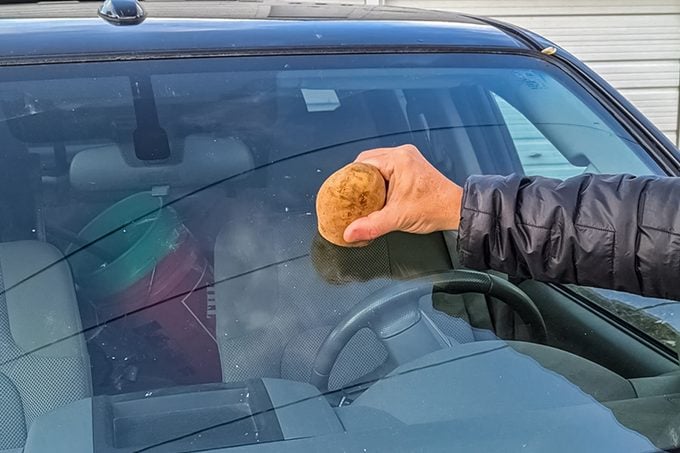
This clever hack costs under a dollar, and it really works. Peterson says the starch in a potato can produce a thin coating on your windows to prevent fogging. Try this trick on a chilly winter night to prevent your windows from fogging in the morning. Or do it before you hit the road in the summer.
What to do:
- Wipe your window of debris.
- Cut a raw potato in half.
- Rub the cut side on your front and rear windshields. Do this on the affected side of the window, usually the interior during winter and exterior in summer.
- Wipe the glass thoroughly with a microfiber cloth.
Before you get on the road, make sure you’ve wiped away any residue that could obscure your vision while driving. If you used the potato on the outside of your windows to avoid summer steam, your windshield wipers and a spray of fluid will help clear the glass.
Pro tip: You can also try the potato trick in winter to prevent frost on your window. At night, rub a potato on the outside of the windshield; the starch prevents ice from sticking to the glass the next morning.
Park in the shade
Want to prevent foggy windows without putting in any elbow grease? This is the hack for you. It works by lowering the temperature in your car, which reduces the likelihood of condensation.
Remember, fog forms on a window when warm, moist air meets a cool surface. If you’ve ever entered a car that’s been baking in the heat, you know just how hot and humid that trapped air can be. When you crank up the air conditioner, it cools the windows, and as the humid air hits the glass, condensation forms. The more moisture in the air—from humidity or wet items like swimsuits—the more likely your windows are to fog.
One way you can lessen your chances of dealing with foggy windows is to lower your car’s internal temperature. So choose your parking spot carefully. Peterson recommends a covered or otherwise shaded spot.
In very hot climates, you might consider a dashboard visor to maintain a cooler and less humid car interior. You’ll want to use it during daylight hours.
Keep the windows clean
Sorry to call you out on an untidy car, but dirty windows are another reason you’re dealing with fog. The dirt and dust particles on your window—both inside and out—give water vapor something to cling to during condensation. “Dirt on the windows can cause moisture to stick and fog up quickly. A clean window is less likely to fog,” says Peterson.
Windshield wiper fluid is there for a reason, so use it frequently on the exterior of the windows. And while a streak-free commercial glass cleaner is a great way to clean the entire surface of your windows, you can also use a cheap vinegar-and-water spray.
What to do:
- Mix a solution of equal parts vinegar and water.
- Pour the solution into a spray bottle.
- Spray the vinegar solution on the car windows, both inside and out.
- Wipe with a microfiber cloth to avoid streaking.
- Go over the glass again with a dry cloth to ensure you’ve dried up all the spray.
Pro tip: While this method keeps windows clean, Peterson stresses that you need to take care to wipe the window and any drip marks. Vinegar is acidic, so it can damage surfaces and even etch glass if it’s not wiped clean after spraying.
Use a fog-prevention product
Although many of these hacks use products you likely have on hand at home, you might want to buy something online or at an auto parts store that’s even more convenient, like these:
- Silica gel packets. Silica is made from silicon dioxide, which absorbs moisture. It’s sold in packets of gel beads, like the small packs you might see in a new box of shoes. Place packets on the dashboard to prevent windows from fogging. You could also place them in the trunk, beneath the seats and in the footwells to remove additional moisture.
- DampRid. DampRid pouches work in a way similar to silica, but they’re made from calcium chloride, and the crystals dissolve as they absorb moisture. To use them, unwrap the pouch, pinch the bottom to allow it to stand up on a surface and place it in a moisture-prone area, like on the dashboard or under a seat.
- Rain-X Anti-Fog. This antifog product is Peterson’s “all-time favorite and works every time.” Just apply a thin coating to your car’s interior windows to stop moisture buildup. Don’t overuse the product, as thick layers can cause streaking or impair visibility, he says.
Pro tip: Don’t go overboard with these moisture-absorbing products. “While they work well, too many can make the cabin uncomfortably dry,” Peterson explains.
How to clear fogged car windows
If you didn’t plan ahead and clean your windows, or you forgot to bring that kitty litter-stuffed sock along for the ride, all is not lost—not even if your car’s defroster is on the fritz. But assuming you can use your car’s defroster, let’s start there and follow up with some other ways to defog those car windows.
Use the defroster the right way
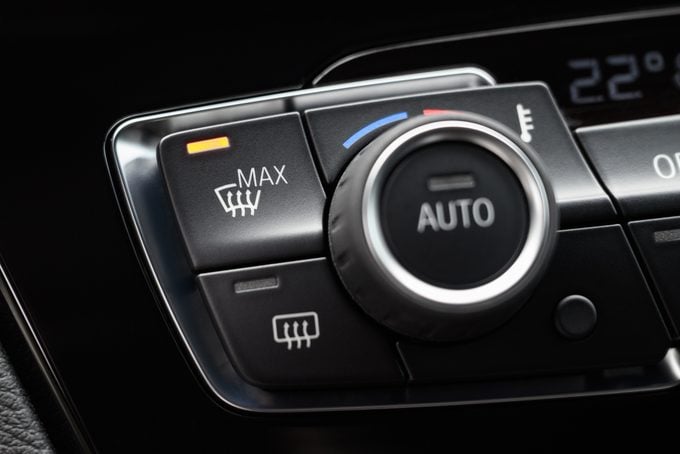
It takes only the press of a button, but I admit the defroster always trips me up. I never know if I should also turn on the heat or the AC, or how high I should set them.
Robert Dillman, the founder of Nevo Driving Academy, advised me to think of the defrost button as an electric blanket for the window—it warms up the glass and gets rid of the moisture in the air. By using the defrost function, you’re essentially balancing the temperature inside and outside the car. So whether the cool glass is caused by low outdoor temperatures (like in winter) or the car’s AC (like in summer), the defroster heats up the glass, clearing it of condensation (and ice in the winter).
What to do:
- Turn on your defroster.
- Turn on the AC if it doesn’t come on automatically when you press defrost.
- Turn off the recirculate feature. This will pull in fresh air from the outside to reduce humidity, Dillman explains.
- Crank the fan to the highest setting. This will warm up the windshield to remove the condensation and defog the windows.
In most cars, when you press the defrost button, the air conditioning comes on too. (If it doesn’t, be sure to turn it on.) You might be tempted to turn on the heat in winter, but there’s a good reason to select the AC instead. “Condensation happens when warm and moist air inside of your car condenses on the cool glass of your windshield,” Watson explains. “The AC dehumidifies the air, pulling out the excess warm moisture.”
He suggests letting the cold air blast for a few minutes, then changing it back to a more comfortable temperature, which will also stabilize the temperature of the windshield glass.
Pro tip: Check to make sure your car’s AC is functioning properly, no matter the season. “Your defroster won’t work if the compressor isn’t working,” says Peterson. (The compressor is what pushes the refrigerant through the system when the AC turns on. Because most defrosters engage the AC as well, this is a key element of a functioning defroster.)
Turn on your windshield wipers
If hot and humid summer temps are causing the outside of your windows to fog up (especially likely if you’re blasting the AC), there’s a quick way to clear the condensation: Use your windshield wipers. They’ll swipe away the blanket of fog so you can see clearly again … at least for a little while. You’ll want to adjust the temperature in the car as well, especially if your side windows are fogging.
Open a window
This may not clear all of the condensation from your windows, but it’s a good trick to try while using your defroster. “If you’re still getting fog, crack your window to let the humid air escape,” Watson says.
It’s an especially useful trick for times when you’re attempting to use the defroster in a car full of chatty folks, Dillman says. When people are expelling a lot of air, humidity rises faster than fresh air gets pulled in through the vents. Opening a window can get fresh air into the car more quickly.
Run your car for a few minutes before driving
Watson suggests keeping your car running with the defroster on for a few minutes before you hit the road. “This not only helps your engine warm up but also helps your HVAC system to clear the fog on your windshield so you can drive safer,” he says.
Remove wet items
Whether it’s wet towels from the pool in the summertime or snowy boots or coats in the winter, all that extra moisture isn’t helping your car windows stay fog-free. “Removing wet items, such as gym bags, umbrellas or snow-covered mats, will reduce the moisture available to cause condensation,” says Dillman.
OK, but you can’t just ditch those items when your windows begin fogging. The fix? Put wet items in the trunk, or at least the backseat, to lower your risk of front windshield fog.
Replace the air filters
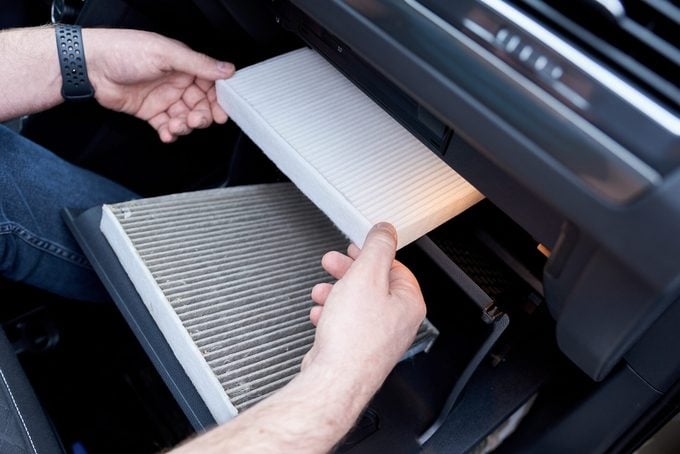
If you find that you’re still struggling with foggy windows (especially in the winter) after trying the hacks on this list, it could be your car’s cabin air filters. “Make sure you’re changing your air filters regularly, as dirty and clogged filters will restrict airflow and reduce the effectiveness of your car’s HVAC system, which can make it harder to clear condensation from the inside of your windshield,” Watson says.
Aim to replace the cabin and engine air filters annually, or sooner if you frequently drive in polluted areas or notice bad odors in your car’s interior.
About the experts
|
Why trust us
At Reader’s Digest, we’re committed to producing high-quality content by writers with expertise and experience in their field in consultation with relevant, qualified experts. We rely on reputable primary sources, including government and professional organizations and academic institutions as well as our writers’ personal experiences where appropriate. We verify all facts and data, back them with credible sourcing and revisit them over time to ensure they remain accurate and up to date. Read more about our team, our contributors and our editorial policies.
Sources:
- Duane “Doc” Watson, technical trainer at Bosch Automotive Aftermarket; email interview, Oct. 13, 2025
- Robert Dillman, founder of Nevo Driving Academy; email interview, Oct. 10, 2025
- Patrick Peterson, auto expert and team lead at GoodCar; email interview, Oct. 10, 2025
- AutoZone: “How Often Should You Change Your Vehicle’s Air Filters?”


Post a Comment for "These clever hacks will keep your car windows from fogging up"