
This beautiful, wild nation showed me a Europe I didn’t know existed
″Why did you choose to come here?” asks our tour leader Robert Sertic, his eyes scanning the group. The question hangs in the air, as we contemplate our reasons for joining this eight-day tour of Bosnia and Herzegovina. Croatia’s coast might be the summer siren, but we all agree that we are here to see another side of Europe that most don’t bother to visit.
Later that night, Sertic takes us to the best restaurant in town. Sarajevo, the capital, shimmers a yellow gold outside as I take a seat. I’ve left my shoes at the door and poured myself a cup of elderflower juice. In any other restaurant, this might raise eyebrows, but in Mustafa Punjeta and Mersiha Punjeta’s home, the dining room is a place of self-service, family, and education. The view is just a bonus.
Mersiha, her hands dusted with flour, is teaching us how to make burek, the national dish of Bosnia. It’s a simple recipe, really – flour, oil, salt, water, and a broomstick. She explains the broomstick was meant to be a temporary solution when her mother broke the rolling pin and they couldn’t afford a replacement. But it worked so well that she still uses it today. “You’ll see,” she says, “Bosnians are resourceful people.”
She stretches the dough over the table like a silky blanket, spoons on a mixture of spiced potatoes, rolls it into a sausage, and coils it like a snail. She repeats the process 20 times. The burek will take 25 minutes to cook in the oven. In the meantime, we experience the merciless generosity of Bosnian hospitality.
First is a pot of chicken soup, then an arrangement of sogan dolma (stuffed onions) and yaprak sarma, a mix of mince, rice, and spices wrapped tight with grape leaves, like mini cigars. She makes a point of telling us that the chopped vegetables are from her organic garden in the backyard.
The burek arrives last. I grab one out of the pan, juggling it until I can plate it. It’s flaky, salty, and satisfyingly spicy. “No one leaves until the dishes are empty,” Mustafa jokes, though I’m not sure if he’s joking.
Mustafa and Mersiha were just kids when Serb forces laid siege to Sarajevo during the Bosnian War of 1992-1995. For 1425 days, the relentless bombardment and sniper fire turned the streets into killing fields.
“We became underground dwellers,” Mustafa jokes, but the humour quickly fades as a flicker of sadness crosses his face. “It was the safest place to be, but humans weren’t meant for such a dark existence.”
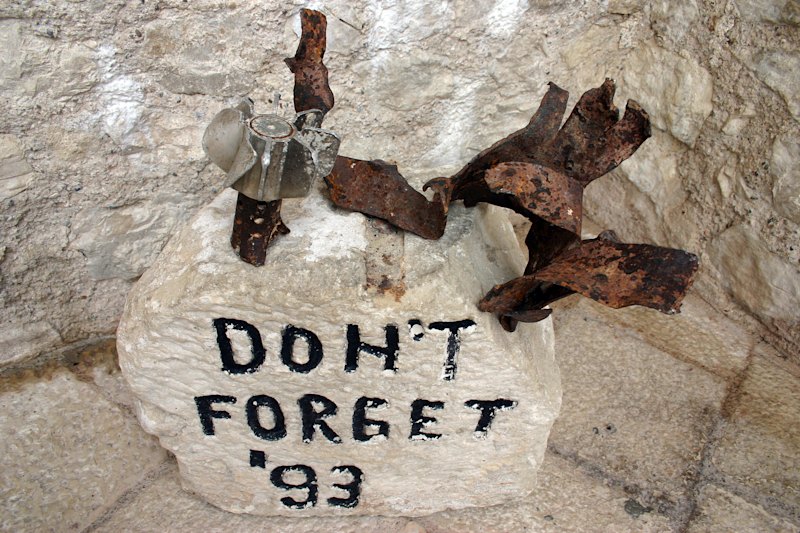
His words force us into silence as he recounts the terrifying memories of being shot at by snipers on the way to school. “If you wanted to learn, it was a risk you took.”
Despite the weight of the conversation, he manages to lighten the mood with a uniquely Bosnian brand of humour. He grabs an expired can of beef from the Vietnam War, a relic of the EU’s well-intentioned but slightly off-target aid for Sarajevo’s residents. The can, a symbol of the city’s resilience, has been preserved as a monument in town.
It’s almost midnight when we say our goodbyes, tracing the dim-lit road to the old town. Sarajevo glows with a nocturnal energy. We catch a fleeting glimpse, knowing we’ll be back in a week.
The next morning, we board a public bus to Jajce, a quintessential part of the local experience. Despite a late departure, a half-working air conditioner, and seats permanently reclined, the three-hour road trip flies by. The stupendous green landscapes and our first glimpse of this beautiful, wild country makes the journey more than worth it.
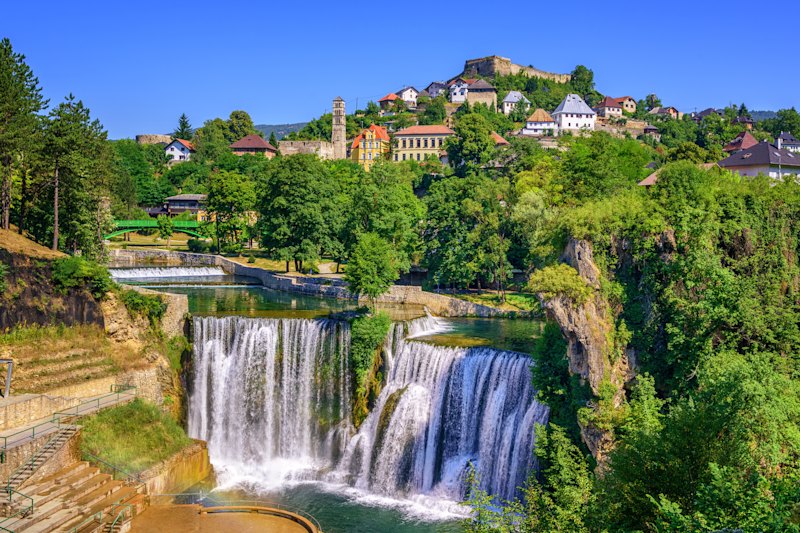
From the viewing platform at Pliva Waterfall, one of Europe’s most beautiful cascades, the town of Jajce unfolds like a scenic tableau. The jewel atop it all is a 14th-century fortress.
Jajce, though charming, holds a significant place in Bosnia’s history. Dragun, a local tour guide, takes us through the AVNOJ Museum where the fate of Yugoslavia and its Communist Party was sealed. It’s a small museum steeped in history, intrigue, and confusion. Then again, anything involving Josip Broz Tito, president of the communist party of Yugoslavia, a political figure whose reputation is as divisive as the nation he once ruled, will make anyone’s head spin.
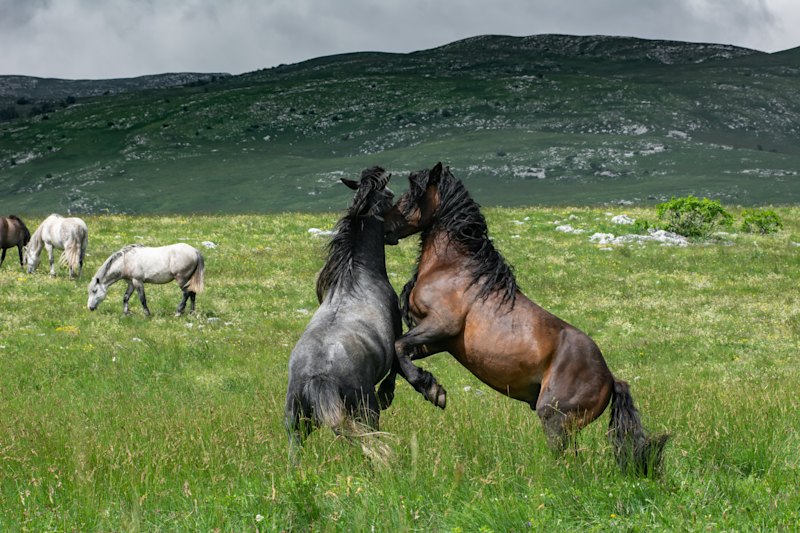
Heading south towards Herzegovina, with Mostar as our goal, we make a detour to Livno to encounter the wild horses of the Cincar Mountains. Marin Mamuza, owner of Continental Adventures Livno, piles us into his sturdy Land Rover, which looks like it has just driven off a safari in Africa.
In less than an hour, we’re just metres from a herd of 300 wild horses, their neighs echoing through the valley. A stampede of them barrels towards me, but Marin steps in, whirling his arms. He’s their keeper, and from what I witness, the horses know it, too.
As tempting as it is to stay and watch the horses all day, there is still more to explore in Mostar.
Stari Most shimmers in the golden and blue hues of the setting sun as a man leaps from the bridge. Just last week, an Australian was paralysed, Amna Jusufovich, our local guide, explains. We watch with bated breath as he resurfaces, victorious. She tells us that local boys would jump off the bridge to impress Turkish politicians, who rewarded their bravery with money and sweets.
“But it’s not the height that will kill you; it’s the five-degree waters below that send jumpers into shock,” she says, referring to the Neretva River, Europe’s coldest river, running through the city like an icy serpent.
The bridge, a beautiful example of Ottoman architecture, was reconstructed after its collapse during the Bosnian War of 1993. This war, which devastated the country, was sparked by the breakup of Yugoslavia. Croatia and Serbia sought to ethnically cleanse Bosna, a nation known for its religious tolerance.
Despite the abandoned buildings crumbling from shelling, Mostar retains a unique charm for tourists. Its cobblestone streets, lined with shiny copper coffee pots and minarets, create an atmosphere that feels distinctly different from other European cities.
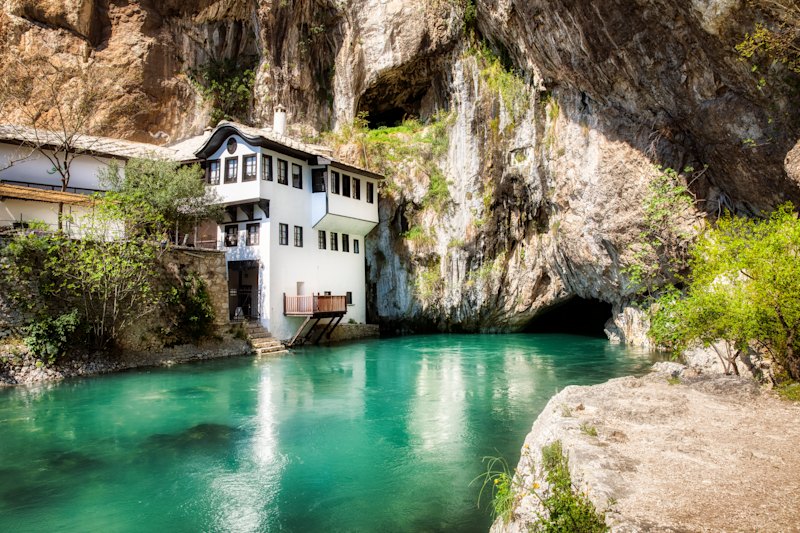
The southern region of Bosnia is where most of the attractions are. Blagaj Tekija, a Dervish monastery lodged under a cliff, is a sight that could be mistaken for a Bhutanese landscape. Kravica Waterfall rivals the beauty of Plitvice Lakes, and for those seeking a challenge, Lukomir, the highest settlement in the country, offers a rewarding hike.
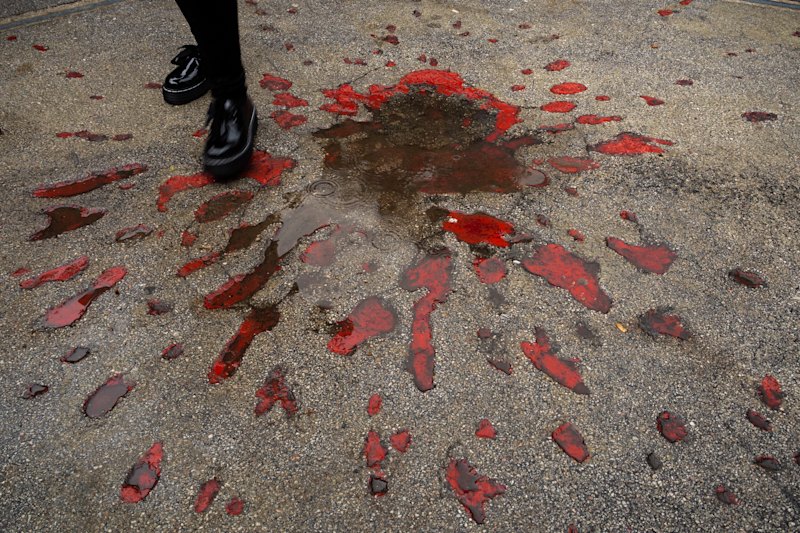
Back in Sarajevo, the scars of war are starkly visible in the daylight. Abandoned homes are reclaimed by nature. Bullet holes and shrapnel mar nearly every building, while craters, filled with red resin and referred to as Sarajevo Roses, are a poignant reminder of the past.
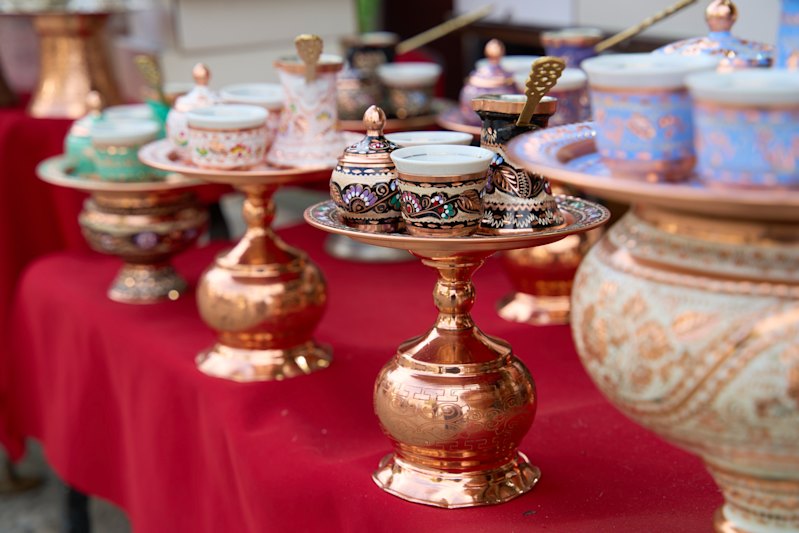
Deeper in town, Bascarsija, known as ‘Copper Street,’ coppersmiths like Adnan Hidič have turned Sarajevo’s war-torn past into souvenirs. After the siege, bullet casings were repurposed into flower vases, a symbol of resilience. “It’s our way of turning something used for killing into something life-giving,” says Hidič, gently hammering a copper bracelet.
Near Latin Bridge, a pale stone triple-arched bridge where Austro-Hungarian Archduke Franz Ferdinand and his wife were assassinated, igniting World War I, a line on the ground marks the boundary between the eastern part of the city, dominated by Ottoman architecture, mosques, and synagogues, and the western part, characterised by Austro-Hungarian buildings and Catholic and Orthodox churches. The city is often referred to as the Jerusalem of Europe.
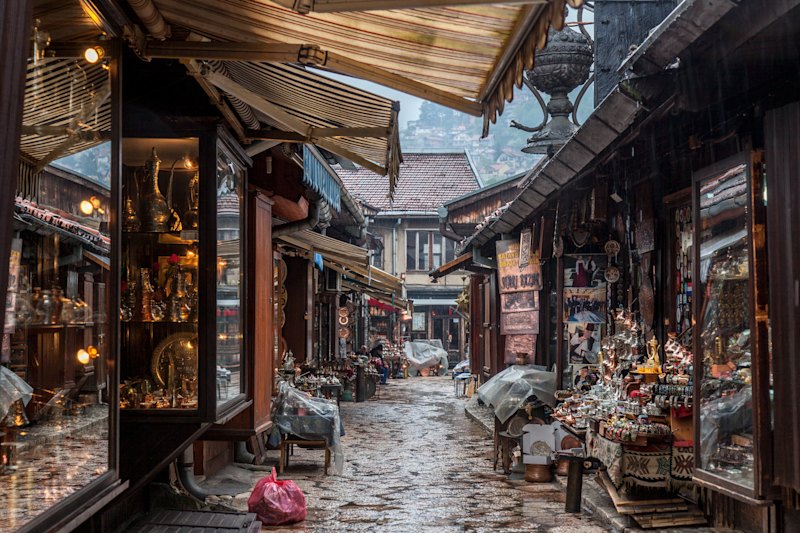
Unlike Mostar, Sarajevo is still finding its footing in tourism. People chewing their morning Bosnian coffee fill cafes and shops peddle fake Prada and Turkish rugs. Most restaurants only accept cash, and it’s clear the Bosnian economy is still recovering from the war, but the vibrant energy in the streets suggests a promising future.
Our farewell dinner is inside Inat Kuća, a historic Ottoman home whose nickname, ‘Spite House’, comes from its backstory. The owner refused to sell when the Austro-Hungarians sought to build a new city hall on its site. Instead, he had them move the house, brick by brick, across the river.
Surrounded by the warmth of new friendships, we share stories of our journey through Bosnia and Herzegovina, our minds enriched by the country’s history, the hospitality of its people, and the unavoidable truths of a nation rebuilding after war.
As we raise our glasses in a toast, the call to prayer echoes through the air, following the lingering chimes of nearby church bells.
THE DETAILS
TourIntrepid’s seven-day Bosnia and Herzegovina Adventure starts at $2570 a person. See intrepidtravel.com.au
FlyEmirates operates 21 flights out of Australia to Dubai per week, connecting to Sarajevo four times per week.
MoreEuros are widely accepted, but some places only accept Bosnian marks. Card payments are less common, especially in smaller towns.
The writer travelled as a guest of Intrepid.
Post a Comment for "This beautiful, wild nation showed me a Europe I didn’t know existed"