
Antarctica's Doomsday Glacier: Scientists Drill into Fragile Core
Unlocking the Secrets of the 'Doomsday Glacier': Scientists Drill into Antarctica's Most Critical Ice Mass
A daring scientific expedition is underway to probe the most inaccessible and least understood regions of the Thwaites Glacier, a colossal ice formation in West Antarctica. Roughly the size of Great Britain, this immense glacier is not only one of the world's largest but also one of its most rapidly changing. Its potential collapse carries grave implications, with research indicating it could trigger a catastrophic global sea-level rise of approximately 65 centimetres (2.1 feet), threatening to inundate coastal communities worldwide. This alarming prospect has earned Thwaites the ominous moniker, the 'Doomsday Glacier'.
Despite its critical importance, the oceanographic processes driving the melting of Thwaites from beneath remain largely a mystery. In a significant undertaking, researchers from the British Antarctic Survey (BAS) are employing a novel approach: using superheated water to bore through the thick ice and deploy vital instruments at a crucial juncture of the glacier. Their mission is to illuminate the precise mechanisms of sub-ice melting before the situation becomes irreversible.
Dr. Peter Davis, a physical oceanographer at BAS, emphasised the significance of the endeavour. "This is one of the most important and unstable glaciers on the planet, and we are finally able to see what is happening where it matters most," he stated.
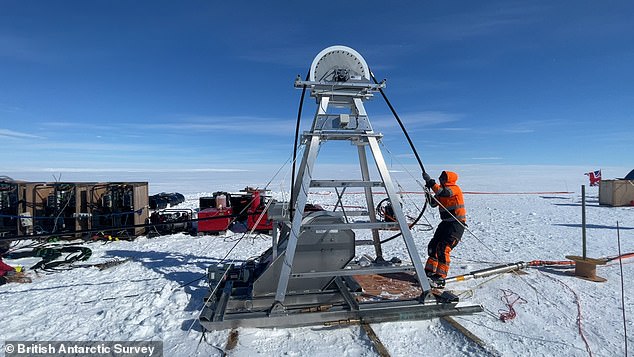
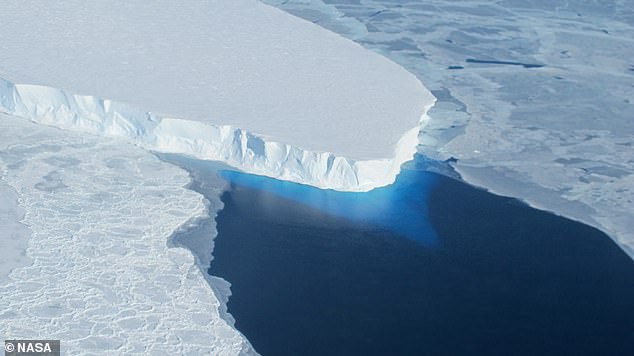
While the BAS has been monitoring the Thwaites Glacier since 2018, previous research efforts have predominantly focused on its more stable sections. The main body of the glacier is notoriously treacherous, riddled with deep and dangerous crevasses, which has historically hampered direct exploration of its most vulnerable areas. This expedition marks a turning point in overcoming those challenges.
To access this previously uncharted territory, the BAS team embarked on a three-week voyage from New Zealand aboard the research vessel RV Investigator. Before venturing onto the ice themselves, a remotely operated vehicle was deployed to meticulously scan the terrain, identifying potential hazards such as hidden crevasses beneath the surface. Once a safe landing zone was confirmed, the team undertook an extensive operation, involving over 40 helicopter flights to transport themselves and their substantial equipment the 18 miles to the chosen site.
The scientists now face a compressed timeframe of just two weeks to complete their drilling mission. Their target is located just downstream of the grounding line – the critical point where the glacier detaches from the seabed and transitions into a floating ice shelf.
Dr. Won Sang Lee, the expedition leader from the Korea Polar Research Institute (KOPRI), described the undertaking as "polar science in the extreme." He added, "We made this epic journey with no guarantee we'd even be able to make it onto the ice, so to be on the glacier and getting ready to deploy these instruments is testament to the skills and expertise of everyone involved from KOPRI and BAS."
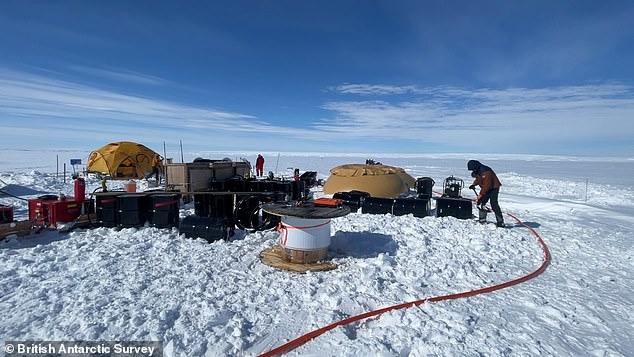
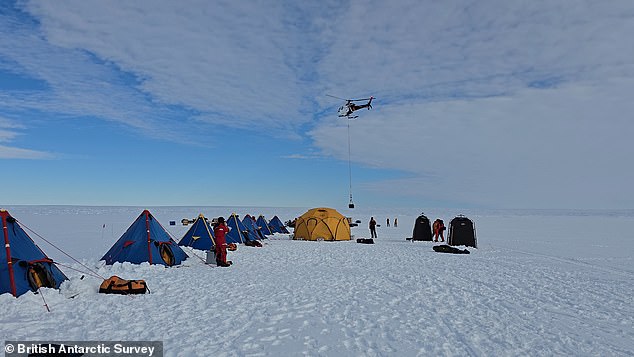
The 'Doomsday Glacier': Understanding the Threat
The nickname 'Doomsday Glacier' is not hyperbole. Thwaites, comparable in size to Great Britain or the US state of Florida, harbours ice up to 2,000 metres thick in places. Scientific consensus suggests that its complete collapse would lead to a global sea-level rise of an alarming 65 centimetres. Such an event would have devastating consequences, submerging vast coastal areas and displacing millions of people who would be forced to seek refuge inland.
Innovative Drilling and Data Collection
The expedition's core activity involves drilling through an astonishing 1,000 metres (3,280 feet) of ice using a sophisticated technique developed by BAS. This method involves heating water to approximately 90°C and then pumping it at high pressure through a specialized hose to melt a precise borehole. The resulting opening, roughly 30 centimetres (11 inches) in diameter, will serve as an access point for deploying scientific instruments.
These instruments are designed to collect direct measurements of ocean temperature and currents precisely where they interact with the glacier's base. Furthermore, the team will gather sediment and water samples, crucial for reconstructing past glacial behaviour and understanding current sub-ice processes.
However, the extreme Antarctic conditions present a persistent challenge. The boreholes are prone to refreezing within one to two days, necessitating the continuous repetition of the melting process to maintain access.
"This is an extremely challenging mission," Dr. Davis explained. "For the first time, we'll get data back each day from beneath the ice shelf near the grounding line. We'll be watching, in near real-time, what warm ocean water is doing to the ice 1,000 metres below the surface. This has only recently become possible – and it's critical for understanding how fast sea levels could rise."
Critical Data for Global Adaptation
While the operation is fraught with difficulty, the data gathered promises to be invaluable in predicting and potentially mitigating the impacts of future sea-level rise. Millions of individuals residing in coastal communities worldwide are vulnerable to the projected inundation should Thwaites collapse.
The insights gained from this expedition are expected to significantly enhance the accuracy of sea-level rise projections. This improved understanding will provide governments and communities with crucial lead time to develop and implement effective adaptation strategies, safeguarding lives and infrastructure against the escalating threat of rising oceans.
Post a Comment for "Antarctica's Doomsday Glacier: Scientists Drill into Fragile Core"