
Canada Faces 100% Trump Tariff Threat
Global Economic Crossroads: Tariffs, Trade Wars, and Shifting Markets
The global economic landscape is increasingly fraught with geopolitical tensions and shifting trade policies, creating a complex environment for investors and businesses alike. Recent developments signal a potential escalation of trade disputes, while other nations are actively seeking to recalibrate their own economic strategies.
Trump's Tariff Threat Against Canada
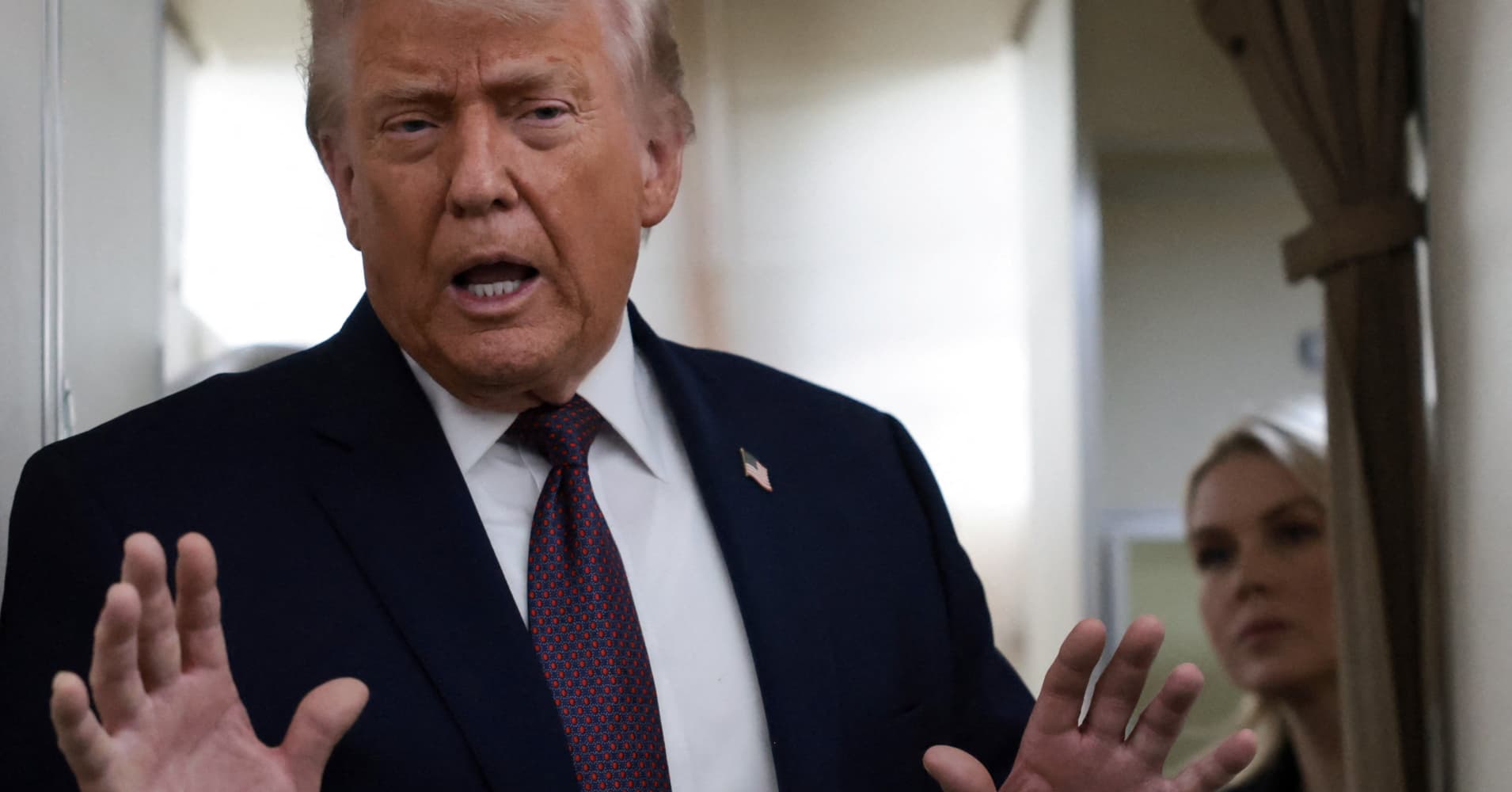
In a striking display of his "America First" trade stance, U.S. President Donald Trump has issued a stern warning to Canada. He threatened to impose a staggering 100% tariff on all Canadian goods if Ottawa proceeds with any trade agreement with China. This aggressive posture comes on the heels of Trump withdrawing an invitation for Canadian Prime Minister Mark Carney to join a U.S.-led council aimed at overseeing reconstruction efforts.
The sentiment echoes the famous line from Robert Frost's poem, "Good fences make good neighbors," though the context here suggests a more confrontational interpretation. Frost's full stanza, however, prompts reflection: "Before I built a wall I'd ask to know / What I was walling in or walling out, / And to whom I was like to give offense." This deeper consideration seems particularly relevant as the relationship between the United States and its northern neighbor becomes increasingly strained under these protectionist pressures. The potential implications of such a tariff war could ripple through North American supply chains and impact a wide range of industries.
Japan's Intervention in Currency and Bond Markets
Across the Pacific, Japan is grappling with its own set of market dynamics. Prime Minister Sanae Takaichi has pledged to intervene in the markets to counter "speculative or very abnormal moves" in both the Japanese yen and government bonds. This commitment comes after a period of significant sell-offs in both assets in recent weeks.
This move by Japan has direct implications for U.S. markets. Japan is the largest foreign holder of U.S. Treasury securities, according to data from the U.S. Treasury Department. Any significant increase in Japanese government bond yields could incentivize Japanese investors to repatriate their capital, potentially leading to higher borrowing costs for the United States. The stability of U.S. debt markets is thus intrinsically linked to Japan's monetary policy decisions.
India's Tariff Reduction on EU Cars
In a move that signals a potential shift towards greater trade liberalization, India is planning to significantly reduce its import tariffs on cars from the European Union. Currently, some EU cars face import duties as high as 110%. However, India intends to slash these tariffs to 40% for vehicles with an import price exceeding 15,000 euros (approximately $17,800). Furthermore, there are plans for these tariffs to be lowered to 10% over time. This adjustment is expected to make European automobiles more competitive in the Indian market and could foster increased trade between the two regions.
Mixed Performance in U.S. Stock Markets and Surging Gold Prices
U.S. stock markets experienced a mixed performance on Friday. While some technology stocks saw gains, with Nvidia and Advanced Micro Devices climbing 1.5% and more than 2% respectively, other major players faced declines. Goldman Sachs shares fell nearly 4%, and Intel tumbled by roughly 17%. In Europe, the Stoxx 600 index closed mostly flat.
However, the start of the new week brought a different sentiment. Futures slid on Sunday night as investors braced for a busy trading week. Key corporate earnings reports from tech giants like Apple, Meta, and Microsoft are on the horizon, alongside the Federal Reserve's concluding rate-setting meeting.
Meanwhile, the safe-haven asset of gold saw a significant surge, with prices breaking past the $5,000 mark on Monday. This sharp rise suggests growing investor anxiety and a flight to perceived safety amidst the prevailing global economic uncertainties.
Chinese Investors Pivot Towards AI
In China, a notable shift is occurring within the investment community. Concerns about a potential bubble in artificial intelligence (AI) chip stocks are prompting local investors to move away from traditional infrastructure investments. Instead, there is a growing focus on AI applications and related technologies. This strategic pivot indicates a belief in the long-term growth potential of AI, despite short-term market volatility.
Davos Dialogue: AI Optimism Meets Geopolitical Concerns
The recent World Economic Forum in Davos highlighted a stark contrast in global economic discussions. On one hand, there was palpable optimism surrounding the advancements in artificial intelligence, with executives and investors discussing concepts like "world models" and "physical AI." This segment of the conference focused on the transformative potential of AI moving from theoretical concepts to practical applications.
Conversely, many conversations at Davos were dominated by concerns over escalating tariffs, geopolitical tensions, and the shifting global order. The sense that long-standing international rules and agreements are in flux created an undercurrent of uncertainty for investors who have relied on this stability for decades. This duality underscores the complex challenges facing the global economy as it navigates technological innovation alongside geopolitical instability.
Post a Comment for "Canada Faces 100% Trump Tariff Threat"