
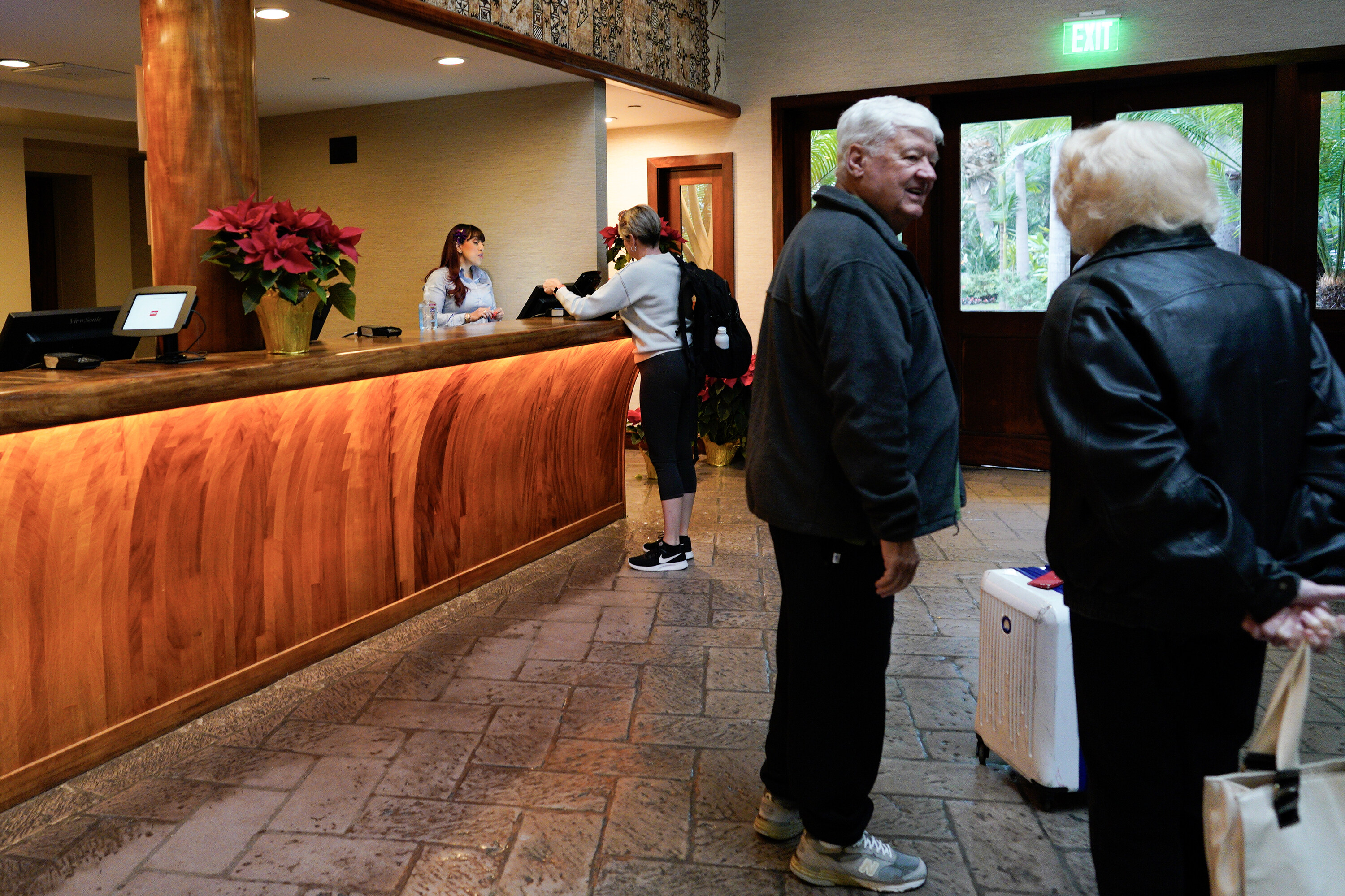
 San Diego is set to implement a significant wage increase for thousands of workers in its tourism and hospitality sectors, marking a new era for low-wage earners in the city. This initiative will eventually see a minimum wage of $25 per hour for employees in hotels, amusement parks, and event centers, a substantial leap from the current state minimum wage and even the city's general minimum wage.
This landmark wage law, phased in over several years, aims to provide a more livable income for those in industries often characterized by lower pay. While the citywide minimum wage will see a modest 3% increase to $17.75 on January 1st, it will be quickly overshadowed by the specialized tourism wage. Six months later, hotel and theme park workers will earn $19 per hour, and those at event centers will start at $21.06. By 2030, the $25 per hour benchmark will be fully realized for all covered hospitality workers, representing a potential pay increase of up to 40% for many.
Beyond the city limits, San Diego County's minimum wage will also rise to $16.90 per hour on Thursday, aligning with the state's mandated rate.
Business Concerns and Worker Hopes
The impending wage hikes are prompting significant concern among San Diego businesses, particularly hotels. They anticipate substantially higher labor costs, which they warn could lead to increased prices for guests and reduced operating hours for amenities like bars and restaurants. Restaurant owners, who are not directly covered by the tourism wage mandate, also foresee a ripple effect, likely compelling them to raise wages for their own employees to remain competitive.
Robert Gleason, chair of the San Diego County Lodging Association and president of Evans Hotels, voiced these concerns, stating, "This is just another way the City Council is making it more expensive to live in San Diego—water, trash, parking, and now this, which will increase the cost of dining, shopping and entertainment.” He added, “We all compete for the same workers, so while this has a direct impact on tourism and event center workers, it will have an indirect inflationary impact on all wages and therefore, the cost of everything in San Diego.”
Meanwhile, workers are expressing cautious optimism. While welcoming the mandated wage increases, many point out that even the future $25 per hour rate may not be enough to comfortably support a family in San Diego. A "living wage" calculation by the Massachusetts Institute of Technology suggests a single parent with one child in San Diego County would need to earn over $53 per hour to adequately cover expenses.
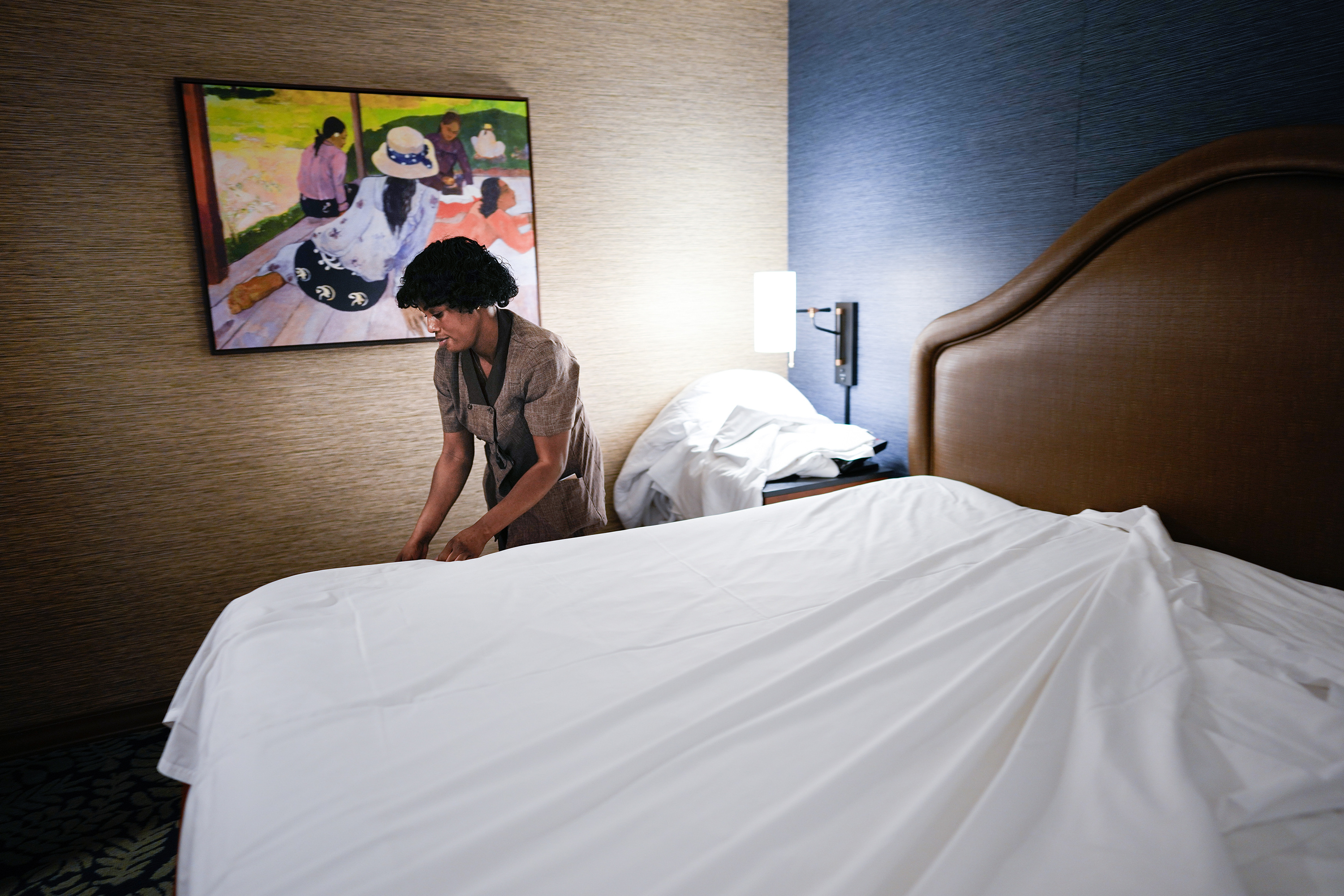
Samara Talavera, a housekeeping supervisor at the Handlery Hotel, currently earning $19.52 per hour under a union contract, shared her struggles. Living in a rented home with her granddaughter, she noted, "It is very hard because everything is so expensive. I just received an email from San Diego Gas and Electric that prices are going up, so it is hard for me. I can’t buy clothes, go out for dinner, go on vacations.” Despite these challenges, she finds hope in the incremental increases, believing the new law will offer a brighter future for those not covered by union wages. "It’s important because little by little we are going to get more money,” Talavera said. “If we didn’t have this law, we would have felt hopeless, like it would never get better.”
The Rise of Industry-Specific Minimum Wages
The San Diego tourism wage law reflects a broader trend in the labor movement advocating for industry-specific minimum wages that exceed the general mandate. This approach has already been applied to fast food workers and certain healthcare employees. Los Angeles, for instance, approved a minimum wage for hotel and airport workers that will reach $30 per hour by 2028.
The San Diego ordinance specifically targets: * Hotels: Those with 150 or more rooms. * Amusement Parks: Primarily affecting SeaWorld. * Event Centers: Including venues like Petco Park, Pechanga Arena San Diego, the San Diego Convention Center, and the Civic Theatre.
For hotels and SeaWorld, the minimum wage will begin at $19 on July 1st, increasing by $1.50 annually until it reaches $25 in 2030. This will impact approximately 89 hotels in the city, collectively offering over 27,000 rooms. Event centers will start at $21.06 on July 1st, with annual increases of $1 until 2030.
These increases occur against a backdrop of consistent growth in San Diego's citywide minimum wage, which has risen by 60% over the past decade. It's worth noting that many unionized workers in these sectors, such as janitorial staff at the Convention Center and housekeepers in downtown hotels, already earn above the new mandated rates.
Union leaders emphasize that the new law is still crucial for establishing a higher wage floor for all. Christian Ramirez, vice president and political director for SEIU United Service Workers West, stated, "We’re saying we have to raise the wage floor for everyone and yes, it’s sometimes a slow and tedious process. But ultimately the goal has to be to bring wages up for workers across San Diego and the state that reflect how expensive it is to live here.” He also highlighted the potential for the law to influence wages in other industries, such as janitorial services at biotech companies, where workers often earn only slightly above $20 per hour.
Competitive Disadvantages and Economic Debates
Many San Diego hotels and restaurants already pay above the current minimum wage to attract and retain staff, especially in the post-pandemic labor market. However, business owners fear that the new tourism wage will necessitate even higher pay to maintain a meaningful gap between entry-level and experienced employees.
Richard Bartell, president of Bartell Hotels, expressed concern about absorbing the increased costs, particularly for tipped employees who already earn a substantial amount with tips. He noted the competitive disadvantage for hotel restaurants compared to independent establishments where workers are not subject to the same $25 per hour mandate. "The increase will also put a lot of pressure on us to operate more efficiently. Do we need a hostess or can the manager do that or can servers fulfill the role of a busser? So will we have to reduce hours, shifts? I think consumers will see a price hike because restaurants in hotels will be forced to raise prices, but we will have to be careful to not raise prices too much.”
When the proposal was first introduced, Councilmember Sean Elo-Rivera dismissed claims that prices would rise significantly. However, the San Diego Padres, representing Petco Park, had initially urged the city to exempt the ballpark from the tourism wage mandate, citing concerns about increased operational costs that would be passed on to fans through higher food, beverage, and ticket prices. While the Padres have not yet confirmed price increases, their statement indicated that "policies like this put further financial pressure on San Diegans when attending Padres games and other events at Petco Park."
 The economic implications of substantial minimum wage increases are a subject of ongoing debate among economists. Some studies, like one highlighted by the Economic Policies Institute, suggest that steep wage hikes can lead to job losses, reduced employment opportunities, and business closures.
Conversely, Professor Michael Reich of the University of California-Berkeley, who has extensively researched minimum wages, challenges these findings. His research on California's fast food minimum wage increase indicated that labor costs represent about 30% of operating expenses, and a wage increase could be fully absorbed by a modest price hike of around 3.3% without sacrificing profits. He found that fast food prices in California rose by only 2.1% after the wage increase, suggesting a partial pass-through of costs to consumers. Reich argues that higher wages can reduce employee turnover, leading to savings for employers. "There’s always a lot of fears thrown up, that costs are going to go up by double digits, but when you look at the data, it just doesn’t work out that way. And employers often don’t take into account that turnover is going to go down because when wages go up, we do see turnover going down. So employers are going to save a lot of turnover costs.”
Brigette Browning, president of Unite Here Local 30, representing hotel workers, questioned the necessity of excessive profits for employers. "Why can’t they make just a little less money?” she asked. “They’ll raise the prices anyway if they think the people will pay for it. It’s not because they’re paying a little more to their workers. It’s because they think they’ll reap bigger profits.”
Julian Hakim, co-owner of the San Diego-based Taco Stand chain, acknowledged the potential ripple effect on businesses not directly covered by the tourism wage. While he aims to avoid price hikes, he foresees challenges as labor costs continue to rise across the hospitality sector. "Having spoken with a lot of my colleagues where everyone is living through tighter (profit) margins as labor costs go up, it will trickle down to the consumer,” he said. “It has to. A lot of restaurant owners have jumped the gun and already done it. It’s ultimately the consumer that takes the brunt of it. I don’t think this is the solution, to just keep raising the wage, but it’s the easiest one for politicians to use and so they keep using it.”


No comments:
Post a Comment