
Albanian Prime Minister's Powerful Message Against Antisemitism in Jerusalem
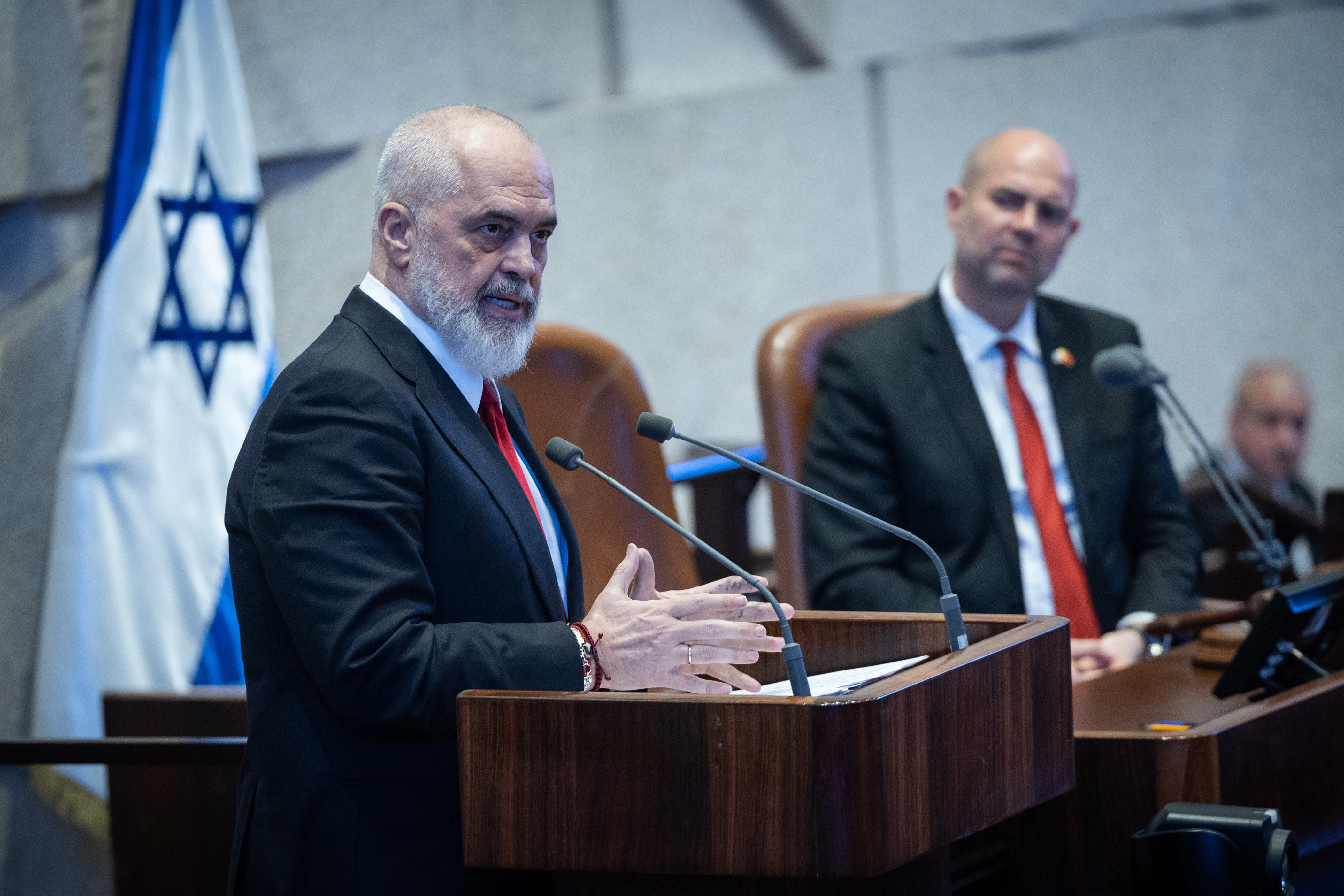 During a recent international conference in Jerusalem, Albanian Prime Minister Edi Rama delivered a poignant address that resonated deeply, drawing from Jewish tradition to underscore the universal threat of antisemitism. Speaking at the "Generation Truth" conference, hosted by the Diaspora Affairs and Combating Antisemitism Ministry, Rama invoked a principle from the Talmud: "The Talmud teaches that whoever saves a single life, it is as if they have saved the entire world." The conference, held in Jerusalem for the second consecutive year to coincide with International Holocaust Remembrance Day, convened global leaders and prominent Jewish figures to confront the alarming rise in antisemitism worldwide.
Rama articulated that antisemitism is "not merely hatred against Jews but an assault on the moral architecture of humanity itself." Later, in an interview, he elaborated on the profound significance of his statement, emphasizing that the danger extends far beyond the Jewish community. "It’s about humanity," he asserted. "History shows that it starts with the Jews, but it doesn’t end with the Jews." This perspective, shaped by a unique historical and political understanding, forms the bedrock of his relationship with Israel and offers a distinct viewpoint on Jerusalem, forged in a past where he was taught to view the Jewish state with animosity.
Growing Up Behind the Iron Curtain: A Childhood Encounter with Jerusalem
 Prime Minister Rama's personal narrative is rooted in a communist Albania that was largely isolated from the rest of the world. In this environment, where suspicion was a state-sponsored ideology, finding allies, whether within or outside the Iron Curtain, was a rarity. "Since I was a kid, I was obsessed with Jerusalem," Rama revealed. "We were living in a totally isolated country, and we were taught we had to prepare for the ‘big fight,’ because ‘they’ would come for us. ‘They’ were the American imperialists, the Soviet social imperialists, and the Israeli Zionists."
Rama described how his understanding of Jerusalem was shaped by two distinct influences. The official narrative, disseminated through the Communist Party newspaper, painted a grim picture for schoolchildren, detailing "how badly the Zionist army kills, or wounds, or displaces Palestinians." However, a more personal and clandestine connection emerged from his grandmother's Bible. Under the restrictive Enver Hoxha regime, religious texts were forbidden, yet his grandmother, a devout Catholic, possessed a genuine Bible, as did his mother. These forbidden texts offered a different perspective.
Following the collapse of communism, direct travel to Israel was not immediately feasible due to the absence of air and sea routes. Nevertheless, Rama dedicated himself to learning more about Jerusalem's history. His eventual visit solidified and deepened his affection for the city. The modern relationship between Albania and Israel, though initially established shortly after Israel's founding, was severed for decades before being re-established in the early 1990s. This revival led to the opening of embassies in Tel Aviv and Tirana and fostered expanded cooperation across various sectors, including economics, culture, agriculture, cyber technology, and tourism.
Albania's Moral Legacy: Besa and the Protection of Jews
At the Jerusalem conference, Prime Minister Rama reiterated the wartime narrative that has become a defining element of Albania's moral identity: the code of honor known as Besa, and the nation's courageous act of sheltering Jews during the Holocaust. He highlighted that during World War II, Albania stood as the sole country in Europe that did not surrender any Jewish individuals, resulting in a growth of its Jewish population during that perilous period. Rama noted that Albania has provided Yad Vashem with over 3,700 names of Jews it successfully protected.
Rama recounted how, during the Holocaust, Nazi officials presented Albanian authorities with two demands: lists of Jews and demands for gold. The response, conveyed through Albanian officials and reinforced by the country's four religious leaders – figures the Nazis themselves recognized as moral authorities – was resolute. The answer was "simple and final: ‘You can take their gold; you cannot take our Jews.’ The gold was theirs to take; the Jews were ours to protect. And this is not a legend; this is record." He sternly warned that antisemitism is "once again resurfacing openly and shamelessly, often disguised as political critique, cultural anxiety, or even worse, moral superiority."
Rama emphasized that "Hatred does not begin with violence. It begins with language. It begins with indifference. It begins with excuses." He repeatedly returned to the crucial point that tolerating antisemitism erodes the very foundations of societal stability. He illustrated this by stating, "It’s like opening a hole, then [it] gets bigger and bigger over time. Or having a building with no windows or doors for protection."
Addressing the October 7th Massacre and the Global Truth Deficit
Prime Minister Rama also addressed the horrific events of October 7th and the subsequent conflict. Regarding the perception that Israel has struggled in its public relations efforts in the West, he argued, "Terrorism is not a perspective. It is just a crime against humanity. So, the massacre of October 7 was not resistance. It was mass murder."
While acknowledging the "real" and "truly heartbreaking" suffering of Palestinians in Gaza, Rama suggested that Western moral complexities have clouded the truth for some. "We live in difficult times of truth, because now, opinions are being treated as facts, and the facts are being treated as opinions," he observed. "It’s a mess. More than that, based on loyalties, people pick opinions that ‘this is right,’ and then they consider it as fact. It is a madness to blur moral lines or to legitimize terror in the name of proportionality. Peace does not and cannot mean neutrality toward terror."
A Thriving Bilateral Relationship Beyond Historical Ties
Albania's connection with Israel is not confined to historical remembrance, Rama assured. He highlighted that Israelis can witness this strong bond firsthand, particularly at a time when Jewish communities in other parts of Europe have faced hostility. "There was no gathering, there was no sign in any shape or form of antisemitism towards the very broad number of Jewish tourists coming to Albania," he stated, contrasting this with experiences in some neighboring countries where Jewish tourists had encountered difficulties due to the ongoing conflict between Israel and Hamas.
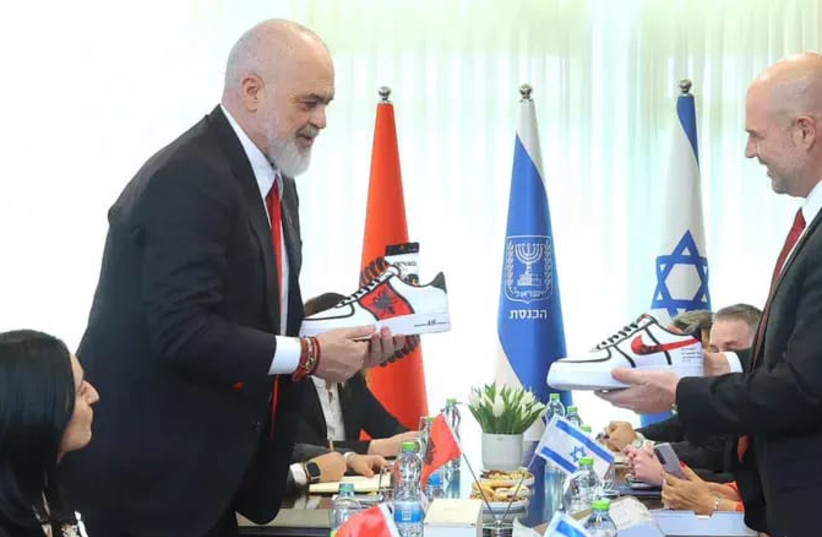
The Prime Minister's visit included several notable engagements. Knesset Speaker Amir Ohana presented Rama with a pair of custom-designed shoes adorned with the Albanian flag as a gesture of gratitude. Discussions also focused on strengthening Albania's Chamber of Commerce in Israel, and Rama held a joint press conference with Prime Minister Benjamin Netanyahu. Upon addressing the Knesset, Rama received a standing ovation.
Rama eloquently summarized the depth of the relationship: "I think it’s normal to be friends with Israel, but it’s an honor to be considered such a close friend of Israel." When asked about future collaborations, he expressed optimism: "I hope we’ll have many more good things."
For Israel, Rama's visit represented more than a diplomatic exchange between allied nations. It underscored the presence of a genuine ally in the Albanian prime minister, who can stand in Israel's capital and quote from the Talmud. For Rama, the underlying principle is clear and directly linked to his fundamental belief in humanity: the recognition that allowing hostility to begin with the Jewish people ultimately imperils everyone.


No comments:
Post a Comment