
Range Rover CSK: The Cape's Crown Jewel
The Range Rover CSK: A Special Edition with Engineering Soul
The term 'special edition' often conjures images of a vehicle laden with optional extras, a subtle marketing manoeuvre to disguise an aging model on the cusp of being replaced by a newer, more desirable successor. While this sentiment could, to some extent, be applied to the 1991 Range Rover CSK – a fully equipped variant of a 20-year-old design – this limited run of 200 two-door Range Rovers was far more than a superficial marketing ploy. It bore the initials of Charles Spencer 'Spen' King, the visionary engineer responsible for conceiving and largely styling the genre-defining Range Rover in the late 1960s.
King's groundbreaking concept of a V8-powered recreational station wagon with permanent four-wheel drive had evolved significantly since its 1970 debut. Over two decades, a quarter of a million units had found enthusiastic owners. For the first ten years, parent company British Leyland struggled to meet demand. It was the more independent Land Rover that truly capitalised on the vehicle's enduring appeal in the 1980s, introducing a long-awaited four-door version that offered increasing levels of sophistication and luxury. The new four-door model outsold its two-door sibling from the outset in 1981. Consequently, when UK production of the original two-door body style ceased in 1984, it went largely unnoticed.
By the time the first CSKs reached customers in 1990, only the most prescient collectors were beginning to recognise the value of early Range Rovers as items worthy of preservation. However, the model's overall historical significance as a design icon was already well-established. Its unparalleled blend of versatility, elegance, and off-road prowess remained virtually unmatched. This go-anywhere, four-wheel-drive estate had, single-handedly, carved out a market for luxury off-roaders that had previously been non-existent outside the United States. Even Spen King himself couldn't have fully anticipated the dominance such vehicles would achieve on our roads in the ensuing decades, and he reportedly expressed a degree of sadness that his widely imitated creation had been the catalyst.
While limited-edition versions of the two-door model, like the 'In Vogue' of 1981, had existed previously, the CSK represented a considerable leap beyond merely a picnic hamper and a unique paint scheme. Land Rover had been exploring the idea of a more 'sporty' Range Rover for some time, and it was from this line of thinking that the CSK concept emerged. The deliberate choice of the two-door body shell was a direct homage to the 1970 original, not a means to utilise leftover stock, as these shells were still being produced for certain export markets. A key structural difference was that the CSK's body frames were welded, mirroring the construction of the latest four-door models, rather than bolted together as in earlier two-door versions.
Previewed at the Birmingham motor show in 1990, the CSK's primary purpose was to showcase Land Rover's newly developed suspension system. This innovative setup incorporated front and rear anti-roll bars for the first time on a Range Rover, significantly curbing the dramatic (though generally safe) body lean that an enthusiastically driven example could exhibit. Coupled with firmer springs and dampers, these enhancements delivered an immediately noticeable improvement in on-road handling, without compromising the renowned ride quality or the legendary axle articulation crucial for off-road capability. Six months later, these refinements, along with the CSK's vented front discs and anti-lock braking system, became standard features on the four-door models.
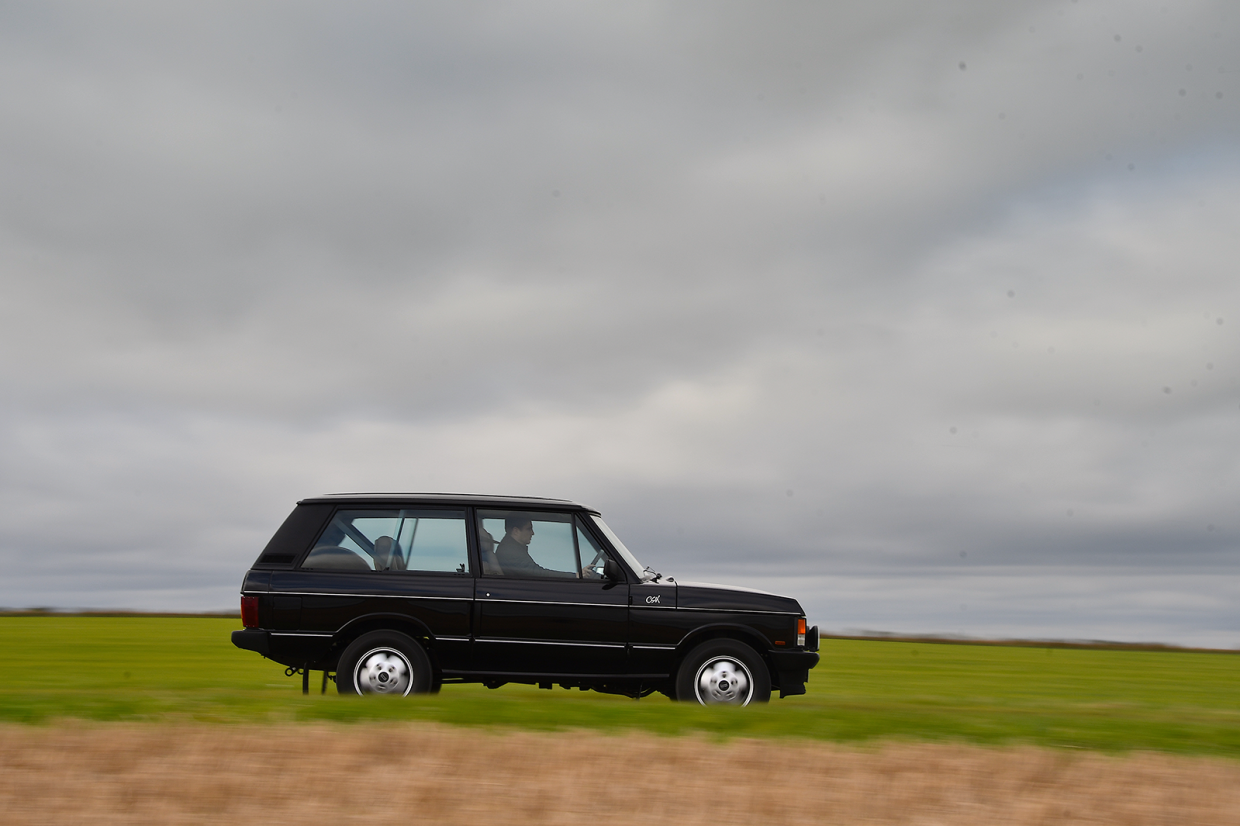
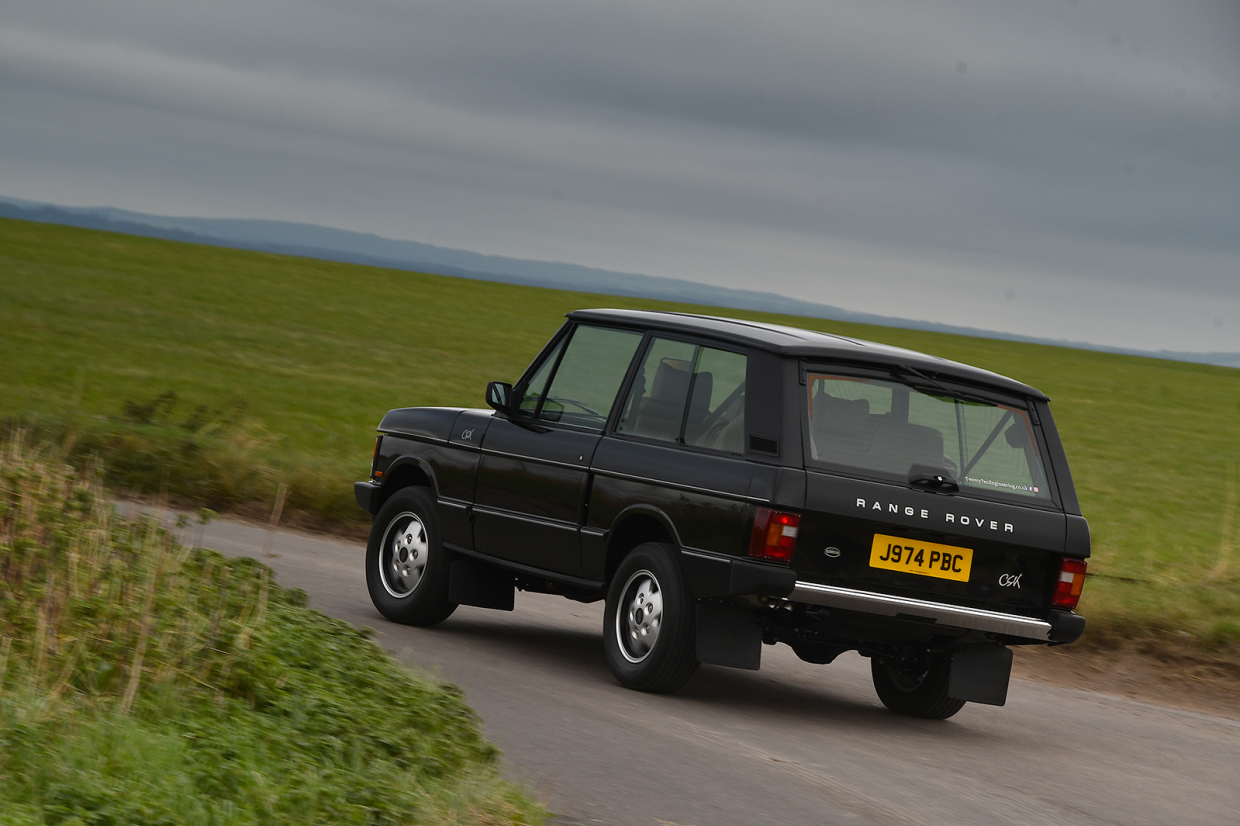
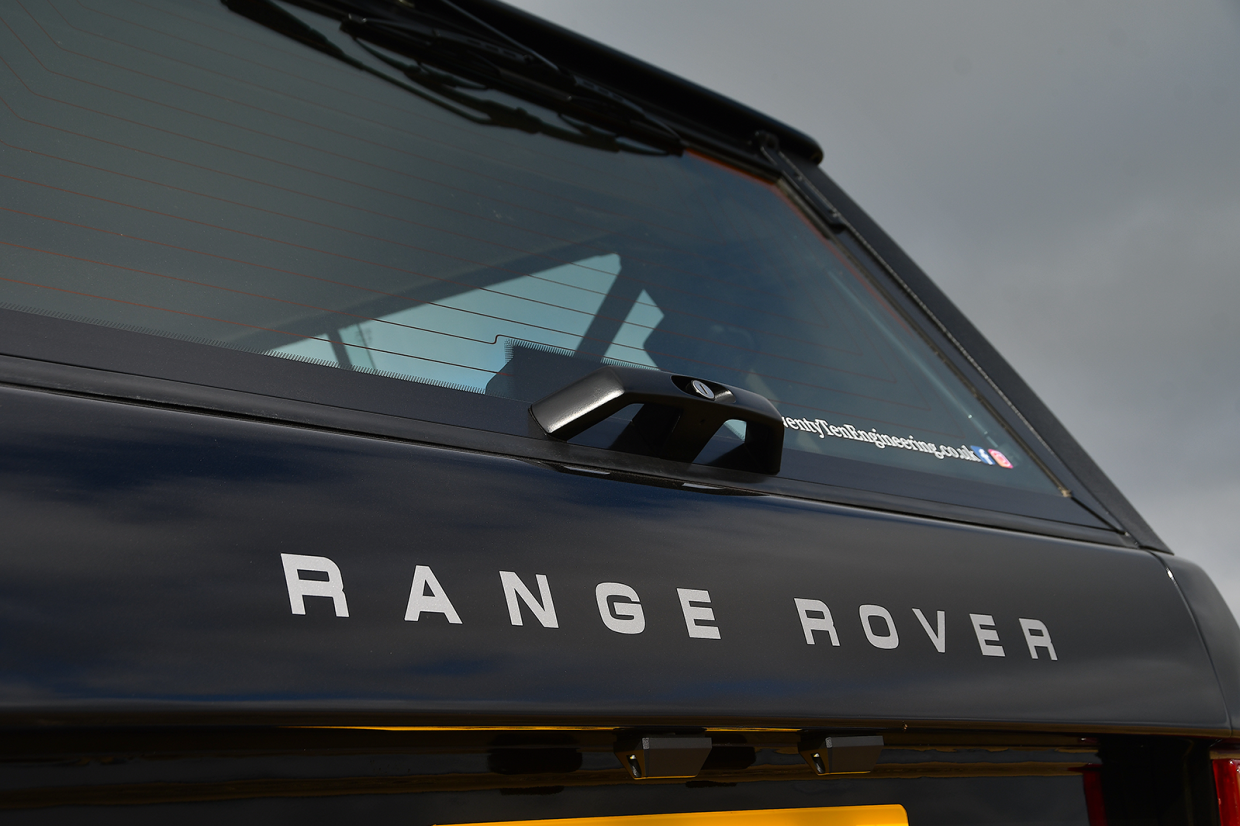
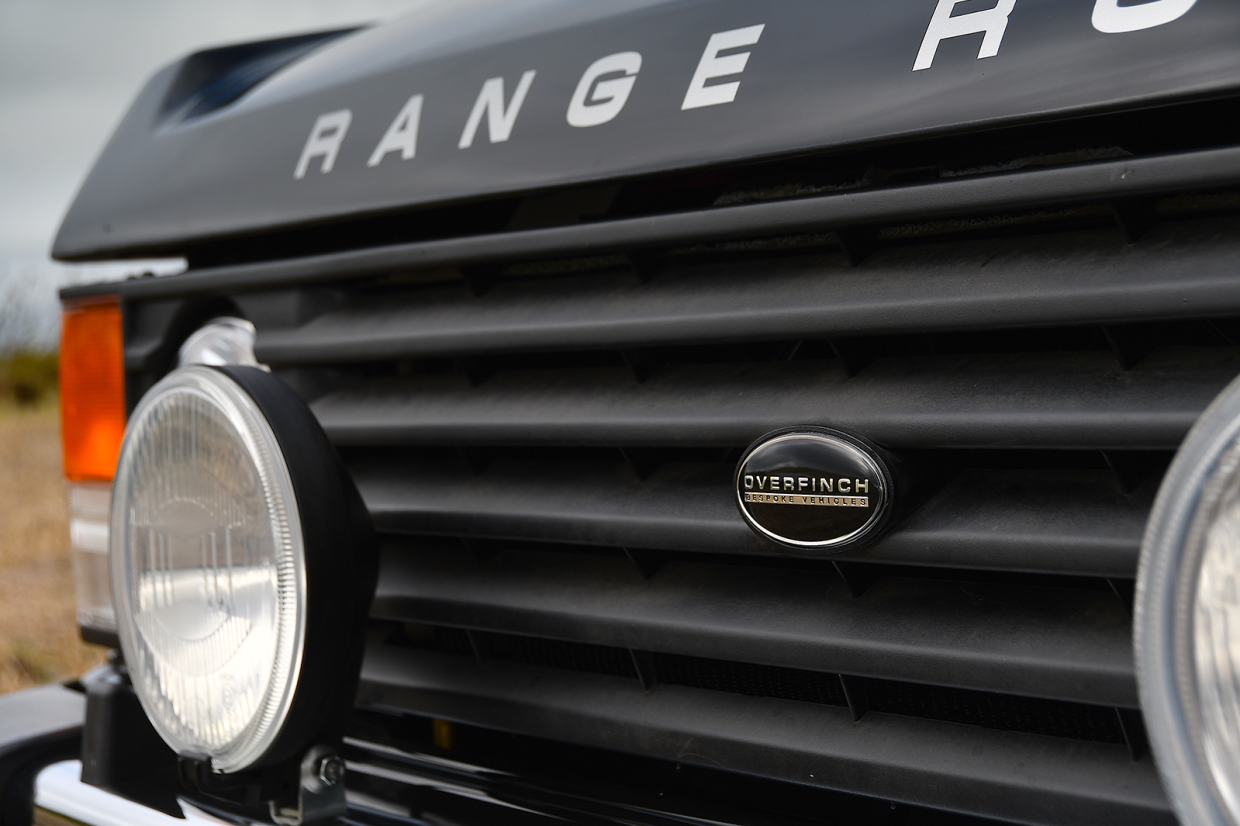
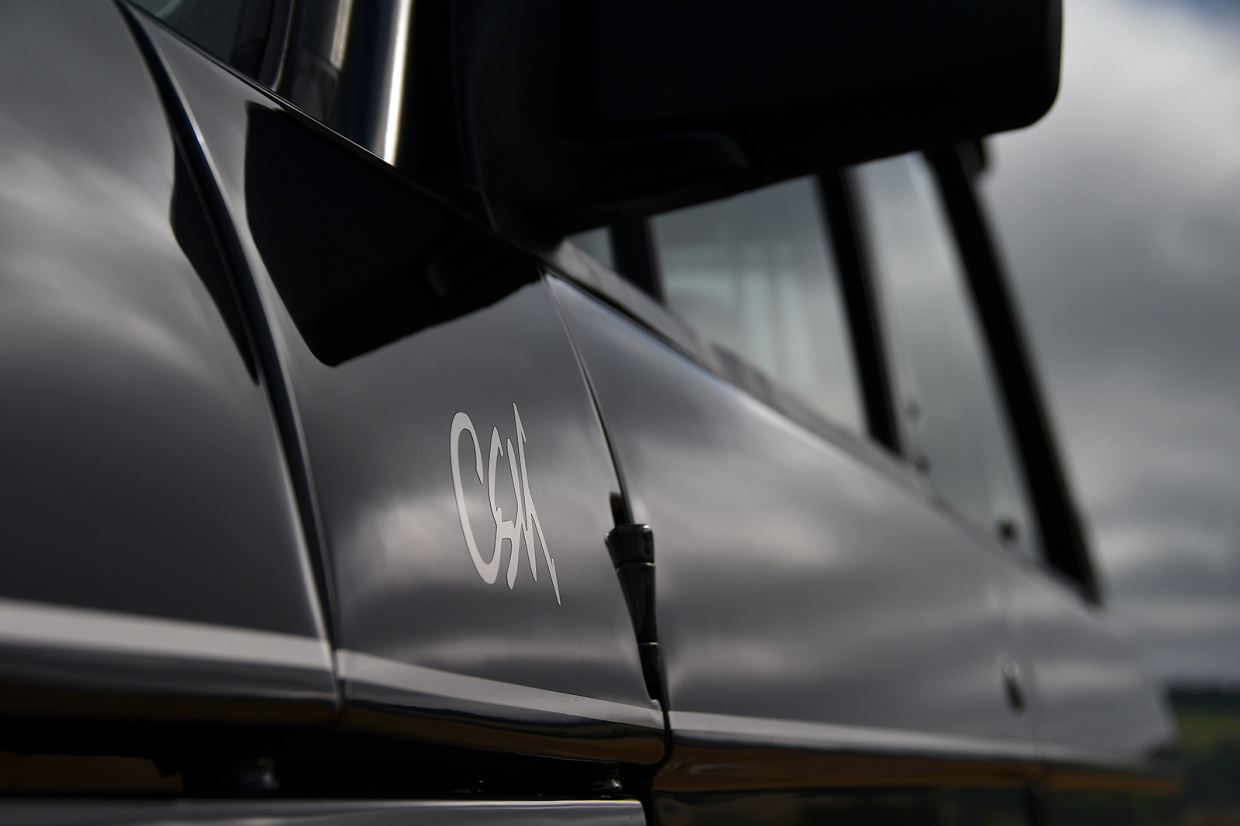
Propelled by the latest 3.9-litre, 185bhp version of the all-alloy Rover V8 engine, the 114mph CSK was the fastest factory-produced Range Rover to date. It was conceived with a five-speed manual gearbox, though a less popular ZF four-speed automatic transmission was available as an option. The engine featured a more aggressively mapped ECU and omitted the catalytic converter. Distinguishing a CSK from its brethren, apart from the 'CSK' script on the sides and tailgate, purportedly replicating the engineer's signature, were its chrome bumpers, silver pinstriping, and black-rimmed five-spoke alloy wheels fitted with T-rated tyres. At the front, the spoiler integrated foglamps, and auxiliary driving lights were positioned ahead of the grille.
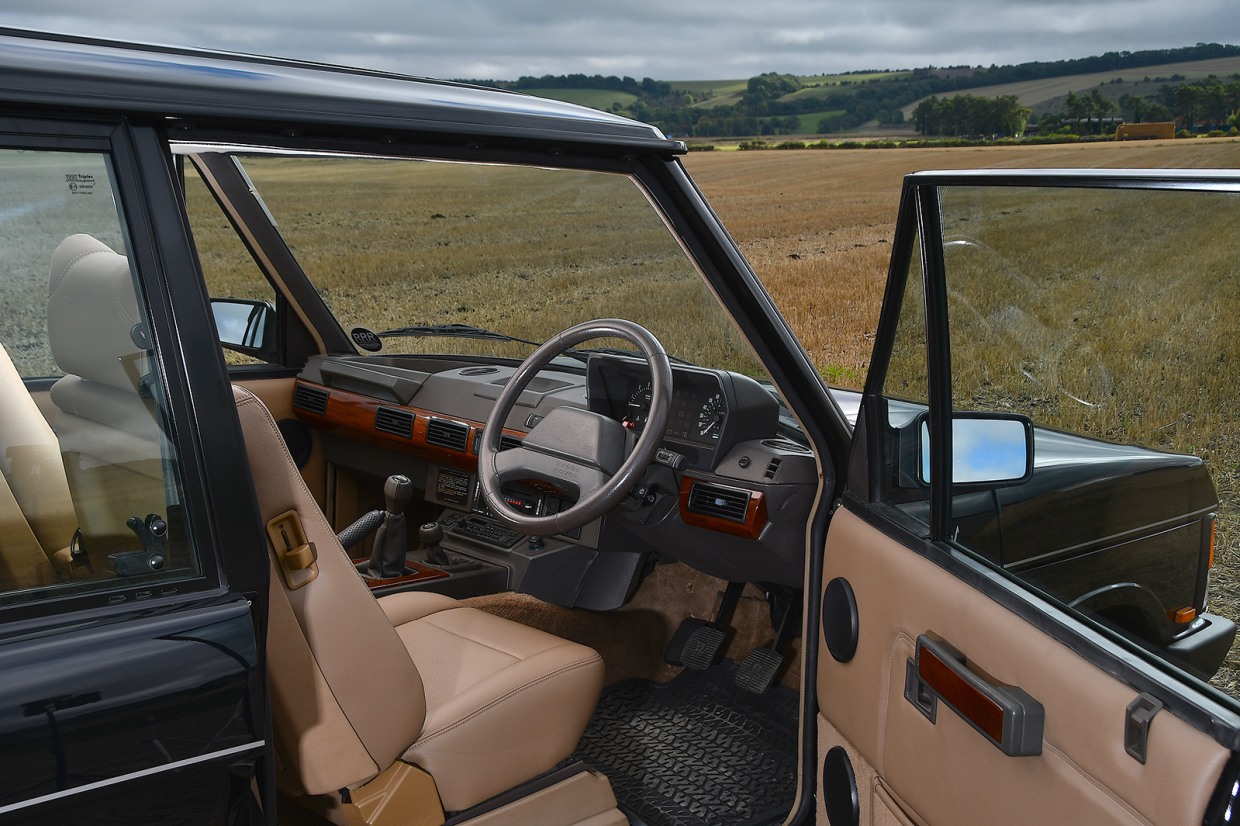
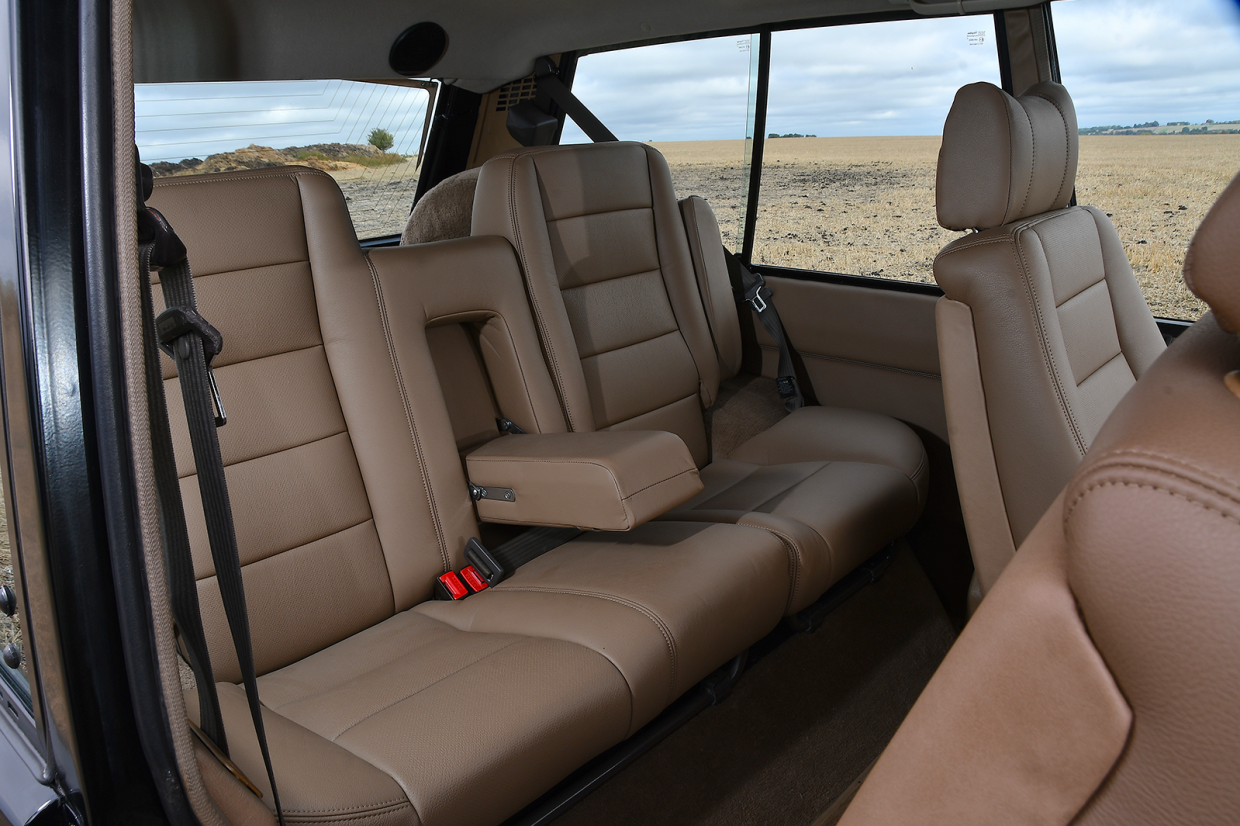
The interior of the CSK was trimmed to Vogue SE specification, featuring perforated beige leather and light-grain American walnut accents on the doors, console, and fascia. It also included detail features typically reserved for US-market Range Rovers. Standard equipment encompassed central locking, air conditioning, and a tilt-and-slide sunroof. The stereo system boasted six speakers, and even the door mirrors were heated. A specially etched plaque located near the radio indicated the specific build number of the 200 CSKs produced. However, it was later discovered that these numbers did not correspond to the Vehicle Identification Number (VIN) sequence. This discrepancy likely arose because all the vehicles were parked together in a compound and assigned numbers sequentially as they were processed. Spen King, for instance, was presented with number 200, but its chassis number indicates it was actually the fifth unit built.
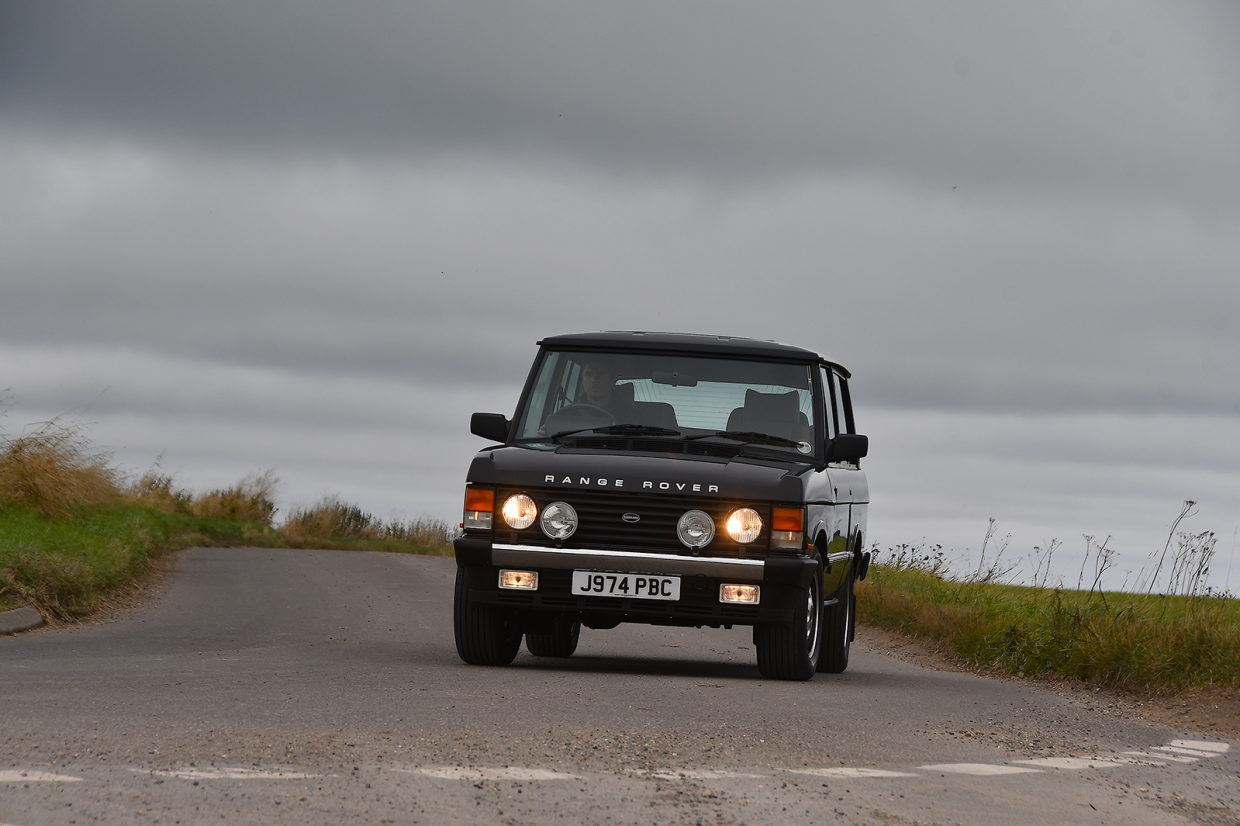
All 200 Range Rover CSKs were manufactured in 1991, with VINs commencing with 'GA'. The majority were registered for road use with a 'J' prefix, though a few 'H' registrations and at least one 'K' are known among the 74 identified surviving examples. While most remained in the UK, CSKs were exported to right-hand-drive markets worldwide, including Australia, New Zealand, and various African nations. For dedicated CSK enthusiasts today, the ultimate collector's item is the original black wooden presentation box, containing a special plaque, brochure, authenticity certificate, and a signed note from Spen King. Regrettably, few of these accompanying items have remained with the surviving vehicles.
Pieter Van Der Walt, proprietor of Walt Motor Company in Newbury, shares a passion for classic Range Rovers that rivals his affection for Mercedes W123 models. His immaculate showroom is filled with gleaming examples of the latter, all sourced from his native South Africa.
However, his CSK is a genuine UK barn find. Unused since 2003, it was unearthed by Van Der Walt in 2018 after a lengthy period of anticipation. "I was disappointed when I first saw it," he admits. "It was in a terrible, rusty state, and I realised I had probably paid too much because I got so excited about it being an Overfinch." Van Der Walt has since acquired two further CSKs, continuing to indulge a passion ignited in his youth in South Africa. By that time, however, his local 4x4 market was dominated by the more reliable Toyota Land Cruiser. The car-obsessed former accountant recently sold his white 'Suffix A' two-door to the CEO of a major luxury goods retailer, who intended it as a Christmas gift for her husband.
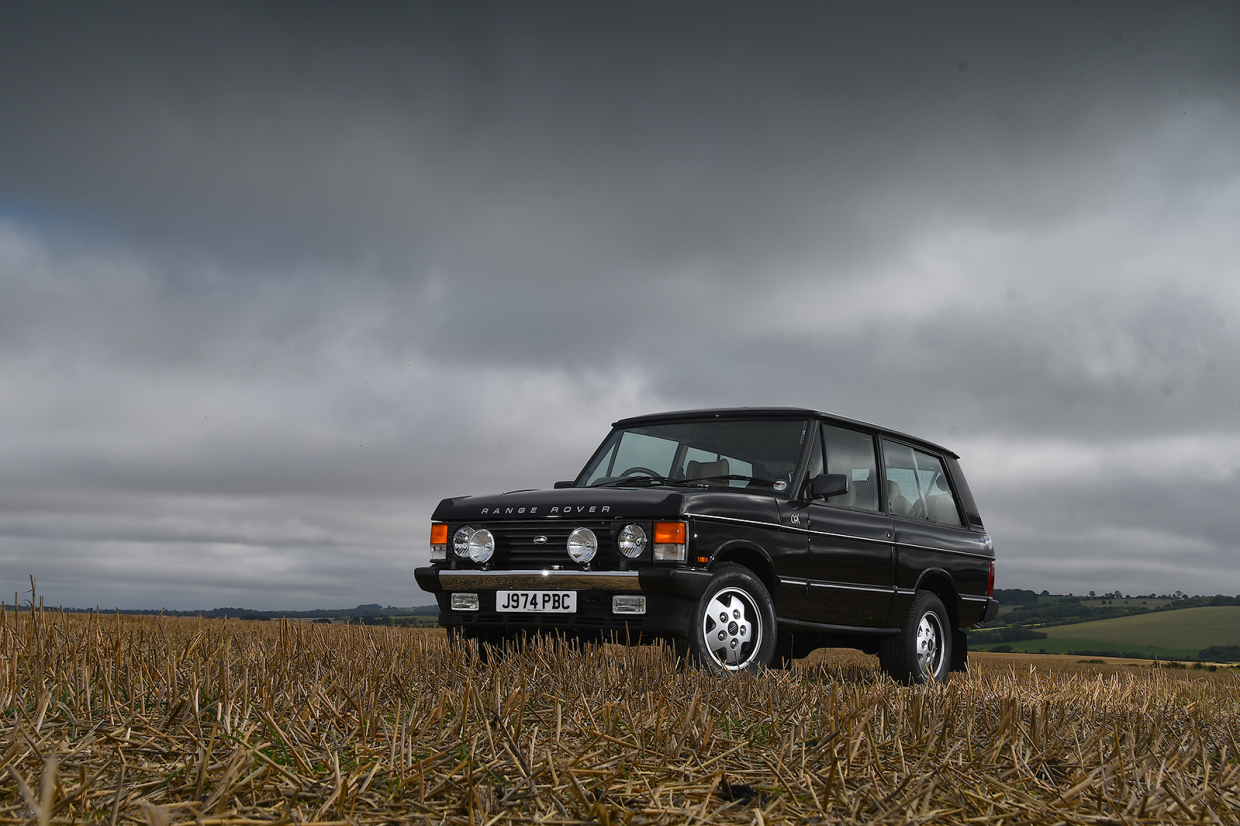
CSK number 142 is one of only two examples that were modified by Overfinch during the period of their production; the other has since disappeared. This particular vehicle has undergone a meticulous two-year, 1000-hour, nut-and-bolt restoration by marque specialist Phil Holland of Twenty Ten Engineering in Redditch, UK. During this extensive process, Holland not only navigated supply chain challenges exacerbated by the pandemic but also endured a devastating workshop fire that destroyed all his spare parts and melted several Range Rover project cars. Holland grew up immersed in these vehicles, explaining, "My dad still owns the two-door he bought before I was born, and in 1995, I got a job at the factory – which was only five miles from where we lived at the time – when they were still making the Range Rover Classic."
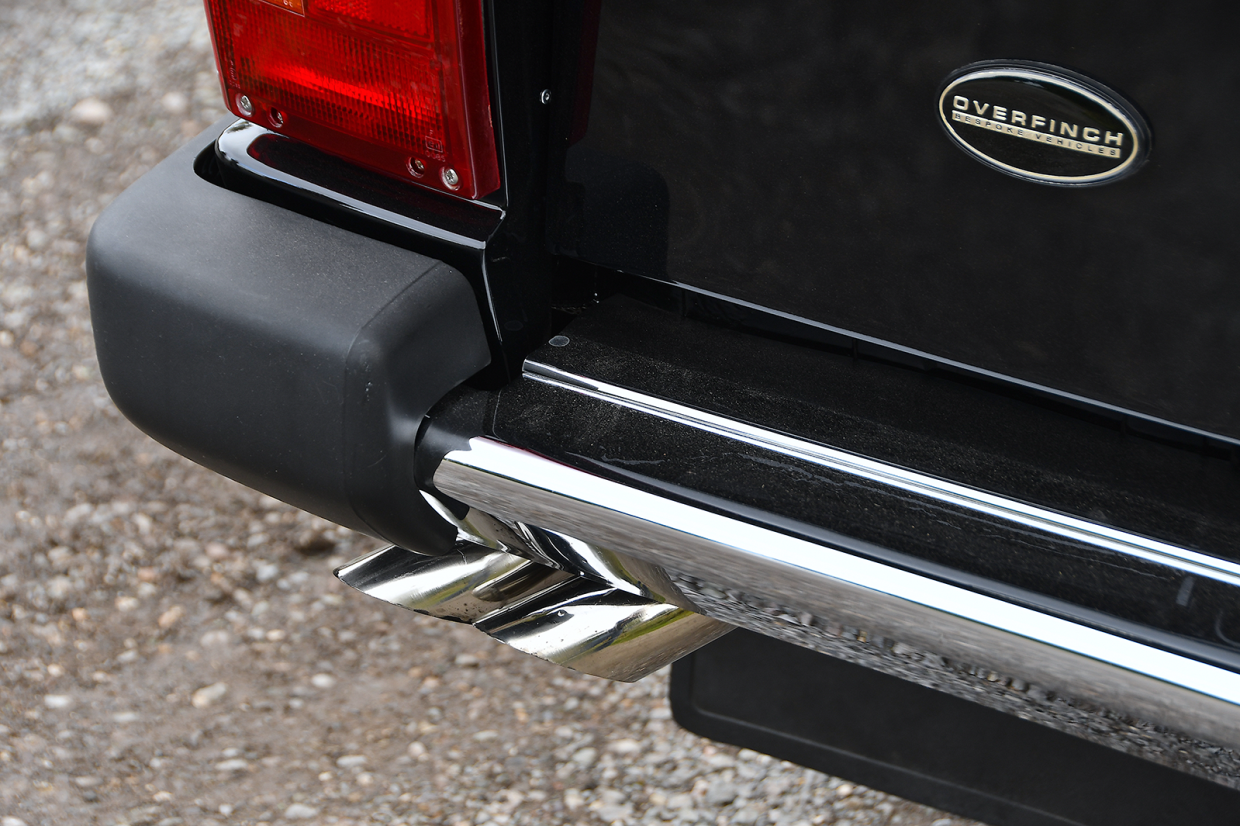
The Overfinch enhancements on this CSK include the original sports exhaust system with its distinctive swept twin tailpipes, further uprated suspension, and wider-than-standard Avon Turbospeed tyres, comparable in size to those found on a Bentley Turbo R.
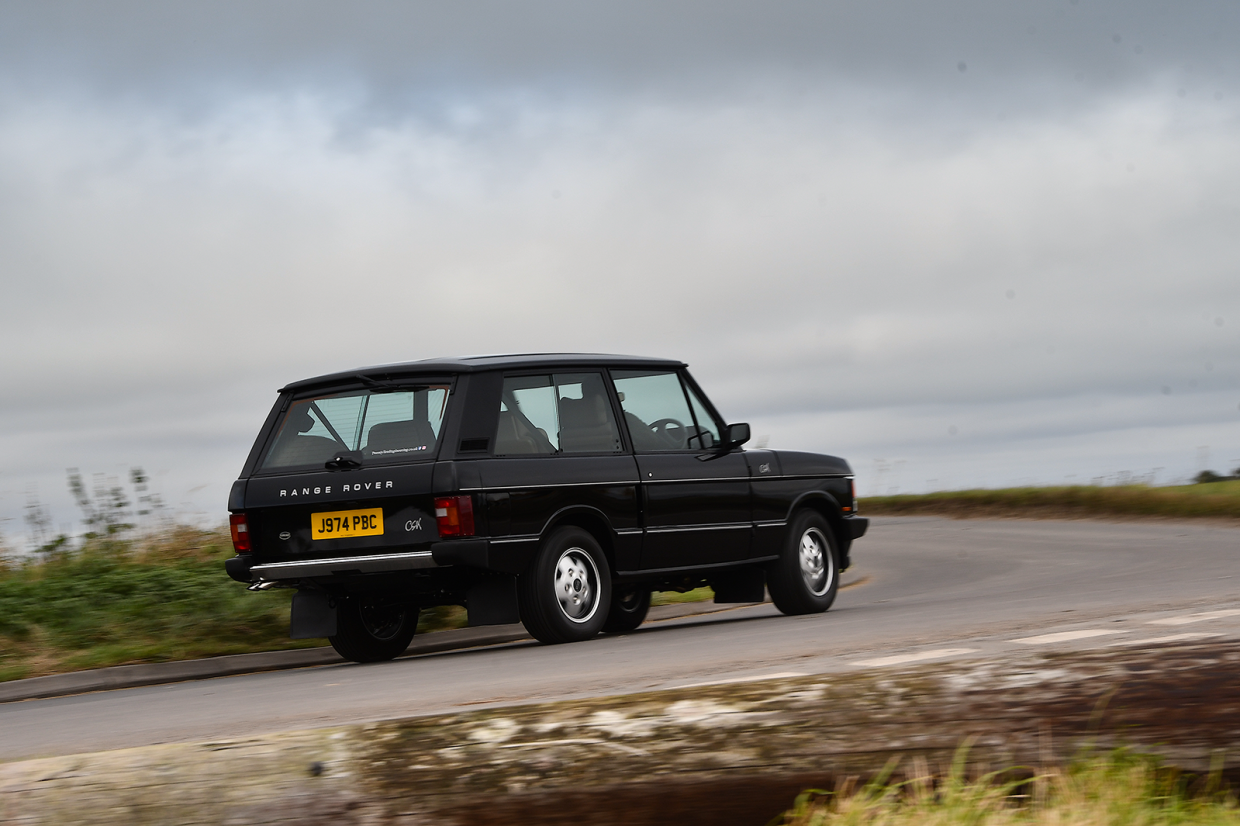
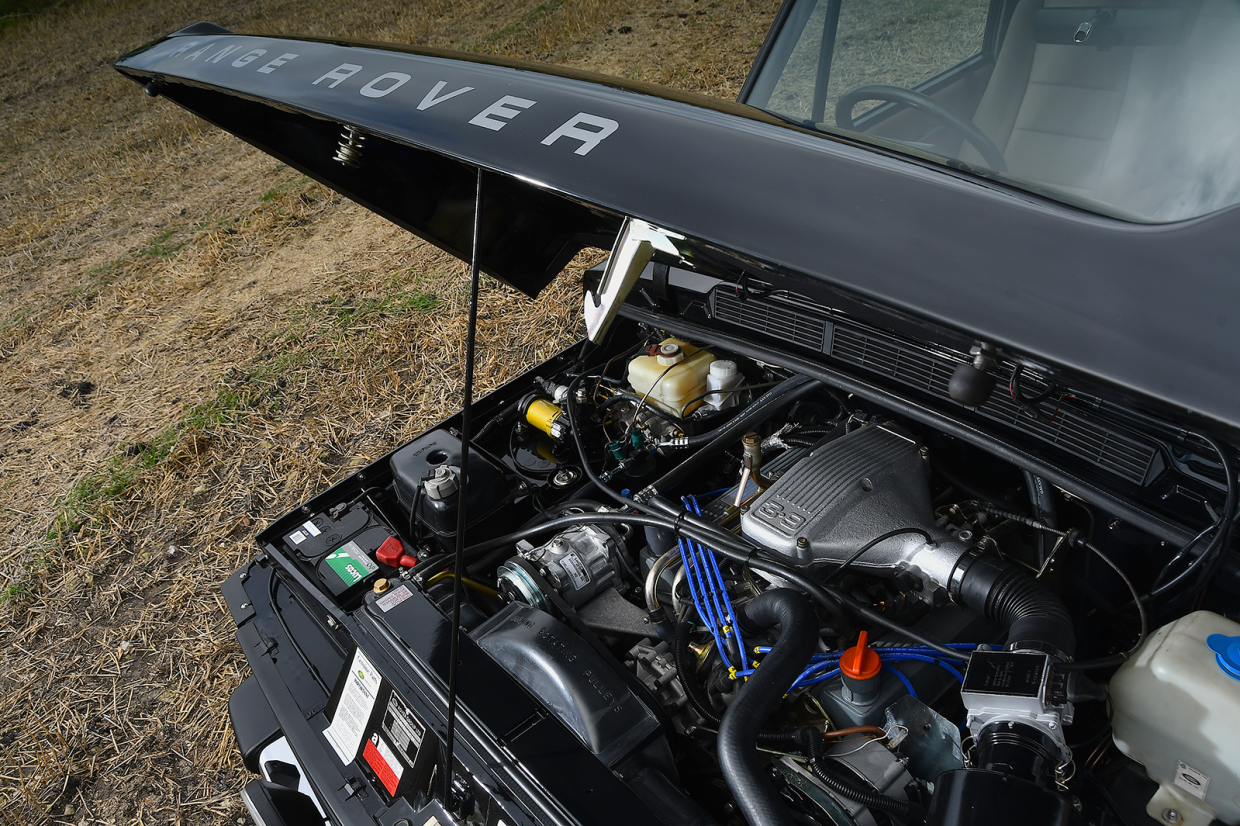
A specialist in Range Rovers with a history dating back to 1975, Overfinch was most renowned for its 5.7-litre Chevy V8 engine conversions. However, these were not mandatory. This particular car retains its original Rover V8 engine, expertly rebuilt by the acknowledged Rover V8 guru, John Hills of JE Developments in Lutterworth. The gleaming results under the bonnet are, quite frankly, better than new – a statement I can make with confidence, having personally experienced a CSK press car for a few days in 1991. The interior, with its plush carpets and the rich aroma of soft leather, offers a stark contrast to the austere, hose-out minimalism of the earlier models.
Achieving the correct shade of leather proved a significant challenge, but Holland's neighbour, Nationwide Trim, executed a superb job. The brittle, Airfix-style dashboard has been replaced with a more refined finish and a comprehensive binnacle that, at first glance, might appear to have been borrowed from a Maestro or Montego – though it has not. In the rear, passengers benefit from sculpted seats with a one-third/two-thirds split and a substantial cover for the load area.
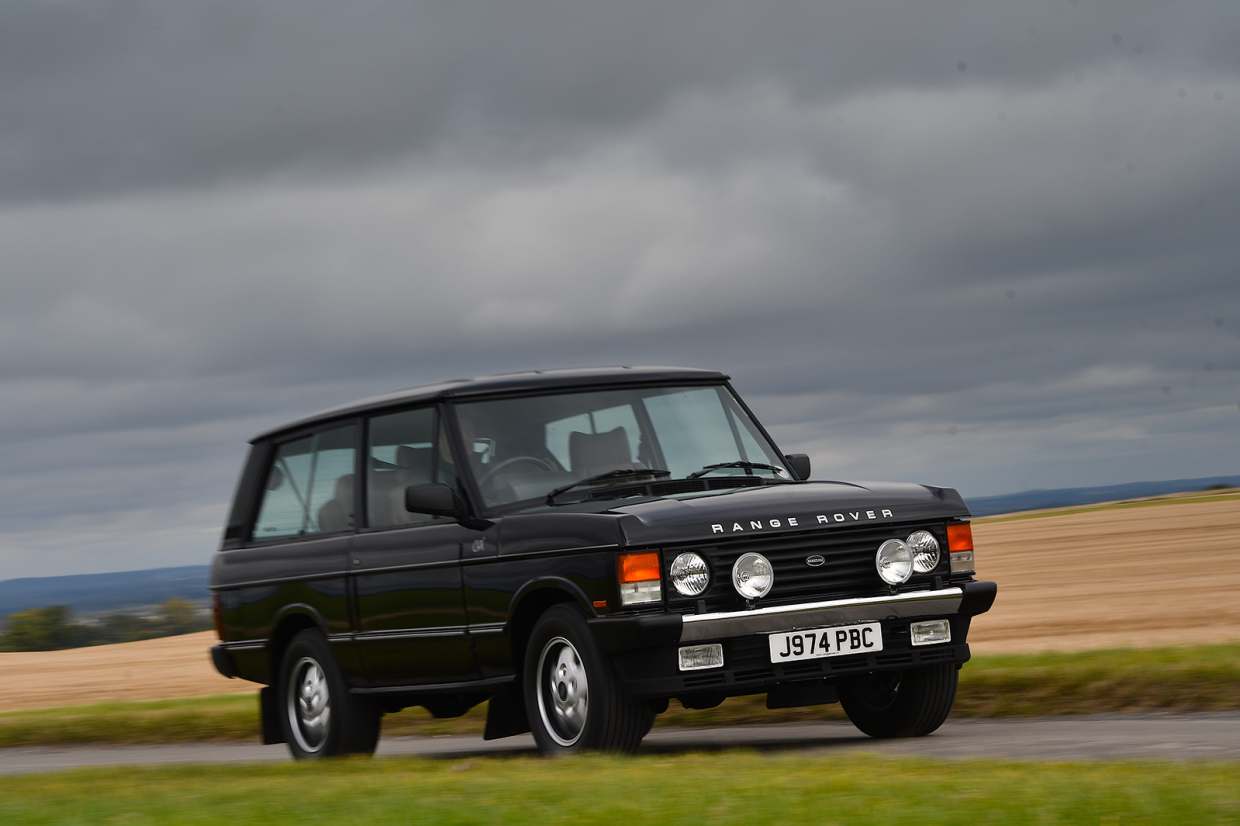
Early two-door Range Rovers can be enjoyable to drive, but typically only for shorter durations. They are not ideally suited for long, high-speed journeys, even with overdrive fitted. The CSK, with a 50bhp advantage over the low-compression 1970 original, is naturally more spirited. Even more noticeable and appreciated, however, are the significantly reduced noise levels from the road, wind, and transmission. The panoramic views through those large windows remain, but the appreciation of the horizon when cornering at speed is far less compromised. Consequently, it's possible to press on without unsettling passengers or alarming other motorists, who are no longer accustomed to seeing vehicles cornering at extreme angles.
Viewed from the exterior, the CSK appears poised to lean heavily, yet it remains remarkably stable. It steers with confidence and precision. The brakes are both light and powerful (perhaps a touch too light for some), and the short-throw, saloon-car-like gear change is a revelation compared to the long-throw, light commercial feel of the older four-speed transmission. The finish on this particular vehicle surpasses even factory standards, a testament to the high expectations placed on these vehicles today.
Holland typically restores classic Rangies for individuals who desire a two-door model to complement their modern collection, perhaps for turning up to a country shoot in something distinctive. The reality is that this CSK is likely to be the most affordable vehicle in its next owner's collection.
There's a perception that the construction of the Range Rover lends itself to being like a giant Meccano set to restore, but this is not entirely accurate. "Even standard cars are quite involved," confirms Holland, who owns three CSKs himself. "But with these, you have the added complication of all the extras, such as the electric sunroof and the central locking."
Surprisingly, parts supply can be inconsistent. "A lot of the time, 'new' parts aren't truly new – they've just been sitting in a box for a long time," Holland explains. "And people aren't willing to invest in tooling up for specific components. Secondhand parts are acceptable if you're simply assembling a usable car, but they're not suitable for a £100,000 restoration."
Priced at nearly £30,000 each when new, and with no colour options other than Beluga Black with beige leather, CSKs were not an easy sell 30 years ago. At that time, most buyers gravitated towards high-specification four-door Range Rovers. Today, as the rarest, fastest, and most sophisticated of the two-door variants, CSKs represent a niche within a niche, and are significantly easier to find homes for, even at the eye-watering prices they now command.
Images: John Bradshaw Thanks to Walt Motor Company and Twenty-Ten Engineering
Factfile: Range Rover CSK
- Sold/Number Built: 1991/200
- Construction: Steel chassis, steel and aluminium body
- Engine: All-alloy, ohv 3947cc V8, with electronic fuel injection
- Max Power: 185bhp @ 4750rpm
- Max Torque: 235Ib ft @ 2600rpm
- Transmission: Five-speed manual or four-speed automatic, 4WD
- Suspension: Live axles, long-travel coil springs, anti-roll bar and Boge self-levelling units (front/rear)
- Steering: Power-assisted recirculating ball
- Brakes: Ventilated front, solid rear discs, with servo and ABS
- Dimensions:
- Length: 14ft 8in (4470mm)
- Width: 5ft 10in (1778mm)
- Height: 5ft 10in (1778mm)
- Wheelbase: 8ft 6in (2590mm)
- Weight: 4435Ib (2012kg)
- Fuel Economy (MPG): 15-21
- Acceleration (0-60mph): 9.5 secs
- Top Speed: 114mph
- Price New: £28,995
Post a Comment for "Range Rover CSK: The Cape's Crown Jewel"