
Iran War: Four Weeks of Oil Market Impact
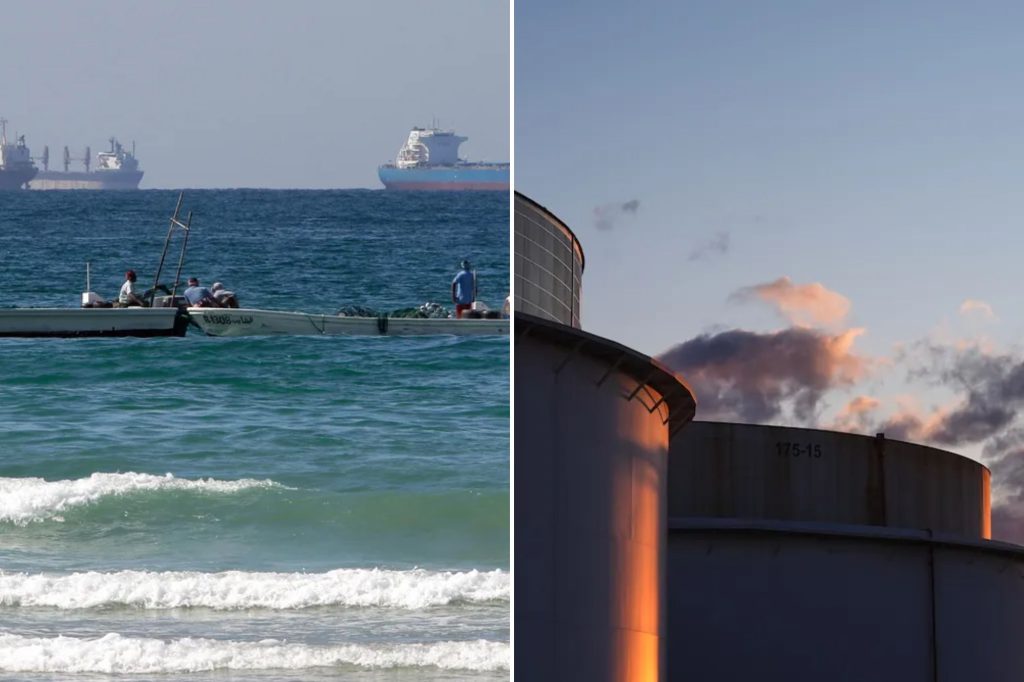 A month has passed since military actions initiated by the United States and Israel against Iran ignited a conflict that has sent significant tremors through global oil markets. What began as an effort to curb Iran's nuclear weapons capabilities has rapidly evolved into a high-stakes struggle for control over the Strait of Hormuz, a waterway indispensable to the global oil and gas trade. Iran's actions have effectively choked off this vital passage, halting thousands of tankers and preventing tens of millions of barrels of crude oil and other petroleum products from traversing the Persian Gulf daily. Prior to the conflict, approximately 20 million barrels passed through the strait each day, representing about one-fifth of the world's total oil demand.
The Ripple Effect on Oil Prices
Oil, being a globally fungible commodity, sees its price dictated by international market forces. Consequently, any significant disruption to supply, let alone one of this magnitude in a critical region like the Middle East, inevitably leads to increased bidding for oil from alternative sources. Before the outbreak of hostilities, crude oil prices hovered around $70 per barrel, with Brent Crude at $72 and West Texas Intermediate at $67.
As the conflict escalated, marked by Iran's retaliatory strikes on energy infrastructure in the Gulf and Israel's intensified attacks on Iranian gas fields, oil prices surged by over 30%. During the second week of the war, crude oil prices reached a historic peak, nearing $119 per barrel.
Strait of Hormuz: A Critical Bottleneck
The traffic through the Strait of Hormuz has come to a near standstill, with only a limited number of vessels managing to navigate its waters. Estimates suggest this disruption has removed between 180 and 250 million barrels of oil from the global supply. Matthew Bernstein, vice president of North America oil and gas analysis at Rystad Energy, described the situation as an "unprecedented scale of global energy disruption, with about 15 million barrels of oil equivalent per day" withdrawn from the markets. As of Friday afternoon, prices remained elevated, hovering around the $100 per barrel mark, with Brent crude trading at approximately $113 per barrel and West Texas Intermediate at $99 per barrel.
International Efforts to Stabilize Markets
An international, coordinated effort has been launched to curb the escalating oil prices. The shipping disruptions have not only impacted crude oil but have also driven up the costs of gasoline, jet fuel, and other commodities such as helium, sulfur, and fertilizer. The International Energy Agency (IEA) has committed to releasing a record 400 million barrels from global stockpiles, with the United States contributing 172 million barrels from its Strategic Petroleum Reserve.
Furthermore, the IEA has advised measures to reduce oil and gas demand, including encouraging remote work, reducing air travel, and promoting slower driving speeds. Neil Atkinson, former head of the Oil Industry and Markets Division at the IEA, noted that these actions have been instrumental in guiding market sentiment. He explained that the market is reacting to a combination of strategic stock releases, demand restraint measures, restrictions on product exports, and actual shortages in some countries.
Shipping Disruptions Extend Beyond Oil
Initially, the news of the IEA's plan to release oil reserves led to a slight dip in prices, with Brent and WTI trading around $85 per barrel. The IEA later estimated that this coordinated stock release contributed to an $18 per barrel drop in prices. However, analysts caution that the situation remains highly fluid, with day-to-day trading heavily influenced by statements and social media posts from Trump administration officials. Bernstein pointed out that announcements from the administration carry significantly more weight than other news in driving rapid price movements. He added that traders understand that SPR releases and similar measures do not adequately address the current total supply deficit, which can only be resolved by an end to the conflict.
The Power of Presidential Communication
It became apparent early in the second week of the Iran conflict that President Donald Trump and his Cabinet members possessed the ability to sway oil prices with even brief pronouncements. On the morning of March 9, Brent and WTI prices surged by over 30% to reach approximately $119 per barrel, only to plummet hours later to around $89 and $86 per barrel, respectively. The catalyst for this dramatic shift was President Trump's statement that the war was "very complete."
The Trump administration's influence on the markets became even more pronounced the following day when Energy Secretary Chris Wright's X account shared a post claiming the U.S. Navy had successfully escorted an oil tanker through the Strait of Hormuz. Such an event would have represented a significant success for the administration in its efforts to restore normal oil flows through the strait, and crude prices subsequently fell by more than 17%. However, the post was deleted approximately 15 minutes later, and prices began to climb again. The White House later clarified that the Navy had not, in fact, escorted any ships.
President Trump continued to influence market sentiment in the subsequent weeks, often announcing escalated military actions on weekends when markets are closed, only to signal de-escalation in the early hours of trading. As recently as Monday, President Trump announced a five-day delay in U.S. strikes on Iranian energy infrastructure, which had been announced two days prior. This announcement caused Brent crude to drop by nearly 11%, falling below $100 per barrel, and WTI to decline by over 10% to around $88 per barrel.
As Iran pushed back against President Trump's de-escalation overtures and rejected the administration's 15-point peace plan, prices began to rise again on Wednesday and Thursday. President Trump attempted to assuage market fears once more on Thursday by announcing another delay in U.S. attacks. However, prices continued their upward trend into Friday, fueled by reports that the administration was considering deploying an additional 10,000 troops to the Middle East. Hunter Kornfeind, an analyst with Rapidan Energy Group, commented that verbal interventions can only influence markets for so long before they "call Washington's bluff." He believes market participants are now weighing presidential statements against the simultaneous deployment of thousands of troops to the Middle East.
The Path Forward
Kornfeind suggests that verbal interventions will have diminishing impact on traders unless there is a significant and concrete development signaling a clear end to the war. Analysts concur that prices will not return to sustainable levels without the resumption of normal oil flows and an end to the conflict. Atkinson warned that the world is heading towards a "mega crisis" unless operations through the Gulf can return to normal.
Predicting the duration of elevated prices remains challenging. Some analysts anticipate that crude oil prices will not dip below $100 per barrel until next year, while others suggest a potential return to $70 per barrel by May. Bernstein believes that traders are not fully accounting for the long-term geopolitical ramifications of the war, even after energy flows resume. He highlights the uncertainty surrounding the extent of damage to refineries and other energy infrastructure in the region that has been caught in the crossfire. Bernstein concluded that the situation will not simply revert to its pre-conflict state, or even a few dollars per barrel higher, once the conflict ends.
Post a Comment for "Iran War: Four Weeks of Oil Market Impact"