
Kansas Legislators Reshape Voting with New Election Bills
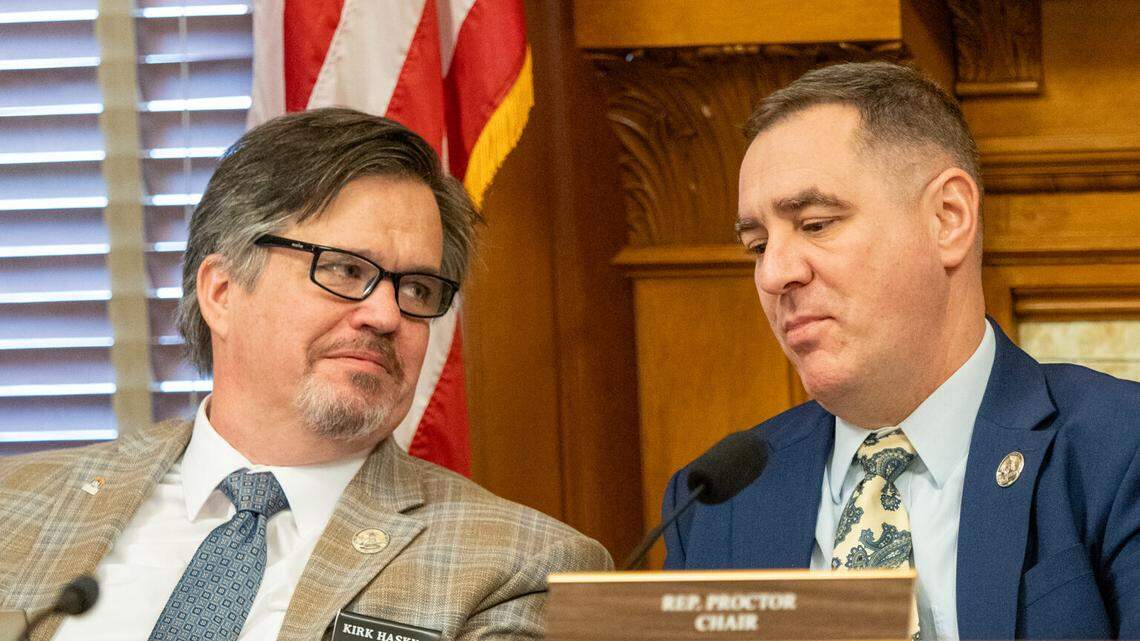 Kansas lawmakers have recently enacted a suite of legislation aimed at enhancing election integrity, but these measures have drawn sharp criticism from Democrats who contend they could lead to voter suppression and legal challenges. The package, primarily consisting of House Bills 2569 and 2437, passed despite significant opposition from Democratic representatives.
Key Provisions and Concerns
The legislation introduces several changes to Kansas's election laws, each sparking debate:
-
House Bill 2569: Shifting Voting Challenge Venue and Restricting Mail-In Voting
- This bill mandates that all legal challenges to voting rights in Kansas must be heard in Shawnee County. This consolidation is seen by supporters as a way to standardize legal proceedings, but critics argue it favors a judiciary with a particular political leaning.
- Perhaps the most contentious aspect of HB 2569 is its provision that could effectively eliminate no-excuse absentee (mail-in) voting. This would occur if any state judge rules the current signature verification law for mail-in ballots to be invalid. This clause has raised alarms about potential disenfranchisement, particularly for voters who rely on mail-in ballots due to convenience or necessity.
-
House Bill 2437: Enhanced Voter Roll Maintenance and Registration Restrictions
- This bill empowers the Secretary of State to conduct bi-annual cross-referencing of driver's license records and state voter rolls against the federal Systematic Alien Verification for Entitlements (SAVE) database. The stated goal is to ensure the accuracy of voter rolls by identifying potentially ineligible voters.
- HB 2437 also imposes restrictions on voter registration websites, limiting them to official ".gov" domains or state-approved platforms. This aims to prevent the proliferation of unofficial or potentially misleading registration sites.
- A notable provision requires county election officials to remove individuals from voter rolls upon notification of their death, typically through an obituary published by a funeral home. While intended to maintain accurate rolls, this method has raised concerns about potential errors and the accuracy of automated processes.
- Furthermore, the bill mandates that state agencies, including those managing driver's licenses and public assistance data, share personal information, such as Social Security numbers, with the Secretary of State's Office for voter roll verification purposes.
Republican Support and Democratic Opposition
Proponents of the legislation, largely Republicans, have framed these changes as common-sense reforms necessary to safeguard the electoral process. Kansas Secretary of State Scott Schwab, who is seeking the Republican nomination for governor, expressed his approval of HB 2437, now known as the SAVE Kansas Act. He stated that the legislation underscores a commitment to maintaining accurate voter rolls and protecting the rights of eligible voters for years to come.
However, Democrats have voiced strong opposition, characterizing the bills as legally reckless, technically flawed, and potentially in violation of federal law. Representative Kirk Haskins, a Democrat and the ranking minority member on the House Elections Committee, described HB 2437 as containing legal errors and HB 2569 as a direct attack on voters' due process rights.
Concerns Over Federal Law and Due Process
A significant point of contention is the use of the SAVE database for voter registration verification. Representative Haskins argued that the SAVE database was not designed for this purpose and that its use in this manner constitutes a violation of federal law. He questioned the rationale behind passing legislation that could potentially contravene federal statutes.
Regarding HB 2569, Democrats expressed concerns that the provision linking the elimination of no-excuse absentee voting to judicial rulings on signature verification could disproportionately affect certain groups of voters. Representative Stephanie Sawyer Clayton characterized this measure as part of a broader "war of attrition" against early voting methods.
Even within the Republican party, there was some dissent. Representative Ken Rahjes, who is also running for Secretary of State, broke ranks with some of his colleagues, arguing in favor of mail-in ballots and their utility for Kansans.
Legislative Process and Future Implications
Both HB 2437 and HB 2569 passed the House with significant but not veto-proof majorities. The House voted 80-43 for HB 2437 and 78-45 for HB 2569. These margins fall short of the two-thirds majority needed to override a potential veto from Governor Laura Kelly. The Senate subsequently passed both bills with a 28-12 vote.
The passage of these bills marks a significant shift in Kansas election law. The ongoing debate highlights the deep partisan divisions surrounding election integrity measures and the potential for legal challenges to the new provisions. The implications for voter access and the administration of elections in Kansas will likely unfold in the coming months and years.
Post a Comment for "Kansas Legislators Reshape Voting with New Election Bills"