
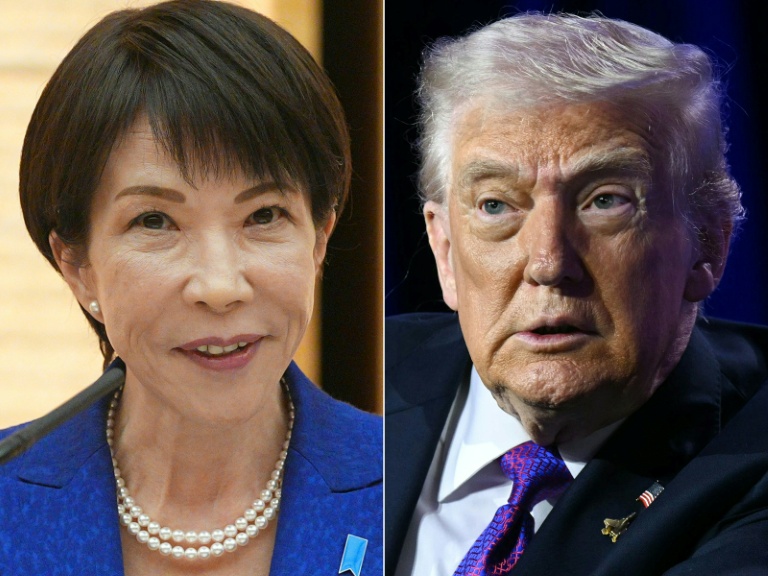
 Japan is grappling with the economic fallout from escalating tensions in the Middle East, a situation that looms large as Prime Minister Sanae Takaichi prepares for a crucial visit to Washington D.C. next week. Takaichi has publicly committed to a "candid" discussion with the U.S. President, but the extent to which she can be fully forthright, and how receptive the 79-year-old American leader will be, remains to be seen. The meeting is scheduled for March 19.
Japan, the world's fourth-largest economy, is heavily reliant on imported oil, with a staggering 95 percent originating from the Middle East. A significant portion of this supply, approximately 70 percent, transits through the Strait of Hormuz, a vital waterway that is now effectively a conflict zone. This disruption has sent oil prices soaring above $100 per barrel. Compounding the issue for Japan is the weakening of its currency against the U.S. dollar. Since crude oil is priced in dollars, this currency depreciation means that each barrel of oil costs more yen, further increasing Japan's import bill.
In response to the unfolding crisis, Japan was the first nation to announce a release from its strategic oil reserves. Prime Minister Takaichi, 65, stated that Japan is experiencing "severe impacts" from the situation. President Trump, on the other hand, has characterized the conflict as a necessary effort to defeat Iran's "evil empire," prioritizing this objective over the immediate concerns of crude oil prices.
The rise in oil and gas prices poses a significant risk to the economic well-being of both businesses and households in Japan. This could potentially erode Prime Minister Takaichi's public approval ratings. Just over a month ago, she celebrated a decisive election victory, but recent polls indicate a decline in her popularity.
Economists are particularly concerned about the impact on food prices. Stefan Angrick, a senior economist at Moody's Analytics, highlighted the interconnectedness of energy and food production. He explained that energy is essential for agriculture, and natural gas, for instance, is a key component in the production of fertilizers. Last year, rice prices in Japan doubled, and Angrick suggests that food prices could see further increases.
Japan's economic growth is already sluggish, registering only 0.3 percent in the last quarter. To stimulate the economy, Prime Minister Takaichi's administration last year implemented a substantial stimulus package totaling 21.3 trillion yen, equivalent to approximately $134 billion. However, any additional fiscal measures could unsettle investors who are already apprehensive about Japan's enormous national debt. Bond yields reached record highs in January, reflecting these concerns.
Navigating International Relations and Security
Japan has historically been a staunch supporter of the rules-based international order. However, Prime Minister Takaichi has adopted a cautious approach to the current conflict, careful not to alienate President Trump. This diplomatic strategy was evident during Trump's visit to Japan in October, where Takaichi sought to cultivate a positive personal relationship with him.
Regarding the specifics of the conflict, Takaichi has stated, "We do not possess detailed information, including whether this was a measure for self-defense. Our country will refrain from making a legal assessment," on March 2. This measured response reflects Japan's delicate position.
Tokyo cannot afford to antagonize Washington, as the United States has been the principal guarantor of Japan's security for decades, maintaining a significant military presence with 60,000 troops stationed on Japanese soil.
President Trump is scheduled to visit China from March 31 to April 2. This visit comes at a time when Japan-China relations have become strained. In November, Prime Minister Takaichi suggested that Japan might consider military intervention in the event of any Chinese attempt to take Taiwan.
Analysts have expressed concerns that the United States may be diverting its focus away from the Asia-Pacific region. A report from the U.S. Naval Institute indicated that two U.S. destroyers, typically stationed in Japan, were repositioned to the Arabian Sea as of last week.
The historical experience of Afghanistan and Iraq, which consumed U.S. resources and attention for extended periods, is not lost on Japan. Yee Kuang Heng, a professor of international security at the University of Tokyo, noted, "Japan remembers that Afghanistan and Iraq 'bogged down US resources and attention for decades.'"
Conversely, some observers hope that the visible display of American military strength in regions like Iran and Venezuela could serve as a deterrent to China's assertive actions. Heng added, "On the other hand, some hope that the display of US military might (in Iran and also Venezuela) will enhance deterrence of China."
Economic Commitments and Strategic Priorities
A key item likely to be high on President Trump's agenda is Japan's commitment to invest $550 billion in the United States. This pledge was made in exchange for the U.S. reconsidering threatened tariffs of 25 percent, which were subsequently lowered to 15 percent last year. These investment promises remain in effect, even after the U.S. Supreme Court invalidated Trump's global tariffs in February, leading him to impose a new, broad 10 percent duty on imports.
Prior to the Supreme Court's ruling, Tokyo and Washington announced the initial disbursement of $36 billion for three infrastructure projects, with further announcements anticipated during Takaichi's visit.
Sayuri Romei, from the Indo-Pacific Program at the German Marshall Fund of the United States (GMF), believes that Prime Minister Takaichi must leverage the personal rapport she has cultivated with President Trump since last fall. Romei stated, "Takaichi will need to use the personal rapport she has built with Trump since last fall to try to convince him to look past the current conflict in the Middle East, and make him see the repercussions that it is having beyond the region."
Furthermore, Romei emphasized the importance of Japan articulating its perspective on the multifaceted threat posed by China. "Notably, she will need to underscore Japan's perspective on China's multi-faceted threat: not only Beijing poses a threat from an economic coercion point of view, it is also a direct security threat," Romei concluded.


No comments:
Post a Comment