
What makes military alliances shift in Middle East conflicts?
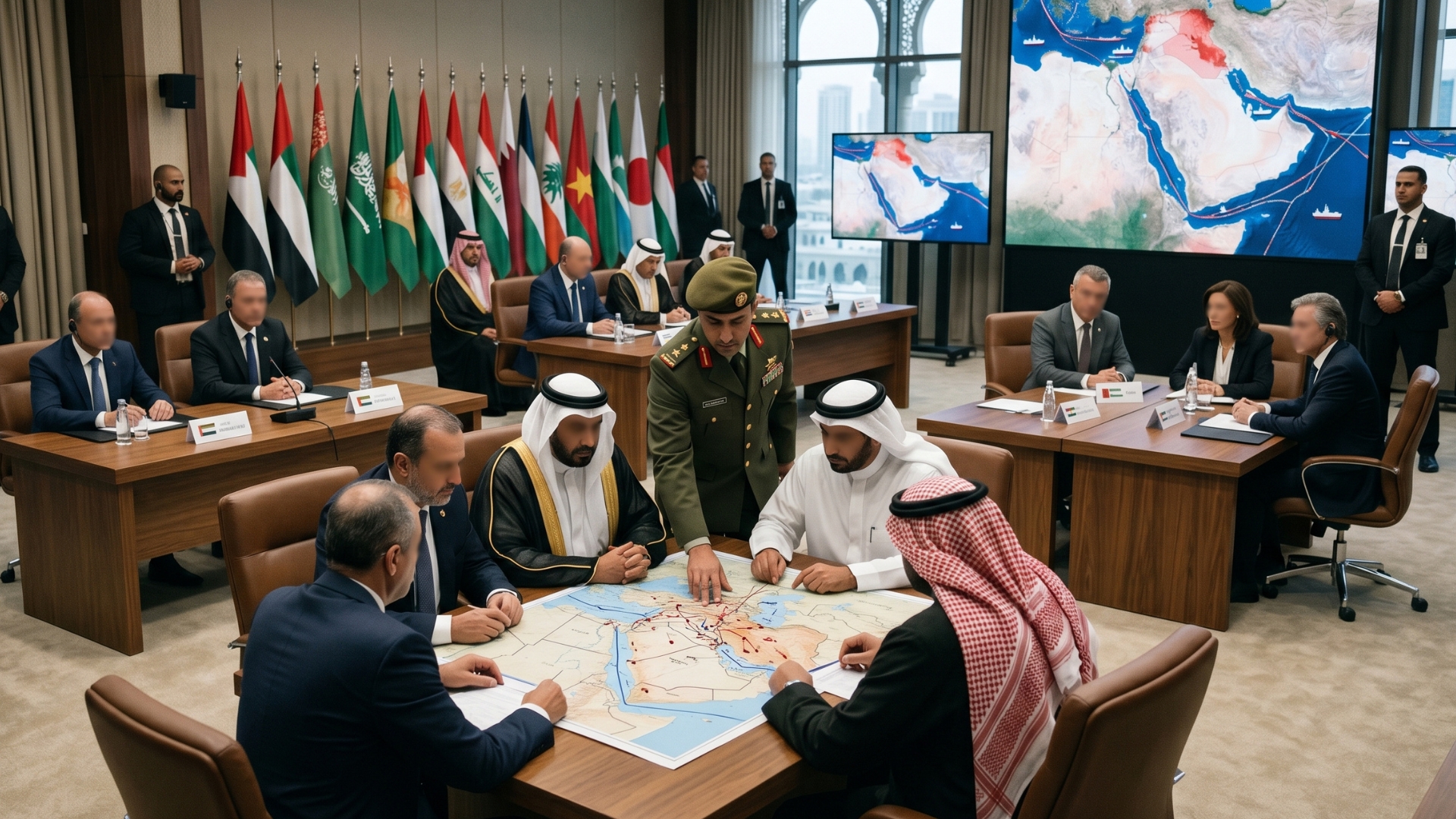
Military alliances in the Middle East shift when leaders decide that yesterday’s main enemy is no longer the most urgent danger. In practice, that can mean old rivals opening channels, formal partners hedging their bets, or proxy relationships being downgraded when they become too costly or too risky. Recent regional analysis describes exactly this kind of reordering, with wars, deterrence failures, and changing power balances forcing governments to rethink who protects them, who threatens them, and who can still deliver results.
For civilians, alliance shifts are not abstract diplomacy. They can determine whether a war is contained or spread, whether outside powers keep arming local actors, and whether border communities face de-escalation or a new round of retaliation. The ICRC has repeatedly warned that widening hostilities in the Middle East create dangerous regional chain reactions with severe consequences for civilians, displacement, and already fragile societies.
Threat Perception Changes Faster Than Ideology
The biggest driver of alliance shifts is usually threat perception. States may share a religion, ideology, or long history of rivalry, but those factors often become secondary when leaders believe another danger has become more immediate. The Abraham Accords, for example, reflected a convergence of interests built around shared threat perceptions and the promise of deeper security and economic cooperation, rather than any sudden disappearance of older political differences.
That logic works in multiple directions. A state that once prioritized confrontation with Iran may later focus on economic stability, maritime security, or limiting spillover from Gaza, Lebanon, Syria, or Yemen. Carnegie’s recent work on regional security argues that Middle Eastern alignments are increasingly shaped by practical efforts to contain escalation, manage spillover, and avoid new wars of attrition, even when underlying disputes remain unresolved.
Proxy Networks Rise and Fall
Another major reason alliances shift is that proxy relationships are not static. They depend on funding, battlefield performance, local legitimacy, and the sponsor’s ability to absorb risk. Iran’s network of armed partners has long been a central pillar of regional alignment, giving Tehran influence across several conflict zones without requiring direct conventional war. CFR describes this network as a key instrument of Iranian regional power.
But proxy systems can degrade. Recent analysis from Harvard’s Belfer Center argues that Iran’s proxy model has entered a period of structural weakening, which matters because when an alliance network becomes less effective, sponsors and rivals alike start recalculating. A weakened proxy may become less useful as a deterrent, more expensive to sustain, or more dangerous to be associated with openly. That alone can trigger realignment.
Outside Powers Are Less Trusted Than Before
Middle East alliances also shift when regional states conclude that great-power patrons are no longer dependable in the old way. Carnegie has argued that recent wars exposed the limits of American crisis management and encouraged Arab governments to think more seriously about autonomous regional frameworks. CSIS and Carnegie have also highlighted how growing Chinese and Russian roles, alongside changing U.S. priorities, are giving states more room and more reason to hedge rather than rely on one external protector alone.
That hedging does not always mean breaking with the United States or embracing a rival power outright. More often, it means diversifying ties. CFR’s recent tracking of China’s regional activity shows how Gulf states and other actors are expanding economic, diplomatic, and in some cases security-related links with Beijing while remaining tied to Washington on core defense matters. That creates looser, more flexible alignment patterns than the older bloc politics many outsiders still assume.
Economic Survival Can Matter More Than Old Rivalries
Conflicts in the Middle East do not unfold in a vacuum. Governments are also trying to protect growth plans, foreign investment, shipping routes, and domestic stability. Chatham House argued in March 2025 that Saudi Arabia’s regional posture increasingly reflects a desire to shape order around stability and development rather than perpetual confrontation. Carnegie has made a similar point, warning that war and instability can disrupt reform agendas and force Gulf states to rebalance priorities quickly.
This economic logic matters because states that are trying to build new industries, attract capital, or position themselves as logistics and finance hubs have strong incentives to avoid being trapped in permanent military blocs. They may still cooperate militarily, but they will often seek looser arrangements, selective partnerships, or temporary understandings with former rivals if that reduces risk to their domestic agenda.
Wars Reorder Alliances by Exposing Who Can Deliver
Military alliances often look stable until war tests them. A conflict can reveal whether a patron actually deters attacks, whether an armed partner still has operational value, or whether a formal alignment creates more danger than protection. CFR noted that Israeli strikes and broader confrontation with Iran have already reshaped the region’s security landscape, while ICRC statements in 2025 and 2026 warned that escalating military operations were creating wider regional chain reactions.
Once that happens, alliances can move quickly. States may distance themselves from a camp that seems unable to protect them, or quietly deepen cooperation with a former adversary if it now appears more useful for de-escalation. In other words, conflict does not just test alliances. It actively reorganizes them by showing who has leverage, who has liabilities, and who can still shape the battlefield or the diplomatic track.
Domestic Politics and Leadership Choices Still Matter
Even in highly militarized conflicts, alliance shifts are not purely structural. Leadership changes, public anger, regime survival concerns, and domestic legitimacy all shape how far a state can move. Carnegie’s regional analysis emphasizes that political systems across the Middle East are responding not just to external threats but to internal pressures and competing visions of state interest.
That helps explain why alliances in the region can look contradictory from the outside. A government may condemn one actor publicly, coordinate with it quietly, and keep a backup channel open to its rival. These are not always signs of incoherence. In many Middle East conflicts, they are the operating style of governments trying to preserve room to maneuver in an environment where rigid commitments can become liabilities overnight.
What Comes Next
The main force behind shifting military alliances in Middle East conflicts is not sudden friendship or sudden betrayal. It is recalculation. Alliances move when leaders reassess threat, proxy utility, patron reliability, economic vulnerability, and domestic risk. As long as the region remains shaped by overlapping wars, weak collective security mechanisms, and major-power competition, alliance patterns are likely to stay fluid rather than fixed.
That is why alliance changes in the Middle East often look abrupt but are usually the result of pressures building over time. Once those pressures reach a tipping point, states pivot fast. The deeper pattern is consistent: when the strategic map changes, so do the partnerships built to survive it.
Post a Comment for "What makes military alliances shift in Middle East conflicts?"