
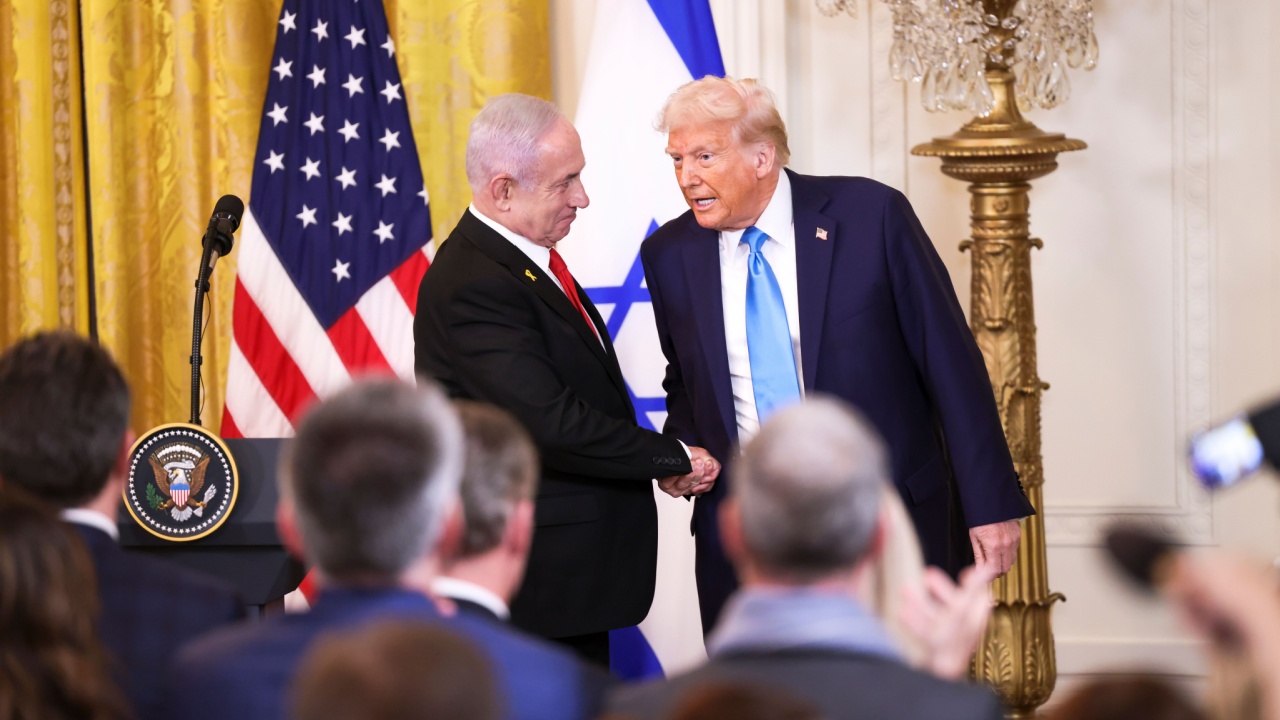
 Navigating the complex dynamics of the US-Israeli relationship requires a clear-eyed understanding of each nation's distinct strategic objectives. The prevailing narrative in Washington, often echoed in think tanks and defense circles, posits a singular, unified strategic interest between the United States and Israel in countering Iran. However, this conventional wisdom, particularly concerning the volatile Middle East, has frequently proven to be inaccurate, and this situation is no exception. A precise articulation of each party's actual desires is crucial, as imprecision in foreign policy can lead not only to intellectual missteps but also to significant human and financial costs.
What Israel Seeks
Israel's primary objective is the complete elimination of Iran's nuclear program, not merely its containment or negotiated limitation. Furthermore, there is an increasing desire for the weakening or even collapse of the Islamic Republic itself. From Israel's perspective, this is an existential matter. A nuclear-armed Iran is perceived as an intolerable threat to its very survival. Israeli leaders have consistently and unequivocally communicated this stance, leaving little room for doubt regarding their sincerity. They seek the United States to engage fully and decisively in confronting this threat, willing to bear any necessary cost to achieve a definitive resolution.
What the United States Aims For
In contrast, the United States' objectives, dictated by its national interests rather than solely by political rhetoric, are considerably more measured and intricate. Washington aims to prevent Iran from acquiring a deliverable nuclear weapon. Equally important is ensuring the unimpeded flow of oil from the Persian Gulf. The U.S. also seeks to avoid another protracted military engagement in the Middle East, which could critically undermine its conventional deterrence capabilities in the Indo-Pacific region. Moreover, the United States is keen to prevent an oil price shock that could further destabilize the global economy and accelerate its fragmentation. Ultimately, if possible, America wishes to reorient its focus toward managing its strategic rivalry with China, which is considered the defining geopolitical challenge of the 21st century.
These objectives are clearly not identical. While there are areas of overlap, significant divergences emerge precisely when the stakes are highest – specifically, regarding the extent of military action.
Historical Precedents and Divergent Interests
The history of US-Israeli relations offers valuable insights, though Washington may often choose to disregard them. Israel has historically operated under the assumption that its strategic priorities should, by virtue of their alliance and shared values, automatically become American strategic priorities. This conflation has served Israel's interests effectively. However, its benefit to American interests has been far more ambiguous.
Consider the lead-up to the 2003 invasion of Iraq. The elimination of Saddam Hussein was enthusiastically supported by individuals and groups closely aligned with Israeli security concerns. The argument presented then, much like the one today, was that American power would be instrumental in reshaping a hostile regional order, yielding security benefits for both allies. The subsequent outcome was a two-decade drain on American credibility, resources, and strategic focus, paradoxically leading to a significantly strengthened Iran due to the removal of its primary Arab rival. This crucial lesson, readily available, was largely unheeded.
The Question of Regional Ownership
Furthermore, the issue of regional ownership is paramount. Israel's immediate neighborhood is, by definition, its primary sphere of concern. The Gulf states, the Levant, and the existential threat posed by Iran's nuclear ambitions are the central coordinates of Israeli strategic thinking, as they rightfully should be. American interests, conversely, are global in scope. A military campaign that degrades Iranian capabilities but inadvertently ignites a regional war, disrupts the Strait of Hormuz, triggers a widespread escalation of Hezbollah rocket attacks, and necessitates a significantly expanded and indefinite American military presence in the Gulf might satisfy certain Israeli benchmarks for success. However, such an outcome would represent a profound strategic setback for the United States.
The inherent asymmetry between the two nations' strategic postures is a critical factor. Israel, a relatively small nation with a narrowly defined threat environment, can afford to prioritize a single, specific outcome. The United States, as a global superpower with commitments spanning from the South China Sea to Eastern Europe and its own hemisphere, cannot adopt such a singular focus.
This analysis is not an argument for American indifference to Iran's nuclear ambitions. A nuclear-armed Iran would undoubtedly be a destabilizing force, and the United States has legitimate reasons to prevent such a development. However, the propositions of "preventing Iranian nuclear weapons" and "prosecuting Israeli strategic objectives in the region" are related but not identical.
The Necessity of Honest Dialogue
The uncomfortable truth that the mainstream foreign policy establishment in Washington often avoids is that genuine alliances necessitate the honest management of divergent interests, not their ritualistic denial. The pretense of perfectly aligned American and Israeli interests does not strengthen the alliance. Instead, it distorts American decision-making, shields Israeli policy from necessary scrutiny, and ultimately, when the divergence becomes undeniable, leads to the kind of strategic confusion that results in loss of life.
A responsible American foreign policy would clearly articulate: "We support Israel's right to self-defense, we share its concerns regarding Iran's nuclear capabilities, and we will collaborate on a strategy that serves both our interests." However, achieving this objective does not imply that the United States should cede control over decisions that carry significant consequences for American service members, consumers, and America's global standing.
This candid conversation has not occurred with the requisite honesty. Until it does, Washington risks continuing to drift into commitments shaped more by Jerusalem's threat perception than by any coherent assessment of American national interests.


No comments:
Post a Comment