
Ukraine Stalemate & Iran War: Ground Troops Loom
Ukraine's War of Motion Without Movement
The current phase of the war in Ukraine presents a peculiar paradox. While the conflict appears to be a relentless cycle of violence, noise, and constant activity, a broader perspective reveals a surprising lack of significant territorial shifts. Russia advances, only for Ukraine to absorb the impact, often through costly defensive actions. Conversely, Ukraine launches deep strikes, which Russia manages to endure. Villages frequently change hands, only to revert to their previous occupants. Over the past year, Russia's territorial gains have been minimal, amounting to less than one percent of Ukraine's landmass, all while sustaining substantial casualties. This scenario is not indicative of forward momentum but rather of intense friction.
This is the modern definition of a stalemate: not a quiet or frozen conflict, but one characterized by a grinding, attritional struggle. Both sides possess the capability to prevent outright defeat but lack the decisive means to achieve victory.
The Middle East's Shadow Over Ukraine
The ongoing conflict in the Middle East has introduced another layer of complexity, acting as a powerful siphon on global attention, resources, and political capital that would otherwise be directed towards Ukraine. Ukrainian President Zelensky has publicly acknowledged that this shift in focus presents an opportunity for Moscow. Furthermore, rising energy prices, directly linked to instability in the Middle East, are indirectly bolstering Russia's war chest. This influx of revenue allows Russia to fund its military operations, from the procurement of artillery shells to the acquisition of drones supplied by Iran. Consequently, a peculiar economic dynamic has emerged, where one conflict inadvertently fuels another.
The Stalemate's Core Dilemma
At the heart of this protracted conflict lies a fundamental problem that neither side has been able to overcome. Russia possesses sheer numerical superiority in terms of manpower and materiel, enabling it to sustain relentless pressure on the front lines. However, it lacks the capacity to execute the swift, decisive breakthroughs necessary to shatter Ukrainian defenses. Ukraine, on the other hand, excels in precision strikes and sophisticated targeting, employing superior tactics. Yet, it lacks the overwhelming mass and air superiority required to breach Russian lines and achieve significant territorial gains.
The situation can be likened to two exhausted boxers in the late rounds of a fight. Both are still actively engaging, landing blows, but neither possesses the strength for a knockout. The spectators anticipate a decisive finish that never materializes.
This self-reinforcing cycle is evident across various aspects of the conflict. The widespread use of drones makes troop movements incredibly hazardous, while precision-guided munitions punish any significant concentration of forces. Layered defensive systems are designed to neutralize offensive operations before they can develop into breakthroughs. Every tactical innovation or lesson learned is countered by the opposing side within weeks, leading to a symmetrical adaptation process.
Even the logistical challenges underscore the strain on both nations. Ukraine faces uncertainty regarding its fuel supply as global prices surge due to Middle Eastern instability. Russia, despite its territorial gains, finds itself increasingly dependent on fluctuating energy revenues and external support.
What is unfolding is not a temporary pause but a state of equilibrium. It is a violent, costly, and industrially scaled deadlock where both sides continue to fight fiercely, making incremental territorial gains measured in inches, yet remaining far from an end to the conflict. With another major conflict drawing attention away, the critical question shifts from who will achieve a breakthrough to who will ultimately run out of time, financial resources, or global attention first.
The Unspoken Role of Special Operations in Iran
The potential involvement of Special Operations Forces (SOF) within Iran, or the planning for such operations, remains largely in the shadows. Information regarding these sensitive matters operates in the space between confirmed actions and strategic preparations.
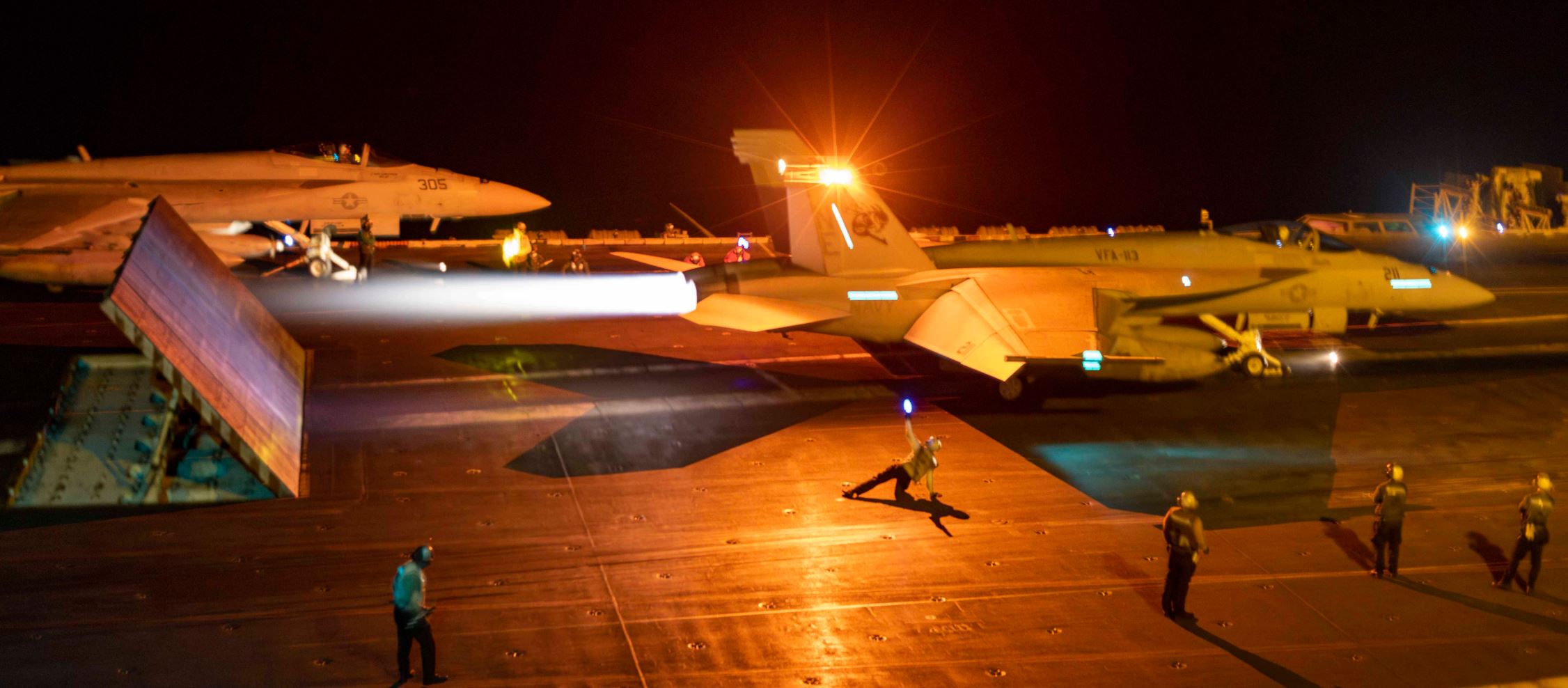
Operation Epic Fury, launched on February 28th, exemplified a familiar American approach: leveraging airpower for a swift and impactful initial strike, aiming to cripple the enemy's command and control capabilities. This campaign has involved thousands of targets, with Iranian command and control systems being particularly affected through pre-emptive cyber and space-based disruptions.
While appearing as a controlled air campaign from the outside, airpower has inherent limitations. It can destroy, degrade, and isolate, but it cannot physically remove or secure critical assets. This is precisely the challenge at the core of current concerns regarding Iran's nuclear program.
Iran's stockpile of highly enriched uranium, theoretically sufficient for numerous nuclear weapons, is believed to remain within the country, potentially dispersed and located beneath damaged facilities. The physical nature of this material presents a significant problem, one that often necessitates special operations solutions.
Multiple reports suggest that the administration is actively exploring options to secure this material, not through invasion or large-scale ground warfare, but via small, specialized teams executing rapid, targeted missions. Such operational concepts have been within the purview of Joint Special Operations Command (JSOC) for decades but are rarely discussed publicly in real-time.
While current operations may not involve SOF, the strategic imperative suggests that the timeline is moving towards a point where such intervention might become necessary. If the objective is to dismantle Iran's nuclear capabilities, airpower alone has finite effectiveness. At some juncture, confirmation of remaining materials, their securement, and measures to prevent their future re-emergence become paramount.
The practicalities of "securing" such sensitive material are often overlooked in public discourse. It is not a single mission but a complex sequence of challenges.
- Confirmation of Location: The first step involves absolute certainty in locating the material. This requires physical verification, moving beyond intelligence estimates derived from satellite imagery or signal intercepts. It demands "eyes on the prize."
- This necessitates bridging the gap between intelligence assessments and on-the-ground reality, a phase fraught with inherent dangers.
- Insertion into Denied Environments: Once located, the material must be reached. This involves insertion into areas with active air defenses and remaining ground forces, even if degraded. It is not a matter of simple overflight or standard strike packages.
- The Securing Process: This is the most challenging phase. Securing fissile material is far more complex than retrieving a portable item. It involves managing radiological risks, dealing with unknown storage conditions, encountering potential booby traps, and the very real possibility that the target material has already been relocated, divided, or partially concealed.
- This transforms a potentially straightforward raid into a time-sensitive search operation conducted under immense pressure.
- Extraction: The extraction phase is often where these missions face their greatest difficulties. The challenge lies not in infiltration or target acquisition but in exfiltrating with the secured material while the adversary is mobilizing a response.
- As extraction commences, air corridors can become restricted, and response forces are deployed, turning a surgical action into a race against time.
Only a select few units globally possess the specialized training for such complex operational scenarios. These units train for these contingencies not in theory but in practice.
Therefore, discussions focusing solely on "boots on the ground" often miss the core issue. The fundamental question is not whether forces will enter a hostile environment, but rather whether the problems left unresolved by an air campaign can be addressed through any other means.
This is where the situation becomes uncomfortable. Public narratives often revolve around strike statistics, sortie numbers, and reported reductions in enemy activity. This information is widely available. What is less frequently discussed is the crucial aspect of battle damage assessment – distinguishing between assumed destruction and actual, confirmed destruction.
Aerial strikes generate data, such as heat signatures, secondary explosions, and structural collapses. However, this data does not guarantee the complete elimination of a target. Hardened facilities can withstand impacts, equipment can be moved prior to strikes, and decoys may be hit instead of the intended targets. Underestimating an adversary's resourcefulness is a critical error.
From an aerial perspective, a structure is either present or absent. On the ground, the reality can be far more nuanced. This gap between assumed and confirmed destruction is the breeding ground for future problems.
The private reality of such operations centers on what the strikes failed to achieve. If special operations forces are deployed in a visible capacity, it will not signify a strategic shift but rather an acknowledgment that the existing strategy, reliant on long-range strikes, has encountered obstacles it cannot overcome from altitude.
This is how conflicts evolve—not through grand pronouncements but through a quiet recognition of what must be done next. When that moment arrives, it will not be perceived as an escalation but as a grim necessity, born from the limitations of prior actions.
Post a Comment for "Ukraine Stalemate & Iran War: Ground Troops Loom"