
A dermatologist just told us the 7 biggest skincare mistakes she sees every single day
Want to support independent women's media? Become a subscriber and get an all-access pass to everything we make, including exclusive podcasts, articles, videos and our exercise app, MOVE.
There's a certain point in your skincare journey where things start to feel very confusing and overwhelming.
You've got the serums, the actives, the SPF (hopefully), and a perfect routine that should be working… but your skin still isn't "glazed" and "glassy".
And according to one very trusted dermatologist, that's not a coincidence.
Because while most of us think we're doing the right things, we're often making a few key mistakes that are undoing all our effort.
WATCH: Which is better — daily skincare or regular treatments? Sydney's top-secret facialist Carina Gross reveals all. Post continues below.
7 biggest skincare mistakes, according to a dermatologist.
On a recent episode of You Beauty, host Kelly McCarren sat down with renowned Sydney-based dermatologist Dr Natasha Cook, who sees skin day in and day out, and she's noticed a pattern.
From sunscreen habits that aren't actually protecting you, to routines that are doing more harm than good, she says the same issues come up again and again in her clinic.
So when Kelly asked her to name the biggest skincare mistakes people are making, she didn't hesitate.
Here are the seven she sees every single day.
#1. You're not using enough sunscreen (or applying it properly).
Let's start with the non-negotiable.
"One of the biggest misconceptions I see is around application," Dr Cook said.
Most people simply aren't applying enough, and that dramatically reduces protection.
"If you under-apply… your SPF 30 might be giving you about an SPF 5."
She recommends using a proper standalone sunscreen (SPF 30 or higher) and applying it generously, not just a light layer you rub in quickly before heading out the door.
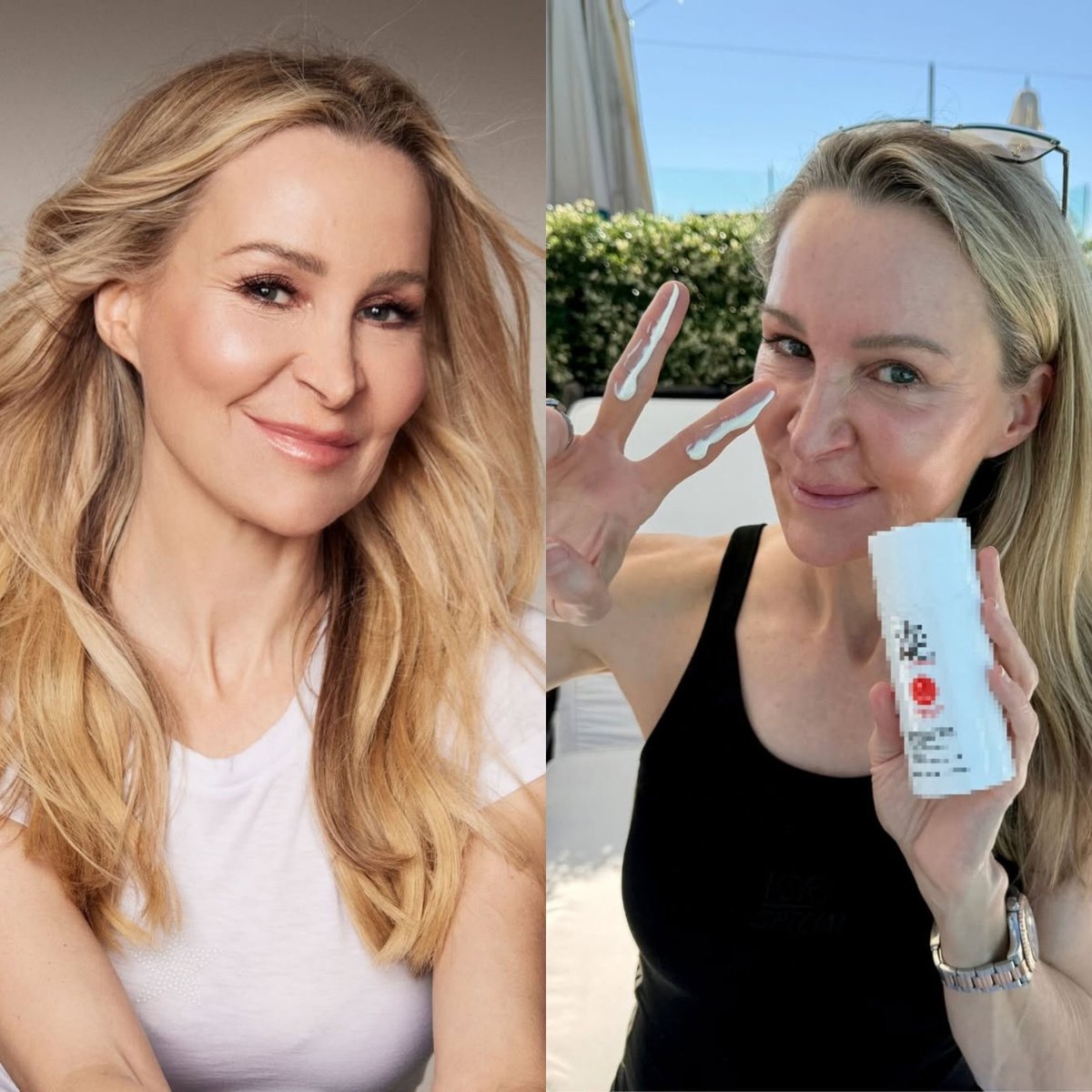
A good rule of thumb is the "two-finger technique", which means squeezing sunscreen along the length of two fingers (your index and middle finger). This is roughly the amount you need to adequately cover your face and neck.
#2. You're relying on makeup with SPF.
Makeup products with added SPF sound like the ultimate multitasker, but they're not something you should rely on.
In reality, they're providing nowhere near enough coverage.
"If you're relying primarily on makeup, you're not putting much on."
When you think about it, we apply makeup in thin layers and blend it out, so it simply doesn't deliver the amount needed for proper protection.
Dr Cook said SPF in makeup should only ever be seen as a bonus, not your main line of defence.
"Makeup is a nice additive, but you should always have a primary SPF underneath."
#3. You're trusting spray sunscreen too much.
OK, still on the topic of sunscreen. Spray formulas might feel easy and lightweight, but that's exactly the problem.
"When you're spraying, particularly outdoors, it dissipates into the atmosphere. It's not going onto the skin."
Another issue is the way they're tested.
"The way they're tested is in the liquid form before it goes into the aerosolised form… so you're not getting the product in the test form."
Which means what you're applying may not match the SPF rating on the label. Yikes.
"If you think about it, why do people love wearing it? It's easy, and it feels like you're wearing nothing at all. The irony is, you probably are."
And when you think you're protected, you stay in the sun longer and end up doing more damage.
#4. You believe in the "safe tan" concept.
OK, I know a glowy tan can look good. But according to Dr Cook, it's actually anything but.
"There is no such thing as a safe tan."
That "glow" isn't a sign of health. It's your skin going into stress mode.
"Tanning is a sign of your skin cells going into a reactive defence mechanism to try and protect your DNA and your dermis from severe damage."
What's happening beneath the surface is your skin producing melanin, the pigment that makes your skin look darker, in an attempt to block UV radiation.
"It's a UV response to defend itself… to try and stop the UV penetrating and damaging the DNA, creating skin cancer, let alone accelerating photo ageing," she warned.
"I know it can look aesthetically pleasing, but I say fake it, don't bake it."
#5. You're blaming your genetics.
You've probably looked at someone with great skin and thought, "She just has good genes."
But according to Dr Cook, that's only a small part of the story.
"You can be born with good skin, but if you have bad lifestyle habits, you will destroy that skin rapidly."
She says genetics only accounts for a fraction of how your skin behaves long-term.
"Twenty per cent is probably DNA… eighty per cent is influenced by what choices we make in our lifestyle."
Basically, what you do every day matters more than what you were born with.
"Even if you're born with amazing skin and genetics, UV, heat and pollution are responsible for over eighty per cent of how our skin will perform and deteriorate… let alone accelerated skin ageing."
And it adds up quickly.
"If we go out in the sun, we smoke, we expose ourselves to high heat (sorry, sauna lovers) and pollution, pretty much our skin will age more rapidly than if we do not."
The upside is you're not stuck with the skin you were born with.
"There are so many ways to change how your skin will look and have healthier, high-functioning skin for longer."
#6. Your skincare routine is way too complicated.
If your routine has grown from a cleanser and moisturiser into an entire shelf, this might be why your skin isn't thriving.
Dr Cook says one of the biggest issues she sees is people over-complicating their routines, often thanks to social media.
"These complicated routines are incredibly unnecessary for results."
She even has a name for it: "cosmetic clutter."
"Overuse of skincare products can compromise the barrier function, increase inflammation and drive skin conditions."
That means all those serums and actives you're layering could actually be behind your redness, sensitivity or breakouts.
"Too much on the skin can destroy the natural equilibrium… to the point that it starts acting out in redness, sensitivity and flare-ups."
Her advice is simple: "Simplicity is key."
She recommends sticking to a streamlined routine – think cleanse, treat, moisturise, plus SPF – rather than constantly chasing trends.
"I don't believe you really need more than three steps morning, three steps night."
And just think about the amount of time and money you'll be saving, too.
#7. You're substituting your diet with supplements.
When it comes to skin health, what you put in your body matters just as much as what you put on it.
But according to Dr Cook, a lot of people are getting this backwards.
"Substituting diet for supplements is a no."
While supplements can have their place, they're not a replacement for a balanced diet.
"Your foundational diet every single day is one… most of the answers do lie in food."
She also warns that more isn't always better, especially when it comes to supplement "stacking".
"Supplements are not substitutes. They are literally a supplement."
And in some cases, overdoing it can actually cause harm.
The takeaway is simple: focus on your diet first and treat supplements as an extra, not a shortcut.
For more tried and tested beauty recommendations, subscribe to the weekly You Beauty newsletter, join our You Beauty Facebook group, listen to the You Beauty podcast or watch You Beauty on YouTube.
Feature image: Instagram @drnatashacook.
Post a Comment for "A dermatologist just told us the 7 biggest skincare mistakes she sees every single day"