
When you think of classic cars, your mind naturally recalls vintage motors from yesteryear, like Silver Birch Aston Martin DB5s, achingly beautiful E-Type Jaguars and Ferrari's decorated 250 GTO.
What you probably don't think of is a Citroen AX or Rover 800.
But these cars officially earn classic status this year.
That's because the earliest iterations sold in the UK turn 40 this year, having first entered the road in 1986.
The 'life begins at' milestone is typically considered the threshold for when a motor becomes a 'classic'.
This is because cars of this vintage automatically qualify for 'historic vehicle' status, which brings with it a raft of financial perks.
When motors reach the 40th anniversary of their initial registration, they immediately no longer need to pass an MOT (granted there have not been 'substantial changes' made to its chassis, body or engine and owners declare exemption) and are excused from inner-city clean air zone charges, like London's £12.50-a-day ULEZ.
Owners also no longer have to pay car tax from the following year, with cars that turn 40 before 1 January 2027 qualifying for Vehicle Excise Duty exemption from that April.
We take a look at 10 models that debuted in Britain four decades ago. Then we cast our verdict on whether they are bona fide collectable classics or forgettable motors worthy of the scrapheap.
Audi 80/90 'B3' (1986-1991)
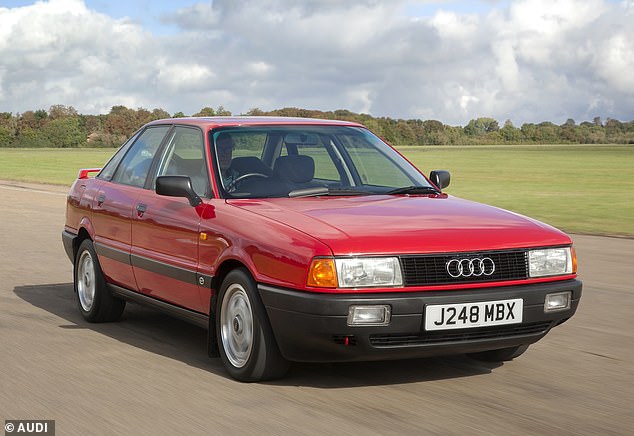
Many know Audi's mid-size executive saloon as the A4, but its predecessor was the 80 - a motor that oozed style and quality.
As the B3 name suggests, this is the third iteration to go on sale, with the car entering UK showrooms in 1986.
It - and the five-cylinder 90 off-shoot - marked a significant shift in premium appeal with elegant interiors and plush materials that put it ahead of German rivals for sophistication.
But high pricing limited sales. As did the small boot, which at just 400 litres was down 20 per cent on the B2's 500-litre capacity. For quattro four-wheel-drive versions, the use of a different rear axle and suspension also ate into the boot space, reducing it to a meagre 325 litres.
Despite being incredibly rare today, its shortcomings mean it's unlikely to become a collector's piece.
Cars & Motoring Verdict: Forgettable
BMW E30 M3 (1986-1990)
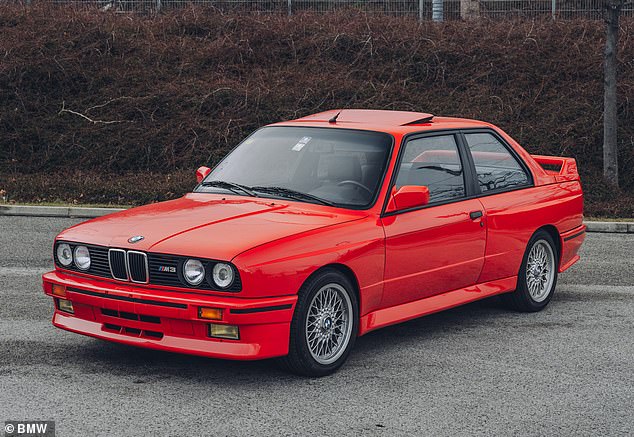
Among the 10 cars in this list, the M3 is the one that has survived the test of time best and even by today's standards is a yardstick for high-performance saloon cars. And BMW's first iteration - the E30 - is without doubt a bona fide classic.
But despite becoming a road car icon, the E30 was purely designed to help BMW win races.
With its bold aero kit - including a massive front splitter and boxy rear wing on its boot lid - and potent 2.3-litre four-cylinder engine, it was created to challenge rivals like the Mercedes-Benz 190E and Ford Sierra that were dominating the touring car scene.
What it created was the generation's best-handling saloon car, yet it remained extremely practical for those needing a family motor. Demand for the original M3 was so substantial that the 5,000 'homologation' requirement [the minimum volume of road cars that needed to be made in order for the car to compete in Group A championships] soon went out the window and over 17,000 were built in total.
It spawned later Evolution and Sport versions, as well as a convertible option.
For an excellent condition saloon today, prices are as high as £76,300. Hagerty UK - the classic car insurer - says pristine, low-mileage examples are worth a staggering £120,000.
Cars & Motoring Verdict: Collectable
Citroen AX (1986-1999)
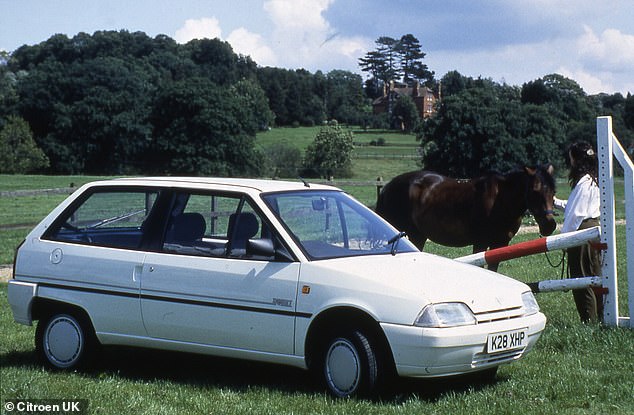
Citroen's AX arrived in 1986 with production enduring for 13 years before it was succeeded by the Saxo. And for those of a certain vintage, the AX will have been burned into their memory.
With its quirky styling and clever packaging, it epitomised the smart thinking synonymous with the French brand. It was genuinely enjoyable to drive, practically spacious, relatively inexpensive to buy and incredibly frugal to run.
Many of these traits were underpinned by the car's lightness, with basic entry models tipping the scale at a featherweight 640kg. Its low bonnet and acutely angled windscreen also contributed to a low 0.31 drag coefficient - meaning it was incredible aerodynamic, thus making it more economical on fuel.
It's low entry price made it an ideal first car for many late teens of the 1980s and 1990s, which is where it earned a cult following. There was even a diesel option, which returned in excess of 65 miles to the gallon.
Sadly, cheap cars of the generation are rarely cherished. As such, How Many Left suggests there are fewer than 250 still on the road.
Cars & Motoring Verdict: Forgettable
Ford Sierra RS Cosworth (1986-1992)
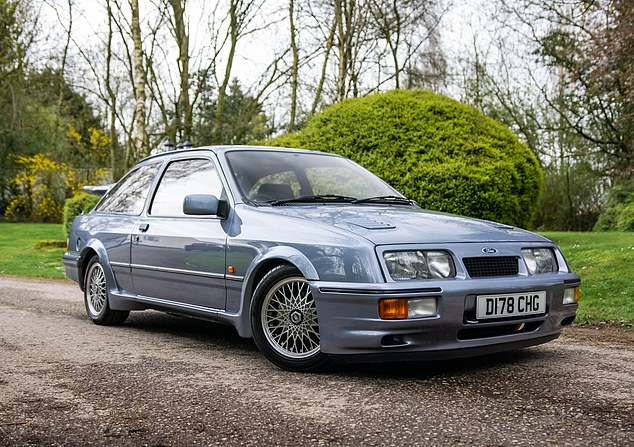
If there is one Fast Ford of the past that's become supremely collectable, it's the Sierra RS Cosworth. Having debuted at the Geneva Motor Show in March 1985, the first examples were delivered in July 1986.
Like the BMW E30 M3, it was very much a homologation special built as an exclusive road car in limited numbers to appease rules to allow Ford to take it racing.
Under the bonnet was a 2.0-litre double-overhead camshaft petrol engine developed in partnership with Cosworth and with a Garrett turbocharger bolted onto it. The result: 204bhp, zero to 62mph in just over six seconds and a top speed of 150mph. Not bad for a family car with a massive boot - which has the legendary 'whale tail' wing attached.
Only 5,545 were made (not inclusive of the 500 RS 500 Cossies that came in 1987) and it was sold by chosen Ford dealers with the specialist 'RS' licence for £17,000. But insurance premiums were sky high due to the ease in which they could be stolen.
Yet 40 years later and Cossies are changing hands for in excess of six figures. One example for 1986 sold in 2022 for £132,000 - it had just 8,795 miles on the clock from new.
Cars & Motoring Verdict: Collectable
Jaguar XJ40 (1986-1994)
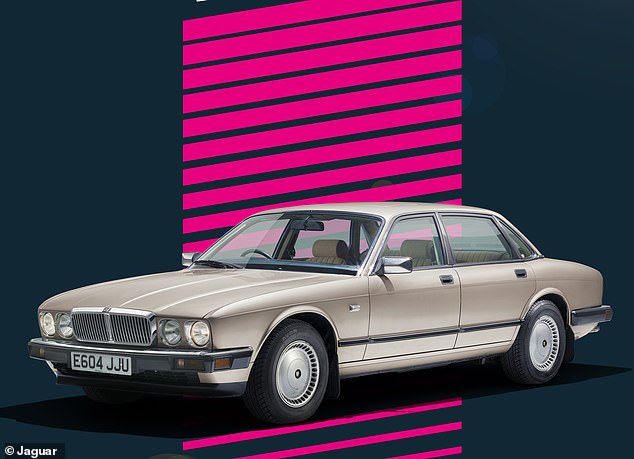
The second generation of Jaguar's XJ faced significant delays. Having been put into development in the early 1970s, the seventies fuel crisis and financial woes at British Leyland delayed the project by well over a decade.
As such, the XJ40 didn't turn up until 1986, by which point it already looked dated against premium rivals.
But the XJ40 was - and still is - a luxurious barge to drive. Sadly, some of its entry engines are a bit gutless, though the six-cylinder variants that emerged later are the pick of the bunch.
Earlier models suffered electrical gremlins, which did nothing for Jaguar's reputation at the time. However, these were ironed out by the middle of the production run.
Relatively overlooked by the classic car fraternity, a good example is likely to set buyers back around £5,000 today.
Cars & Motoring Verdict: Forgettable
Lamborghini LM002 (1986-1993)
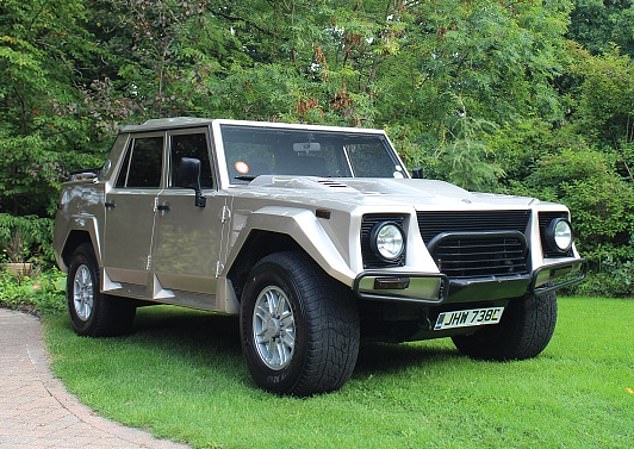
Plenty of supercar companies now make a 'hyper-SUV'. Aston Martin has the DBX. Ferrari has its Purosangue. And Lamborghini's Urus is its global best-seller.
But wind the clocks back 40 years and the thought of putting supercar performance into a massive 4X4 package seemed bonkers. And that's exactly what the Lamborghini LM002 was.
Dubbed the 'Rambo Lambo', it made production in limited numbers after the LM001 military vehicle project had failed. And it dwarfed a Mercedes G-Wagen (also with an army background) when it debuted at the 1986 Brussels Auto Show with jaw-dropping dimensions.
Weighing 2.7 tonnes, measuring in at 4.8-litres long and powered by the naturally-aspirated 450bhp 5.2-litre V12 engine lifted from a Countach 5000 QV, it was like nothing else that had graced the road. It was luxurious too, with a plush cabin.
It had tank-like looks, with a boxy body carved out of fibreglass and aluminium.
Around just 300 were produced and it was priced at $120,000. The super rich snapped them all up pretty quickly, too. Today, they're worth up to six times their original value, with the most expensive sold at auction in 2024 for $703,500.
Cars & Motoring Verdict: Collectable
Porsche 959 (1986-1989)
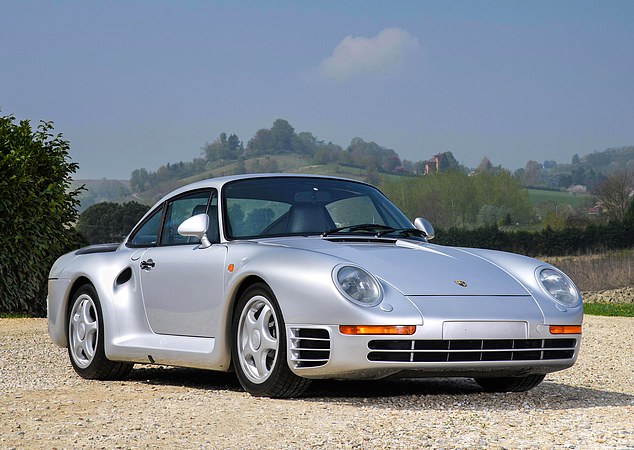
The late-1980s spawned one of the greatest supercar match-ups of all time: Porsche 959 versus Ferrari F40.
The Porsche - first unveiled in 1985, though production was delayed to 1986 and first deliveries a year later - was a model bursting with innovative technology that comprehensively reshaped supercar performance.
This included its adjustable active suspension, electronically controlled all-wheel drive system and sequential twin turbo-charged engine, making it the most advanced road-going sports car on the planet.
While both Porsche and Ferrari were pushing for a 200mph top speed, the 959 mustered just 197mph - though a rarer S version did eventually surpass the milestone by going 211mph flat out. The F40 beat it to the threshold, though, officially listed in '97 with a top speed of 201mph.
The 959 is still considered one of the greatest Porsches in history and an automotive engineering masterpiece. As such, when any of the 337 examples are offered at auction, they sell for well over £2million.
Cars & Motoring Verdict: Collectable
Renault 21 (1986-1994)
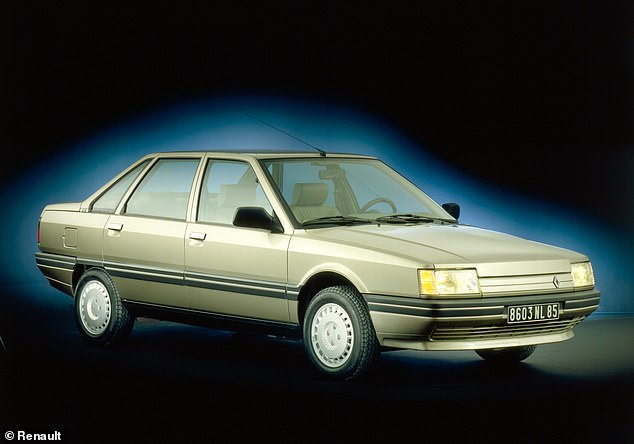
The Renault 21 was the French company's answer to the Ford Sierra and Vauxhall Cavalier, bidding to become a favourite among families as well as fleet operators.
Arguably, it was the most attractive of the three, with the design penned by styling house by Giugiaro.
Oddly, given the impact on production costs, the 21 was offered with two drivetrain configurations; while the 1.7-litre version was transversely mounted (across the engine bay), turbocharged 2.0-litre cars were longitudinally positioned.
Numbers in the UK disappeared dramatically in the 2000s. While there were nearly 100,000 examples on the road in 1995, these volumes had dwindled to 15,000 by a decade later, How Many Left says.
Today, DVLA records show there are around just 40 registered on the road - though there's approximately ten times as many off the road as SORN.
Cars & Motoring Verdict: Forgettable
Rover 800 (1986-1999)
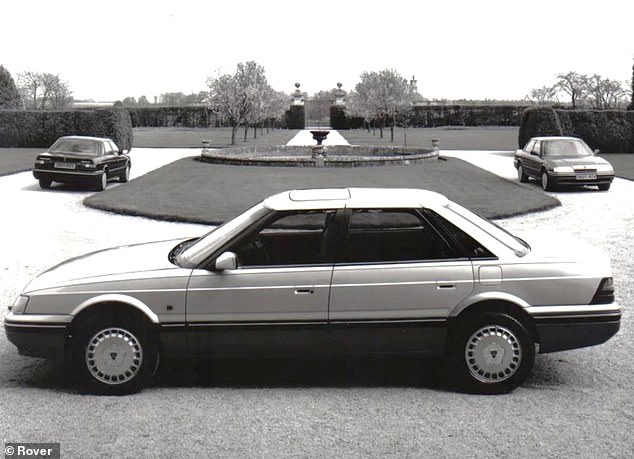
The Rover 800 had a difficult challenge ahead of it when it emerged in 1986 as the direct replacement for the SD1. And, under British Leyland's stewardship, it's little surprise that it didn't live up to its billing.
Sophisticated - especially by British car standards - and available with a choice of solid engines, it should have ticked the right boxes to be a sales success. But early build issues flat-lined the 800's reputation.
That said, examples with the 2.5-litre Honda-borrowed V6 engine are going up in value, according to experts.
In its heyday of the mid-nineties, there were around 130,000 on the road. Fast forward to today and DVLA records suggest there are around 250 still in use.
Cars & Motoring Verdict: Forgettable
Volvo 480 (1986-1995)
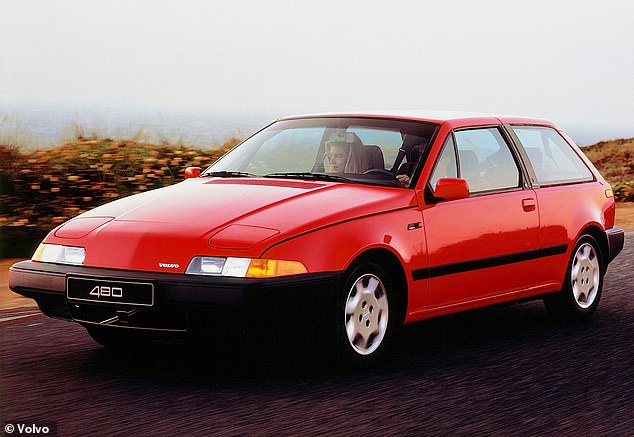
The 480 is Volvo's first front-wheel drive car. But more importantly than that, it was a huge diversion from the boring boxy cars for which Volvo had become notorious. Instead, it was a rakish hatchback that went against the manufacturer's conservative traditions.
From the front, the wedge-inspired design looked sleek and boasted the iconic eighties pop-up headlamps with a tiny grille concealed below the bumper. To the rear, it had a frameless glass hatchback, similar to that of the 1800ES.
One of its unique features was its semi-digital instrument cluster and what was marketed as an 'electronic information centre' that displayed oil, water, and outside air temperatures as well as average speed and fuel consumption. It is clever too, automatically engaging the rear windscreen wipers if the driver selects reverse gear while the front wipers are activated.
Oddly, it also had pillar-mounted locks that were separate from the door handles.
It debuted with Renault-derived 1.7 and 2.0-litre engines, but latter models added turbocharging and improved grunt. Despite its rarity (with a little over 100 examples believed to still be on UK roads) and its bold design, it's still unlikely to become a truly collectable car.
Cars & Motoring Verdict: Forgettable


No comments:
Post a Comment