
Hazardous material from WA's biggest lithium-ion battery fire in Maddington to be removed by tomorrow
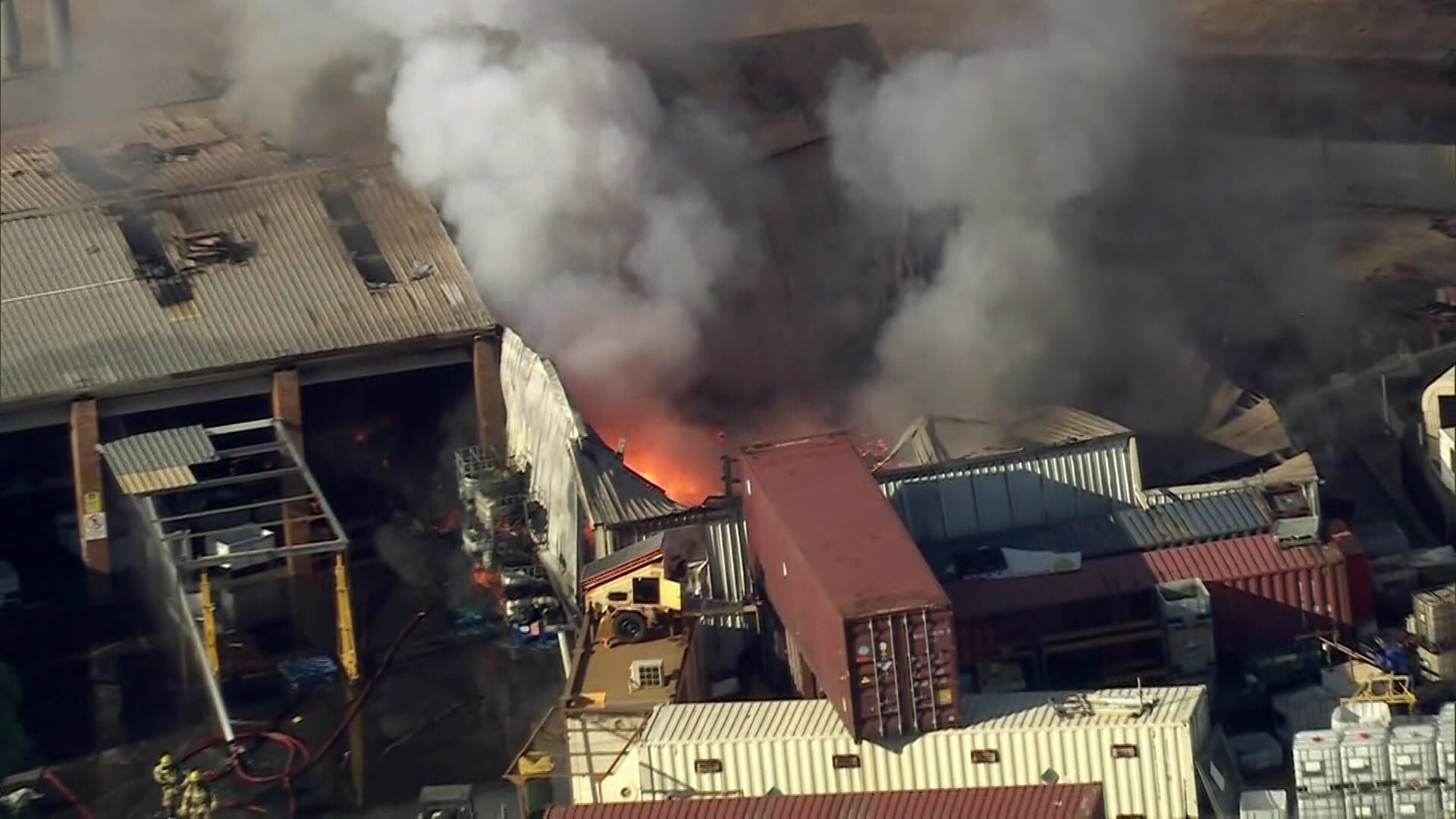
Schools in Perth's south-east have been deemed safe for students to attend tomorrow after WA's biggest lithium-ion battery fire sparked a HAZMAT warning in Maddington, which is still in place.
The huge blaze broke out at Li-ion Energy, a lithium battery recycling facility, on Burwash Place on April 12, prompting concern about the health impacts of exposure to toxic chemicals.
As the school holidays draw to a close, Premier Roger Cook has assured parents it is safe to send their children to schools in the area for the first day of term.
"I know that the schools have all undergone a thorough cleaning so we don't anticipate any danger to the students when they go back to school," he said.
The Department of Fire and Emergency Services (DFES) said specialists were aiming to remove the hazardous waste by Monday, but a HAZMAT warning remains in place advising people to stay away from the area, as air quality testing is carried out.
Health testing
The Department of Health's acting executive director of environmental health, Tanya Gillett, told a community meeting in Maddington on Friday evening that preliminary testing did not indicate any levels exceeding public health standards.
"There shouldn't be any further escalation [in smoke], because the material is being removed from site, however, if you find you are having any symptoms I urge you to get medical advice," she said.
Further testing is underway — with samples taken from surrounding areas — which is being analysed by the state's chemical analysis service, ChemCentre.
The centre's Mitch Walker said chemists were "working around the clock" to complete testing as quickly as possible.
"This is new emerging technology with emerging risks that we're still all trying to get our heads around how best to manage," he said.
An unprecedented fire
The facility contained 100 tonnes of three types of battery — lithium ion, lithium metal and lead acid — making it the largest fire of its kind in Western Australia.
But it was the mixture of materials that made it difficult to extinguish, DFES incident controller Leigh Bishop told the community meeting.
"Lithium-ion is a very new space for all agencies," he said.
"When you're dealing with different types of the batteries themselves, it's really tricky to try put strategies together to try and either mitigate or suppress that fire."
Mr Bishop said rainfall on Wednesday had reacted with the material, causing a flare-up.
Thermal imaging showed parts of the site reached 400 degrees.
DFES district officer Andrew Suren said specialists were working to remove the hazardous waste by Monday.
"What we've done to safely remove the product is putting the products into bins, 20-foot containers, and then covering it with sand, which helps to minimise any off-gassing and impacts to the community," he said
"We have had to consult with a lot of experts to figure out the safe way to remove and transport the product."
He said the risk of reignition was low but can not be ruled out.
Increase in lithium-ion battery fires
DFES deputy commissioner Craig Waters said there had been a significant increase in lithium-ion battery fires over the past few years.
"It's extremely difficult to extinguish with our normal extinguishing medium of either water or foam," he said.
"But it's one of those things we have to maintain a presence there to make sure it doesn't reignite."
DFES chief superintendent for Metro South Scott Hares said the combination of materials made it complicated to manage.
"We fight fires for those three different types of batteries in different ways, what works for one will not work for another," he told 102.5 ABC Perth.
"It's extremely difficult to extinguish these using conventional firefighting techniques, but we're doing our best to protect the community."
Superintendent Hares added that DFES had responded to 63 lithium battery fires so far this year — around four per week.
Post a Comment for "Hazardous material from WA's biggest lithium-ion battery fire in Maddington to be removed by tomorrow"