
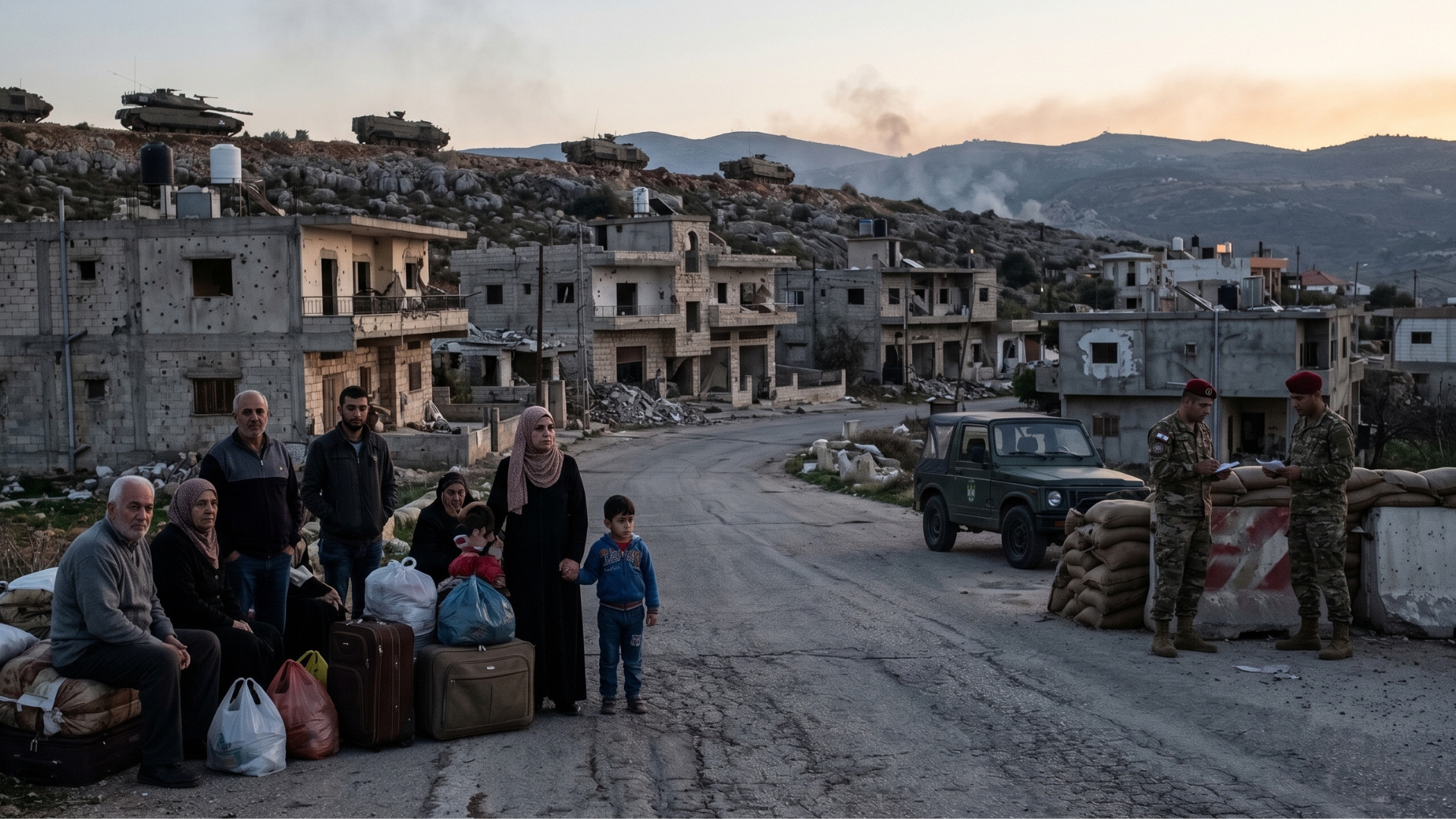
Israel is keeping troops inside southern Lebanon even as the new 10-day ceasefire takes effect, underlining that the agreement is a narrow de-escalation measure rather than a full military pullback. Israeli Prime Minister Benjamin Netanyahu said forces would remain in a 10-kilometer security zone, while reporting from AP and other outlets described the truce as one that bars offensive action but still allows Israel to claim self-defense.
For Lebanese civilians, that distinction has immediate consequences. Families weighing whether to return to damaged towns in the south are being told the war has paused, but not fully ended, because troops remain in place and shelling was reported shortly after the ceasefire began. AP and the Guardian both reported warnings against rushing back to conflict-hit areas, showing that the presence of Israeli forces is not just a military detail but a daily safety issue for displaced residents.
What Israel Is Doing on the Ground
The clearest reported fact is that Israeli troops are not withdrawing as the ceasefire starts. AP reported that Israeli forces will remain in an expanded security zone in southern Lebanon, and Netanyahu specifically said troops would stay in a 10-kilometer zone inside Lebanese territory. The Washington Post likewise described Israeli forces remaining in a reinforced security buffer zone despite the deal.
That means the ceasefire is not restoring the pre-conflict status quo on the border. Instead, it freezes the conflict at a moment when Israeli forces still hold positions on Lebanese soil. This is an inference drawn from the continued troop presence described by AP and the Post.
Why Israel Says Troops Are Staying
Israeli officials are framing the continued deployment as a security necessity tied to Hezbollah. The Guardian reported that Netanyahu said Hezbollah’s disarmament remains a precondition for peace, while AP said the ceasefire still allows Israel to act in self-defense. That combination helps explain Israel’s position: it is treating the troop presence as both a deterrent and a hedge against the truce collapsing.
The political message is also straightforward. Netanyahu is signaling that Israel does not regard the ceasefire as requiring an immediate retreat, but as a pause that still leaves it freedom to enforce a security line in the south. That is an inference based on his reported insistence on keeping troops in the security zone and on the self-defense carveout in the agreement.
Why This Makes the Ceasefire Fragile
The troop issue goes to the heart of why the truce remains unstable. AP reported that Hezbollah indicated it would retaliate against Israeli attacks, and the Guardian said the group agreed to the truce only as long as Israel also halts hostilities. If Israel keeps soldiers in southern Lebanon while reserving the right to strike, Hezbollah still has grounds to say the conflict has not truly ended.
That tension was visible almost immediately. AP reported artillery shelling in southern Lebanon shortly after the ceasefire began, and the Guardian’s live coverage said intermittent shelling and gunfire were reported as the truce took effect. Those early incidents do not prove the ceasefire has failed, but they do show how easily a continued Israeli military presence can feed accusations of violation and trigger renewed violence.
A Ceasefire Without Full Withdrawal
The diplomatic structure of the deal also makes the troop issue harder to solve. AP reported that the ceasefire was formally presented as one between Israel and Lebanon, even though the actual fighting has centered on Hezbollah, which was not a party to the agreement. That leaves Lebanon’s government able to endorse a truce, but not fully able to determine whether the main armed confrontation on its territory truly stops.
In practice, that means one of the central military facts on the ground, Israeli troops remaining inside southern Lebanon, sits alongside a diplomatic framework that still lacks a full settlement on Hezbollah, border security and disarmament. This is an inference based on AP’s description of the agreement and the unresolved conditions reported by the Guardian.
What Comes Next
The next test is whether the 10-day pause can survive with Israeli forces still deployed. If the troop presence remains limited and the ceasefire suppresses most violence, negotiators may try to turn the arrangement into broader talks. But if either side treats the continued deployment as grounds for retaliation, the truce could unravel before diplomacy has time to mature. That is an inference based on the early shelling reports, Hezbollah’s warning and Israel’s stated intent to stay in the security zone.
For now, the most accurate conclusion is that Israel has not ended its military footprint in southern Lebanon. It has agreed to pause offensive operations while keeping troops in place, a formula that may buy time for diplomacy but also leaves one of the conflict’s most explosive issues unresolved.


No comments:
Post a Comment