
'My husband was the love of my life. I still had to leave him.'
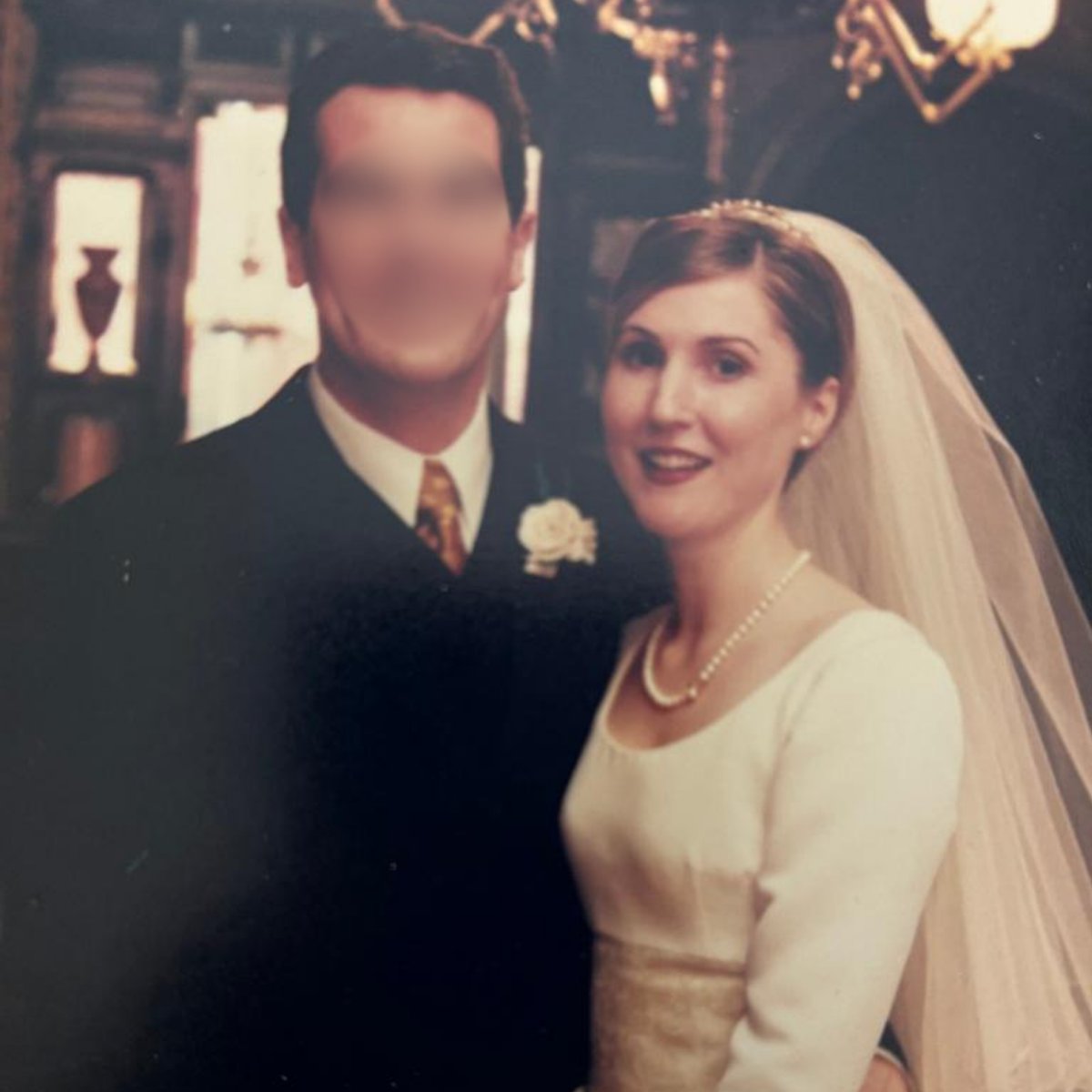
The father of my children was the love of my life. He was destined to remain my life's greatest romantic love.
And I left him – after he left me first.
People assume divorce happens when the love runs out. That a marriage ends because the feelings fade or the relationship turns bitter or toxic.
Watch: The hosts of Out Loud discuss the 'aloof wife'. Post continues below.
But sometimes that isn't what happens at all.
Sometimes the love stays.
Sometimes the person you divorce remains the great love story of your life – even as the marriage itself quietly collapses.
That was my marriage.
We met in our late twenties, working in the same profession – journalism in the 1990s – Murdoch newspapers that demanded long hours and rewarded them with long nights celebrating afterwards.
Deadlines. Stories. Front Pages. Drinks.
And then more drinks.
He was the kind of man people gathered around at parties. Funny, magnetic, endlessly charming. The last person to leave a room and the first person everyone noticed when he walked in.
I fell in love with him almost instantly.
Life with him felt like one long adventure. We travelled whenever we could, stayed out too late and laughed constantly. It was passionate and heady in the way relationships often are when you're young and convinced the future will unfold exactly as you imagine.
When we married, I believed with absolute certainty that he was my person.
Then we had children.
And like it does for so many couples, life tilted onto a completely different axis.
Suddenly my days revolved around the steady rhythms of family life: dinner, baths, bedtime stories. The small domestic rituals that fill evenings when children are young.
Meanwhile, his career gathered speed.
Promotions. Opportunities. After-hours events that were "important for work". Networking dinners that stretched late into the night.
At first, I understood. I had once lived in that professional world too and it was all future-creating stuff.
But slowly the gap between our two lives widened.
I was home managing the chaos of evenings with young children – three under four – while he was still out socialising, networking, building a career.
One night stands out clearly in my memory.
I was standing in the kitchen, the house finally quiet after the bedtime routine. The dishes were stacked in the sink and the clock on the oven read 9.47pm.
I called him to ask when he might be home.
There was noise in the background – laughter, glasses clinking, music.
"Soon," he said.
I remember standing there for a moment after the call ended, looking around the empty kitchen.
It was the first time I realised how alone I felt inside my own marriage. He wasn't home "soon" and it became an all too familiar habit and pattern.
By my early thirties, something else had quietly slipped away too.
My identity.
Motherhood had become my entire world while his continued expanding outward. Work drinks, awards, celebrations, late nights that blurred into early mornings.
There were evenings when it felt less like I was raising three children and more like I was raising four.
He had what I can only describe as a Peter Pan quality. The life of every gathering, adored by friends, funny and charismatic.
But also, someone who struggled to fully land in the responsibilities of family life.
Over time, I began to suspect there might be more than just work and socialising keeping him away. Nothing dramatic at first – just small signs that slowly began to add up.
A quiet unease.
A feeling that something wasn't quite right.
Around that time, we stopped sharing a bed.
Like many changes in long relationships, it didn't happen suddenly. One night apart became several. Eventually, separate rooms became the new normal.
I told him eventually that things couldn't continue the way they were.
I needed him to show up for our life.
For our children.
For me.
To his credit, he did try – for a while. There were weeks when he came home earlier, helped with dinner, stepped back into the rhythms of family life.
But old habits have a gravitational pull.
Slowly the late nights crept back in. The drinks. The parties. The sense that our family existed somewhere on the edge of his world rather than at its centre.
Eventually I reached a moment of clarity.
I told him I was done.
What surprised me most was what didn't happen next.
He didn't fight for us.
I had imagined arguments or promises, some desperate attempt to hold the marriage together.
Instead, there was a quiet acceptance.
If anything, the separation seemed to give him permission to lean further into the life he had already been living. More partying. More drinking. A revolving door of women.
It hurt to watch.
But it was also clarifying.
For a long time afterwards, people asked whether I would like to meet someone new.
I did have one significant relationship after our divorce. It was, to put it kindly, a disaster.
Since then, I have chosen not to partner again.
Friends sometimes encourage it. Family occasionally suggests it might be nice to have someone to grow old with.
And I understand what they mean.
But the life I have built now feels balanced in a way that took years to achieve.
My children are extraordinary young adults who fill my life with meaning. I have siblings I adore and friends who show up for me in ways that matter deeply.
My life is full.
Peaceful.
Do I sometimes worry about growing old without a partner? Of course.
But I also know that partnership is not the only path to a meaningful life.
And here is the truth that still surprises people when I say it out loud.
My ex-husband broke my heart.
But he will probably always remain the love of my life. Not because I want him back and not because I believe the marriage could have worked.
But because loving someone that deeply leaves a permanent imprint.
He gave me my children. He gave me years of adventure and passion and joy.
And he also taught me, in the most painful way possible, how to build a life that stands on its own.
Love stories don't always end neatly.
Sometimes they don't end at all.
Sometimes they simply change shape.
Feature image: Supplied.
Post a Comment for "'My husband was the love of my life. I still had to leave him.'"