
Russia sends 3 tons of supplies to the ISS in high-stakes orbital resupply mission
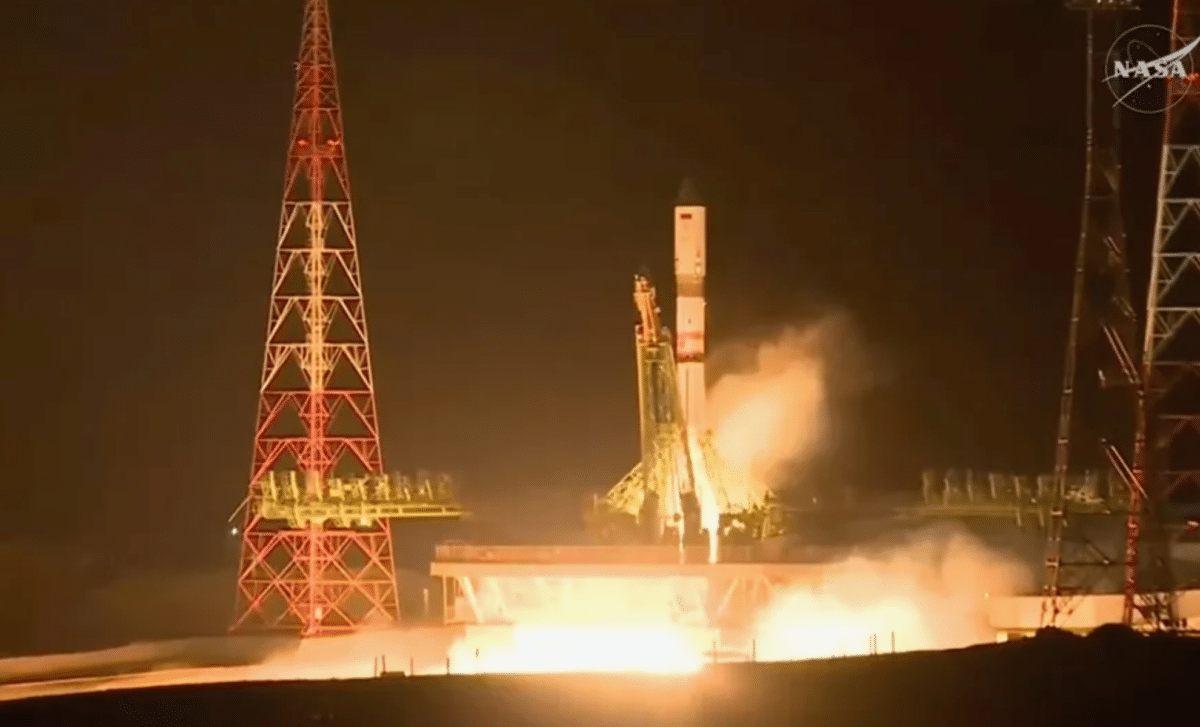
A fresh wave of supplies is now racing toward the International Space Station, as Russia launched its latest Progress 95 cargo spacecraft on April 25, marking a critical step in sustaining human life and operations in orbit.
A Precise Launch From Baikonur Cosmodrome
The mission began with a flawless liftoff from the historic Baikonur Cosmodrome in Kazakhstan, where a Soyuz rocket roared into the night sky at exactly 6:21 p.m. EDT. The timing reflects the extreme precision required for orbital rendezvous missions, where even minor deviations can compromise docking operations hundreds of kilometers above Earth.
The payload, the uncrewed Progress 95 freighter, carries nearly three tons of essential cargo, including food, fuel, and mission-critical equipment. These shipments are not routine deliveries; they are lifelines that ensure astronauts can continue research, maintenance, and survival aboard the orbiting laboratory.
Such launches remain a cornerstone of international space collaboration, even amid geopolitical tensions on Earth. The ability to maintain a steady logistical chain to the ISS highlights the resilience and continuity of space operations in low Earth orbit.
Docking Timeline And Orbital Coordination
The spacecraft is scheduled to dock with the ISS on April 27 at approximately 8 p.m. EDT, executing a carefully choreographed approach that relies on automated navigation systems. The docking will occur at a port recently vacated by Progress 93, demonstrating the continuous cycle of arrivals and departures that keep the station operational.
This orbital traffic management is a complex ballet involving multiple spacecraft from different nations. Each vehicle must align perfectly with the station’s velocity and trajectory, ensuring a smooth and safe connection.
According to details reported by Space.com, this mission represents the second Progress launch of the year, reinforcing Russia’s ongoing role in ISS resupply efforts. The previous mission, Progress 94, successfully reached the station despite a technical issue involving a docking antenna, underscoring the robustness of these systems.
The Lifecycle Of A Progress Spacecraft
Unlike some modern spacecraft, Progress vehicles are designed for single-use missions. After completing their role, they are filled with waste and deliberately deorbited, burning up in Earth’s atmosphere over remote ocean regions.
This controlled destruction serves a dual purpose: it safely disposes of station waste and prevents space debris accumulation in orbit. Progress 93 followed this exact path after departing the ISS on April 20, clearing the way for the incoming Progress 95.
The current mission is expected to last about seven months before meeting the same fate. This predictable lifecycle allows mission planners to maintain a steady cadence of launches and replacements, ensuring uninterrupted support for the station’s crew.
A Competitive And Collaborative Supply Network
The ISS relies on a diverse fleet of cargo spacecraft, each contributing unique capabilities. Alongside Russia’s Progress, missions are supported by Japan’s HTV-X, Northrop Grumman’s Cygnus, and SpaceX’s Dragon capsule. Among these, Dragon stands out as the only reusable option, capable of returning cargo to Earth with parachute-assisted ocean landings. This capability allows scientists to retrieve experiment results and hardware, adding a crucial dimension to station logistics.
The coexistence of expendable and reusable systems reflects a broader evolution in spaceflight strategy, balancing cost, reliability, and functionality. As commercial and national programs expand, this network continues to evolve, shaping the future of orbital infrastructure.
Sustaining Life And Science In Orbit
Every cargo mission directly supports the astronauts living aboard the ISS, enabling groundbreaking research in microgravity. From biological experiments to advanced materials science, these investigations depend on a constant flow of supplies and equipment.
The arrival of Progress 95 will replenish critical resources and ensure that ongoing experiments can continue without interruption. In a broader sense, each successful mission reinforces humanity’s ability to maintain a permanent presence in space. As the ISS approaches the later stages of its operational life, missions like this highlight the enduring importance of international cooperation and logistical precision in space exploration.
Enjoyed this article? Subscribe to our free newsletter for engaging stories, exclusive content, and the latest news.
Post a Comment for "Russia sends 3 tons of supplies to the ISS in high-stakes orbital resupply mission"