
Sánchez's Anti-Trump Gambit: A Lifeline for Spain?
Global Left Unites in Barcelona to Counter "Reactionary Wave"
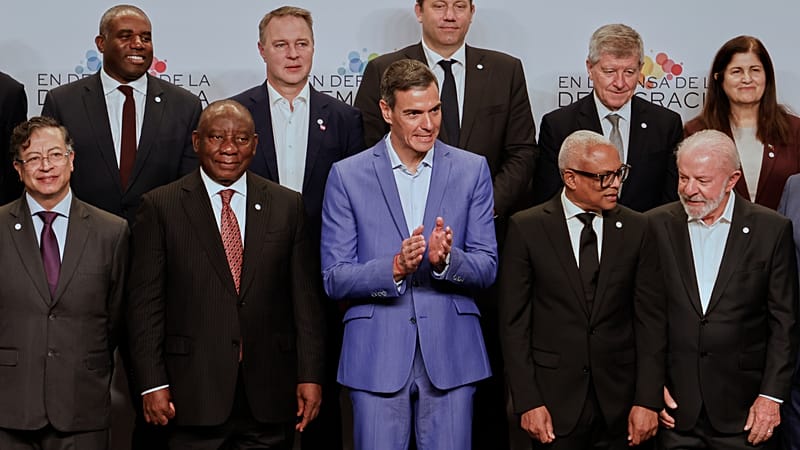 Spanish Prime Minister Pedro Sánchez has positioned himself as a leading voice for the international left, rallying global leaders in Barcelona over the weekend for a two-day convention. Billed as a progressive counterpart to the conservative CPAC gathering, the event aimed to forge a united front against what Sánchez described as a growing "reactionary wave" of hate speech, sexism, war, and division.
During a powerful address on Saturday, Sánchez declared, "It doesn't matter how much they scream, or how many lies they spread. The time for the reactionary, ultra-right has come to an end." His sentiments were echoed by Brazilian President Luiz Inácio Lula da Silva, who criticised individuals who "call themselves patriots but put their sovereignty up for sale and call for sanctions." The palpable anti-war sentiment was evident, with chants of "No to war" resonating through the Fira auditorium.
The distinguished guest list featured prominent leaders from across the globe, including:
- South African President Cyril Ramaphosa
- Colombian President Gustavo Petro
- Mexican President Claudia Sheinbaum
These leaders, along with others in attendance, have previously found themselves at odds with former US President Donald Trump on issues such as trade tariffs and migration policies. South Africa, in particular, has also navigated accusations of "anti-white" racism, a narrative amplified by tech billionaire Elon Musk.
The European contingent was equally robust, comprising:
- German Vice-Chancellor Lars Klingbeil
- UK Foreign Secretary David Lammy
- Italy’s opposition leader Elly Schlein
- Belgian politician Paul Magnette
Renowned "tax-the-rich" economist Gabriel Zucman also lent his expertise to the discussions. Notably, European Council President António Costa was forced to withdraw at the last minute due to personal reasons, a decision that may have been influenced by the overtly political nature of the gathering.
Mexican President Sheinbaum participated in sessions focused on safeguarding democracies but opted out of the more politically charged rally on Saturday. This decision is understandable given the ongoing review of the US-Mexico-Canada trade agreement by the Trump administration and the delicate negotiations surrounding its terms.
A Progressive Answer to Global Challenges
The Barcelona conference, conceived as a left-wing response to the conservative CPAC, was designed to consolidate "progressive forces" under a unified banner. Sources close to the event indicated that Brazil had initially proposed an earlier date in the spring, with April ultimately being selected.
While specific references to former US President Donald Trump were often indirect, his policies and rhetoric were a recurring theme. From trade disputes to international conflicts, speakers advocated for a progressive approach to counter what they perceived as a "reactionary wave."
Minnesota Governor Tim Walz, who previously ran as Kamala Harris's running mate in her unsuccessful bid against Trump, delivered a forceful speech. He characterised Trump as "trigger-happy" and lacking a coherent plan, going so far as to label the former president's apparent authoritarian tendencies as "fascism. Or at least it's fascist curious as they would be."
President Lula of Brazil also voiced strong criticism of the war in Iran, commending Spain's decision to deny US forces access to Spanish military bases for potential strikes. "I want to salute friend, Pedro Sánchez, for having the courage (to say no)," Lula remarked, underscoring the significance of Sánchez's independent stance.
Navigating Domestic Turbulence
Sánchez's assertive international positioning, particularly his independent stances on issues like the conflict in Gaza and the war in Iran, has undeniably amplified his global profile and solidified his leadership within a bloc of left-wing leaders. This strategic move to capitalise on public sentiment, particularly regarding the war in Iran and Trump's unpopularity, has garnered him international acclaim, though it has also drawn criticism from the White House.
Former President Trump has publicly expressed his desire to "have nothing to do with Spain" and has been critical of Sánchez's leadership, questioning Spain's contributions to NATO. He has also alluded to potential trade blockades, though no concrete measures have materialised.
The Barcelona convention concluded a particularly challenging week for the Spanish Prime Minister. His wife, Begoña Gómez, is facing corruption charges and is scheduled to stand trial following a two-year investigation. Both Sánchez and Gómez have vehemently denied any wrongdoing. Sources close to the Prime Minister maintain that the case is politically motivated and express confidence in Gómez's eventual acquittal. Despite these domestic pressures, Sánchez has demonstrated a remarkable ability to project a strong international presence, rallying global progressives and setting a clear agenda for the left on the world stage.
Post a Comment for "Sánchez's Anti-Trump Gambit: A Lifeline for Spain?"