
Bato dela Rosa’s Disappearing Act
A Turbulent Return to the Senate
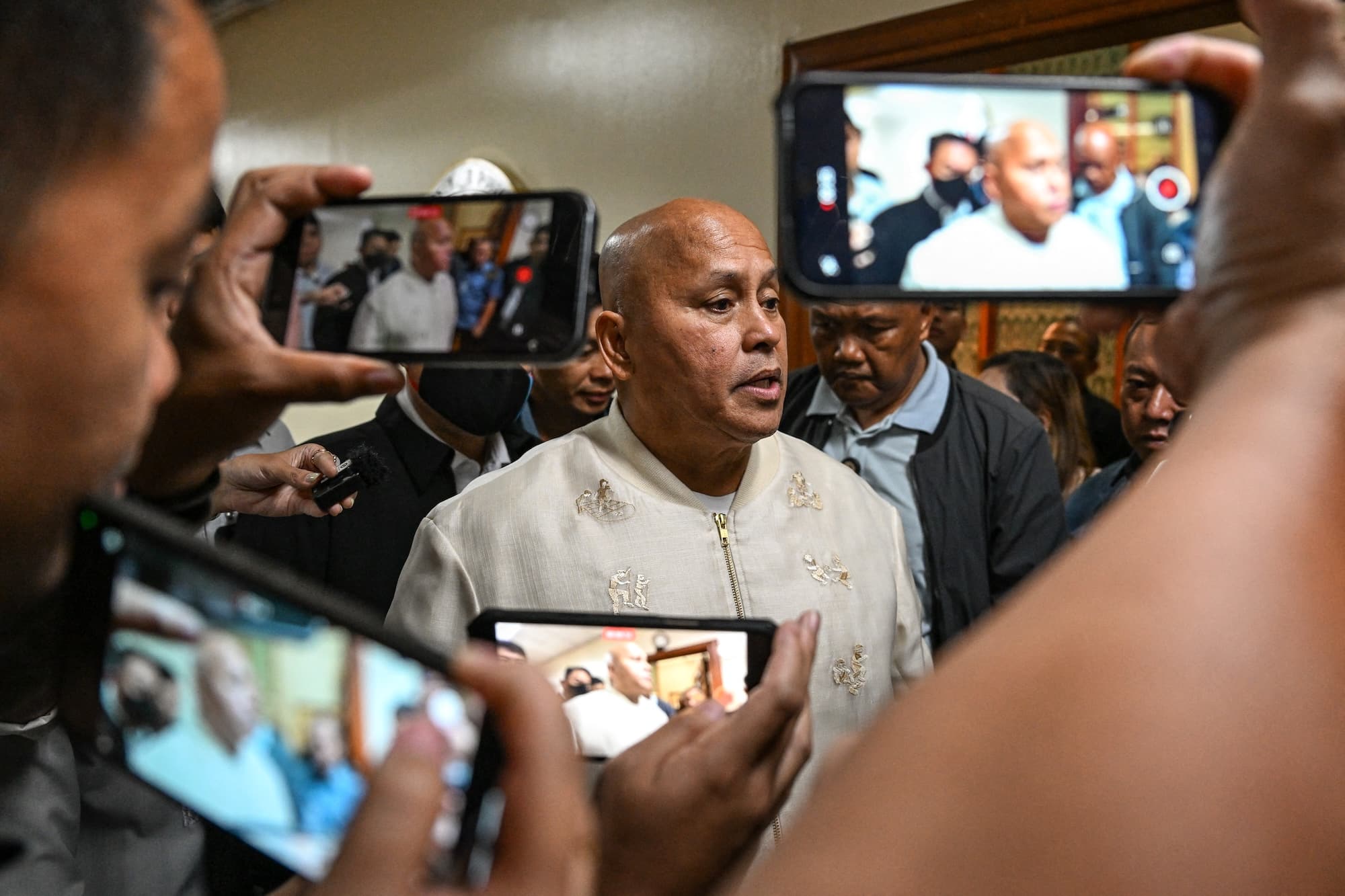
Sen. Ronald “Bato” dela Rosa’s unexpected return to the Senate floor on Monday, May 11, was marked by a series of dramatic events. Within just three days of his re-emergence, several incidents unfolded: a game of tag between dela Rosa and some National Bureau of Investigation (NBI) agents; a Senate coup that resulted in the removal of Senate President Vicente “Tito” Sotto III; a shooting incident inside the Senate building; and dela Rosa’s sudden escape shortly after the shooting.
These events are unprecedented in recent history and pose a threat to the sanctity and stability of the political system. However, as with any distraction, it’s essential not to lose sight of what truly matters. It’s all smoke and mirrors.
Timing is Everything
On the same day that the House of Representatives voted 257 to 25 to impeach Vice President Sara Duterte, transmitting the articles of impeachment to the Senate for trial, then-Senate President Tito Sotto was unceremoniously impeached by 13 out of 24 senators.
According to an Impeachment Primer prepared by the UP College of Law, the Senate must convene as an impeachment court once the House succeeds in impeaching an official. The process requires at least two-thirds (2/3) of all members of the Senate to vote guilty on one article for a conviction. If no single article receives the required votes, the impeached official is acquitted.
The Impeachment Primer also states that senators are sworn to political neutrality regardless of party affiliation or preference during an impeachment court. However, with both the majority and newly-elected Senate President Alan Peter Cayetano—known allies of the Dutertes—neutrality seems unlikely.
A two-thirds majority vote, or 16 out of 24 senators, is needed for a conviction. With 13 already likely to vote in favor of the vice president, this puts them in a strong position.
Alliances and Investigations
While the sudden Senate coup raised questions about the stability of the legislative branch, Sen. Ping Lacson assured the public that ongoing investigations, particularly the flood control probe, would not be abandoned.
“Our findings would not go to waste. First of all, we already contributed to the preliminary investigation of the Department of Justice and Office of the Ombudsman, through testimonial and documentary evidence,” shared Lacson in an interview with DZMM radio. Lacson, who heads the Blue Ribbon Committee, did not vote in favor of ousting former Senate President Tito Sotto.
However, according to the Philippine Center for Investigative Journalism (PCIJ), “eleven of the 13 senators behind the Senate coup are facing active or unresolved investigations.” Six of them—Jinggoy Estrada, Chiz Escudero, Joel Villanueva, Mark Villar, Camille Villar, and Bong Go—are tied to ongoing flood-control corruption probes.
That said, the Senate majority has already shown the lengths they will go to protect their own, like in the case of dela Rosa. What more for the rest?
Priorities of the Political Elite
Despite his six-month absence, an animated dela Rosa stated on Monday that he returned to the Senate floor out of shame and duty. When asked if he merely showed up to bolster numbers for the ouster, he explained: “Lahat ‘yan trabaho ng senador.”
And what work did he exactly do? Sing in front of the cameras, cry victim, beg for due process, only to escape from prosecution. It’s clear that at least for dela Rosa, the roles and responsibilities of a senator only matter when it’s invoked for personal gain. But what about those who rely on the Senate for their advocacies and livelihoods?
Case in point: the farmers. According to farmer advocate chef Waya Araos-Wijangco, on May 11, farmers gathered to appear before the Senate Committee on Agriculture to talk about the various challenges they’re currently facing—including rising fertilizer costs, imported vegetables undercutting local produce, and transport costs due to the oil crisis. However, despite making the journey to Manila from their provinces, their supposed dialogue was unceremoniously canceled in place of senseless politicking.
Araos-Wijangco says, “Our farmers came prepared with lived experience, practical solutions, and dignity. The Senate responded with cancellation notices and political theater. The senators have shown us clearly who they represent: themselves, their dynasties, their ambitions, their interests.”
Forget dela Rosa for a second; Sen. Robin Padilla also exemplifies this selfishness. In a separate discussion in the Senate, both Padilla and Sen. Kiko Pangilinan got into a heated exchange when the former kept intruding on Pangilinan’s turn to talk. The veteran senator then raised his voice, to which the actor-turned-politician cried foul and later claimed he would file an ethics complaint against him.
During the next day’s session, Pangilinan said there are more pressing matters than Padilla’s petty ethics complaint—to which the latter claimed there is nothing more important than discussing it. It seems that hurt feelings matter more than hearing out the plight of the Filipino people.
As it is, dela Rosa remains an “indirect co-perpetrator” in the nationwide drug war during his stint as Philippine National Police chief that led to the deaths of many Filipinos. This week’s fiasco only proves what the prosecution has been saying at The Hague—that the Philippine justice system, when left to its own devices, will not hold wrongdoers accountable for their crimes.
We simply saw the brazenness, the shamelessness—to what end they will go to avoid prosecution. The Senate just showed who they’re truly for. And it’s not us Filipinos.