
If you want to support independent women's media,become a subscriber. Get an all-access pass to everything we make, including exclusive podcasts, articles, videos and our exercise app, MOVE.
This article is an edited version of one that originally appeared on Claire Drinkwater's Substack. Sign up here.
Most people associate gap years with 18 to 20-year-olds exploring the world before their university studies.
When I decided to take a career break to travel at the age of 32, I worried I'd be the oldest person on the backpacker trail.
I had other worries too. Getting sick somewhere remote, having all my money stolen, or losing my passport and not being able to fly home. And — if I got back in one piece — how to explain this extended gap to recruiters.
Watch: These are the safest places to travel in 2026. Post continues below.
Eventually, I took the plunge and spent part of my savings on round-the-world flights, mapping out a 12-month itinerary. Concerned friends and family asked why I was 'running away', but by then I knew it was something I needed to do. So, I packed a large backpack and boarded the plane to India by myself.
I had no idea that this year would end up rerouting my life entirely.
The adult gap year is having a moment
The Associated Press recently ran a major piece on the growing number of adults taking extended career breaks, otherwise known as an 'adult gap year'. Plenty of mid-career professionals and empty-nesters are now, it says: "creating space for a reset, whether mental, physical or spiritual." It's not just for students with nothing to lose.
The story was picked up by international news outlets across the board. It follows Business Insider's series last month on adults taking gap years, which featured my own story. The fact that prestigious outlets are writing about this idea tells you how mainstream it has become.
The trend is being reflected in book publishing too. Author and Substacker Emma Gannon has just released A Year of Nothing, her memoir about stepping back from a successful career to heal from burnout. The conversation it has sparked has resonated with many people.
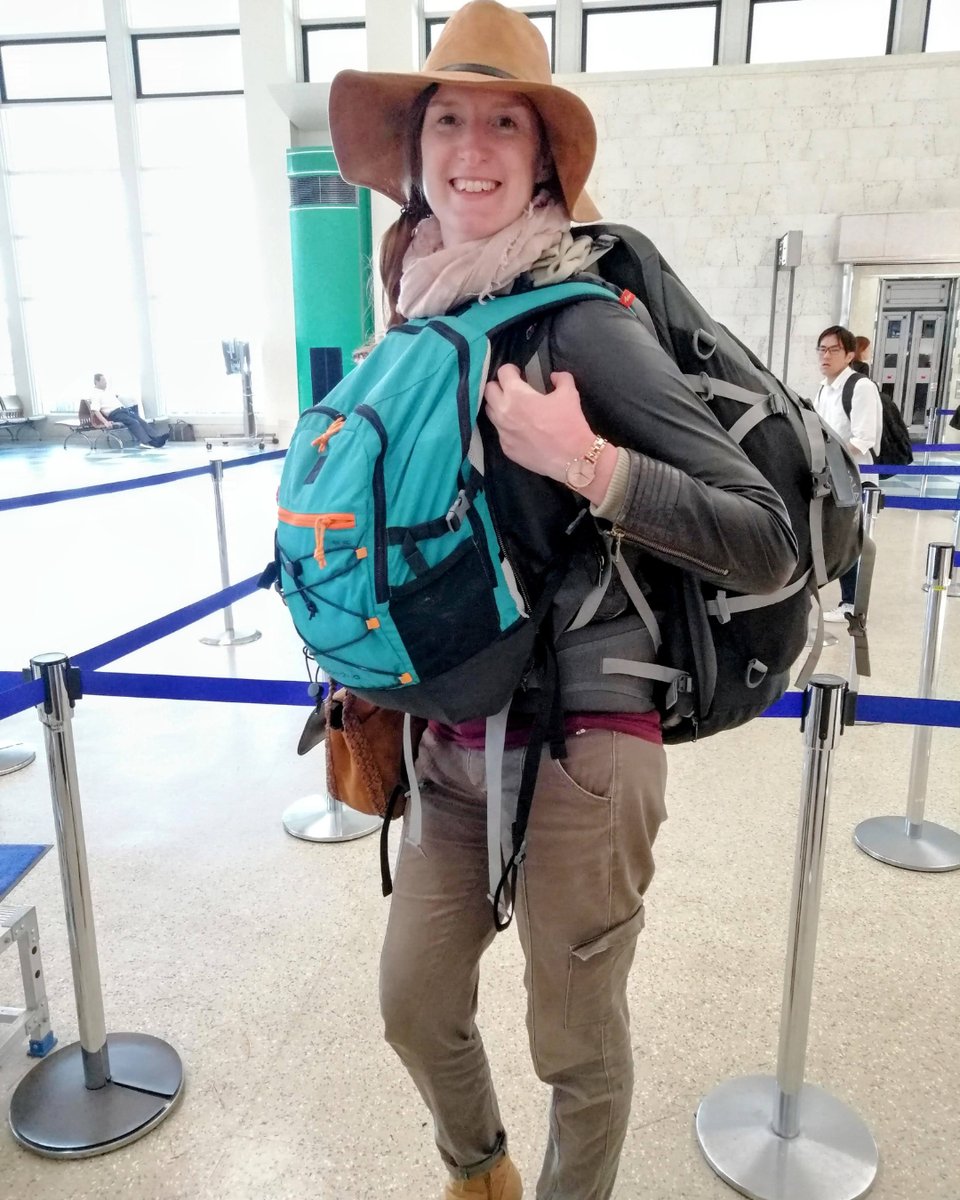 Claire Drinkwater travelling. Image: Supplied.
The reasons people leave
Research conducted last year revealed that nearly 4.9 million working people in the UK have taken a sabbatical. Almost half simply needed a break from work, while a third wanted time to re-evaluate their life. For the rest, it was about finding the right time to travel, such as before settling down to start a family.
It's not just in the UK. In 2022, LinkedIn found that almost two-thirds of professionals globally took a career break, and over a third want one.
This prompted LinkedIn to allow users to list a career break instead of a new position in the 'Experience' section of their profile. You can choose from options including travel, health and wellbeing, relocation and, of course, a gap year. Over a million people have already used it.
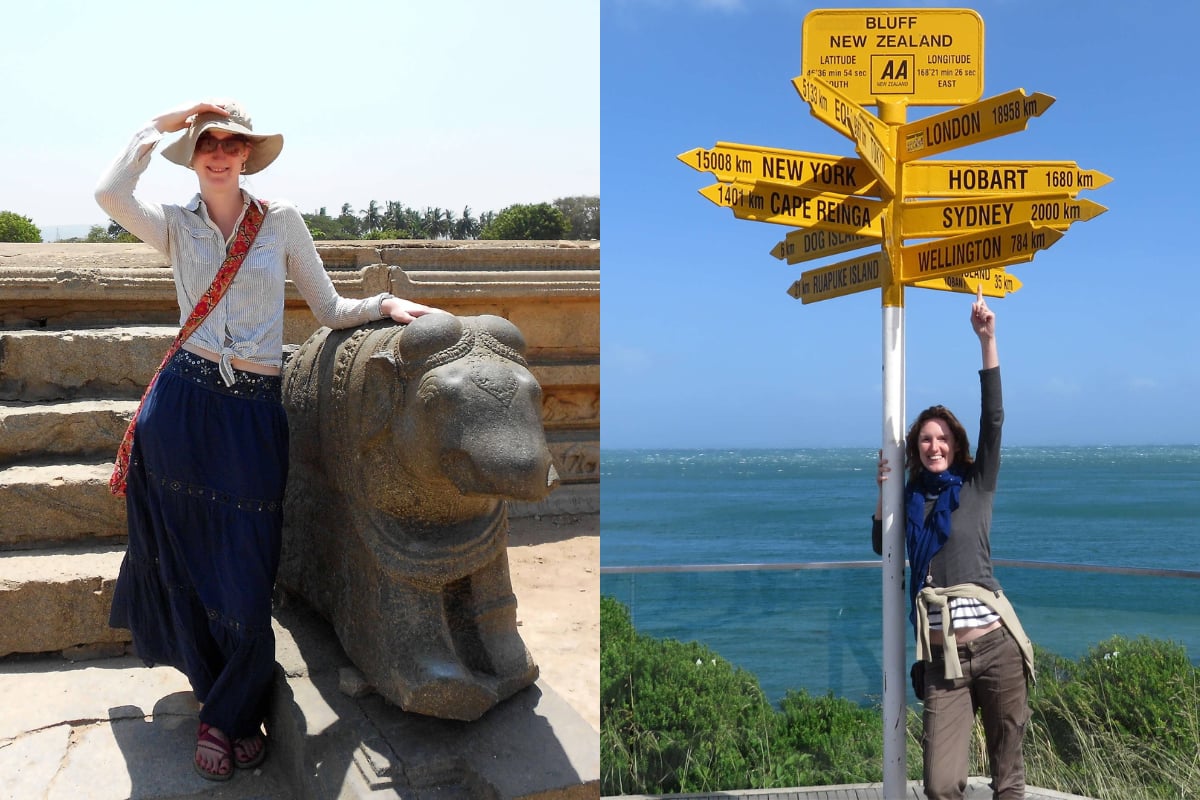 Claire Drinkwater's gap year re-routed her whole life. Image: Supplied.
What happened on my year away
This month, exactly 13 years ago, I had just arrived in Goa and was enjoying sunrise yoga classes on the beach. There, I discovered how to be alone again and unwind from the anxiety of my London life.
Every country on my year-long route taught me something new. In Malaysia, I overcame a fear of scuba diving and earned my PADI Open Water qualification. On my 33rd birthday, I arrived in Bali, where I learnt to treat myself with kindness. My itinerary took me to New Zealand, where I saw volcanoes on the way to my temp job, and to Chile, where I spotted shooting stars over the arid Atacama Desert.
These months of navigating new countries alone and making decisions by myself made me stronger and more confident.
But it wasn't all perfect. Along the way, some of the things I worried about did go wrong — as well as other things I didn't anticipate.
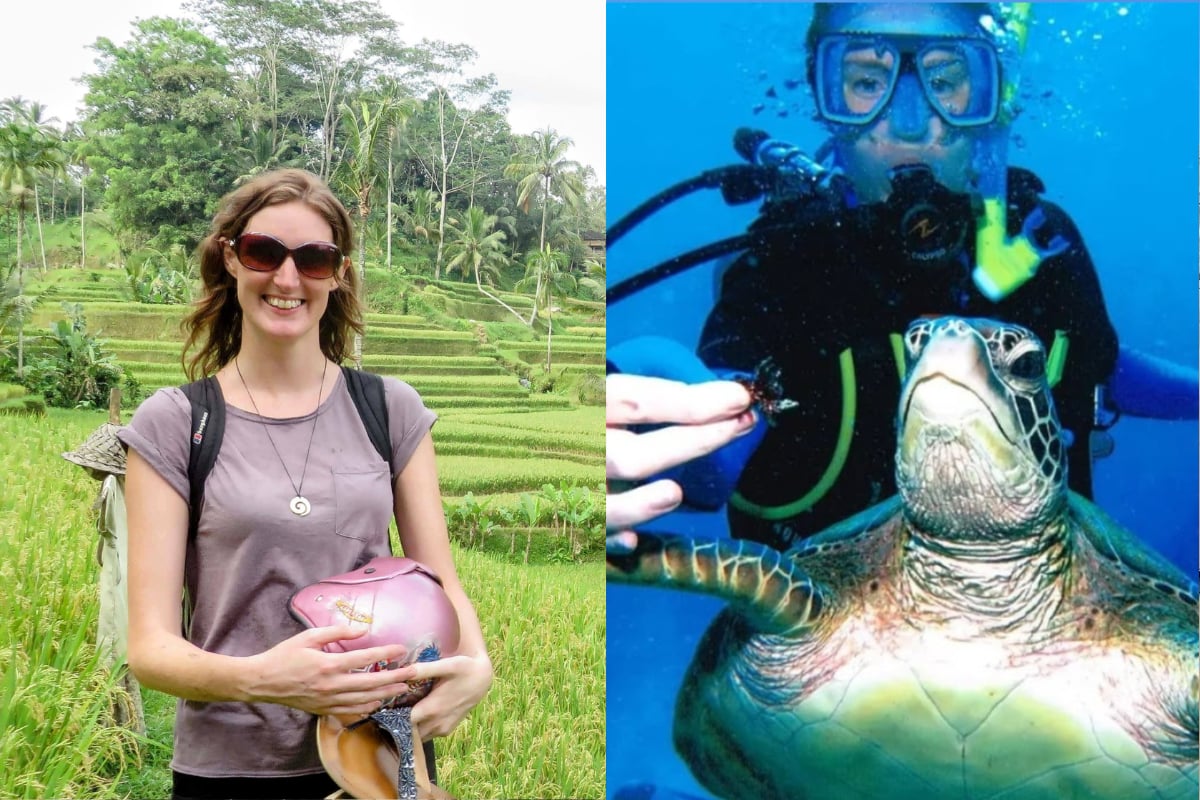 Claire on her travels. Image: Supplied.
The reality versus the fear.
Whether I was the oldest backpacker on the block didn't seem so important once I was on the road.
While there were plenty of people younger than me, I met some of my own age and others who were a decade older. When you meet people travelling in the same way as you, there's a natural affinity and feeling of shared experiences, no matter your age.
One day, about a month into my trip, some of my worst-case scenarios happened at once. I arrived on a Thai island to find the airline had put my backpack on the wrong flight. All I had to wear was the jeans and T-shirt I was standing in — I didn't even have a towel or a toothbrush until my luggage was returned to me a day later. To top things off, that night I barely slept thanks to a bad case of food poisoning.
Towards the end of my journey around the world, in Rio de Janeiro, I almost found myself homeless. I'd failed to extend my hostel stay on time, on what turned out to be one of the busiest holiday weekends of the year.
But I was able to handle all of this and come out unscathed. When dealing with these situations far from home, you realise how capable and resourceful you are in the face of adversity.
Listen: Meet Monique van Tulder — she took a grown-up gap year, went to change lightbulbs, and didn't return for months. Her sons call it "the time mum got mad and took off." She calls it life-changing—saving her marriage by renegotiating it entirely. Post continues below.
How it ended.
My adult gap year led me to relocate to a country I would have never imagined.
While in New Zealand I met a guy from Belgium, and we fell for each other. Since I no longer had a job or an apartment in London, when we finished our respective travels, I decided to move to Brussels.
That gap in my CV that I was so concerned about? Employers didn't seem to care. In fact, it was a positive talking point in interviews; they could see how rewarding it had been for me.
As it turned out, that was the least of my worries. Once in Belgium, I quickly realised I'd have to pivot to a new industry and understand the complexities of Belgian compensation and benefits to even have a basic salary discussion. Plus, I didn't speak any of the national languages.
One recruitment agent bluntly informed me that I'd struggle to find work here. But my gap year had filled me with conviction that I could deal with anything. Four job offers later, I secured a full-time communications position for a great organisation and settled in well immediately.
Emma Gannon puts it well in her recent Substack post, Can we normalise the "career break"?, when she writes: "…if you take time away, your career, in fact does not fall away and disappear. Instead, you only come back stronger."
Taking an adult gap year means you return knowing yourself better, which can be the most professionally useful thing of all.
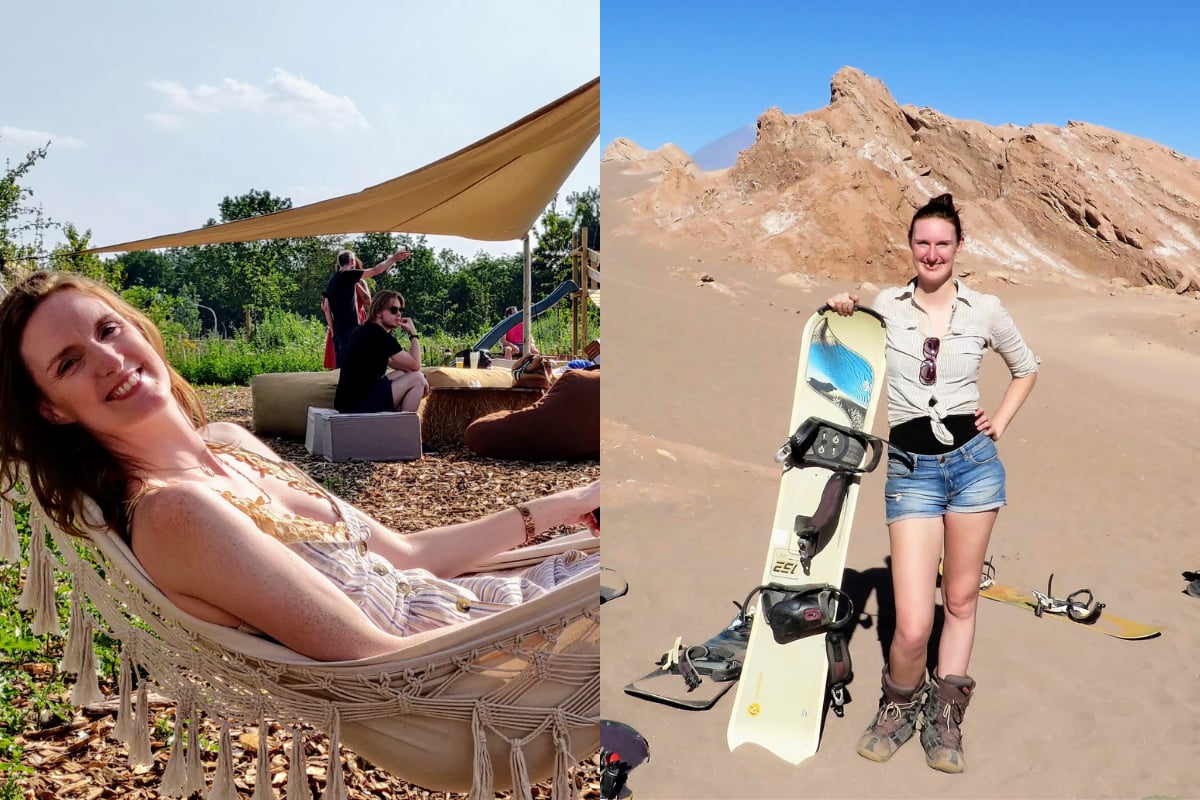 Claire's career break has been beneficial. Image: Supplied.
What I'd tell my pre-gap year self
If I could tell my anxious pre-gap-year self anything, I'd say it's good to be prepared. Take those precautions, because things will go wrong — but way less than you think. Everything is going to be OK. More than OK. It will be the best year of your life.
You are not too old. You haven't lost your passion for everything. You're only tired because you're no longer on the right path, and it's time to step off it for a while. To rediscover what brings you joy. This is an opportunity, not a failure.
The career break I took to get a new perspective on life ended up giving me a completely new one. I returned from my adult gap year a calmer, more resilient person who didn't blink twice at relocating to a new country. Ready for whatever comes next — curveballs and all.
Sign up to Claire Drinkwater's Substack here.Feature Image: Supplied.


No comments:
Post a Comment