
Russia's High-Stakes ISS Resupply Mission
A fresh wave of vital supplies is currently en route to the International Space Station (ISS), following the successful launch of Russia's latest Progress cargo spacecraft, Progress 95. This mission, which took off on April 25th, is a crucial element in maintaining human life and sustaining ongoing operations aboard the orbiting laboratory.
Precision Launch from Baikonur Cosmodrome
The mission commenced with a flawless liftoff from the historic Baikonur Cosmodrome in Kazakhstan. A powerful Soyuz rocket ascended into the night sky at precisely 6:21 p.m. EDT, a testament to the extreme precision demanded by orbital rendezvous missions. In the vacuum of space, even minuscule deviations can jeopardise docking procedures hundreds of kilometres above our planet.
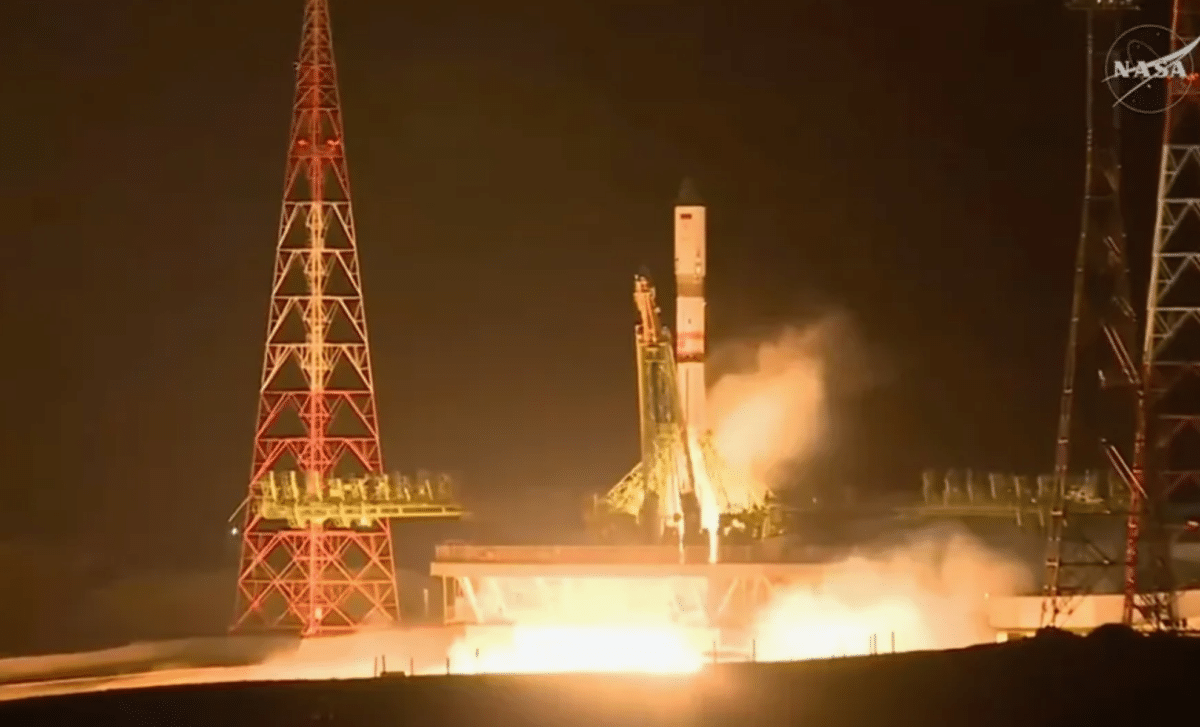
The uncrewed Progress 95 freighter is carrying a substantial payload, weighing in at nearly three tonnes. This cargo includes essential provisions such as food, fuel, and critical mission equipment. These are far from routine deliveries; they represent lifelines that empower astronauts to continue their vital research, essential maintenance, and simply survive aboard the orbiting laboratory.
Despite geopolitical tensions on Earth, launches like these remain a fundamental pillar of international space collaboration. The ability to maintain a consistent logistical chain to the ISS underscores the resilience and enduring nature of space operations in low Earth orbit.
Docking and Orbital Coordination
The Progress 95 spacecraft is slated to dock with the ISS on April 27th, with the manoeuvre expected around 8 p.m. EDT. This will involve a meticulously choreographed approach, relying heavily on sophisticated automated navigation systems. The docking port designated for Progress 95 was recently vacated by Progress 93, highlighting the continuous cycle of arrivals and departures that keeps the station fully operational.
Managing this orbital traffic is akin to a complex ballet, involving multiple spacecraft from various nations. Each vehicle must precisely align with the station's velocity and trajectory, ensuring a smooth and secure connection.
This mission marks the second Progress launch of the year, reinforcing Russia's ongoing and indispensable role in resupplying the ISS. The preceding mission, Progress 94, successfully reached the station despite encountering a technical issue with a docking antenna, a situation that ultimately demonstrated the robustness of these critical systems.
The Lifecycle of a Progress Spacecraft
In contrast to some more modern spacecraft, Progress vehicles are designed for single-use missions. Once their cargo has been delivered and their role aboard the station is complete, they are loaded with waste materials. They are then deliberately deorbited, programmed to burn up safely in Earth's atmosphere over remote ocean regions.
This controlled destruction serves a dual purpose: it provides a safe and effective method for disposing of station waste while simultaneously preventing the accumulation of potentially hazardous space debris in orbit. Progress 93, for instance, followed this exact procedure after departing the ISS on April 20th, clearing the way for the arrival of Progress 95. The current mission is anticipated to remain docked for approximately seven months before meeting a similar fate. This predictable lifecycle allows mission planners to maintain a consistent schedule of launches and replacements, thereby guaranteeing uninterrupted support for the station's dedicated crew.
A Collaborative and Evolving Supply Network
The ISS relies on a diverse fleet of cargo spacecraft, each contributing unique capabilities to its logistical framework. Alongside Russia's Progress missions, the station is supported by Japan's HTV-X, Northrop Grumman's Cygnus, and SpaceX's Dragon capsule. Among these, the Dragon capsule holds a distinct advantage as the only reusable option. It is capable of returning cargo to Earth via parachute-assisted ocean landings. This unique capability allows scientists to retrieve valuable experiment results and hardware, adding a critical dimension to the station's logistical operations.
The coexistence of both expendable and reusable systems reflects a broader evolution in spaceflight strategy, a balanced approach that considers cost-effectiveness, reliability, and functionality. As both commercial and national space programs continue to expand, this vital network is constantly evolving, shaping the very future of orbital infrastructure and human presence in space.
Sustaining Life and Advancing Science in Orbit
Every single cargo mission directly contributes to the well-being and productivity of the astronauts living aboard the ISS. These missions enable groundbreaking research in the unique environment of microgravity. From intricate biological experiments to pioneering advancements in materials science, these investigations are fundamentally dependent on a constant and reliable flow of essential supplies and cutting-edge equipment.
The arrival of Progress 95 will serve to replenish critical resources and ensure that ongoing scientific experiments can proceed without any interruption. On a broader scale, each successful cargo mission reinforces humanity's remarkable ability to maintain a permanent presence in space. As the ISS approaches the later stages of its operational lifespan, missions like this one powerfully underscore the enduring importance of international cooperation and the absolute necessity of logistical precision in the ongoing endeavour of space exploration.
Post a Comment for "Russia's High-Stakes ISS Resupply Mission"